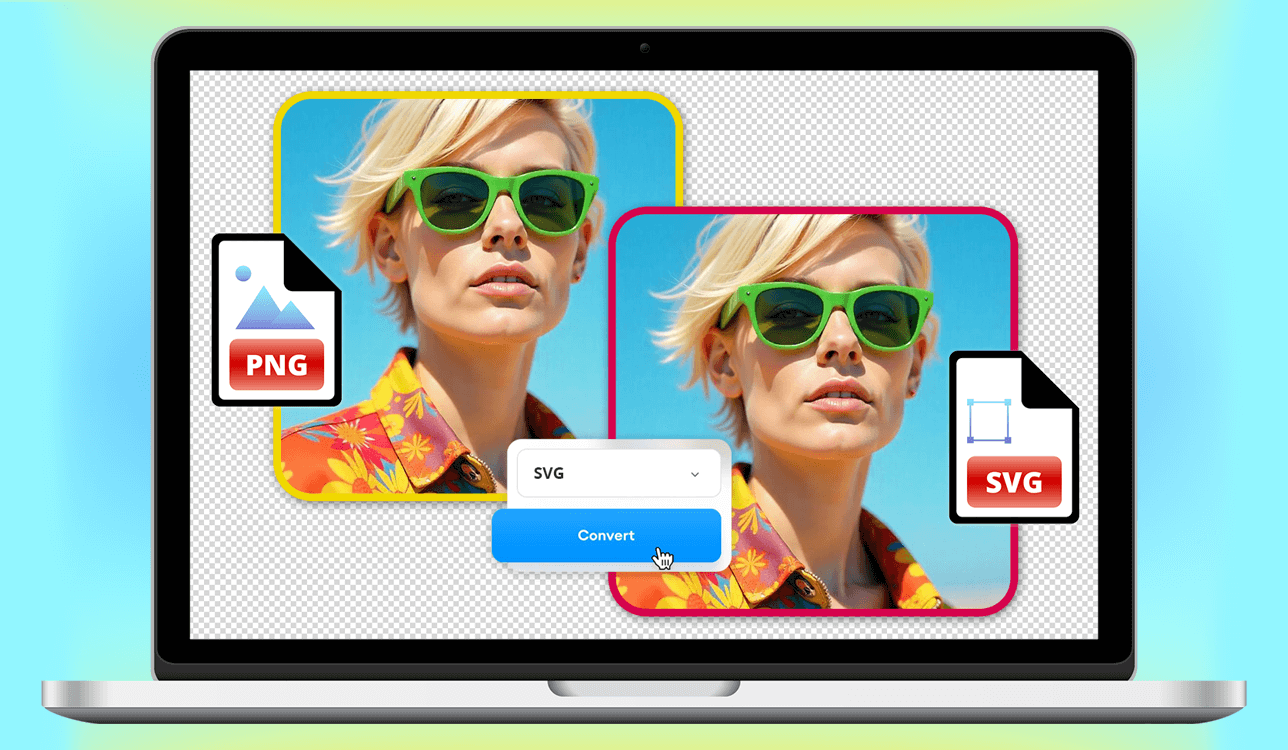
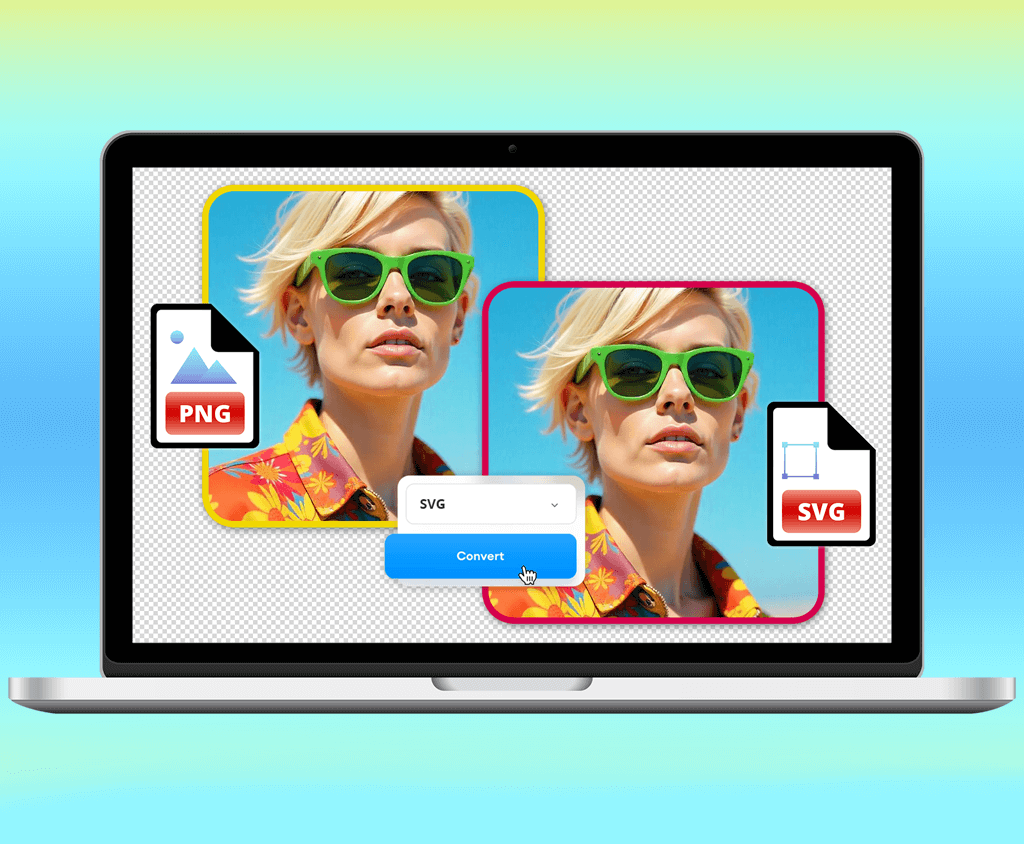
Doing photography and graphic design work for FixThePhoto, I frequently have to handle PNG images, which can encompass logos, overlays, and interface elements. However, since many web and print projects demand images in SVG format, I needed an appropriate tool to avoid re-saving each file manually.
I brought up this subject with my coworkers and we all agreed that we needed to find the best PNG to SVG converters that would provide quick and precise results without lowering the image quality. We tried out more than 15 options to put together this shortlist.
| Platform | Accuracy | Speed | Advanced Features | Free Plan/Trial |
|---|---|---|---|---|
|
Excellent
|
Fast
|
AI vectorization, editing features
|
✔️
|
|
|
High
|
Fast
|
Customizable sizes, cloud support
|
✔️
|
|
|
Excellent
|
Fast
|
Automated path detection
|
✔️
|
|
|
High
|
Average
|
Manual vector editing
|
✔️
|
|
|
High
|
Fast
|
Batch processing functionality
|
✔️
|
|
|
Average
|
Average
|
Intuitive UI
|
✔️
|
|
|
Average
|
Average
|
Protected offline usage
|
✔️
|
Begin with a polished PNG. I take time to prepare the image before I convert it. You can guarantee optimal results by using PNGs with a transparent backdrop. Logos, icons, and flat shapes tend to look great even after being converted. However, if a PNG features noise, shadows, or soft gradients, I like to tidy it up in an image editor before converting.
Be clear with your needs. Various solutions provide differing results, so you need to know what exactly you want. If you’re interested in sharp outlines without a background, pick a PNG to SVG converter that preserves transparency. If you need to maintain separate color layers, pick an option with editing functionality. This way, you’ll get the desired result on your first try.
Leverage preview and cleanup tools. Once converted, open the SVG file in a vector editing solution to ensure no needless outlines or extra points were added. You can also fine-tune the curves and paths as needed. This is important to do even when using UI-based platforms if you want to guarantee a clean, print-ready result.
Adjust and test if necessary. The initial converted SVG file can look too unpolished or lack important details. If that happens to you, I suggest either editing the PNG file or picking different parameters in the converter. For instance, by decreasing the threshold or turning on smooth curves, you can preserve more detail.
Choose converters that offer export flexibility. I frequently require SVGs for websites, print materials, and motion graphics, which is why I tend to pick PNG to SVG converters that let me determine the size, shape, and other parameters of the converted image without having to use other software.
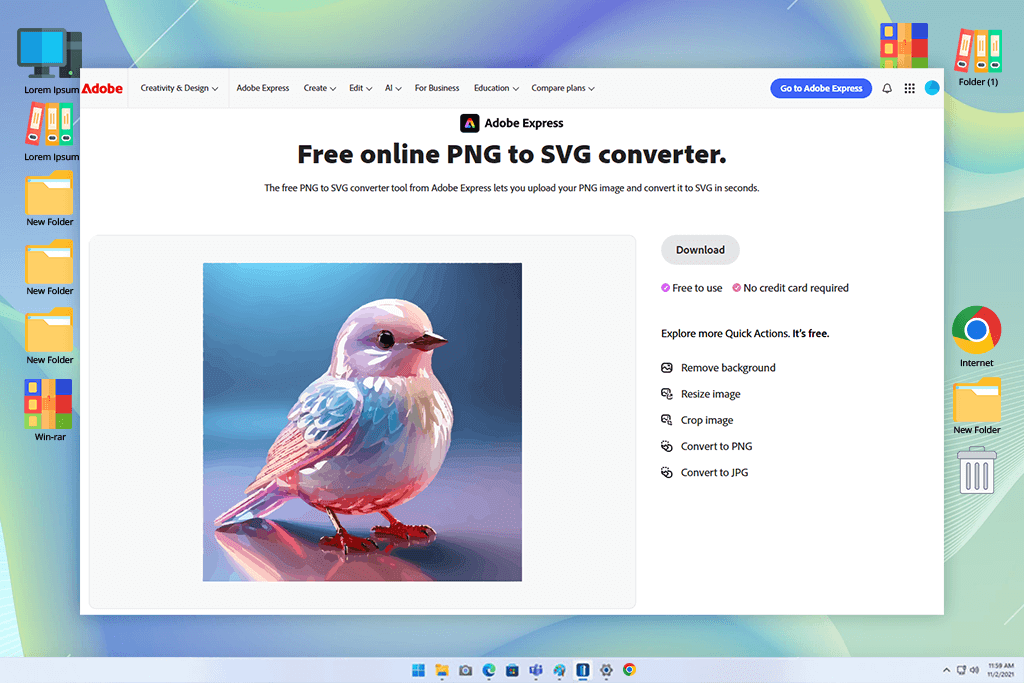
I primarily rely on Adobe Express to transform PNG logos with a transparent backdrop into SVG format whenever I’m making images for a site. For instance, I wanted to make a clean vector image of our watermark for a photography review landing page, and Adobe Express did a great job converting the white text over a transparent background.
This platform also recently received a Quick Action feature for transforming PNG and JPEG images to SVG, powered by Illustrator’s vector engine. This innovation lets you receive smoother curves, more precise shapes, and much more. I used it on several colorized icons and the conversion quality allowed me to import them to Figma straight away.
Another reason why I consider this the best PNG to SVG converter is that I’m already a part of the Adobe ecosystem, so adding Express to my workflow felt very natural and convenient, especially since it doesn’t create any unnecessary points or broken paths that many free options are known for.
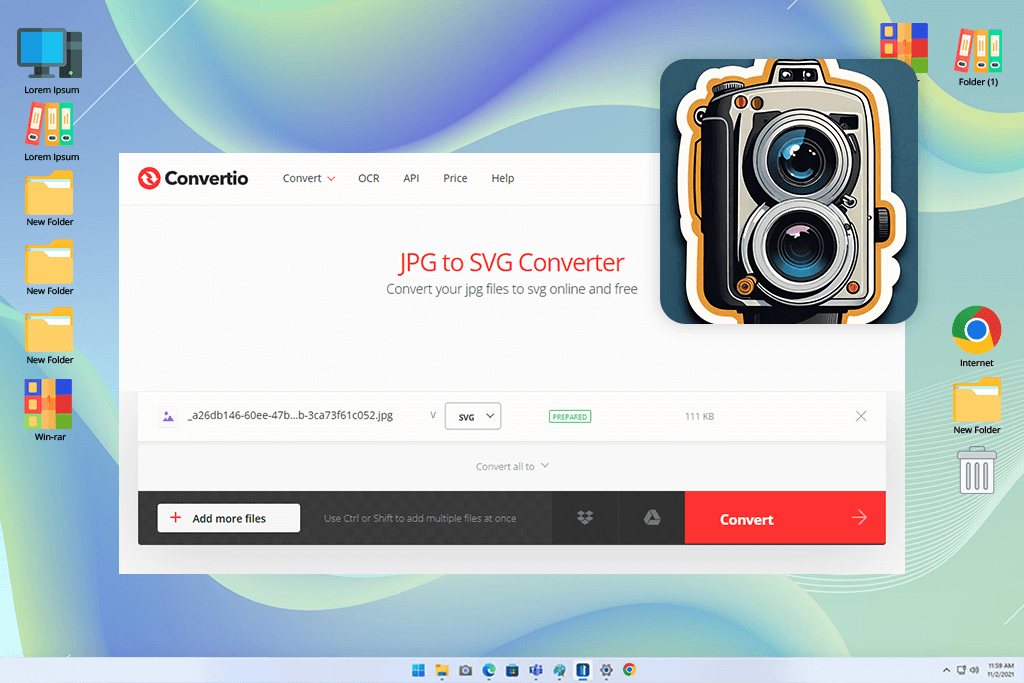
If you’re looking to get a quick result without downloading any software, Convertio might be the optimal PNG to SVG converter for you. It allowed me to prepare the necessary images for a web presentation on my tablet. It produced great results with basic icons and logos, allowing me to avoid looking for specialized software.
Convertio offers drag-and-drop controls and cloud storage support. It provides clean results when handling small images like checkmarks or social icons while allowing you to do everything within the comfort of your browser.
This PNG to SVG converter is extremely convenient and fast, but a suboptimal choice if the SVG requires a lot of cleanup and adjustments after the conversion.
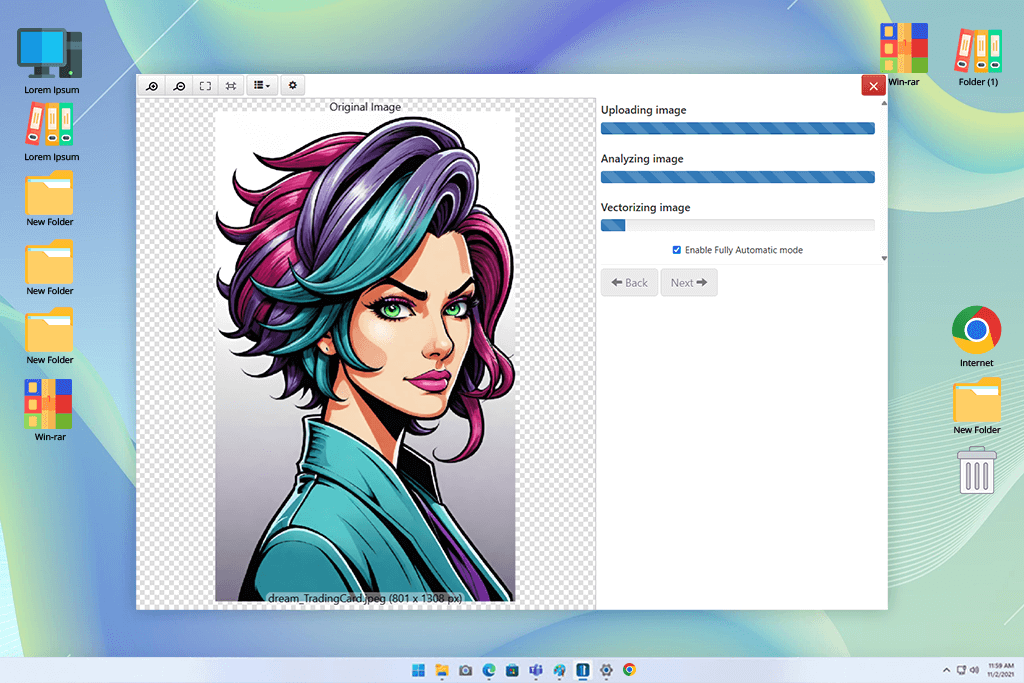
Hand-drawn illustrations and scanned pictures are often hard to properly convert using simple tools. Vector Magic is great at tackling old ink drawings, which I wanted to digitize for a T-shirt print. It kept all the lines and details without transforming them into rough shapes.
It allowed me to set the export parameters, get rid of extra points, and smooth the curves before launching the conversion process. The exported SVG only requires a few minor touch-ups in Illustrator before printing.
It’s possibly the best PNG to SVG converter when it comes to intricate projects. However, the free edition imposes batch conversion restrictions and adds a watermark to the exported files. If you’re used to creating in Adobe Illustrator or Corel, you’ll have no trouble learning how to use Vector Magic.
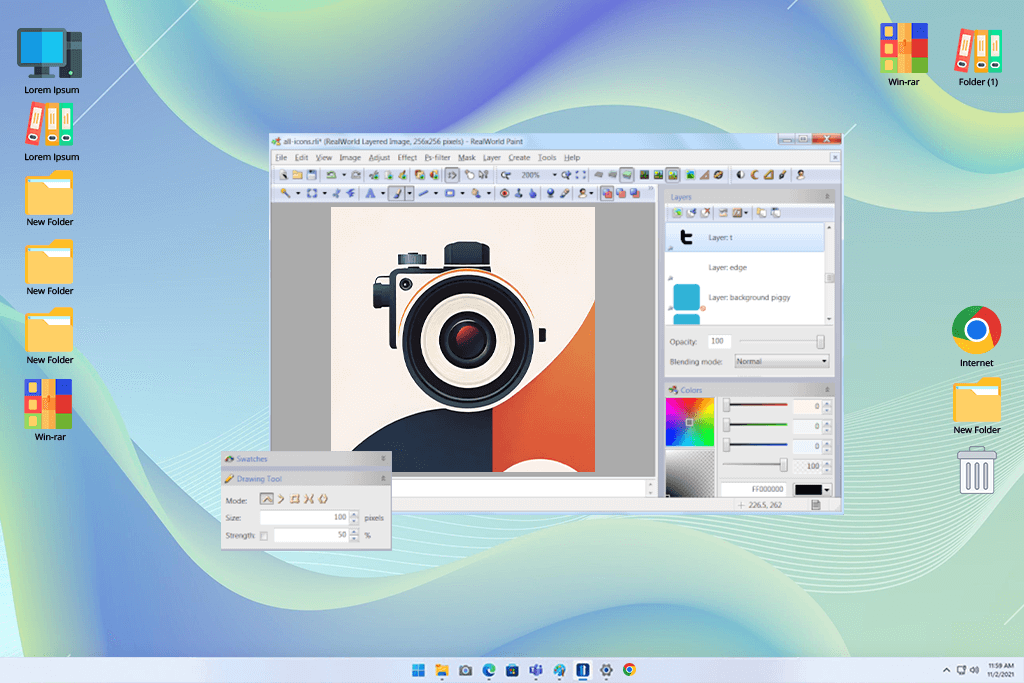
When automatic tracing isn’t accurate enough, your only choice is to draw manually. I was working with a blurry logo with gradients and soft edges that couldn’t be accurately converted by any of the other tools. Thankfully, RealWorld Paint allowed me to overlay the PNG and trace it with the help of vector tools, akin to how I use photo editing software for PC, like Photoshop or GIMP.
This process is more time-consuming than relying on AI but resulted in a polished, sharp, print-ready SVG file. I also like the freedom to switch between raster and vector layers as needed, since it's a feature that is seldom included even in the best free vector graphics software.
If you enjoy having complete control over the look of the image and aren’t averse to manual editing, this is an incredible PNG to SVG converter to have, even if it’s not suited for speed or batch processing.
«Whenever I employ RealWorld Paint for logo gracing, I tend to lock the PNG layer since it simplifies manual vector editing by a lot.»

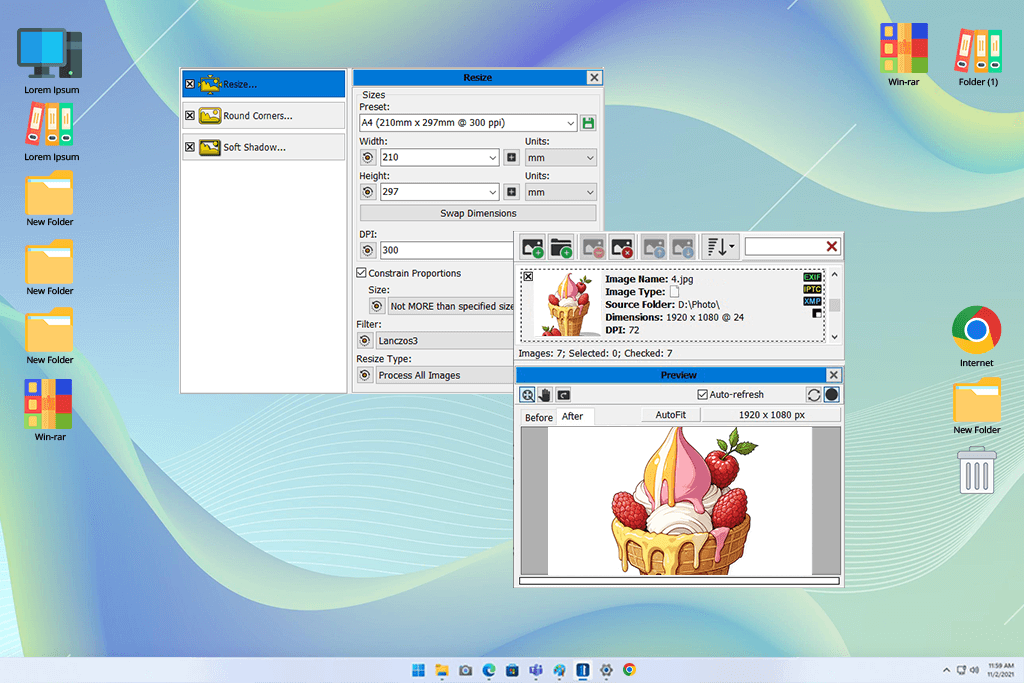
Dealing with dozens of images simultaneously can become extremely time-consuming if you don’t automate the process. ImBatch helped me convert about 50 PNGs to SVG format in a single swoop. After adjusting the parameters, I processed an entire folder in one go.
Most images were rather basic, flat shapes with solid colors, so I didn’t have to edit any of the converted files, taking full advantage of the provided speed.
However, ImBatch doesn’t have a preview feature or any editing tools, so if you value precision and customization, you’ll have to pick a different PNG to SVG converter, as this one is primarily designed for basic bulk processing.
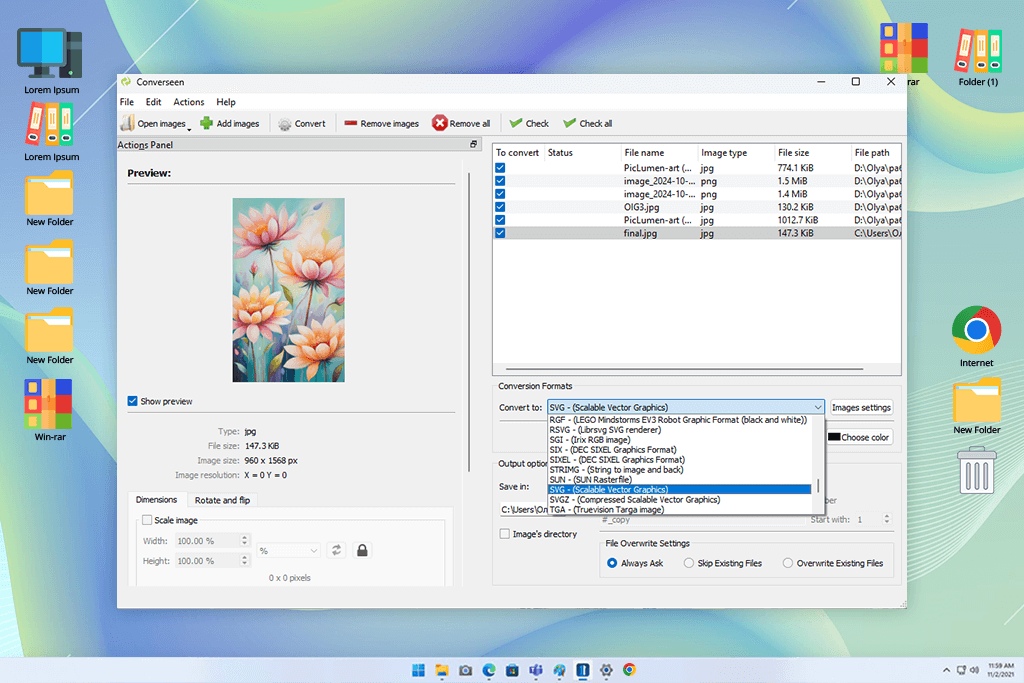
Not all tasks require complex software. When I was handling some presentation icons on an older laptop of mine, I used Converseen since it’s a lightweight and superfast tool.
It excels at converting flat icons and simple shapes with maximum accuracy. All I have to do is import the result into a Figma wireframe without messing around with any other software.
While Converseen might be the best converter for PNG to SVG processing when it comes to speed, I recommend looking for other tools that allow you to adjust shapes or tweak the export parameters if you’re interested in something more complex.
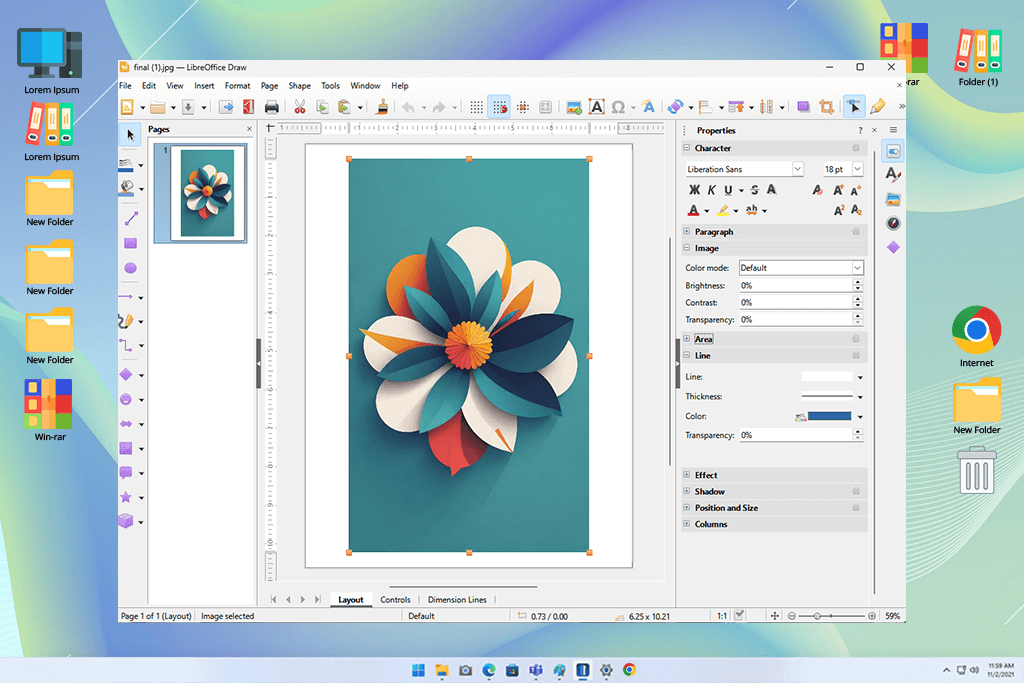
If you value security above everything else, an offline solution is your best bet. I needed to convert our company’s icons from PNG to SVG without uploading them to the web. LibreOffice Draw allowed me to manually trace over the images and save the results without ever putting them at risk of being leaked.
Additionally, I leveraged this tool to remake multiple interface components from static PNGs. Even though LibreOffice Draw takes more time to use compared to AI-powered solutions, it allows me to enjoy clean shapes and well-defined paths.
Moreover, this file converter software let me convert, resize, rotate, and flip images in a variety of other formats as well, including DPX, TIFF, JPG, and PhotoCD among several others.
«Before converting a PNG to SVG in LibreOffice Draw, I first transform all shapes into curves – to avoid having to deal with frustrating scaling problems afterward.»

Before I started looking for the best PNG to SVG converter I first needed to determine which features matter most to image retouchers, graphic designers, and content creators. I evaluated how good each option is at preserving shapes and transparency while avoiding creating convoluted vector paths.
I also gauged the speed and user-friendliness of the converter. Along with my coworkers from the FixThePhoto team, we tried out each option manually. We imported a variety of images, from logos with transparent backgrounds and flat icons to scanned hand-drawn illustrations. Some test images were clean while others were made imperfect on purpose to see how the converter would handle them.
When doing our testing, we put each software through actual tasks, including:
Additionally, we checked out a variety of tools that weren’t included in our list of the best converters for PNG to SVG transformations. For instance, Autotracer produced SVGs with excessively rough edges while Picsvg deleted entire areas of logos with transparent backgrounds. SVG Creator was pleasantly user-friendly but struggled to process multicolored images. Lastly, while Online-Convert offered great speeds, it produced disappointing results when dealing with shadows and finer details.
While the aforementioned solutions are suitable for basic B&W icons, they aren't advanced enough to deliver polished, professional vector SVGs. We required software that can export print-ready SVGs without requiring a lot of manual adjustments afterward.
We also accounted for the availability of a mobile version and took note of lagging or crashes on older hardware. The highest-rated options are multi-platform and can produce clean SVGs even out of highly detailed PNGs.