I didn't believe you could get Adobe software without paying. It seemed like only students and beta testers got the privilege of using free Adobe apps.
But when I worked as a freelance photographer and retoucher at FixThePhoto and lacked cash, I had no choice but to search for solutions. I explored every legitimate option I could find, including their phone apps, free trials, and online tools most people don't know about. Turns out, there are more options than most photographers realize.
Adobe's system works for me, so I'm staying put. But that doesn't mean I want to overpay, though, considering there are smart and totally legal ways to get Adobe for free.
In this guide, I'm not just throwing trial lists at you. I'm going to show you every Adobe app that's actually free, which ones work best for different people, and how I built my career without spending much. I only paid for one CC subscription when I absolutely had to.
If you've ever searched "how to get Adobe for free," you're not alone. I'm going to tell you which ways are actually safe and which ones will get you in trouble.
Before I decided to invest in Creative Cloud, I took advantage of each and every legal option available. The secret is being smart about it. You can actually get a lot of free Adobe downloads if you know where to look.
Here's what actually works legally:
Looking back, I wish someone had told me this earlier. You don't need the complete Creative Cloud package. Many people who are starting out just waste money on stuff they never actually use.
However, you should probably pay for it if…

Probably not worth paying if…
Best for: Photographers, influencers, quick retouching
Compatibility: iOS, iPadOS
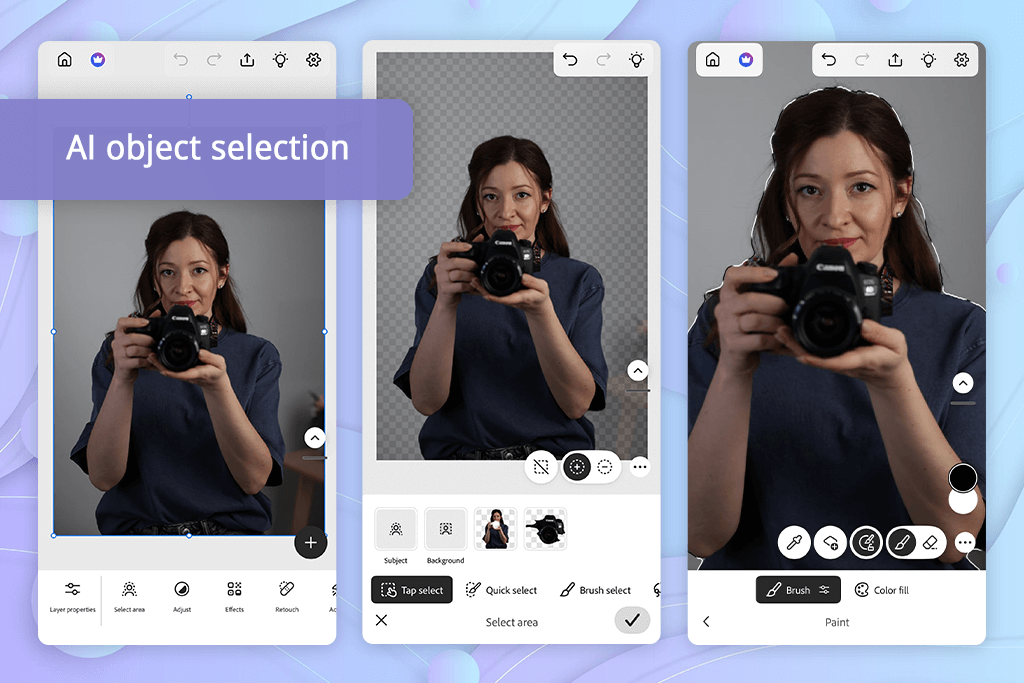
I discovered Photoshop on iPhone by accident. A client needed me to fix photos quickly, and I didn't have my laptop with me at the airport. I downloaded the app expecting it to be just a basic filter tool, but I was stunned because it actually worked like real Photoshop, just smaller.
“Photoshop Mobile isn’t as powerful as the desktop version, but it helps a lot when you are far from your desktop.”

This Adobe free app has layers, masks, healing tools, background removal, blend modes, and AI object selection. I use it mostly for quick skin fixes, removing unwanted objects from travel photos, and resizing images for social media. The app is easy to use on a phone. There are big buttons, and all tools are clearly labeled.
However, there are some limits. If you're working on complicated images with many layers, the app slows down quickly. Some advanced features, like smart objects and liquify aren't available yet. Besides, syncing your work to Creative Cloud can be slow or fail if you have problems with internet connection.
Use an Apple Pencil if you're using Photoshop on iPad or doing close-up retouching. Photoshop on mobile isn't a desktop substitute, but it works great for urgent touch-ups or cases when you need to edit while traveling.
Pricing: Free (limited tools); from $9.99/mo (Photoshop plan) or $119.88/year
Best for: Designers, marketers, safe AI content
Compatibility: Web, Photoshop integration
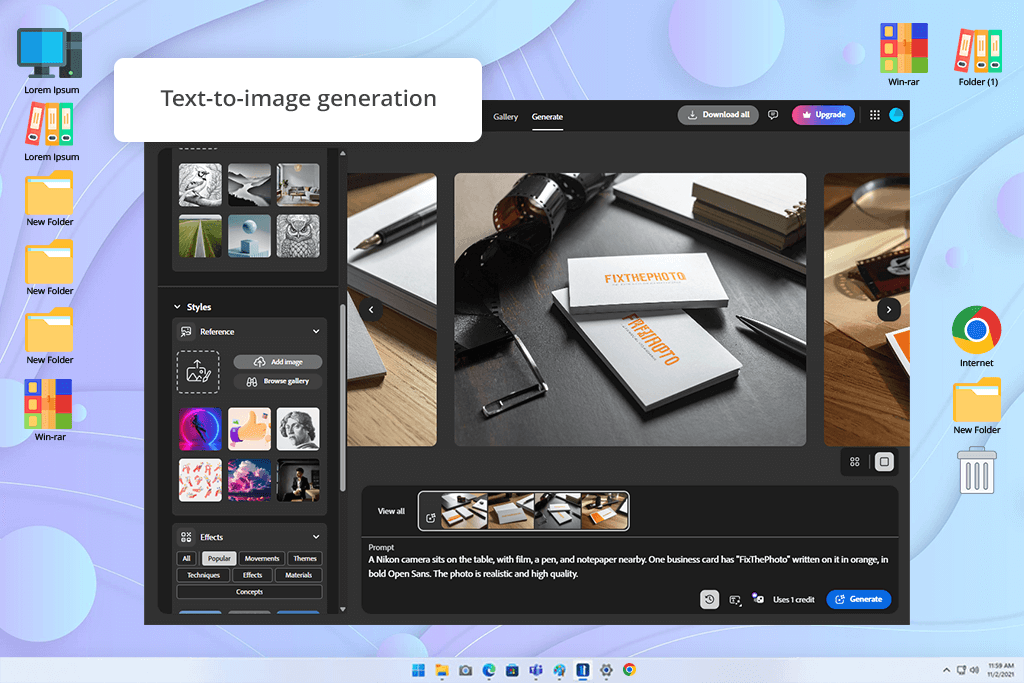
When Adobe Firefly was released, I decided to test it to find out if it could compete with such popular tools as Midjourney and DALL·E. The bragging point of this Adobe’s AI software is that it's built using only approved, copyright-protected material. Because of this, all the images you make are safe to sell or use commercially. This applies to free users, too.
“Firefly isn’t the most powerful AI, but it gives you materials that are safe to publish.”

Adobe Firefly in Photoshop is a handy tool for several things. I use this Adobe product free to replace backgrounds, layer textures, and stretch images when clients ask for different dimensions. I'm especially impressed by the Text Effects feature for YouTube thumbnails. Just type in an effect like "chrome bubble" or "neon smoke", and your text changes automatically.
I discovered that the free version restricts your monthly "generative credits”. So, I prepare all my prompts before I start and generate everything at once instead of doing it little by little. In my opinion, Firefly does create realistic images most of the time, but there's definitely a problem with hands and faces.
Pricing: Free (limited credits); from $4.99/mo or $59.88/year
Best for: Creators making Reels & short content
Compatibility: iOS
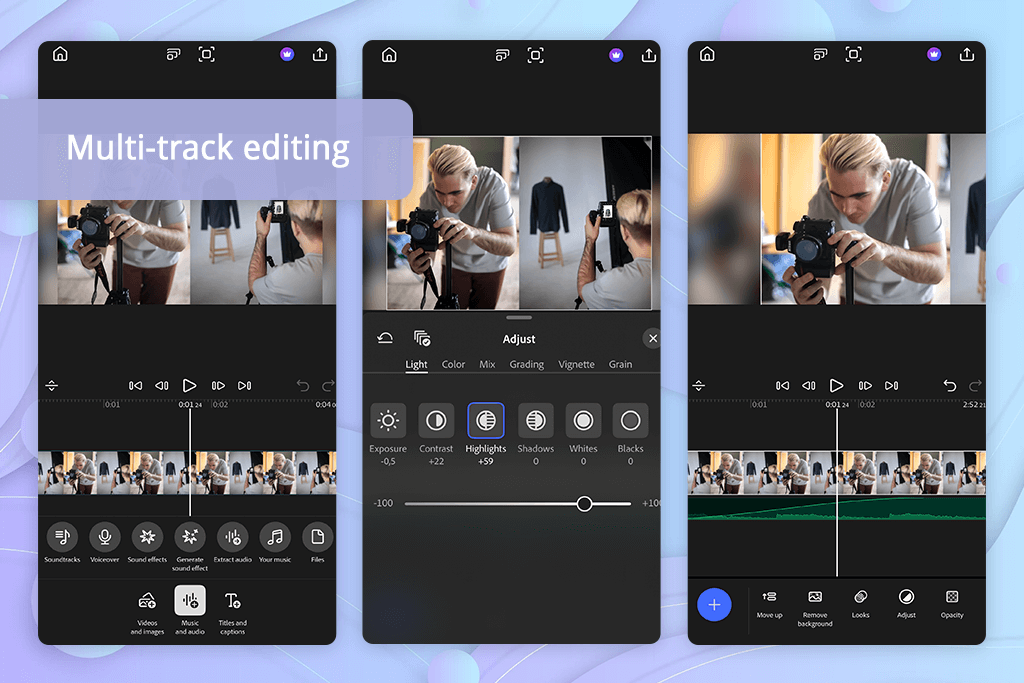
I thought Adobe Premiere on iPhone would just be a basic mobile editor, so I ignored it. Then, a videographer I work with at FixThePhoto mentioned he was actually making full Reels campaigns on it. That made me curious, so I decided to try it out myself.
This version is like the desktop Premiere Pro. It offers multiple video and audio tracks, keyframe animations, speed ramping, voiceovers, and auto-captions. I often use it whenever I'm filming behind-the-scenes content or need to get a quick teaser out to clients the same day.
I skip the whole PC import process now. Everything goes straight through airdrop into mobile Premiere, where I trim clips, layer in music, apply color presets, and export 4K videos. The audio features are actually better than most free desktop editors. I can automatically duck the background music under voiceovers and use noise reduction, too.
Like many free Adobe Creative software, this one is not perfect. Working with large timelines is slow and sluggish. The text and title features are pretty basic compared to CapCut or regular Premiere. Plus, if you want to move your project to desktop Premiere, you have to use Creative Cloud storage.
My top tip: lock your phone in landscape mode and use wired headphones when editing to receive a faster and more precise outcome.
Pricing: Free (brand assets & cloud limits locked); from $4.99/mo or $34.99/year
Best for: Marketers, small businesses, content creators
Compatibility: Web, iOS, Android
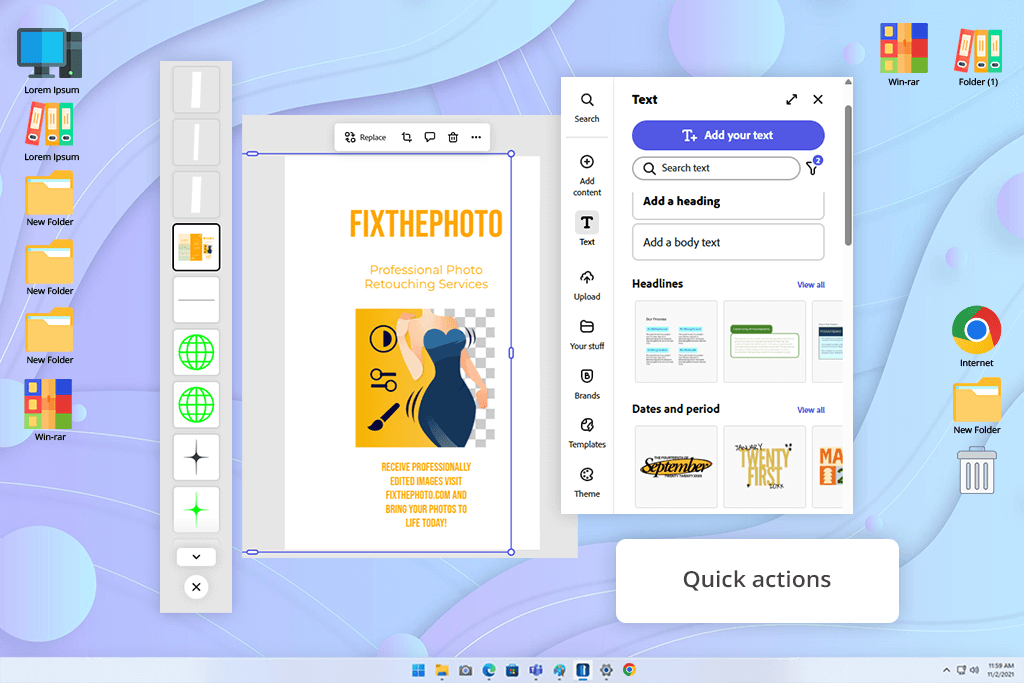
I stumbled upon Adobe Express when I was in a rush to make Instagram story templates for a client. Photoshop was an overkill, so I tried Express instead. I've never been big on drag-and-drop tools like Canva, but this one actually impressed me. It works the same way as Canva, but it actually lets me use all my Adobe files.
“It resembles Photoshop, but is simple. Great option for non-designers.”

Adobe Express has lots of templates for social media posts, posters, resumes, ads, thumbnails, QR codes, you name it. My favorite feature is one-click resize. I can change a Facebook post into a Pinterest pin or a YouTube thumbnail instantly. Now I use it all the time for TikTok covers, Pinterest carousels, showing clients my work, and making quick presentations.
You can set up brand kits to save time. Just add a client's logo, fonts, and color scheme once, and you can apply them to every design. The free Adobe tools available here are solid, but fancier templates and the background remover feature require payment. The phone app is good for making small changes fast, but you should use the desktop version for complex layouts.
Best tip: Use “Quick Actions” in the toolbar to remove backgrounds, convert videos, or resize images without opening the full editor.
Pricing: Free (premium templates locked); from $9.99/mo or $99.99/year
Best for: Photographers who edit on the go
Compatibility: iOS, Android
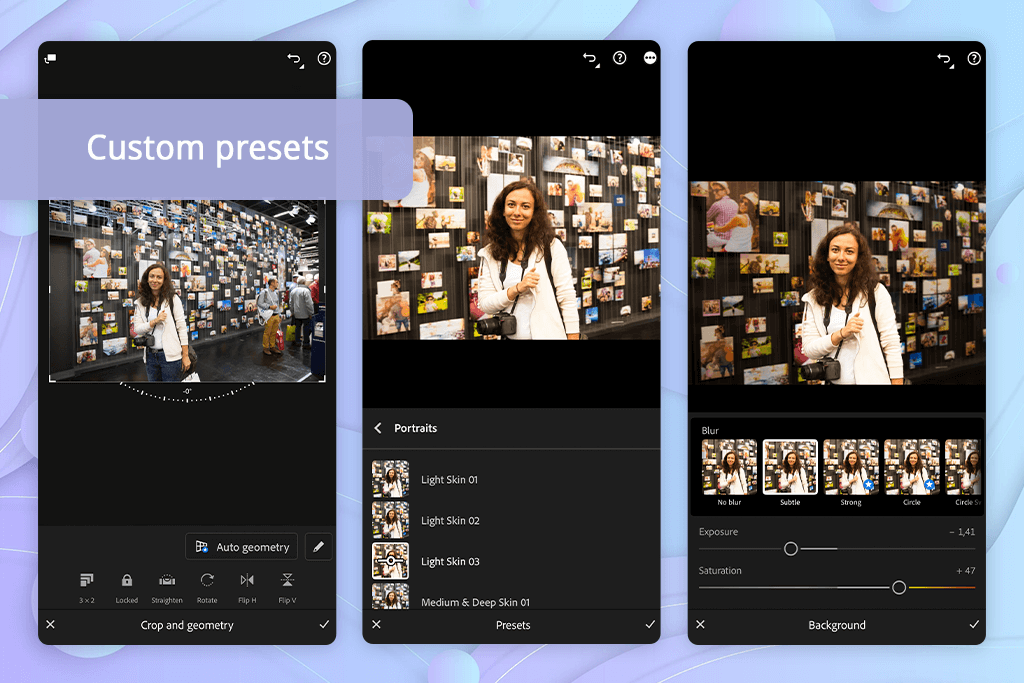
I was looking for a new photo editing app to replace VSCO so I could edit RAW files on my phone. That's when I found Adobe Lightroom Mobile. I was surprised by how it resembled the regular desktop version. In fact, it has 80% of the full Lightroom app right in your pocket.
When I'm on travel shoots or photographing weddings, this free Adobe product is perfect for me. I can pick my favorite shots and do quick edits on my phone before sending them to my computer. The best feature is cloud syncing. Everything I edit on my phone automatically updates on my desktop.
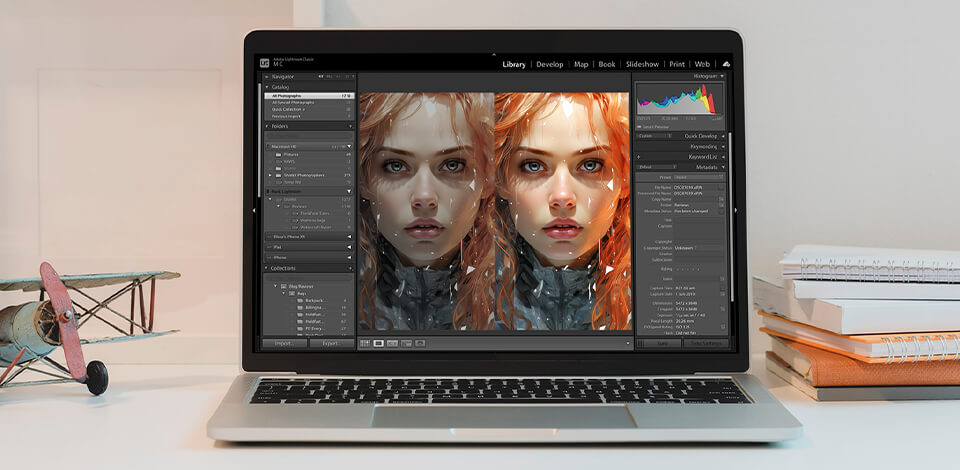
Lightroom free version has lots of useful tools. You get exposure settings, color adjustments (HSL), cropping, sharpening, and curves. I particularly like that users can create and save their own preset packs. I make FixThePhoto presets and I use them whenever I need them. When I tested it with dark photos, Lightroom Mobile actually did a better job fixing the bright areas than other phone apps out there.
The main downside is that you can't use Selective Masking and Geometry Corrections unless you pay for a subscription. Also, if you try to export a lot of photos at once, it takes a while to finish.
To get the best results, you should turn on Lens Profiles in settings and edit in Portrait mode only. Sliders are more precise this way.
Pricing: Free (Selective tools locked); from $9.99/mo (Photography Plan) or from $119.88/year
Best for: Contracts, document review, signatures
Compatibility: Windows, macOS, iOS, Android, Web
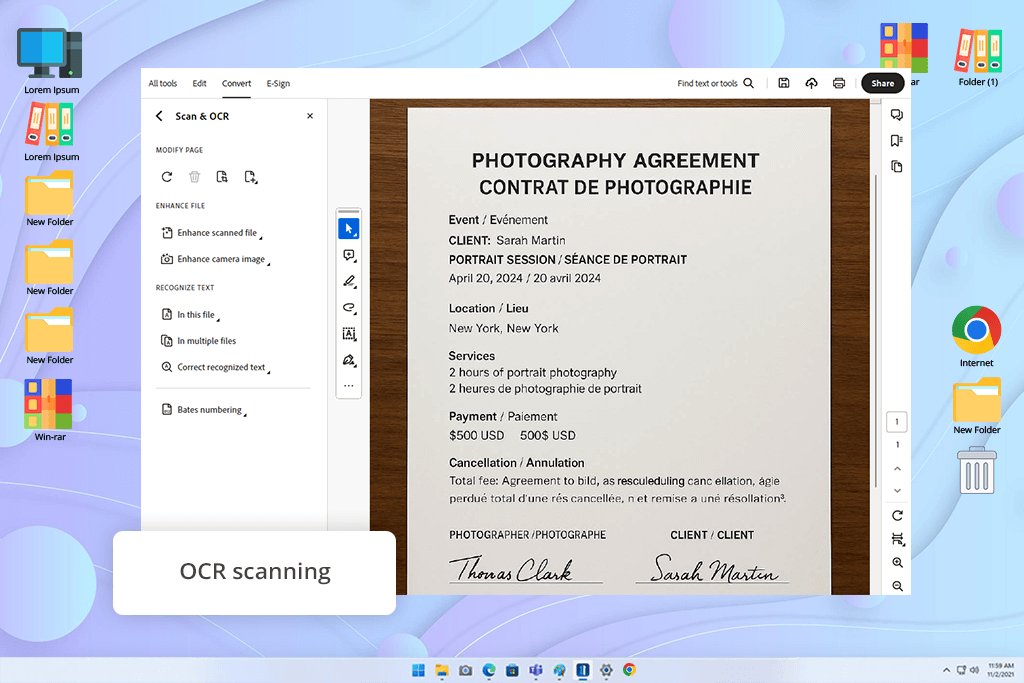
I've used Adobe Acrobat Reader since my college days. But I didn't really see how useful it was. When I started my job at FixThePhoto, where I handle contracts and client changes, I truly grasped its capabilities. People think it's just for viewing PDFs, but I discovered I could do so much more without printing papers or jumping between different programs. Now I use it regularly.
“When I need to open a PDF, I typically use Acrobat for the task. It is a great program.”
I mainly use it for signing documents, marking up draft comments, and putting PDF pages together for final projects. The Fill & Sign tool is really helpful because I save my digital signature once, so I don't have to scan or write it again each time. I can also leave notes straight on client documents without exchanging lots of emails. Plus, I can use it on my phone when I'm checking project proposals away from my desk.
Anyone can use this free Adobe software without tech knowledge, though useful features like text recognition and file size reduction are hidden in dropdown menus. I suggest exploring the toolbar to find all the capabilities rather than only using it to view files.
The frustrating part is that some options, namely, converting to Word and making text changes in PDFs, aren't available unless you upgrade your plan.
Pricing: Free (export/edit tools locked); from $12.99/mo (Pro) or $155.88/year
Best for: Social media retouch
Compatibility: iOS, Android, Windows (via Microsoft Store)
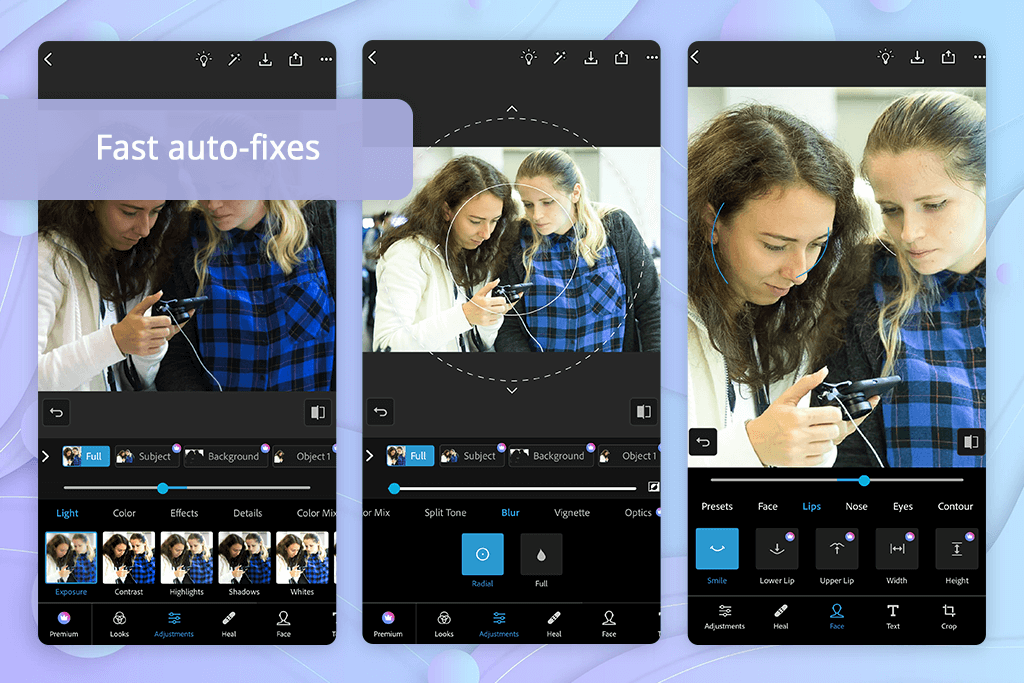
My coworker from FixThePhoto kept telling me how great Adobe Photoshop Express was, so I decided to try it. I should say it's nothing like the full version of Photoshop. You don't get lost in complicated buttons and settings. Instead, you just pick a photo, use some quick filters or adjustment tools, and your image is done and ready to share.
“If you need to edit your images on the go, this app lets you do it incredibly quickly.”

I use this app a lot when I'm on the go or covering events. Since I need to send quick previews to people before I get back to my desk, it's perfect for that. One thing I really like is the Healing tool. It does an amazing job at getting rid of stray hairs or skin spots. The preset filters called "Looks" here are really good too. You can improve your photos and get unique results.
I think this is one of the best free Adobe programs for social media managers, influencers, and people just starting out with photo editing. But even though I do professional retouching work, I still use it all the time when I'm in a rush. I particularly like the Selective Adjust brush. It lets me focus and improve specific photo parts, e.g., make someone's eyes brighter or make the sky more vibrant, without having to change the entire picture.
The app does have some limitations. If you're used to working with desktop Photoshop, you'll notice you can't do everything you typically do. There are no masking layers or advanced blending options. You may also run into problems when you want to download your final photo with the highest quality. It can be buggy unless you're logged in. Despite these drawbacks, considering it's completely free, it's actually better than most editing apps that charge money.
Pricing: Free (Premium tools locked); from $4.99/mo
Best for: Illustrators, concept artists, visual brainstormers
Compatibility: iPad, Windows tablets
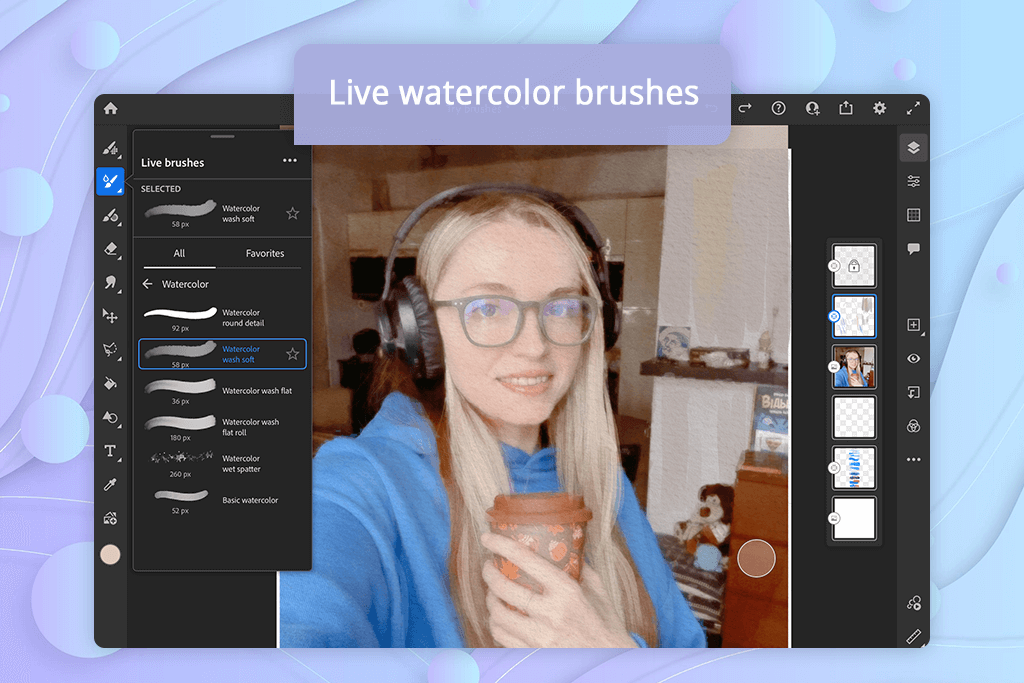
One of the artists at FixThePhoto told me about Adobe Fresco. She said the Live Brushes were like real oil paint on a screen. I'm usually better at fixing photos than drawing, so I downloaded it just to see what it could do. But I ended up using it more than I thought I would.
“With Fresco, drawing on my iPad is like using a real sketchbook, but neater.”

Adobe Fresco looks like a mix of Procreate and Photoshop. You can use both vector and raster brushes on the same canvas. In other words, means you can sketch loosely and then turn it into clean outlines without starting fresh.
The Live Watercolor brush behaves like real watercolor on wet paper. I mainly use Fresco for creating storyboards, showing how photos should look after editing, and marking up designs when I'm hashing out ideas with clients.
This Adobe free software easily connects with Photoshop. When I draw something on my iPad, I can open that file on my computer right away and all the layers are still there. The downside is that you need to pay extra to import custom brushes and use certain vector export features. One other issue is that the program can slow down when you're working on really big canvases.
Pro tip: Enable Touch Shortcut in settings for quick erasing or color picking.
Pricing: Free (limited brushes & exports); from $9.99/mo or $119.88/year
Best for: Designers, marketers, product previews
Compatibility: iOS, Windows (Beta), Mac (Viewer only)
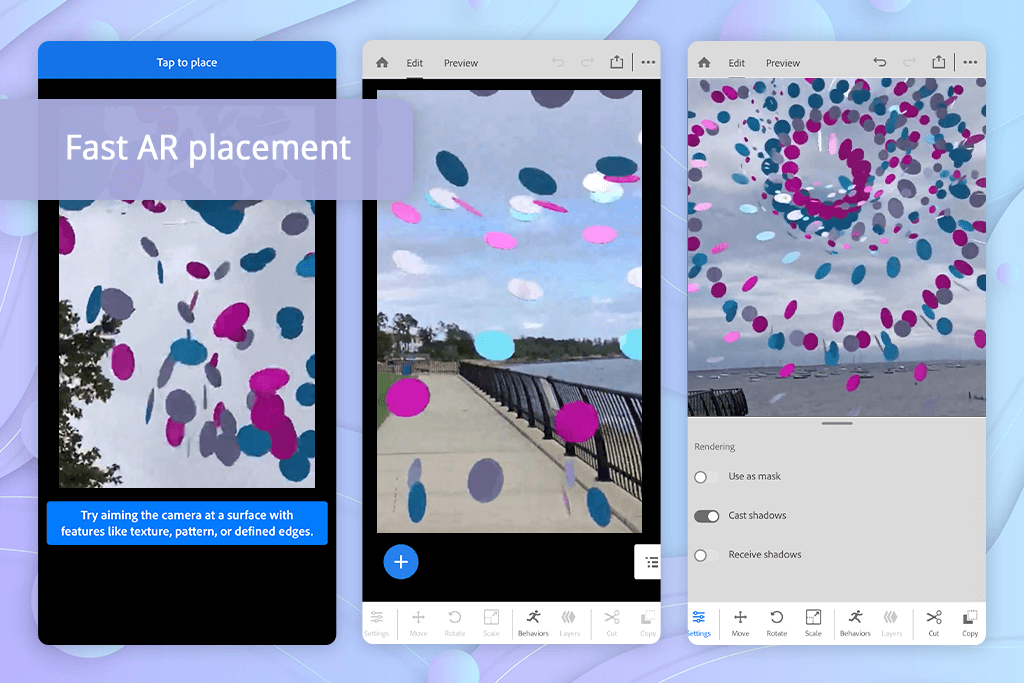
While searching for augmented reality software, I found out about Adobe Aero. A designer on our team uses it to put virtual designs into actual spaces without programming. That sounded cool, so I downloaded Adobe Aero on my iPad to try it out.
This is one of the most user-friendly Adobe free products I’ve used. You can take 3D shapes or flat images and put them into your real surroundings using your phone camera. You don't need to write complicated code or create animation timelines. Just tap where you want something to go, then add simple actions like "tap to spin it" or "move closer to see more."
I tested Adobe Aero with different tasks. First, I used it to show a client what their printed photos would look like hanging in their showroom, without printing or hanging anything. Later, I used it to create videos for social media. I added floating text and images in real rooms to make interesting posts. The app will surely please designers, artists, and marketers who want to test out their ideas quickly without paying someone to code them.
There are some limitations to know about. The quality of rendering depends on lighting. Bad lighting makes things look blurry or weird. Big 3D objects often cause crashes or freezes. If you want to share your work with others, you have to use Adobe's cloud storage. You can't just save it and send it as a file.
To receive the best results, use simple, plain backgrounds, stay away from shiny or reflective surfaces, and keep your 3D objects simpler and less detailed.
Pricing: Free (export & cloud limits); from $9.99/mo (with Creative Cloud) or $119.88/year

Best for: Video editors needing multi-format exports
Compatibility: Windows, macOS
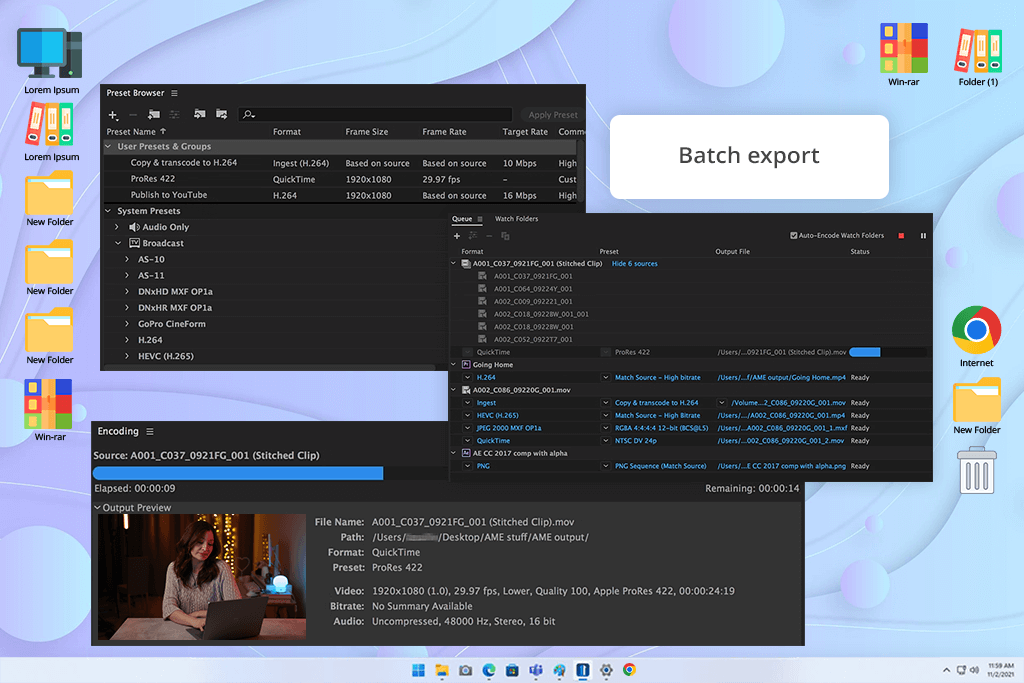
I was having a problem with Premiere Pro. It kept freezing up whenever I tried to save my videos. It was really frustrating. Then my coworker gave me some great advice. He recommended using Adobe Media Encoder instead of exporting straight from Premiere. Turns out he knew what he was talking about.
Adobe Media Encoder free is basically a tool that specializes in saving files. You just tell it what video, audio, or animation you want to save, choose a suitable format, and then you can go back to editing while it does all the work in the background.
“Media Encoder helps with exporting without distracting you from your work.”

This is one of my favorite free Adobe products for saving one video in multiple versions for different social media platforms. YouTube videos are wide, Instagram Reels are tall, and regular Instagram posts are square, and Media Encoder handles all three at once. You can also save your settings, so you don't have to redo them every time. There are many handy features. For example, it automatically fixes audio levels so videos sound consistent, and it can change the frame rate if you need it to.
Media Encoder is very dependable. If something goes wrong while it's saving a video, it automatically tries again without you having to do anything. The downside is that it uses a lot of your computer's memory, so your system may slow down. Also, the buttons and menus can look confusing if you don't understand video settings.
My professional recommendation: create one perfect setup for each platform you use and give it a clear name, so you remember what it's for. Something simple like "Instagram_1080p_30fps" is better than trying to remember what you did months ago.
Pricing: Free with Premiere/After Effects; from $22.99/mo (Premiere plan) or from $239.88/year
Best for: Designers, marketers, content creators
Compatibility: Web, macOS, Windows (via sync in Adobe apps)
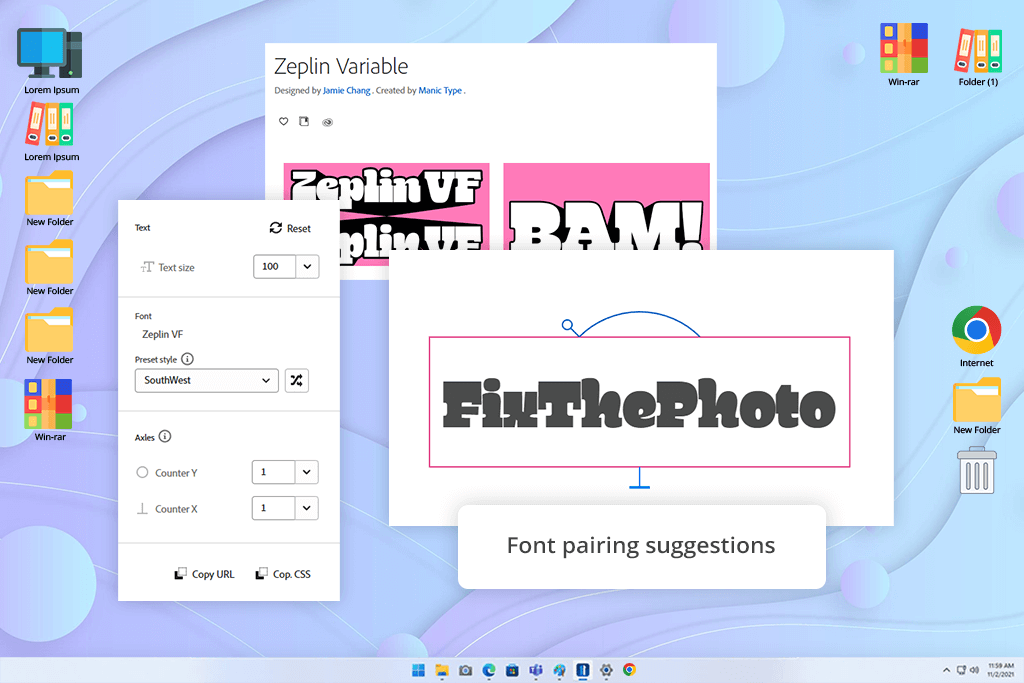
I found out about Adobe Fonts by accident. Before that, I was spending a lot of time downloading free fonts from random websites that didn't even look trustworthy. Then one of our graphic designers shared a font library through Creative Cloud free. I discovered I could use thousands of real, licensed fonts with just one click. I didn’t have to download files or unpack them. Plus, the fonts always looked perfect with no broken letters.
“Adobe Fonts includes so many typefaces. Just pick what suits your project and you’re good to go.”

Adobe Fonts is a huge collection of fonts that you pay for. There's also a free version, which gives you a lot of fonts to choose from. I mainly use it when I'm working on brand designs, making YouTube thumbnails, and building my portfolio. The cool thing is I can switch between different fonts quickly without having to close and restart my programs.
Once I pick a font and turn it on, it shows up right away in Photoshop, Illustrator, Premiere, and even Word. Plus, there are search tools that let me filter fonts by height, size, and mood. So, finding the right font is faster than scrolling through endless options on Google Fonts.
Keep in mind that the fonts stay connected to the internet, so if you lose connection, some apps will temporarily use regular computer fonts instead. Once your connection comes back, everything returns to normal. Also, if you want to put Adobe Fonts on a website, you'll need the paid Creative Cloud subscription. It's not available in the free version.
Pro tip: Adobe Fonts has a Recommended Pairings tool. It automatically suggests fonts that look good together.
Pricing: Free (limited library); from $22.99/mo (All Apps) or $239.88/year
Best for: Freelancers, students, office use
Compatibility: iOS, Android
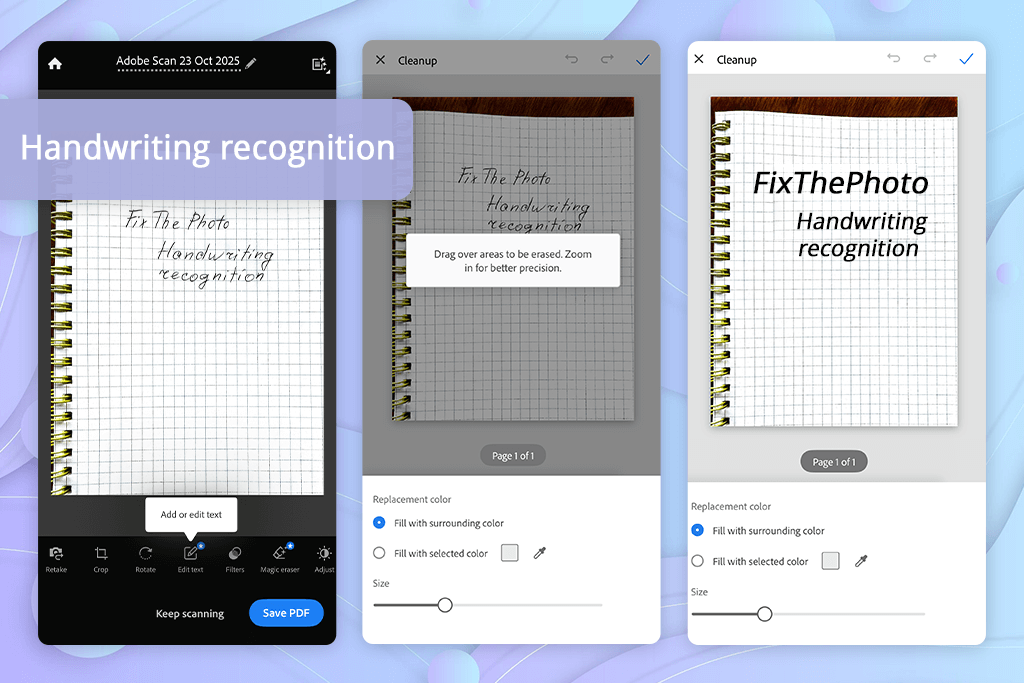
I downloaded Adobe Scan on my Android after I lost a paper invoice while working on a freelance project. My coworker recommended I stop using my phone's regular camera app and use Adobe's scanner instead. I'm glad he did. This app not only takes photos, but also finds the edges of documents, fixes angles that are off, makes the text darker and easier to read, and automatically turns your images into PDFs that you can search through.
I rely on this free Adobe app for storing important papers like contracts, receipts, signed permission forms, and business cards. I also use it to keep notes about photo ideas. The app does a great job reading handwriting. When I'm done, I can send the document straight to Adobe or give people a link to view it, without the need to keep copies on my phone. You can use the free version just fine, but if you want to edit documents with multiple pages later, you'll need to pay.
One tip: glossy paper and shadows can confuse the app's cutting tool, so I always use a dark matte surface and natural or soft indoor light when scanning.
Pricing: Free (basic scans & export); from $9.99/mo (Acrobat Premium) or $119.88/year
Best for: Photographers, archivists, content organizers
Compatibility: Windows, macOS
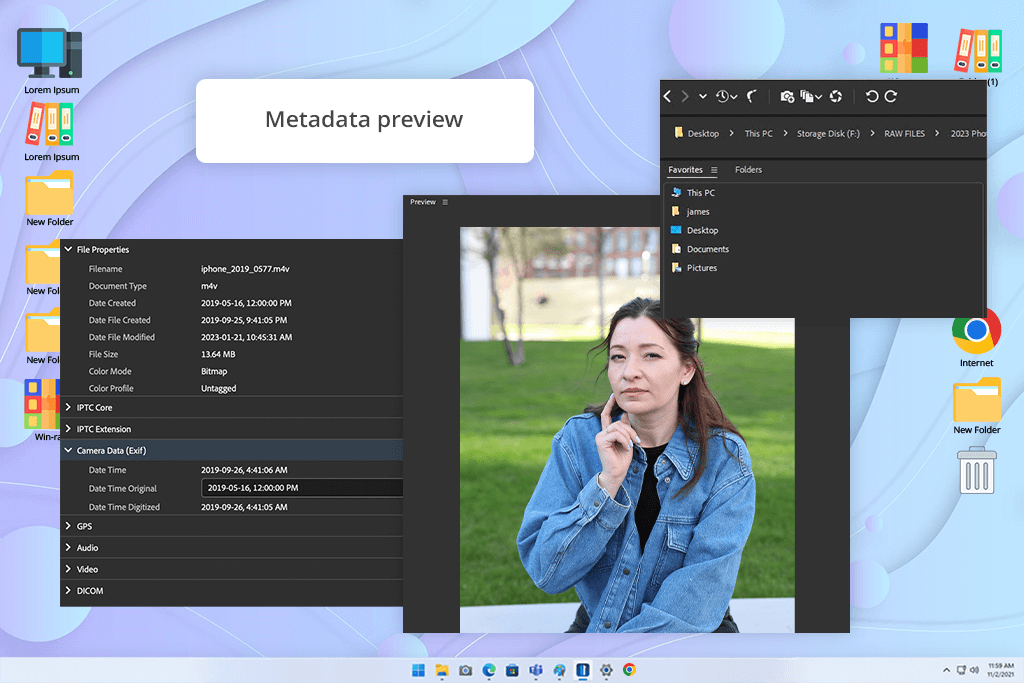
I started using Adobe Bridge for one simple reason. I had way too many RAW photo files, and Lightroom was getting too slow. But, unexpectedly, Bridge became one of my favorite Adobe programs. Now I use it to organize and find photos, PDFs, videos, fonts, and scripts.
“Unlike most Adobe tools, Bridge is completely free. This is a very helpful product.”
With Adobe Bridge, I can rename a bunch of photos at once, rate them with stars, and check all the photo details without any hassle. I can even open photos in Camera Raw straight from Bridge without importing them first. When I'm working with client photos, I sort through them and mark my favorites with different colored labels. Then I use the Output section. It creates contact sheets or web galleries very quickly, so I can send clients a preview in just seconds.
Bridge does have one downside. If you're working with files on a network drive, the preview pictures can take a while to load. To prevent this, I save my files locally first, organize them in Bridge, and then move them back. That's faster. Besides, keep in mind that Bridge isn’t for image editing. The program is aimed at organizing and managing your files. If you want to edit your photos, you need to use Photoshop free or Lightroom.
Pricing: Free
Best for: 3D designers, product mockups, texturing
Compatibility: Windows, macOS
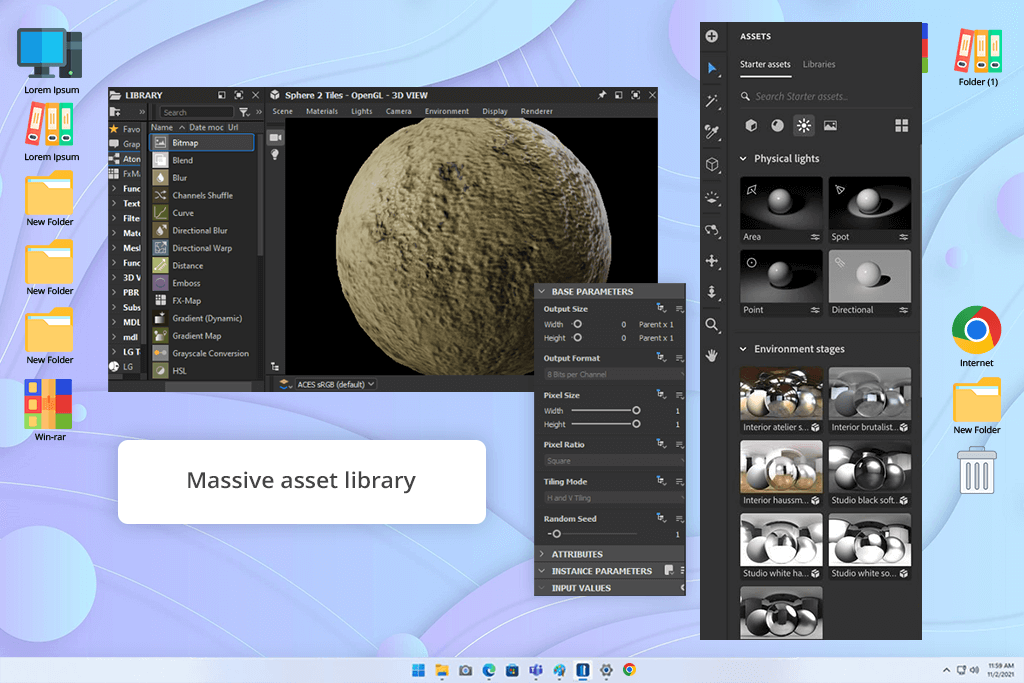
Adobe Substance 3D Painter costs money, but if you're a student or teacher, you can get the whole package completely free. That's an amazing deal when you think about how good this software is. Even if you're not eligible for that, don't worry. You can still grab free materials and special assets. Plus, you can test out the 3D Sampler and Painter using trial credits without paying anything.
“Substance may seem too much, but you should definitely spend some time evaluating its features to the fullest.”
I used Substance Painter to add textures to a cosmetics product design. I was able to give it a shiny metallic look and rough, realistic imperfections without having to paint everything by hand. The best part is watching your work show up instantly on the 3D model in real-time.
It's like using Photoshop, except your artwork wraps all around a 3D object instead of sitting flat. If you're not used to working with 3D art, it may feel overwhelming at first. But the tutorials that come built into Adobe really help you learn it step by step.
Still, if you want to export your finished work in high quality or render it at high resolution, you need to pay for the full version, unless you have a student or educator license. If you're trying to save money, create your textures in Painter, then export them at medium quality. After that, you can take those files into Photoshop and improve them further if you need to.
Pricing: Free for students/teachers; from $49.99/mo or $549.99/year
Want to get more out of free Adobe software? You can download free add-ons, like brushes for Photoshop or filters for Lightroom. We've collected them all in one place to help you work faster.
I didn’t want to recommend “free” Adobe programs that turn out to lock all the useful features. That’s why our FixThePhoto team checked everything ourselves. We tested each tool in real creative situations, just like we do with other gear and software.
I coordinated the process, but everyone on the team tested the apps from their own field.
The plan was to find out which Adobe apps work well for free and which ones pretend to be free but don’t hold up in real projects. Here’s what we tested:
Testing took nearly two months. We compared files in spreadsheets and folders, and even showed clients work without saying which came from premium or free versions. They didn't always guess correctly. This proves that free Adobe apps work great for creative projects if you choose wisely.