While working as a video editor and production coordinator at FixThePhoto, I often need to focus on other tasks besides producing a video. Even a simple project may require me to collaborate with another editor, writer, producer, designer, and a client who is supposed to approve the final version. This is why I decided to find the best video collaboration software to simplify my workflow.
While working on one of my projects, I had to deal with a reviewer who asked me to move a graphic a little closer to the middle. The reviewer used a messenger. Next, I received another comment by email. Besides, I was working with a file stored on a cloud platform. The file name included the word “final,” which made the situation even more confusing.
Even though it took me a few minutes to perform the edit, it took me a while to understand what exactly the reviewers wanted to change. This is why, together with my colleagues from the FixThePhoto team, I decided to test 50+ video collaboration tools to see whether they could help us streamline our editing workflow.
I wanted to find solutions that would allow me to share media files, receive frame-specific comments, work with multiple versions, get feedback from clients who do not have any technical background, and get my files approved quickly.
I decided to include only the practical solutions that could help me simplify the remote video production process. Some of the services listed below prioritize video collaboration. Others are more suitable for proofing, approvals, shared storage, or client reviews.
| Tool | Best for | Free trial | Price |
|---|---|---|---|

|
Best overall workflow
|
✔️
|
Premiere from $22.99/mo; |

|
Video reviews with unlimited reviewers
|
✔️
|
Free plan; paid plans available
|

|
Multiuser post-production
|
✔️
|
Free; Studio $295
|

|
Remote access to huge media
|
✔️
|
From $7/member/mo
|

|
Complex approval workflows
|
✔️
|
Free; from $199/mo
|

|
Client reviews and sign-off
|
✔️
|
Free; from $199/mo
|

|
Hosting + video review
|
✔️
|
From $12/seat/mo
|

|
Mixed-media review
|
✔️
|
From $99/mo
|
I often need to work on video production projects and face situations when clients ask me to make minor edits. Such tasks might significantly increase project costs.
While looking for video collaboration software, I realized that the subscription prices do not allow me to understand how much I will actually spend on such programs. This is why I typically calculate the cost for one revision cycle: Revision cost = editor time + producer time + reviewer time + re-export time + publication delay.
I decided to test a short approval workflow with a 90-second promotional video. I wanted to review my file together with five other people. My main goal was to check how online collaboration tools can lead to productive teamwork and allow me to save money. During the first stage of our testing, we stored the video in cloud storage. We used email and team chat to leave feedback.
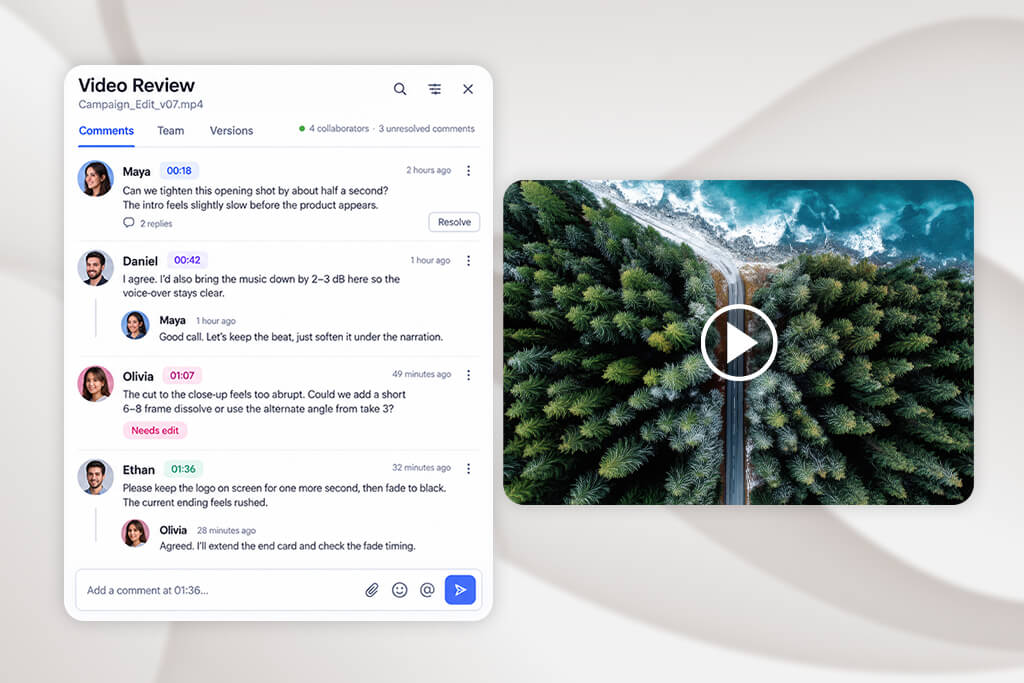
One reviewer told me that a graphic should be moved a bit higher somewhere in the middle. Another left a reply under an older message. Some people downloaded the previous version. As a result, I have to deal with multiple variations of the supposedly final version.
This is why I decided to optimize a workflow that required sending 14 messages, downloading videos four times, creating three duplicates of local files, and spending several minutes to find a frame one comment referred to.
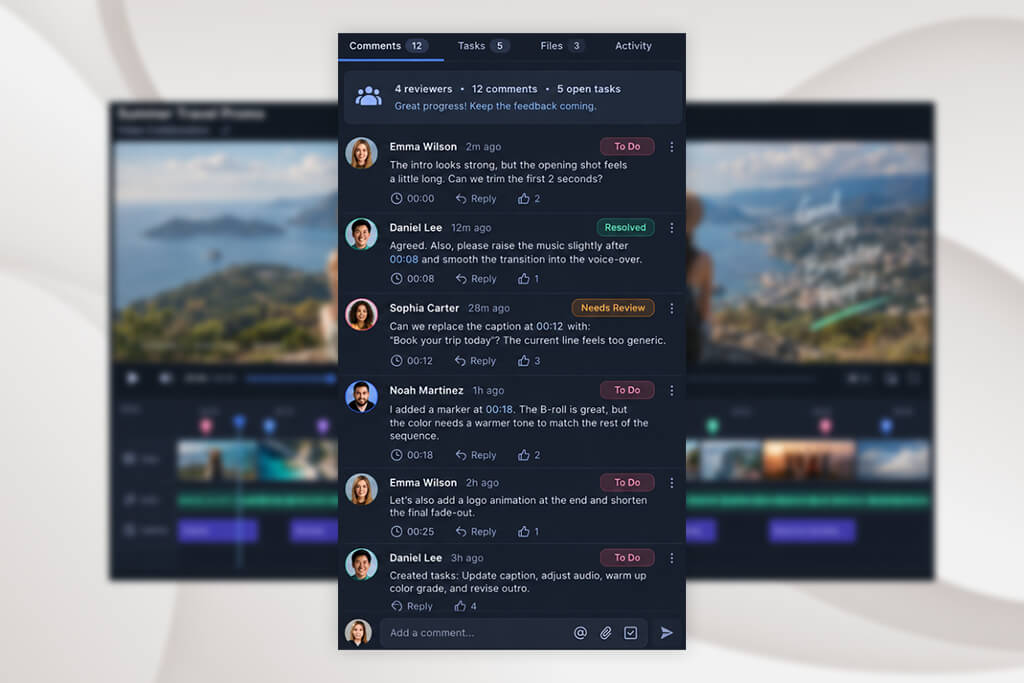
Next, I simplified the approval process by using a solution like Frame IO, Filestage, or Ziflow. Such tools allow me to attach my comments to specific frames, making it easier for reviewers to reply. For instance, I replaced the graphic and uploaded a new version into the currently reviewed project.
The best thing was that it became much easier to make the right decision faster.
Workflow speed becomes crucial when teams need to produce more content. According to Adobe's 2026 research, 84% of businesses had failed to use at least one marketing opportunity in the past quarter because their workflows were not efficient enough.
While assessing video collaboration software, I use six questions:
A $15 subscription price may look affordable until I need to involve an editor, producer, and client to meet a publication deadline. It’s important to understand what specific parts of the project require revision to avoid unnecessary expenses.
Price: Free plan; Premiere Pro 7-day free trial; Premiere from $22.99/month; Frame IO Pro from $15/member/month
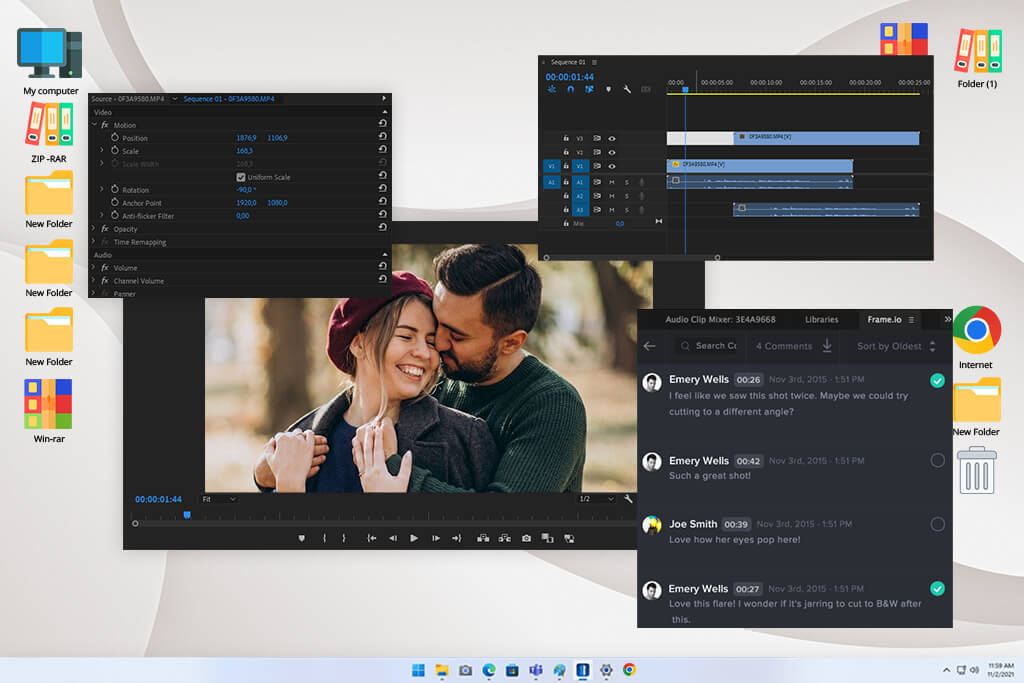
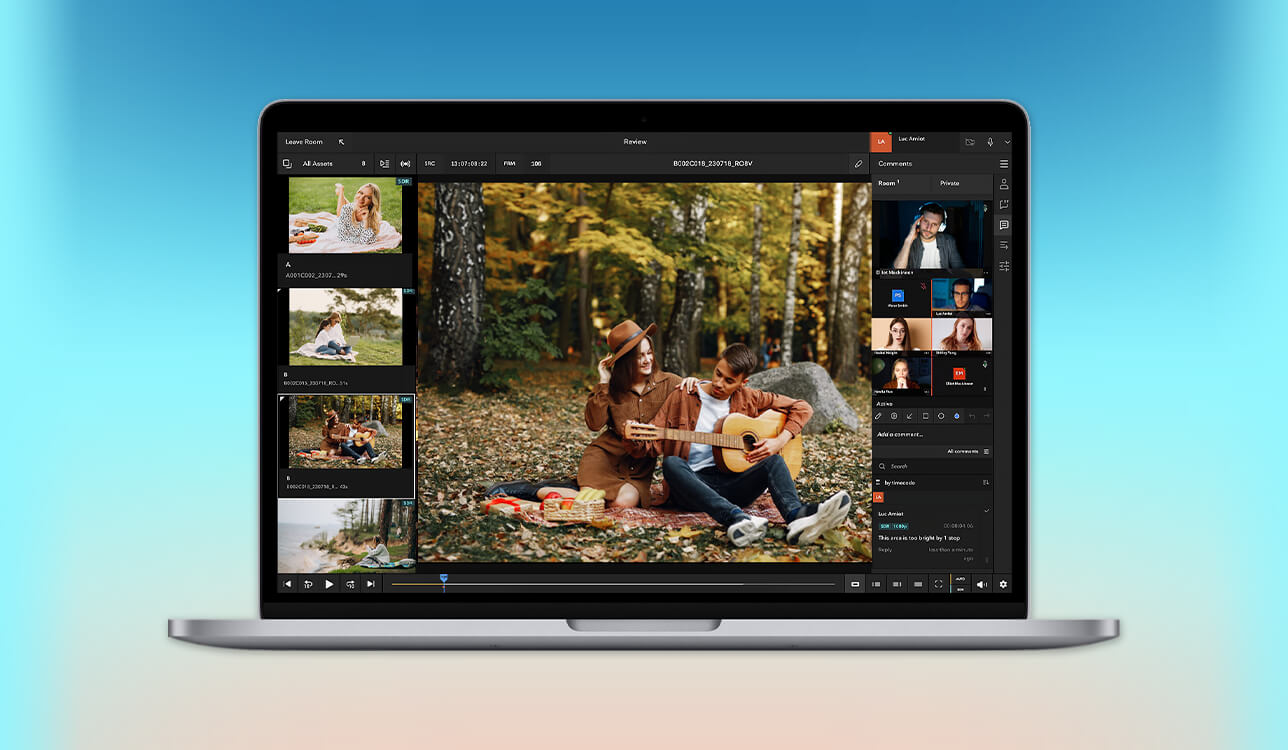
Frame IO for Premiere Pro was the best solution I tested because it streamlines video collaboration and makes it easy for teams to use feedback more efficiently.
While testing this collaborative video editing software, I uploaded several cuts, asked my colleagues to review them, produced multiple versions, and asked collaborators to add notes. I did not send detailed instructions to the people involved in testing, as I wanted to check whether it would be easy for them to understand how to use it.
Frame IO allows users to add centralized comments, streamline review and approval, create versions, use sharing controls, simplify project management, and leave frame-accurate feedback while staying within the Premiere workflow. Premiere subscriptions also allow users to access Frame IO for Creative Cloud.
This service is perfect for teams that use Premiere and need to send their files to people who do not know how to use this Adobe video editor.
A reviewer can indicate whether there are problems with titles or unnecessary objects. There is no need to use Slack or look for specific timestamps. It makes it easy for reviewers to attach contextual feedback.
I was pleased with this solution when working on projects that involved multiple rounds of revisions. Besides, it supports version stacking, which helps me to expedite delivery.
If your colleagues do not use Adobe software, Frame IO might be less suitable for your needs. You may still use it as standalone online video collaboration software, but I recommend taking a closer look at Filestage, Ziflow, Vimeo, or Wipster before paying for it.
Frame IO was not built as a full alternative to Premiere. This is why it makes sense to use them together. Premiere is more suitable for editing tasks. Frame IO is suitable for collaboration. It allows a team to discuss files, get feedback, compare versions, get approvals, and streamline delivery.
Premiere also supports multi-user editing, shared timelines, and sequence locking, making it easier for several editors to work on the same project.
If you have a large team, seat costs can increase sharply. Besides, teams that do not use the Adobe ecosystem may not find it useful. I do not consider Frame IO an alternative to a full project-management platform. However, it’s suitable for projects that involve working with creative assets.
Price: Free plan available; paid plans and a free trial offered
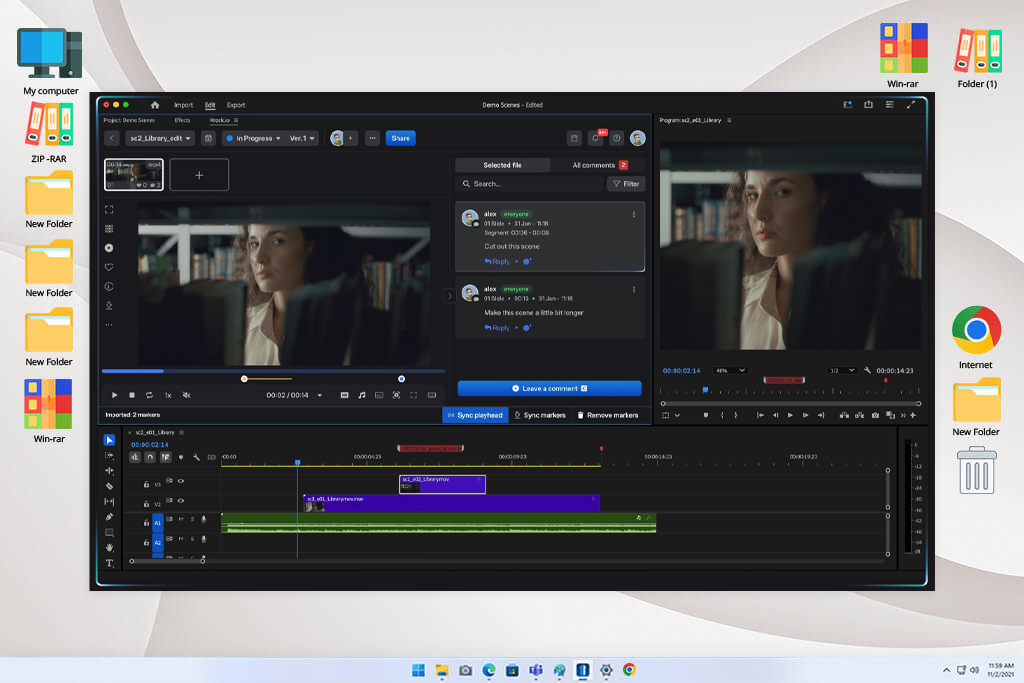
When it becomes challenging to follow video feedback across emails, chats, and other papers, Krock would be my first pick. I think it's important to have the video, comments, and approval procedure all together for a creative team working on multiple iterations. It provides a distinct position in the project for any modification that is requested.
Unlimited reviewers for no additional expense is what most appeals to me. A creative director, an editor, and other client stakeholders may be involved in a production. Instead of treating each new reviewer as a paid seat, I would prefer to get their input.
Time-coded files can be written, drawn, and attached by reviewers. To make modifications to transitions, title timing, or specific graphic components more understandable, I would use these tools.
Differences between versions can also be found using overlay and automatic comparison modes. I would utilize them to see if the desired adjustments are addressed in an updated cut.
For agencies, animation studios, and video teams managing recurring client reviews, I would recommend Krock. Role-based access and dedicated workspaces aid in project organization and access management.
In addition to AI-powered storyboarding, the interactive Board facilitates the preparation of storyboards, animatics, and screenplays. The ability to link early planning with subsequent input appeals to me.
Additionally, playhead synchronization and the import of comments as timeline markers are supported by editing software plugins. First, I would make sure it was compatible with my editor.
While Krock manages creative work, other software is still needed for color correction, animation, and footage cutting. I would weigh the bundled features and storage allotment against the volume of projects my team was working on before selecting a package.
Price: Free; Resolve Studio $295
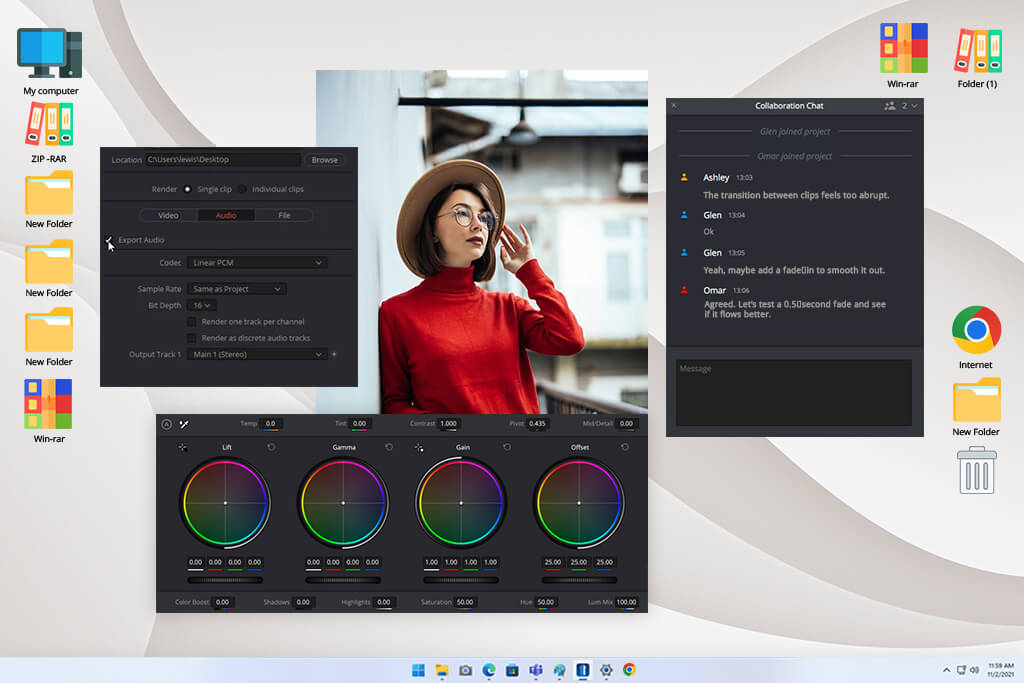
I prefer to use DaVinci Resolve whenever I need to focus on video collaboration and ensure that several team members would be able to work together on one project. When I started testing it, I realized that it’s less suitable for situations when several clients need to add comments to exported files in MP4 format.
Many services require editors to export files before using collaboration tools. However, this video editing software for Windows and Mac allows editors, colorists, VFX artists, animators, and audio professionals to work on a specific task simultaneously.
Blackmagic Cloud enables collaborators to work on the same project and use the same timeline. This service supports timeline comparison, allowing users to make precise edits without overwriting each other’s changes.
This software is perfect for professional post-production. I consider it the best video editing collaboration software on my list. It allows one editor to work on the cut while their colleague works on another timeline. Besides, other team members can perform color grading and improve audio simultaneously.
Bin and timeline locking streamline live editing. The integrated chat makes it easier to discuss production without switching to other apps.
A marketing manager who needs to approve social media clips quickly may not need to use advanced collaboration tools available in Resolve.
It’s more focused on production than Vimeo or Filestage. However, beginners will find it much more difficult to master.
I was also pleased with Blackmagic Cloud Presentations. Teams can upload a timeline or video for review, then link markers and comments to Resolve. It makes Resolve more convenient to use than many other editors. Besides editing, it supports collaborative production and frame-accurate review.
Users need to consider the location of media files, proxies, synchronization, project libraries, permissions, and storage. Even though Resolve streamlines collaboration, it still requires remote editors to download terabytes of source files to their drives.
Price: Free 30-day trial; From $7/member/month
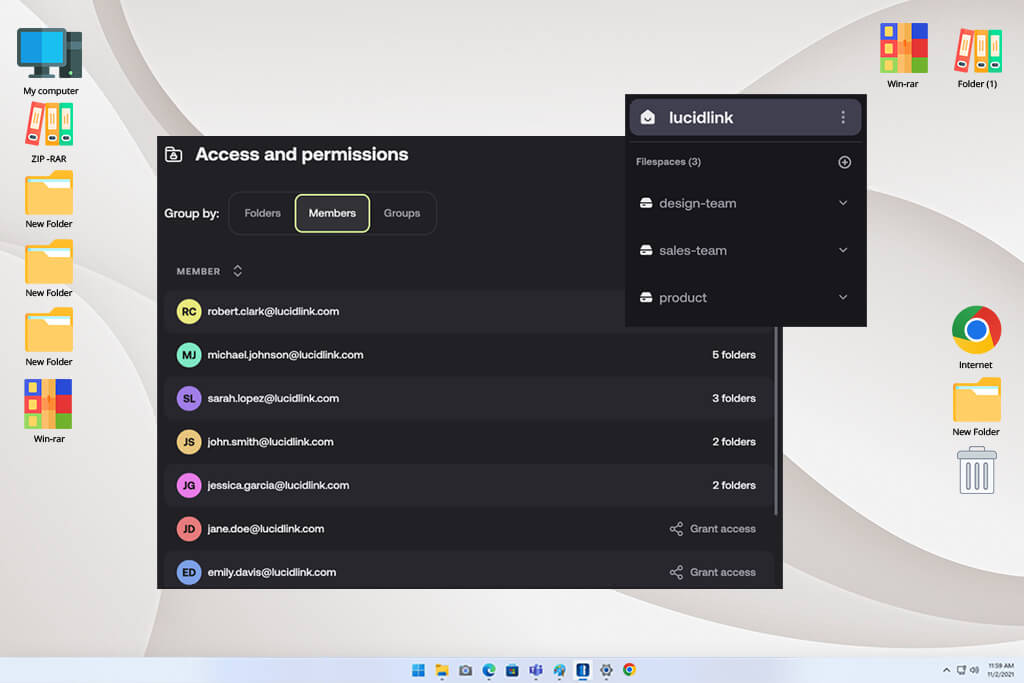
Initially, I had doubts about adding LucidLink to my shortlist because it cannot be considered as an alternative to Frame IO or Filestage. However, when I started to test this online collaboration software to see whether it could optimize an editor’s workflow, I realized that it could be quite useful for production teams.
LucidLink simplifies remote editing processes and makes it easy for every member of the team to access the media files. This collaborative video editor streams parts of files so that editors do not need to save entire RAW, proxy, 4K, or other large media folders to their devices.
This service allows remote editors to access shared projects quickly without waiting for hundreds of gigabytes to synchronize.
LucidLink enables users to access a shared filespace that can be used like a regular drive. It integrates with Premiere Pro, DaVinci Resolve, Media Composer, Final Cut Pro, After Effects, and other similar solutions.
While testing this service, I discovered that it could be especially useful when several people from my team needed to access the same source files. Regular cloud platforms often create local copies, which causes sync delays and may result in duplicates.
If you only need to export a few short videos and send them to clients to get their feedback, you will hardly need to use LucidLink, as it’s too complex. In such cases, it’s better to use dedicated review software, as it will be more affordable and easier to use.
Many reputable video collaboration tools prioritize commenting features. However, experienced editors understand that ensuring access to files could be more challenging for distributed teams. LucidLink allows teams to store their assets in a shared filespace and stream media on demand.
The Business plan was created for remote teams. It includes 400GB per member and allows users to access extra storage if necessary. It makes it one of my favorite solutions for geographically distributed production workflows.
LucidLink could be especially valuable if you consider it in terms of infrastructure. However, it won’t replace a dedicated client approval portal. I would use it together with Frame IO, Ziflow, Filestage, or another review system if I need to get format approvals.

Price: Free; Standard from $199/month
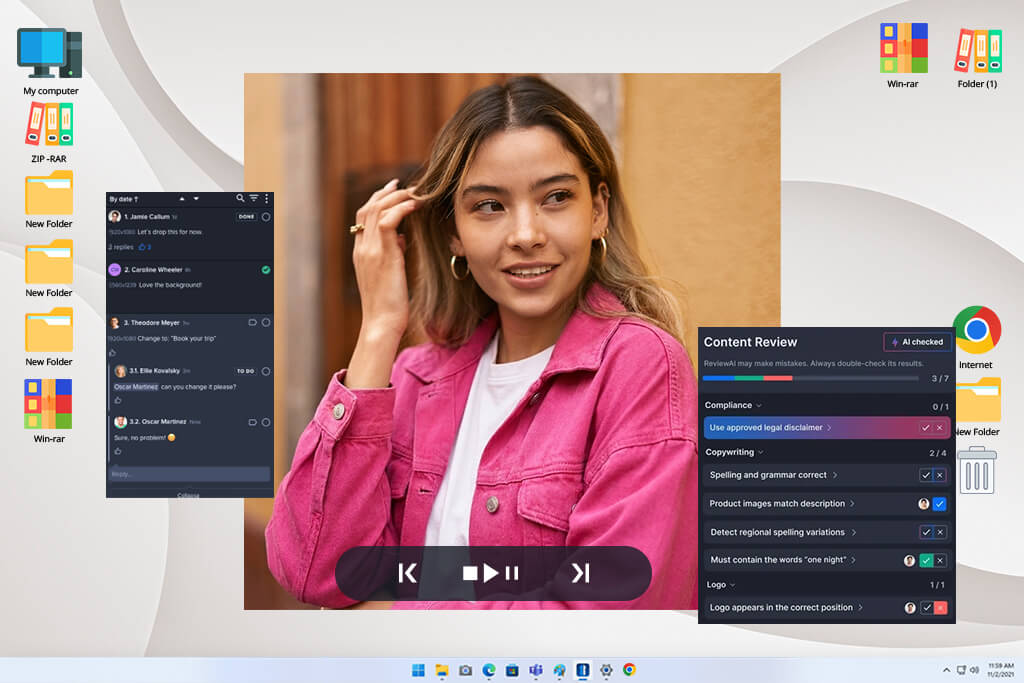
Ziflow is best suited for situations when I need to streamline the approval process and improve the coordination between different team members. It’s more focused on workflow optimization than Frame IO, making it perfect for complex projects.
While testing this service, I wanted to see whether it would allow me to collect feedback quickly and allow a producer to understand what version they need to review, what changes have to be done, and which versions have been approved.
Reviewers can add comments to specific frames, add checklists, and compare versions side by side. Ziflow also comes with the automatic comparison feature that supports pixel-level precision and allows users to use video safe-zone previews for different formats.
I was pleased with the checklist feature, as it’s perfect for branded videos. With it, a person can check a CTA, disclaimers, subtitles, logo position, or required shot. There is no need for reviewers to remember every moment.
Freelance professionals who produce a couple of YouTube videos weekly are unlikely to pay $199/month to streamline their approval workflows. However, this solution may be suitable for large organizations that need to streamline approval stages and improve cooperation between producers, clients, legal teams, and marketing managers.
Ziflow also comes with the ReviewAI feature, which allows users to automate the review process and detect missing elements or problems with timing swiftly.
I was especially pleased by the fact that it integrates with Premiere Pro, After Effects, Final Cut Pro, and DaVinci Resolve, making it easier for me to work with video feedback. I can link a comment to a specific timecode to make it easier to find an issue quickly.
Ziflow has an excellent free version, but its premium subscription is too expensive. The Standard plan starts at $199/month when billed annually. The Pro plan starts at $329/month. Such pricing makes this solution suitable mostly for agencies that want to simplify coordination.
Price: Free; Free 14-day trial on paid plans; Starter from $199/month
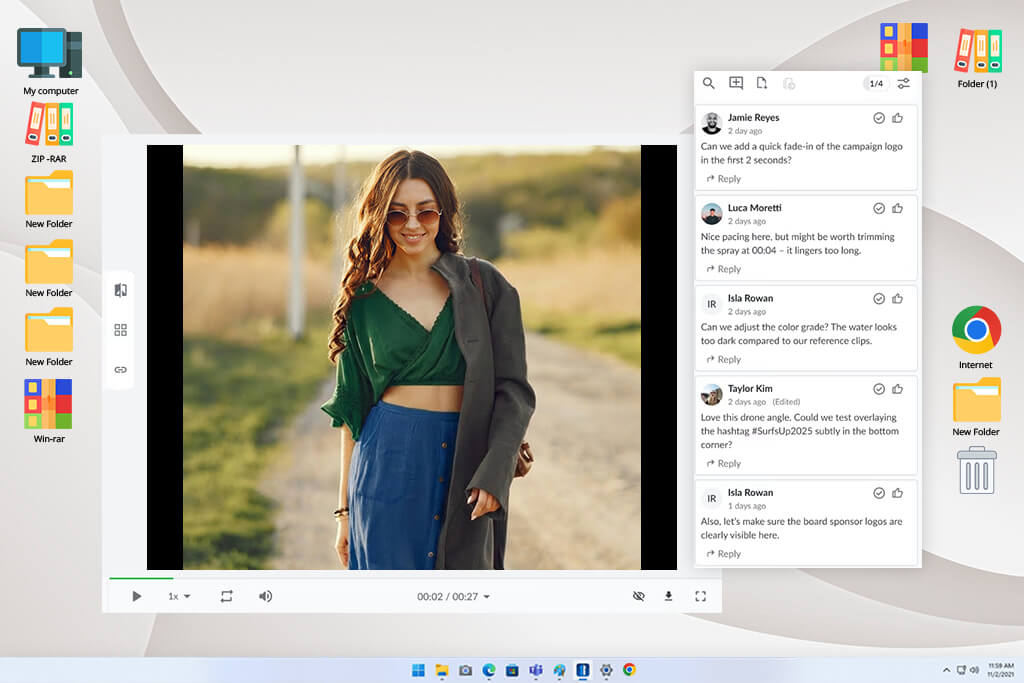
Filestage has quickly become one of my top choices for workflows that require me to work with many other people besides editors.
Even though some may hardly recognize the benefits of this service at first glance, they become more noticeable when one needs to ensure that a client will be able to sign up quickly, find the file, navigate a project dashboard, and provide feedback without using third-party tools like WhatsApp.
Being primarily known as software for video management, Filestage is suitable for simplifying the review process as well. It allows external reviewers to open a shared link, view a file, comment on the moments that require improvement, and approve the final version without installing any programs on their devices.
I was especially impressed with reviewer groups. Using them, I could set up a complex workflow that required my colleagues to review a file first. Next, the improved version of the file was sent to clients, after which it was sent to legal or other final stakeholders. This process helped us avoid the situation where a client starts commenting on a file that hasn’t been reviewed by all the members of my team first.
A solo creator who works on a project for one client will hardly need to use Filestage, as their workflow is not complex enough to require advanced organization. The free version may still come in handy for some situations, but the premium version is necessary only for those who spend too much time on a complex approval process.
Filestage allows users to benefit from automated timestamps, annotations, versions, approvals, and live status tracking tools. Thanks to its seamless integration with Premiere Pro and After Effects, creators can send files and receive feedback without relying on regular cross-referencing.
I discovered that this service may be especially useful when one works on campaigns that require the team to separate approval processes and avoid confusing versions approved by marketing teams and approved for publishing.
The free version is perfectly suitable for small testing projects. It supports unlimited reviewers and allows one to work with different file types. However, when you need to manage many tasks, you will have to pay $199/month for the Starter package that supports unlimited active projects. The package includes ten seats. Besides, users can use a 14-day unrestricted trial.
Price: Free; 7-day free trial on paid plans; From about $12/seat/month
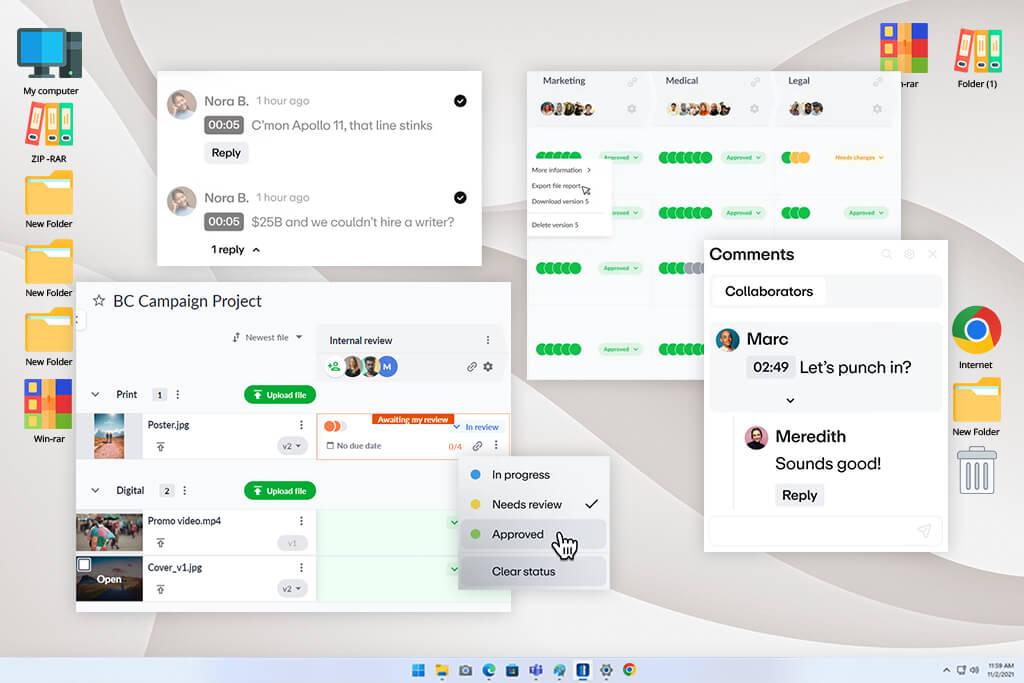
Vimeo exceeded my expectations because I mostly considered it a video delivery platform. However, I was pleased to discover that it also supports a streamlined review workflow. Teams do not need to upload a draft to a third-party platform and then add their video to Vimeo later, as the platform supports review and hosting tools within the same environment.
This service has significantly streamlined the client-facing workflow. It allows users to add review links and time-stamped comments. Teams can sort, filter, and resolve comments with ease. Besides, one can consider status labels and version history to find the most recent cut. Links may be protected with passwords, have expiration dates, and permissions. This service is especially convenient to use in situations when a reviewer does not need to explore the whole production stack.
I believe that Vimeo is hardly suitable for situations when several editors need to make many edits while working on the same project. DaVinci Resolve would be a more solid choice in this situation. Similarly, organizations that need to set up complex approval workflows will benefit more from using Ziflow or Filestage.
The key benefit of using this video collaboration software is that it allows users to access many services from a single dashboard. If a team uses Vimeo to organize its video library, it makes it an excellent choice for adding reviews, as the team does not need to upload assets to other platforms and create new accounts for stakeholders. Vimeo also supports review comment synchronization with Premiere Pro, allowing editors to export new versions of their videos from the timeline.
Vimeo comes with a set of useful video production tools, but I do not think that it would be my first choice in case I were looking for the best collaborative video editor. However, I would use it if my workflow required me to store the finished assets on Vimeo and I wanted to set up the approval process using the same platform.
Price: Free trial; From $99/month
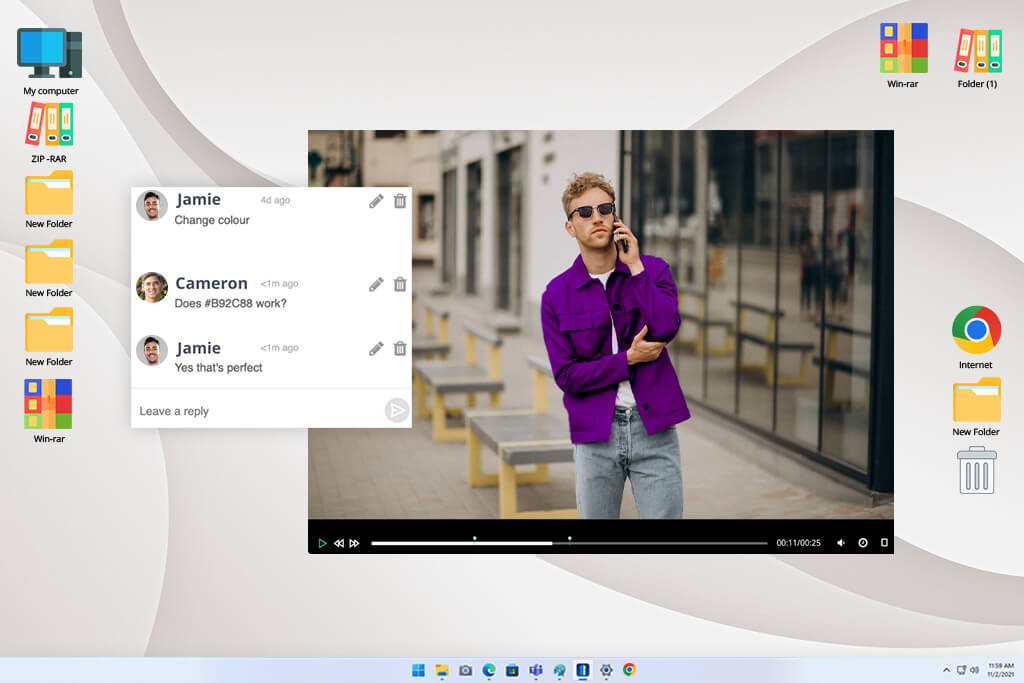
I decided to include zipBoard because many video projects require us to work with other types of files as well. Occasionally, my colleagues and I need to work on a video cut, open a PDF, add a graphic, access a webpage, prepare training materials, or read supporting documentation.
zipBoard was built specifically for those who want to perform visual review and issue tracking tasks while working with different media types. It’s suitable for projects that require one to work with many types of files instead of focusing only on videos.
While working on videos, reviewers can add annotations with timestamps to a specific frame or segment. It makes it perfect for situations when I do not need to guess which section I need to make shorter. Timestamped visual feedback streamlines cooperation and expedites task completion.
Editors who mostly use Premiere or Resolve may benefit from using a solution that supports deeper NLE integration. I believe that zipBoard is better suited for those who are interested in production and project reviewing, as it’s less focused on editing.
Besides videos, zipBoard allows users to work with PDFs, web files, pictures, SCORM files, and other digital assets. It makes it easier for teams to focus on review and approval phases separately and facilitates working with multiple stakeholders. The Team plan allows users to work together with an unlimited number of collaborators and reviewers, which is especially useful in situations where the number of external reviewers is higher than the number of managers in the team.
This video collaboration software is mostly suitable for handling generic online proofing tasks and collaborating with others, as it wasn’t built specifically for non-linear video editing. The Team plan starts at $99/month, making this solution too expensive for small teams that can benefit from more budget-friendly programs.
Even though I decided against including these programs in the final version of my list, they may still be suitable for specific workflows.
Evercast – Best for live remote sessions. I believe that it might be better to use Evercast for live creative sessions when one does not need to focus on asynchronous approval. It facilitates streaming creative applications in up to 4K/60fps and allows users to video chat, draw, and add notes.
The main shortcoming of this service is that it’s too expensive: at the moment, studio rooms start at $599/month with a commitment, making this platform mostly suitable for professional productions.
Avid Media Composer – Best for broadcast workflows. Media Composer might be a smart option to consider for those who work in well-established film, television, and broadcast environments. It’s perfect for the teams that rely on Avid infrastructure.
The main benefits of using this service are its Shared Projects and pro-grade editorial controls. However, it’s more difficult to set up and use than modern browser-based solutions. The Standard plan costs $259.99/year. Occasionally, Avid launches promotional campaigns, which allow users to buy this program at a discounted price.
WeVideo – Best for intuitive browser editing. WeVideo is an AI video editor that has more intuitive functionality than professional post-production software. The Teams plan supports real-time collaboration and project sharing. It allows users to access templates and configure permissions without using local editing software.
I believe that it could be perfect for small marketing or education teams. However, it’s not the best solution for complex post-production tasks. At the moment, it costs $624/year for three seats.
Wipster – Best budget-friendly review solution. Wipster makes it easier to streamline a video review workflow. It facilitates working with projects and reviewers. Besides, it streamlines version management and supports Premiere/After Effects integration. I was pleased to discover that its entry-level Light plan does not require users to pay for a large agency subscription right from the start.
It starts at $9.95/month when billed annually, while the Team plan starts at $19.95/user/month annually.
ReviewStudio – Best flexible proofing solution. ReviewStudio allows users to edit videos, pictures, PDFs, HTML, and audio. It facilitates getting approvals, working on tasks, switching between versions, and using comparison tools.
The free Starter plan allows users to get three active reviews. The Pro plan is $15/user/month or $12/user/month when billed annually. I believe that it’s the perfect choice for agencies interested in broad proofing solutions. Besides, its entry-level plan is quite affordable, unlike Filestage's plan.
Dropbox Replay – Best for Dropbox teams. Dropbox Replay will be perfect for your needs if you already use Dropbox to store your media files. It supports frame-accurate review and streamlines approvals. Even though it does not have editing tools, it integrates with Premiere Pro, After Effects, Final Cut Pro, DaVinci Resolve, and Pro Tools. The full Replay add-on costs $10/user/month when billed annually. You can buy it after paying for an eligible Dropbox plan.
When I started testing remote video collaboration software, I realized that it might take me longer than I expected to test the available solutions. I invited my colleagues from the FixThePhoto team to help me test them while working on our typical editing and production tasks.
We followed a simple approach, as we wanted to see whether these solutions would be suitable for our practical workflows. Instead of blindly trusting marketing claims, we checked whether these programs had intuitive functionality, were suitable for creative tasks, delivered flawless performance, and had great value for money.
I tested over 50 services with video collaboration tools that also supported proofing, cloud editing, media sharing, remote post-production, and creative approvals. Next, I excluded the solutions that looked like generic project management software, meeting apps, or cloud platforms and did not focus on video processing specifically.
Then, I examined the remaining 27 programs. During the hands-on testing stage, I wanted to check whether these solutions could help me handle at least some practical production tasks. I tested them to see whether they were suitable for collaborative editing, supported shared media access, had frame-specific review tools, supported version management, and streamlined formal approval.
I excluded some of the services from this review because I wanted to include only the solutions suitable for specific workflows:
While testing these services, I did not rely on a single 20-second demo clip. Together with my team, I tried implementing several production scenarios. We used them to produce a short social media clip that required multiple text revisions, create a longer project with B-roll and audio edits, produce a client-facing promotional video, and test them while working on a project that involved collaboration and required multiple team members to be able to access media files.
This strategy enabled us to see the shortcomings of each service. We realized that some solutions could be perfectly suitable for collecting comments, but were hardly suitable for tasks that involved using editing source footage. Others were perfect for video editors but made it more challenging to finalize the approval process.
Here are the main things I focused on: