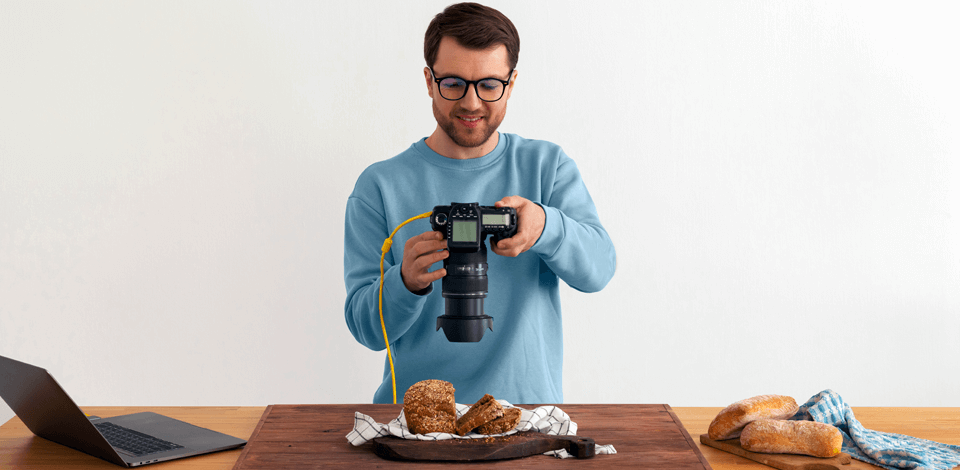
As someone who does photography for FixThePhoto when it comes to commercial purposes, I’m constantly juggling a wide variety of projects, many of which require being an expert in top-down photography – a technique that seems basic but demands diligent planning and well-developed composition skills.
Whether you’re working with food, fashion, or various accessories, you need to keep an eye on the tiniest details: the angle, lights, and composition to ensure everything looks right.
When preparing for a top-down photoshoot, you need to figure out how you’re going to deal with rough shadows, poor light distribution, or unbalanced visual elements.
With practice, I learned how to place the light sources to receive a soft glow, which lenses to pick, and how to transform a regular flat surface into a captivating scene.

Before you learn how to do top-down photography, you first need to learn what it is. It’s a common technique that involves taking photos while having the camera angled at 90 degrees above the subject to ensure you capture its top surface.
Such photos are especially widely taken for social media platforms, be it Instagram, Facebook, or Pinterest since they provide a unique perspective and are very pleasing to the eye.
| Type | Angle of view | Use cases |
|---|---|---|
|
Top-down
|
Taken at a 90-degree angle from above; focuses on symmetry and a balanced composition
|
Commercial, like presenting eCommerce products, food produce, and other situations that benefit from a top view
|
|
Flat-lay
|
Taken from above, but you can pick other angles to achieve more creative results
|
Presenting artistic arrangements and creative compositions, often with a narrative purpose
|
|
Overhead
|
Taken from a bird’s-eye view with a wider perspective, can also be an angled picture instead of adhering to a strict top-down view
|
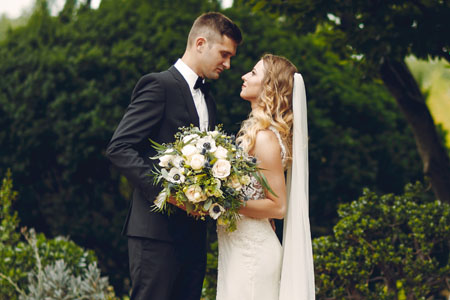
Provides additional context to the subject, helpful for large-scale storytelling (often used at weddings or outdoor events)
|
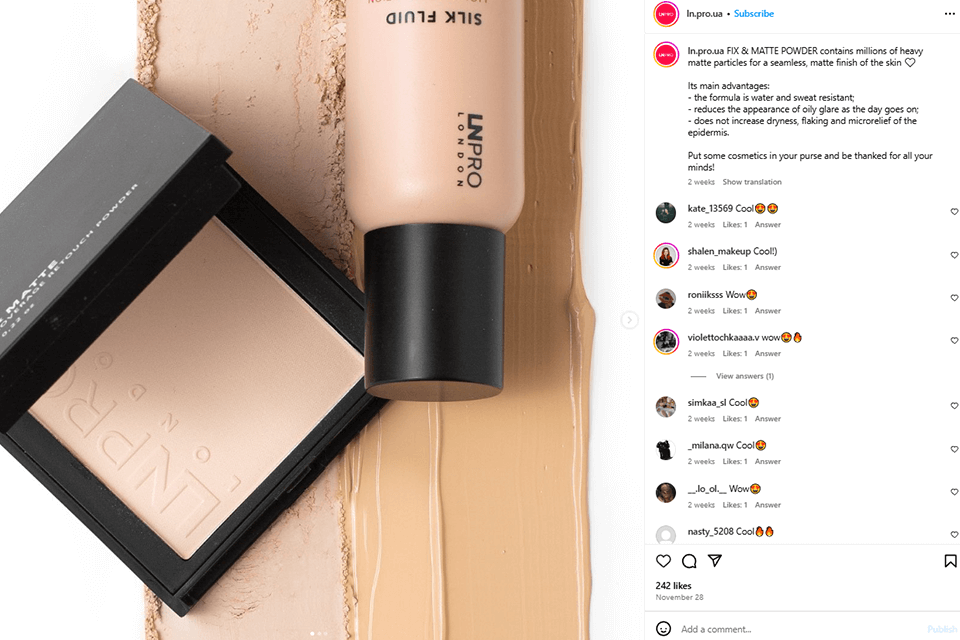
Top-down photography is extremely popular right now across all social networks. The distinct view provided by this technique allows you to look at various subjects from the most flattering angle.
I’ve been asked to organize such photoshoots by all kinds of makeup brands, tech companies, and food businesses who wanted to use top-down images for their marketing campaigns, all because:

That said, top-down photographs aren’t just involved with products, as this technique has a variety of other applications as well.

Top-down food photography is a classic at this point and there are multiple reasons why that is the case.
Other than the rare exceptions where the food is “closed” when viewed from above (like a sandwich, or a hamburger with the bun on) the top surface of dishes like pizza, soup, pasta, cakes, ice-cream, cupcakes, cookies, and many others look the most mouth-watering and aesthetically pleasing to the viewer.

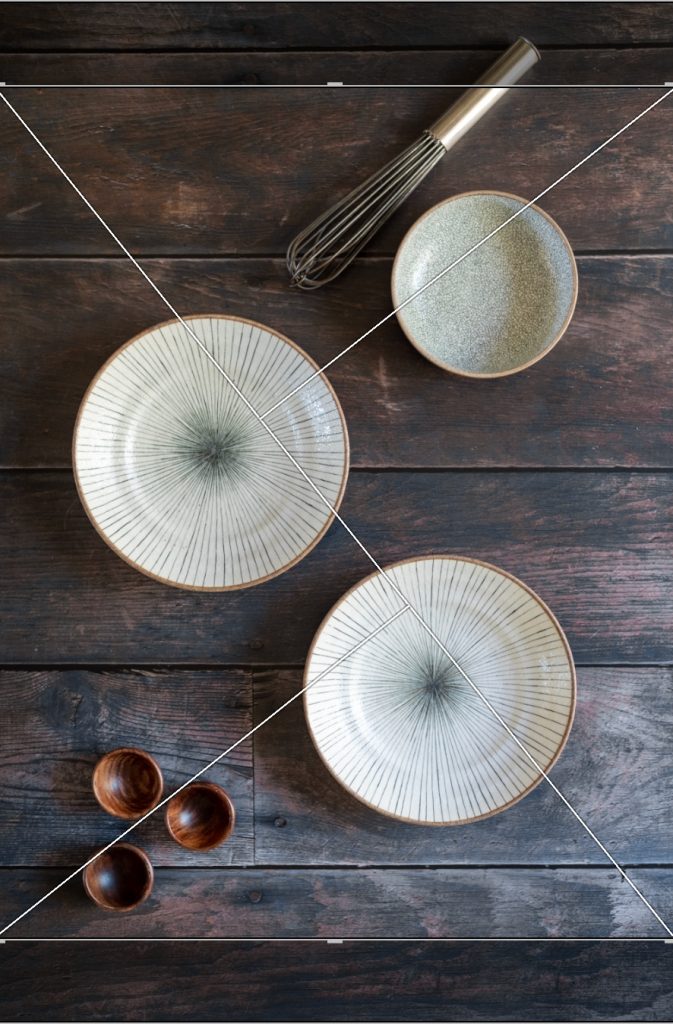
Food photography includes top-down dishware pictures that feature beautiful arrangements of food, drinks, and tableware on large tables. Such compositions can be great for telling a story.
That’s why food vloggers, restaurants, and home cooks use this angle to showcase the beauty of a dish or tableware while highlighting their designs, colors, and textures.

I also recommend sticking to basic backgrounds for top-down photography to ensure the viewer’s attention is centered on the subject. I usually pick light product photography backdrops as they help emphasize the subjects and brighten the overall scene:

I suggest giving a lot of thought to what props you’re going to use since they can allow you to add color, depth, texture, and a more balanced composition. Properly chosen food photography props allow me to tell the story I need while catching the viewer’s eye and focusing their attention on the subject.

Beautiful product photography with top-down shots is one of the cornerstones of most eCommerce and retail businesses who want to entice customers with their products in the digital space.
Jewelry, makeup, skincare products, clothing, accessories, all kinds of other items can look extremely appealing in a top-down photo.
You can present the product in a clean, nicely-organized manner to present it in the best possible light on Instagram, Pinterest, Facebook, or your website.


Top-down clothing photography is all the rage in the eCommerce sphere. If you’re still in the process of getting your fashion brand off the ground, this type of clothing photography can do wonders for attracting more attention to your products without breaking the bank. It doesn’t require professional photography skills, a spacy studio, premium-grade gear, or hiring a model, which makes top-down photos extremely budget-friendly.

You can try out various props, backgrounds, and arrangements to take aesthetically pleasing photos. In contrast to other techniques, top-down pictures don’t demand a lot of setup or preparation. It’s very time-efficient and allows you to receive a lot of high-quality photos quickly.
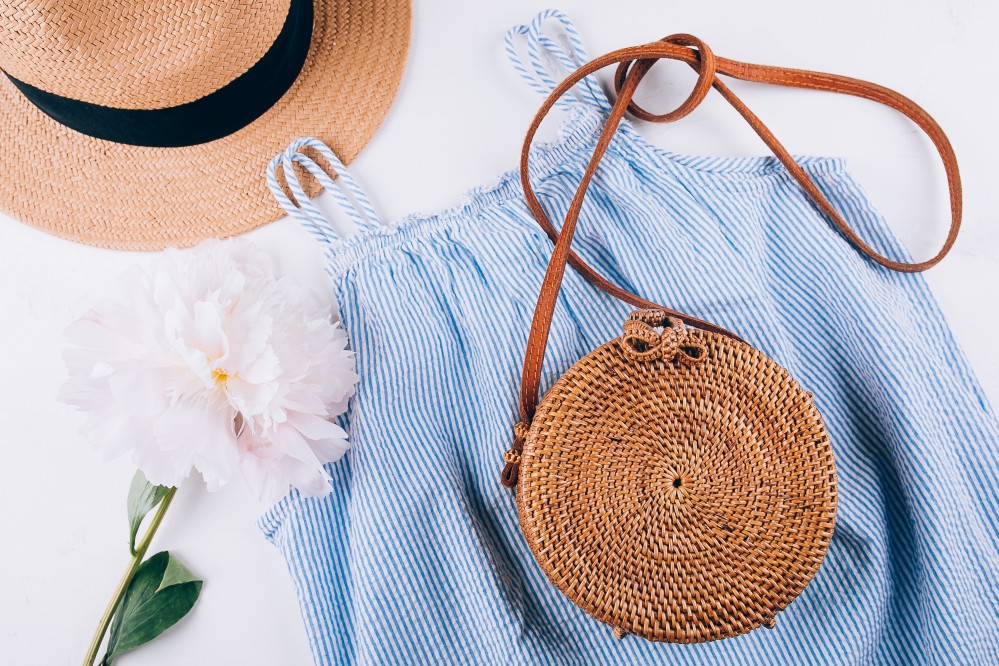
To receive the best results when taking top-down clothing photos, I suggest using these camera parameters:

Top-down portrait photography is a distinct technique that provides a unique view of the model, allowing you to receive interesting, unconventional results.
Top-down camera photography for portraits is widely popular among clothing, lifestyle, and editorial photographers who are interested in finding new compositions and presenting their subjects in a new way.

As for compositional advice, I sometimes use negative space for top-down portraits, even though it’s mostly reserved for product and food photography. You might be inclined to fill the space with accessories or by placing subjects closer to each other, but that can make the overall photo feel cluttered and unprofessional.
Meanwhile, negative space offers a wide range of benefits, including:


If you do street photography in a top-down style, you’ll allow viewers to see the city from a new perspective, examining familiar urban spaces in an original manner.
Whether you’re taking photos from a roof, or a balcony, or flying a drone, this technique lets you create breathtaking compositions that can tell a captivating story.

Urban photography grants a lot of room for experimentation with natural lighting, which is why I always account for the weather and the time of day when planning my photoshoots.

Midday light. Even though I try not to take photos in rough noon lighting for traditional photography, these conditions are well-suited for top-down pictures since they produce striking contrasts and powerful shadows of people, structures, and vehicles.
Watch for shadow play. When it comes to city streets, top-down photography lighting is all about the shadows. Examine what kind of shadows are cast by objects and people and use them to create leading lines, silhouettes, and symmetrical patterns.
Overcast days. Cloudy weather can serve as the perfect light diffuser, making the shadows softer and ensuring your photos aren’t overexposed. Such conditions are perfect for more minimalistic compositions.

Top-down drone photography provides a fascinating perspective that allows you to explore patterns, symmetry in architecture and nature, and different landscapes like never before. I especially enjoyed doing aerial top-down drone photography of Japan’s nature.
This photography style is widely used for landscape and real estate photography as well as abstract art and city photography.

Step 1. Prepare your drone camera. Aim the camera down to receive a flat, top-down perspective. Tweak the exposure parameters until you get the lighting right (e.g., shutter speed, aperture, and ISO).
Step 2. Plan the shot and take it. Align the camera with a reference point or pattern (for example, a path, house, or court) to receive consistent results. Fly the drone side to side in rows, taking several overlapping photos (strive for 50%+ overlap per photo). After one row is done, fly the drone forward and start working on the next row, securing proper coverage.

Step 3. Combine photos. Open the photos in your go-to image editing software like Lightroom. Pick all the overlapping pictures and utilize the Photo Merge → Panorama feature to merge them seamlessly.

If you don't have a drone, creating beautiful top-down landscape photography seems like a daunting task, but you can still do it if you pick the right approach:
Step 1. Climb high. Choose an elevated area like a cliff, hills, or mountain to gain the necessary bird’s eye view.
Step 2. Strategic composition. Envision the photo before taking it. Prioritize flatter environments that are easier to shoot in this perspective, as you can create top-down beach aerial photography or take photos of vast fields or large bodies of water that don’t have distracting elements (trees, people, houses).
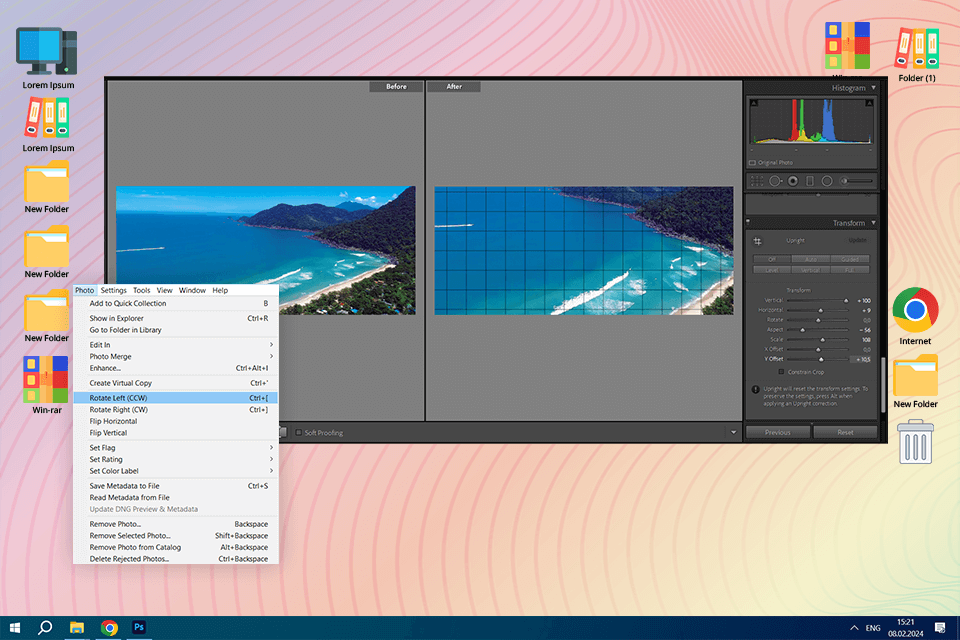
Step 3. Post-processing trickery. Employ Lightroom’s Transform feature to change the horizontal and vertical perspectives to emulate a drone-shot top-down image. Crop and refine the picture until it properly showcases your subject. Perform color correction in Lightroom and use Photoshop to tidy up the image and perform any necessary manipulations.

📸Camera: DSLR or mirrorless?
For top-down photography, it’s highly recommended to use a DSLR or mirrorless model, with full-frame cameras providing the best results. Full-frame cameras deliver:
📸Lenses: Choosing the optimal focal length
My top-down photography setup is determined by the subject and intended look.

Macro lenses (100mm). Ideal for taking close-up top-down photos of smaller subjects like jewelry or intricate fabric textures. I prefer Sony FE 90mm f/2.8 Macro G OSS.
Lighting: natural or artificial?
I employ both natural and artificial light sources for my photos.
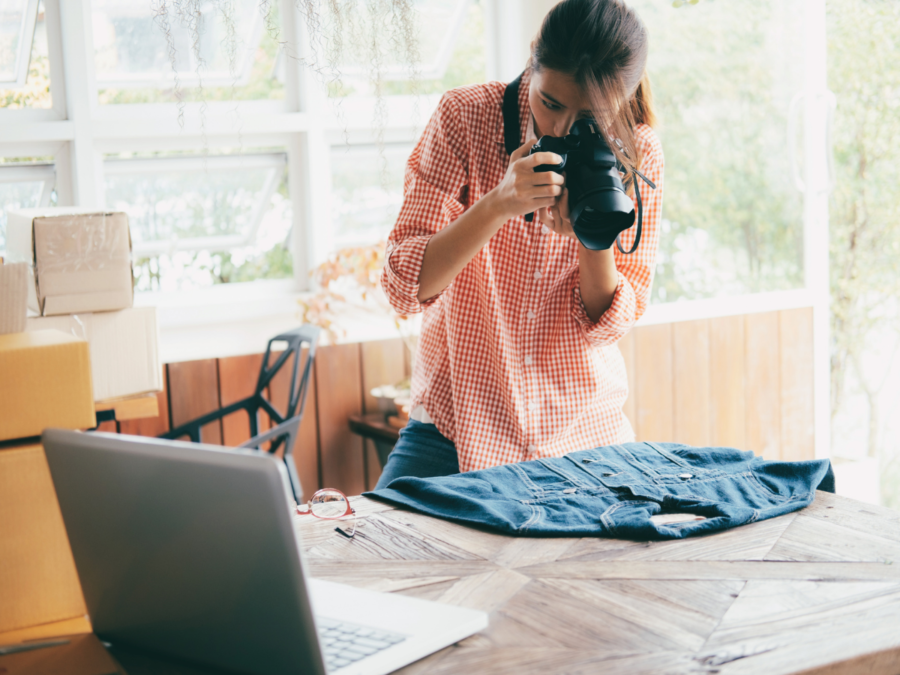

If the natural light you have access to isn’t enough to illuminate the subject properly, you can create a setup for top-down photography with lightboxes softboxes, or LED lights:

Tripods: stability is crucial

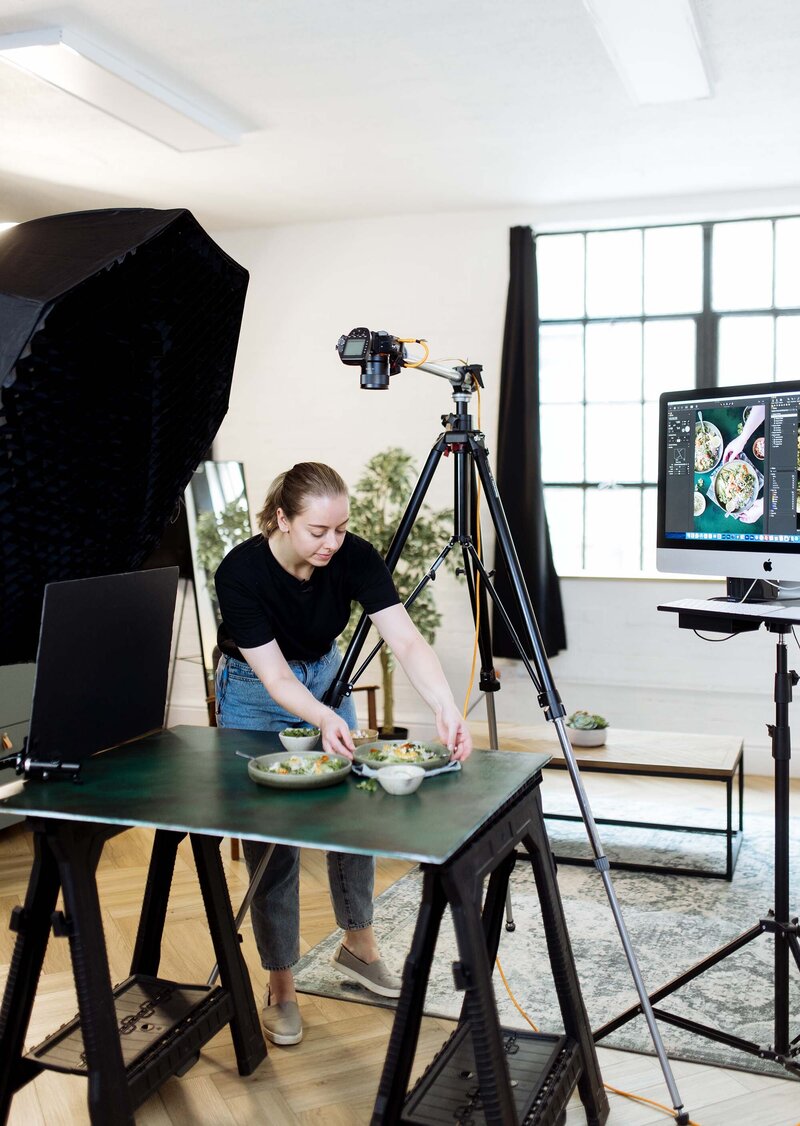
A tripod can play an essential role when taking top-down pictures. It adds stability to your setup and allows capturing a crisp, detailed photo. Additionally, it makes it easier to maintain a 90-degree camera angle.
Camera mount or C-stand: as a tripod replacement?
The biggest benefit to using one of these tools is that they can also serve as a light stand. I employ them to mount my camera and prepare extra light sources whenever the situation calls for it. A great example would be the Kupo 40” C-Stand Kit.
Remote shutter release: prevent camera shake
When doing top-down photography indoors, not even a tripod can save you from a minor degree of blur caused by you pressing the shutter. A camera remote control deals with this issue by allowing you to snap photos hands-free.
Alternatively, you can employ you’re camera’s timer feature.
The optimal method is to position the light source below the camera level. Alternatively, you can employ a reflector to shed light on darker spots of the shot to soften harsh shadows. You can also take photos facing the light to prevent the appearance of shadows.
Yes, a smartphone is a solid replacement for a professional camera. Even though your photos might lack some of the detail captured by mirrorless or DSLR cameras, they can still look stunning as long as you get the composition and lighting right.
Typical errors include snapping top-down photos without maintaining the right camera angle, poorly arranging items so that they end up looking cluttered, and choosing a clashing backdrop. If you don’t get these three aspects right, your photos will lose most of their aesthetic appeal.
Yes, editing is a crucial step for this photography technique. The original photo might have problems with exposure, shadows, or color balance and you can deal with all of those issues and many others using image editing software.




![Northern California Engagement Photo Locations [Popular & Secret]](http://fixthephoto.com/blog/images/gallery/news_main__preview_25405.png)

![Loop Lighting Photography [Setup & Examples]](http://fixthephoto.com/blog/images/gallery/news_main__preview_27935.jpg)

![How to Create Neon Effect in Photoshop [+FREEBIES]](http://fixthephoto.com/blog/images/gallery/news_main__preview_27937.jpg)
![Best Music for Real Estate Video Background [{{%year}} UPDATE]](http://fixthephoto.com/blog/images/gallery/news_main__preview_25157.png)
![Foreshortening In Photography [Tips, Ideas & Examples]](http://fixthephoto.com/blog/images/gallery/news_main__preview_27905.jpg)