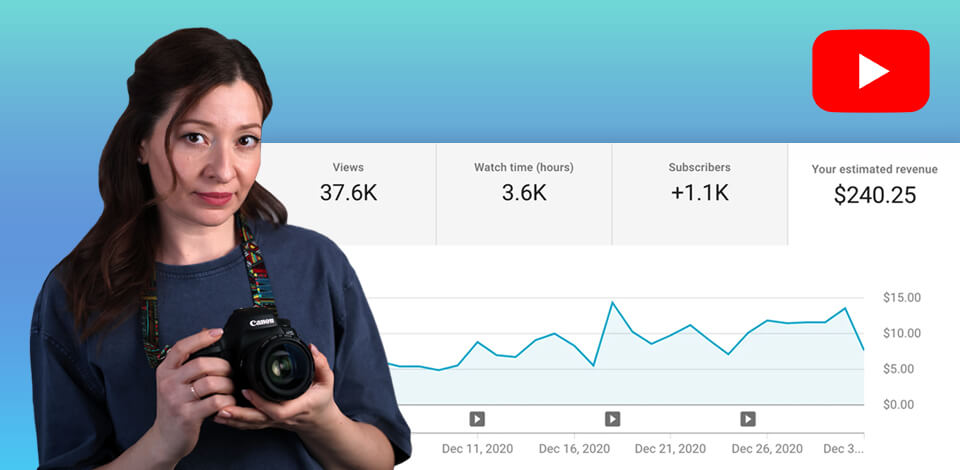
YouTubers earn money in several ways, including ads, brand partnerships, affiliate links, and fan support - and these earnings can grow quickly. According to Statista, ad rates usually range from $0.002 to $0.025 per view, which means one viral video can earn about $2,000 to $25,000 for every million views.
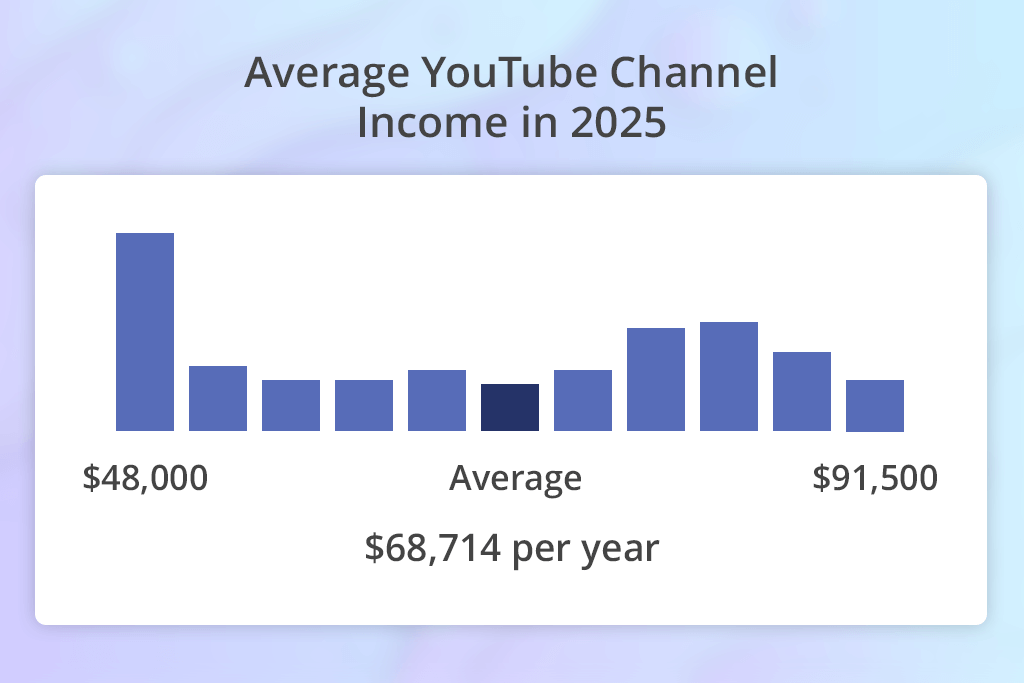
It’s easy to see why so many people wonder how much YouTubers make. YouTube now has about 2.53 billion monthly users, and making a living from creative content feels easier to achieve than ever. Even job platforms like ZipRecruiter estimate that running a YouTube channel can bring in around $68,714 a year, showing that it can be a real career, not just a hobby.
YouTube money comes from different sources, not just ads. Creators earn through sponsors, affiliate links, fan support, and their own products. Using several options helps keep income more stable when views change.
Ad revenue is the main way a YouTube creator earns money and is usually the first option available. Once a channel reaches the requirements (1,000 subscribers and 4,000 watch hours, or 3 million Shorts views), a YouTube creator can join the YouTube Partner Program (YPP) and earn from ads shown around their videos. This is often the first steady source of income.
YouTube shows ads on videos and shares the revenue with creators: you receive 55%, while YouTube keeps 45%.
Your earnings depend on two main factors:
These figures change depending on the types of vlogs, the niche, where the audience is located, and the time of year. For example, ad rates on YouTube are much higher in countries like the U.S., Canada, and Australia than in India or Latin America. They also tend to rise in the fourth quarter (Q4), when brands spend more on holiday advertising.
Although YouTube CPM rates can range dramatically, the amount YouTube creators earn per 1,000 actual video views (not ad impressions) usually falls into these ranges:
Even though YouTube CPM rates can vary a lot, YouTube monetization income per 1,000 actual video views (not ad impressions) usually falls within these ranges:
This is why two channels with the same number of views can end up making very different amounts of money.
For creators, ads are a steady income, but brand deals are the real game-changer for earning. One sponsorship can pay more than ads do in an entire month. Why? Because brands value what you offer beyond views: your trust with your audience, your expert status, and your power to drive real results for them.
A tech or YouTube photography channel, for example, can easily earn double or triple the rate of a general lifestyle channel with the same view count. For example, a tech channel getting 100K views might earn $300-$600 from ads, but $3,000–$8,000 from a single sponsor.
Affiliate marketing is a reliable way for YouTube creators to earn money over time. Instead of being paid for views, they earn a commission when someone buys something using their special link. This income can continue long after a video is posted, which makes it popular for tutorial, tech, and photography channels.
How affiliate links work:
What makes this great? The buyer doesn’t pay more - the brand rewards you for helping close the sale. So, during quieter periods with fewer views, your affiliate earnings can keep your monthly YouTube revenue stable and predictable.
Affiliate marketing is a strong source of passive income for photographers because people are always searching for camera recommendations, and gear reviews or editing tutorials stay useful for a long time.
Products like presets, LUTs, and editing tools often have good affiliate programs, and viewers tend to trust photographers who share real behind-the-scenes examples. Because of this, a single video such as “Mirrorless Cameras for Beginners” or “How to Set Up Lighting” can keep earning commissions day and night, even when the creator is not actively posting new content.
| Platform / Niche | Typical Commission Rate | Notes |
|---|---|---|
|
Amazon
|
1–5%
|
Large product selection with high clicks but lower commissions
|
|
Photography & Tech Stores
|
3–10%
|
Ideal for cameras, lenses, lighting, and accessories
|
|
Software Subscriptions
|
20–60% (often recurring monthly)
|
Good long-term income with recurring monthly payouts
|
|
Online Courses & Digital Tools
|
30–80%
|
High margins, great for tutorials, tech, and creative content
|
|
High-Ticket Items (Cameras, Lenses, Laptops, Lighting)
|
Varies (usually 3–10%) but high payouts
|
Expensive products make even small commissions worthwhile
|
Affiliate income can differ, but with the right approach, it can make up a large part of a creator’s YouTube earnings per month.
Some creators in the tech and photography space, such as Fixthephoto, make more money from affiliate sales than from YouTube ads and sponsorships combined.
Channel Memberships and Super Thanks are built-in YouTube features that let creators earn money directly from their most loyal fans. Unlike ads or brand deals, they offer more predictable and steady income, which is why many creators use them to keep their YouTube monetization earnings stable.
Channel Memberships let viewers support a creator with a monthly subscription, similar to Patreon but built directly into YouTube. Creators can offer different membership levels, each with its own exclusive benefits, such as special content or extra perks for members.
This is recurring income, which means creators receive payments every month, regardless of how many views their videos get.
Most YouTube creators set their membership prices within this range:
YouTube takes a share of the payment, and creators keep about 70% of the membership fee after fees and taxes.
Even a relatively small group of loyal members can bring in a solid and steady income:
This revenue doesn’t rely on platform trends - it comes from dedicated fans.
Super Thanks gives viewers the option to leave a direct tip on any video, not just live streams. It’s a one-time payment that can range from a few dollars to over $50. This feature is especially effective for tutorials, step-by-step guides, and evergreen problem-solving content. A single helpful video can continue earning Super Thanks contributions long after it’s published.

Selling merchandise and digital products is one of the most profitable ways creators earn money. Unlike ads or brand deals, all revenue goes directly to the creator. That’s why many YouTubers launch their own shops with items like hoodies, T-shirts, hats, mugs, tote bags, stickers, branded accessories, and clean, minimalist collections that match the style and theme of their channel.
When make merchandise for your YouTube channel means turning your online presence into real products. People purchase these items not just for how they look, but because they support your work and feel part of your community.
Digital products don’t need storage, packaging, or shipping, which makes them extremely profitable. Because of this, many creators earn their highest YouTube income from digital sales. The most successful digital products include:
Once these products are finished, they can keep earning money for years with almost no extra effort.
Income differs from creator to creator, but here’s a realistic picture of what many of them make:
For a lot of creators, selling their own products is their most stable and highest-earning income stream. It's more reliable than ad revenue and often more profitable than brand deals. This type of income grows as your audience grows, not just from views. So, even channels with smaller followings can earn significant money by offering a great product to a dedicated community.
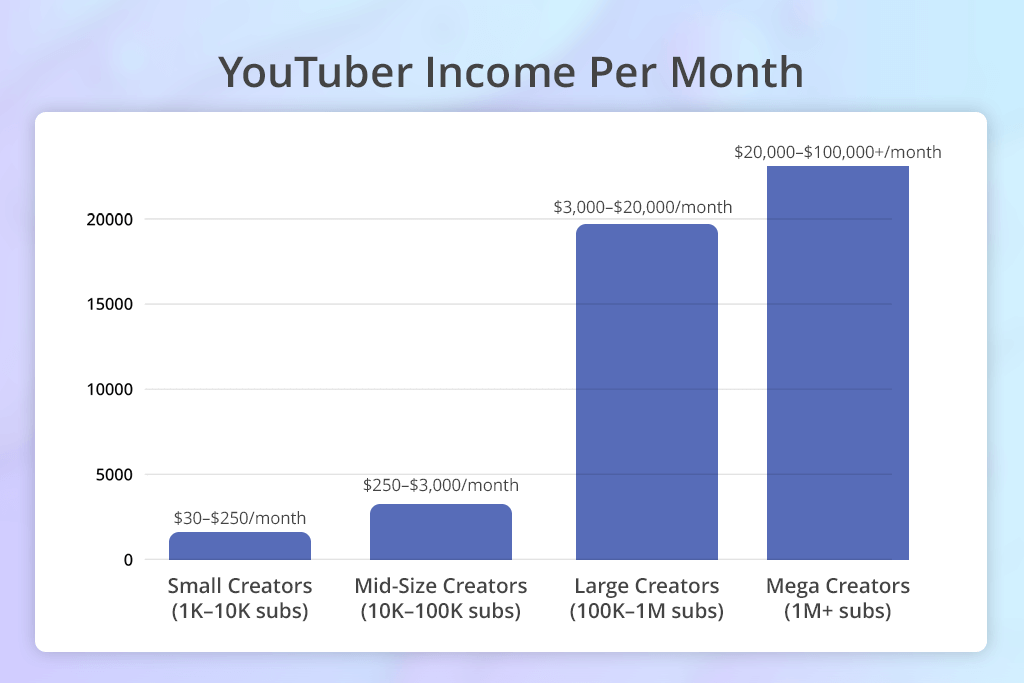
YouTube income can be very different from one channel to another. It depends on things like how big the channel is, the topic it covers, where viewers are located, and how engaged they are. Ads are the main way creators earn money on YouTube, but most creators also use other income sources such as sponsorships, affiliate links, and digital products to earn more.
For smaller channels, ad earnings are usually limited. If a channel gets roughly 10,000 to 50,000 views each month, ad revenue typically falls between $20 and $300. At this point, creators can increase their income by using affiliate links and creating content for a specific audience, such as photography lovers, technology users, or students. A well-made tutorial can continue earning money long after it’s posted, which is why this stage is often the first time creators begin to see income from YouTube.
Mid-sized channels usually get between 50,000 and 300,000 views each month. From ads, they often earn around $150 to $2,400 per month. At this stage, creators start getting interest from sponsors and affiliate programs, which can increase their total income by two or even three times.
For example, a Photoshop portrait tutorial with around 100,000 monthly views may earn about $400 to $600 from ads, while a tech-focused tutorial with the same view count can bring in $1,000 to $1,500. At this stage, the YouTube revenue breakdown becomes more diverse, as creators start earning from multiple sources such as ads, sponsorships, and affiliate deals instead of depending on ads alone.
Large channels often reach 300K–2M monthly views. Their ad revenue alone can range from $900 up to $24,000 per month. However, the biggest boost comes from brand deals, merchandise, and digital products, which often surpass ad earnings. Channels in high-paying niches like finance, tech, and photography gear reviews benefit from higher RPMs, showing that YouTube monetization income is heavily influenced by niche and audience value.
Mega creators can achieve 2M–20M+ monthly views, earning anywhere from $4,000 to $150,000+ from ads alone. For top creators, sponsorships, merchandise, and digital products multiply income exponentially. Channels in high-value niches, particularly finance, tech, and educational content, can earn more in a single month than many people make in an entire year. Even with similar view counts, factors like audience location, engagement, and content niche dramatically impact how YouTube pays creators.
Large channels usually receive between 300,000 and 2 million views each month. From ads alone, they can earn roughly $900 to $24,000 per month. However, a large share of their income comes from brand partnerships, merchandise sales, and digital products, which often earn more than ads. Channels in high-paying niches such as finance, technology, and photography gear reviews benefit from higher RPMs, showing that YouTube monetization income is strongly influenced by the niche and the type of audience.
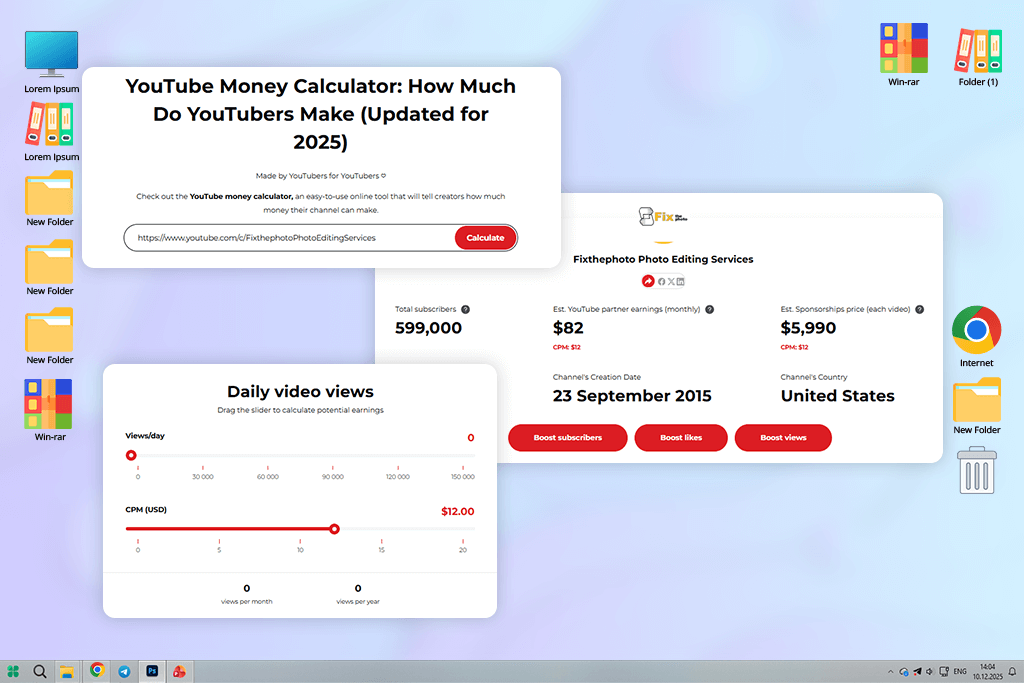
I personally think a YouTube income calculator is one of the simplest ways to estimate how much you might earn. It’s an easy tool to use, but it helps you get a realistic idea of the potential income your videos can generate.
One tool I prefer is the YouTube Money Calculator from Views4You. This is how my FixThePhoto colleagues and I use it to estimate earnings:
Using this tool helps me plan my content, pick better niches, and understand how YouTube pays creators at different stages. It’s a simple and useful way to estimate income before putting in more time or effort.
YouTube earnings depend on more than just view count. Many different factors affect how much money a channel can earn, and understanding them is important if you want to increase your YouTube monetization income.
Your viewers’ location can greatly affect your earnings. Advertisers usually pay higher rates for audiences in countries like the U.S. (≈$11.95), Canada (≈$6.65), Australia (≈$8.93), Norway (≈$8.19), Switzerland (≈$8.02), and the United Kingdom (≈$7.60). Because of this, channels with mostly North American viewers often make more money per 1,000 views.
Lower CPMs are often seen in countries with smaller ad budgets, like India (≈$0.74), the Philippines (≈$1.12), and Brazil (≈$1.64). So, where your viewers live plays a big part in your overall income.
The more time people spend watching your videos and the more videos they watch, the more chances YouTube has to show ads. This matters most for videos longer than 8 minutes, because YouTube can add mid-roll ads. For example, a 10-minute video can run pre-roll and post-roll ads plus 1-2 mid-roll ads. But a 5-minute video typically only has one pre-roll ad, which limits how much you can earn from ads.
Retention is important as well. YouTube looks at how much of your video people actually watch. If viewers stay for about 70-80% of the video, YouTube is more likely to recommend it, which can raise views and create more ad impressions. But if a video only holds around 30% retention, it may show up less in search and suggestions, leading to fewer ads shown and lower earnings.
Tip: I try to make the first 30–60 seconds interesting so viewers keep watching, and I set up tutorials or reviews so people stay to the end. Even small retention gains can raise monthly ad revenue.
Even if two channels get similar views, they may earn very different amounts. One major factor in YouTube monetization income is how profitable the niche is - basically, how much advertisers are willing to pay to reach that audience.
Some niches pay much more than others. Topics like finance, tech tutorials, photography gear, software reviews, and business tools often attract advertisers who pay higher CPMs - sometimes $10-$25 per 1,000 views. In comparison, lifestyle, entertainment, and general vlogs usually have lower ad rates, often around 2-$5 per 1,000 views.
Niche also changes what you can earn outside of ads, like sponsorships, affiliate income, and merch sales. Picking the right niche early can strongly affect your monthly YouTube earnings and how much you can grow over time.
YouTube earnings don’t stay the same all year. Advertisers spend more in certain seasons (especially in Q4 during the holidays), so CPMs often rise. Because of this, many creators see a big jump in YouTube monetization income in November and December.
Knowing that earnings change by season helps creators plan videos, promotions, and ad choices for the months that pay more. Even smaller channels can benefit a lot from a smart Q4 push.
In the end, how you earn money makes a big difference. A channel that relies only on ads will likely make far less than one that mixes different sources of income, such as sponsorships, affiliate sales, products, memberships, and viewer tips. Spreading your income across several areas helps keep your expected YouTube pay more stable, even when ad revenue or view counts change.
For example, a mid-sized photography channel with 50,000 views a month might make around $500 from ads. But if the creator also shares an affiliate link for a YouTube video equipment, like a camera (about $100 commission) and sells Lightroom presets ($50–$200), their total monthly earnings could easily double or even triple.
Earning more on YouTube goes beyond views and retention. The real growth comes from working smarter, experimenting, and using overlooked tools. Here are some unique strategies to boost your YouTube content creator salary.

YouTube is more than a place to post videos - it works like a real business for some creators. In 2025, several aesthetic YouTube channels are still among the top earners, bringing in millions each year through ads, sponsorships, merch, and other income sources.
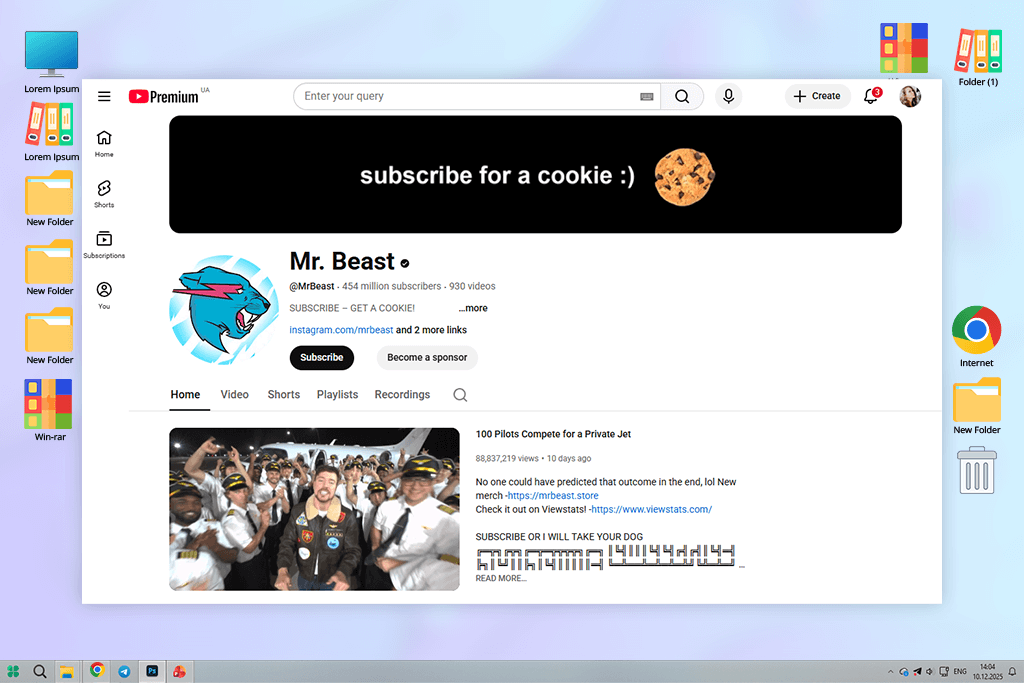
MrBeast earns money from several sources, not just YouTube ads. In 2025, his estimated yearly income is around $85 million, helped by major brand sponsorships, merch and retail items (including his snack brand), and other businesses outside YouTube. Because his videos focus on huge stunts, challenges, and giveaways, he pulls in a massive global audience, which leads to strong ad earnings, higher-value sponsorships, and high demand for his products.
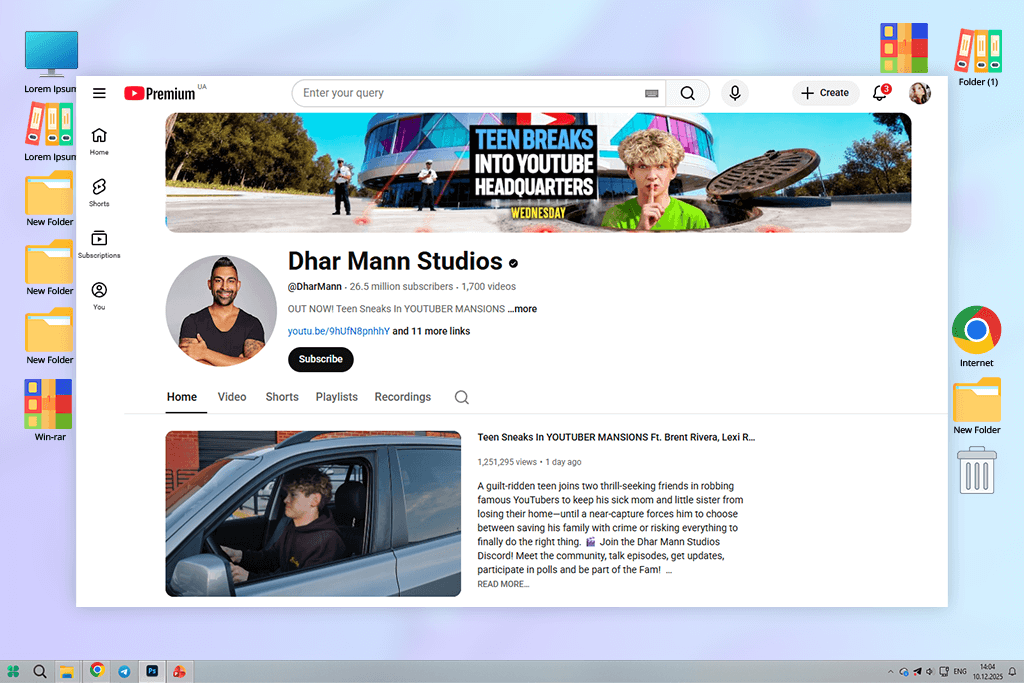
In 2025, this creator is expected to make roughly $56 million. His strategy involves producing many short, moral‑based stories that consistently gain millions of views. He earns money from YouTube ads and also through regular brand partnerships integrated into his content.
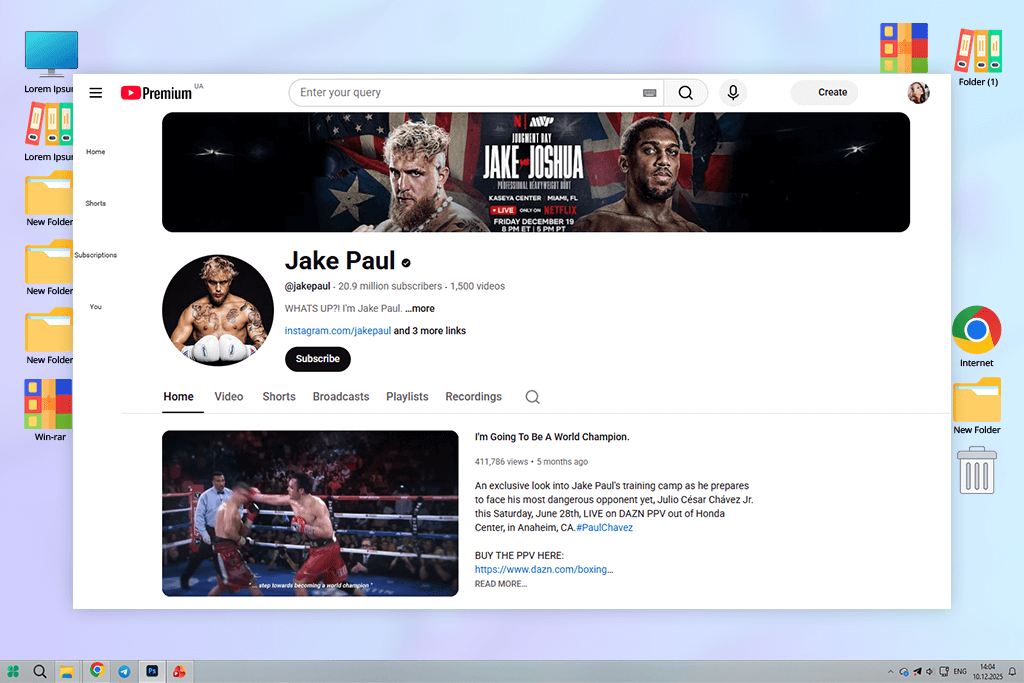
His estimated earnings in 2025 are around $50 million. Jake Paul makes that money not only from YouTube ads, but also by pairing his content with boxing matches, pay-per-view events, paid appearances, and brand partnerships - a strong example of how YouTube pays creators through multiple income streams, not ads alone.
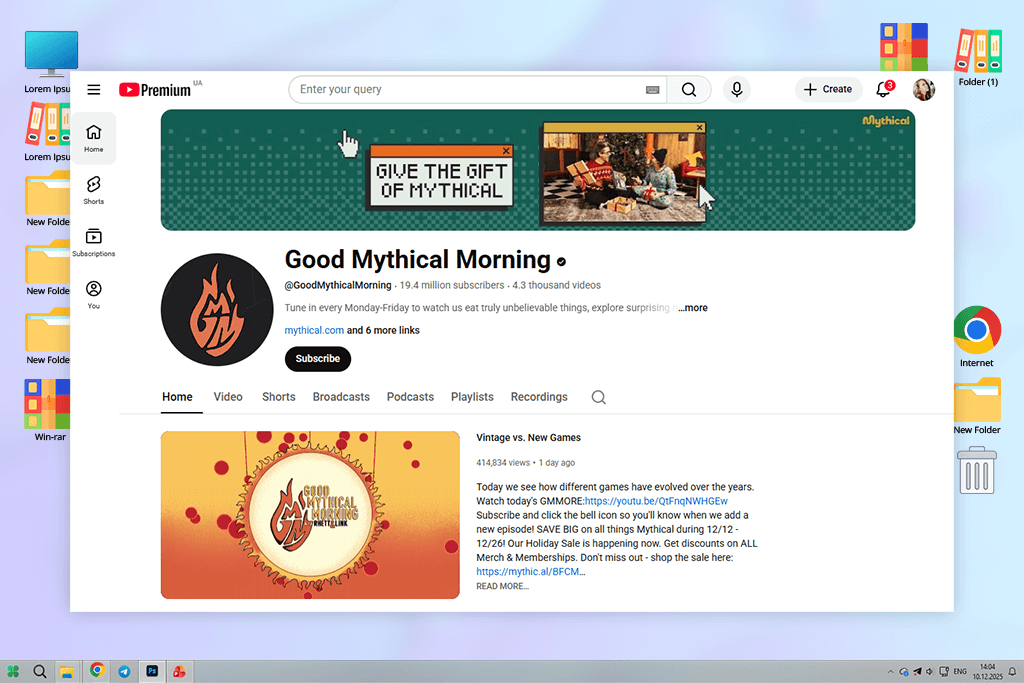
Their estimated income in 2025 is about $36 million. By posting regularly in a daily style, running multiple channels or projects, and earning through merch and memberships, they show how making lots of content and using different income sources can keep revenue steady.
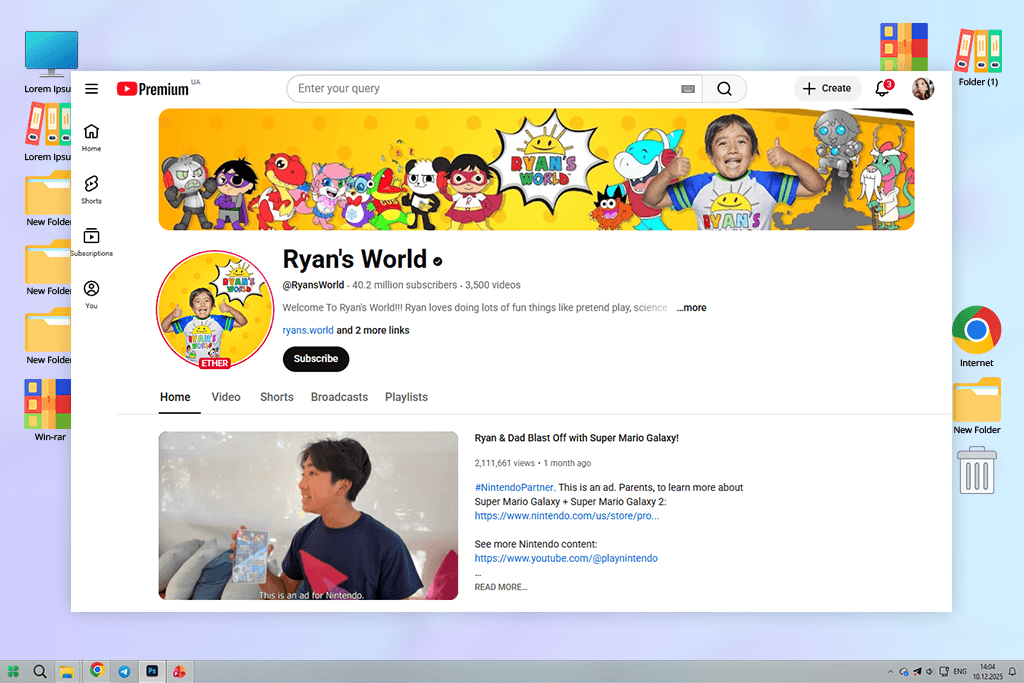
In 2025, he made about $35 million a year. Ryan’s World focuses on kids’ videos like toy reviews and family-friendly content, which brings in high, steady ad revenue. On top of that, they earn more through toy licensing and merchandise deals.
Beginners with under 1,000 subscribers and only a few hundred views per video usually make very little from ads - sometimes just a few dollars a month. Most new creators focus on growing their audience first, because ad income doesn’t add up until the channel gets bigger.
YouTube earnings depend on views, watch time, engagement, niche, and CPM (pay per 1,000 views). Sponsorships, memberships, and merch can add more, and audience location matters because some countries have higher ad rates.
Yes, ads aren’t the only option. Creators can earn through sponsorships, affiliate marketing, merch, digital products, memberships, and Super Thanks, and top channels often make more from sponsorships and products than from ads.
Yes, but only if you’ve reached the AdSense payout minimum of $100. YouTube pays monthly, usually around the 21st of the next month after you earn the money.
Yes. Evergreen videos, affiliate links, and merch can keep earning money for months or even years after you post them. That’s why some creators still make income even when they take a break.
Videos are more likely to go viral when they trigger strong feelings like laughter, surprise, awe, or inspiration, because people want to share them. Content that feels relatable, is entertaining, or teaches something useful can greatly improve your chances to make a viral video.
In most countries, YouTubers are considered self-employed. They have to record earnings from ads, sponsorships, and merch, then report that income for taxes. Many creators work with an accountant to manage taxes and deductions.
Yes, it’s possible, but it usually takes time, regular posting, a clear plan, and often more than one income source. Many creators start YouTube part-time and gradually increase their income as their channel gets bigger.







![How to Create Neon Effect in Photoshop [+FREEBIES]](/blog/images/gallery/news_main__preview_27937.jpg)