My goal was never to become an expert in apps for captions. I just needed to add subtitles quickly. But I soon realized that picking the right app was one of the most important parts of my project.
I was helping to launch a small media startup. They were creating an online learning website for people who aren’t tech experts. My job was to handle the video content for a daily series called “60-Second Skills.”
These were short, helpful videos that explained different tools, work methods, and new digital trends. We posted these videos every day on TikTok, Instagram Reels, YouTube Shorts, and LinkedIn.
A large part of our audience watched videos without sound. If the videos didn’t have captions, they failed. People stopped watching, they didn’t remember the content, and our point was missed. My job was to find the best apps for video captions that could manage our high volume of videos and fit smoothly into our quick, busy workflow.
To speed up the process, I asked my colleagues from the FixThePhoto team to help me test 50+ apps for video captions. Together, we carefully reviewed videographer forums, collected recommendations from people we know, checked Google search results, and also asked ChatGPT to suggest the best options for our needs.
Good captions are clear, correct, easy to use, and make videos accessible. They don’t just put words on screen - they help everyone understand the video, no matter where or how they’re watching.
Good captions get the words right, are easy to read, work for everyone, are timed perfectly, and can be used anywhere. Their role is to help the video, not fight it for attention.
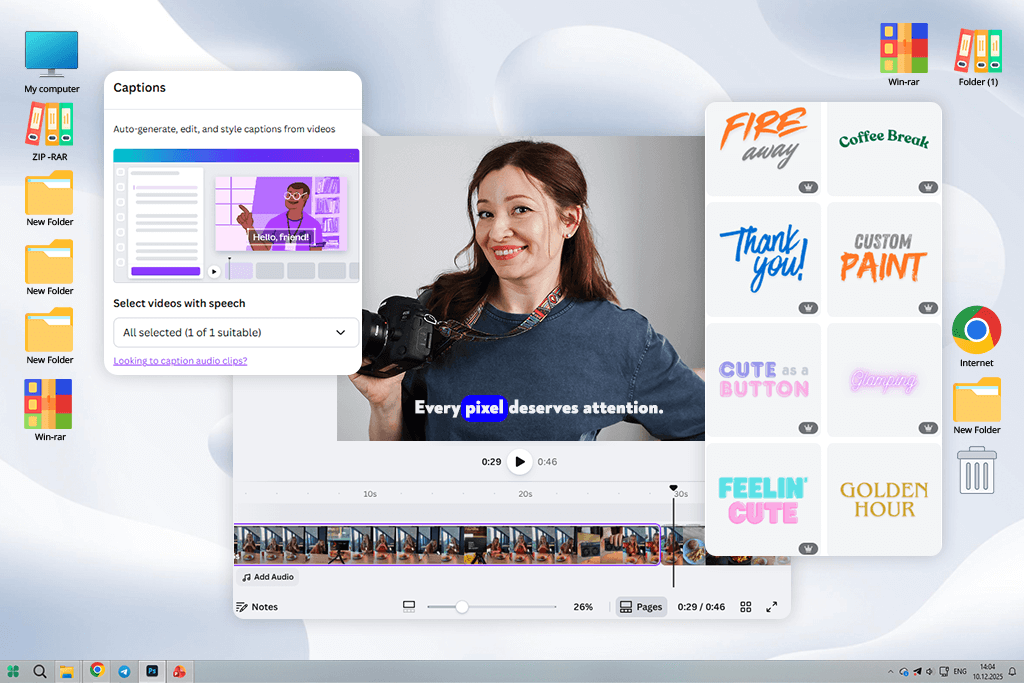
Yes, AI can create very good video captions. However, the quality of the final captions depends on two things: which AI tool you choose and how well you get your video ready for it.
First, clear audio is the most important factor. AI works best with clean, consistent speech that isn’t covered up by background noise or music. Using a good microphone, reducing echo, and having only one person speak at a time can all make the AI’s captions much more accurate.
Second, pick an AI captioning app that fits your video. Some apps are more accurate with accents, quick dialogue, or specialized terms. Using a subtitle editor that lets you easily fix the text, label different speakers, and adjust the timing will help you quickly turn decent AI captions into excellent ones.
Third, always check and correct the AI’s work. Even top tools can get brand names, jargon, or tricky phrases wrong. Taking a moment to fix spelling, punctuation, and how the text is broken into lines makes the captions look polished and sound natural.
Finally, make sure your captions fit the platform you’re using. For short videos on social media, large, permanent captions on the screen usually work best. For longer videos on websites or streaming services, you’ll likely need separate caption files (like SRT or VTT). Adapting the style and format makes sure your captions work correctly everywhere you post.
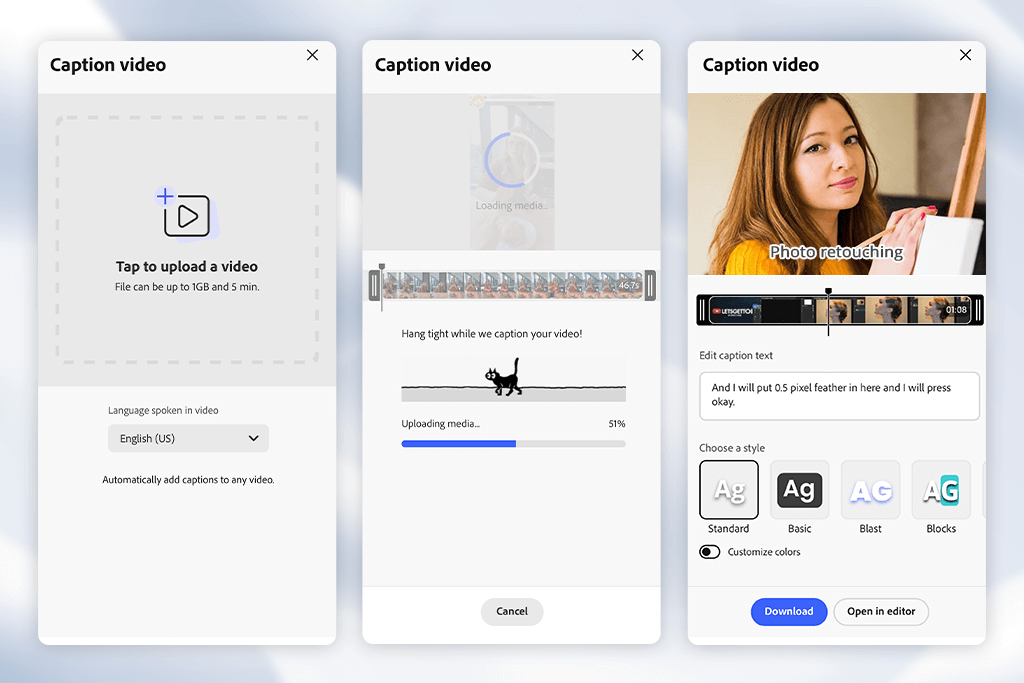


I tested Adobe Express as part of our daily routine for making the “60-Second Skills” videos. I uploaded our short, educational clips, and it created captions for them almost instantly. The transcript was very accurate, even with quick talking and specific marketing terms.
Fixing the captions was straightforward. I could correct mistakes, change when text appeared, and break up long lines quickly, without slowing down. The layout was simple and focused, which was very helpful when I was in a hurry.
“This caption app became a tool I could always rely on. It saves videos in the right formats for all our social channels. Working with my team on edits is easy. ”

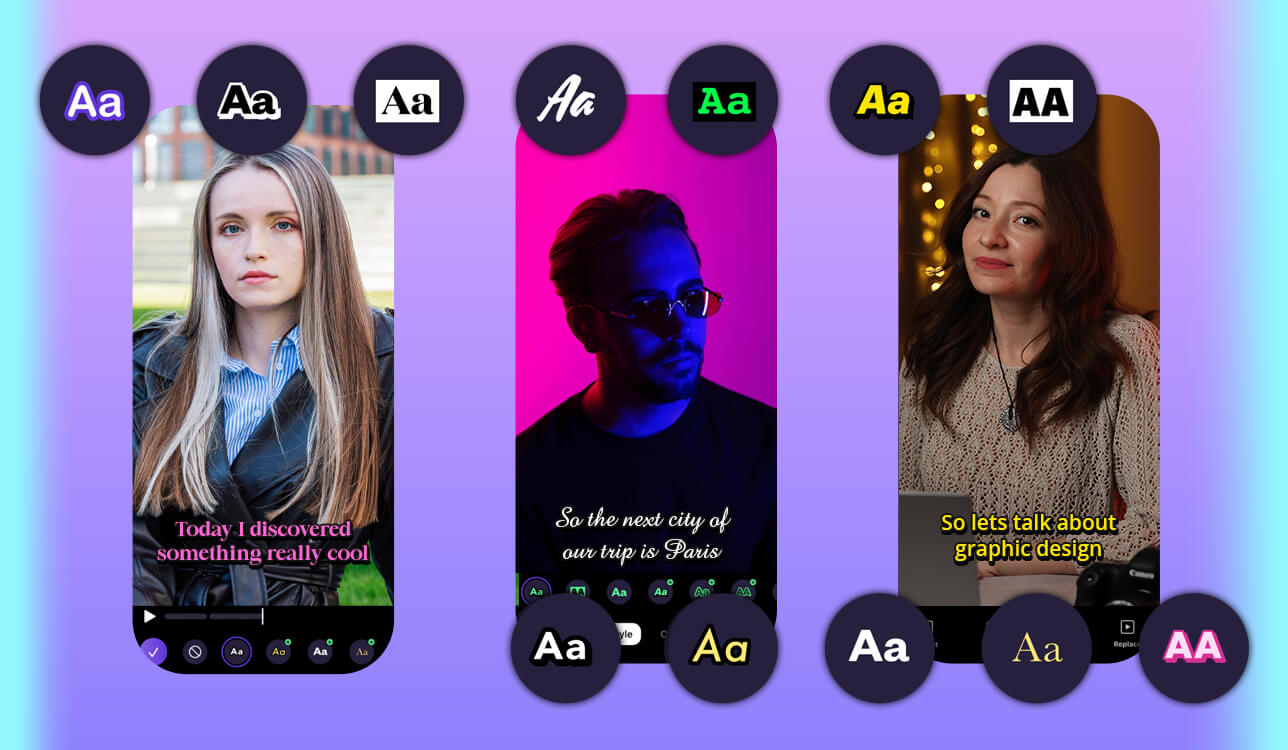
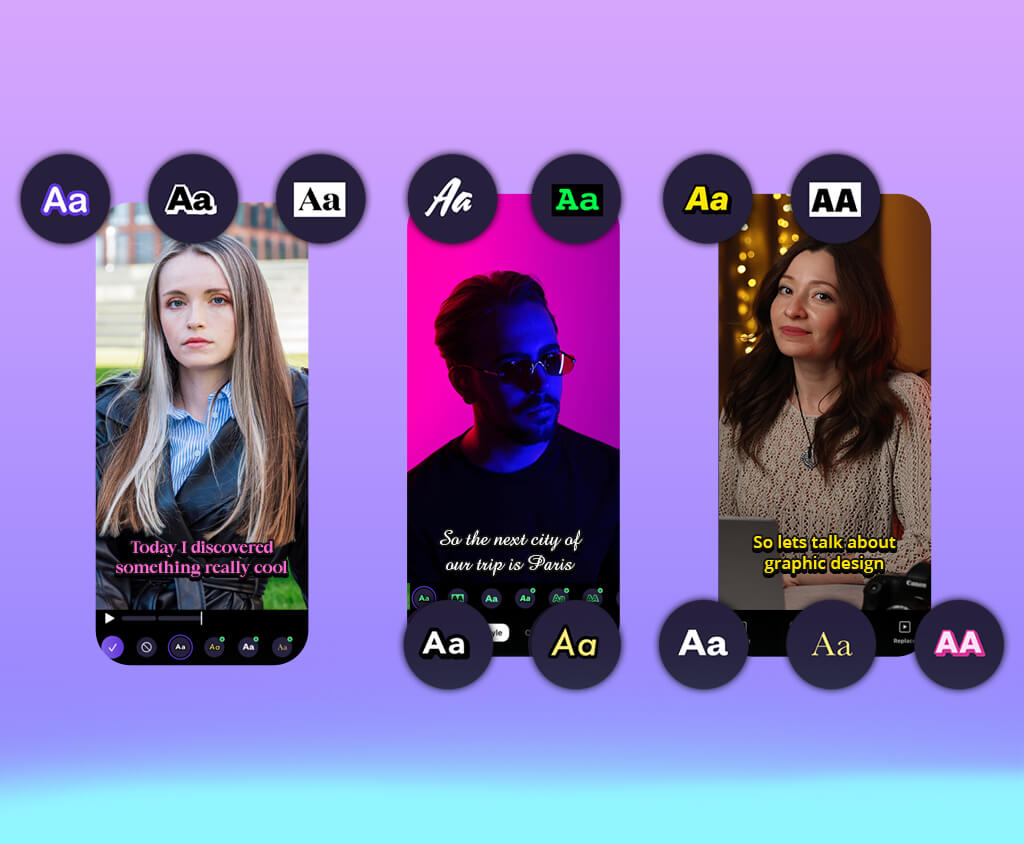
The design tools were the best part of this free Adobe software. It was simple to use the right fonts, colors, positioning, and light animations to keep everything looking like my brand. The captions appeared professional and clean without pulling focus from the video. The whole experience felt built for today’s social media.
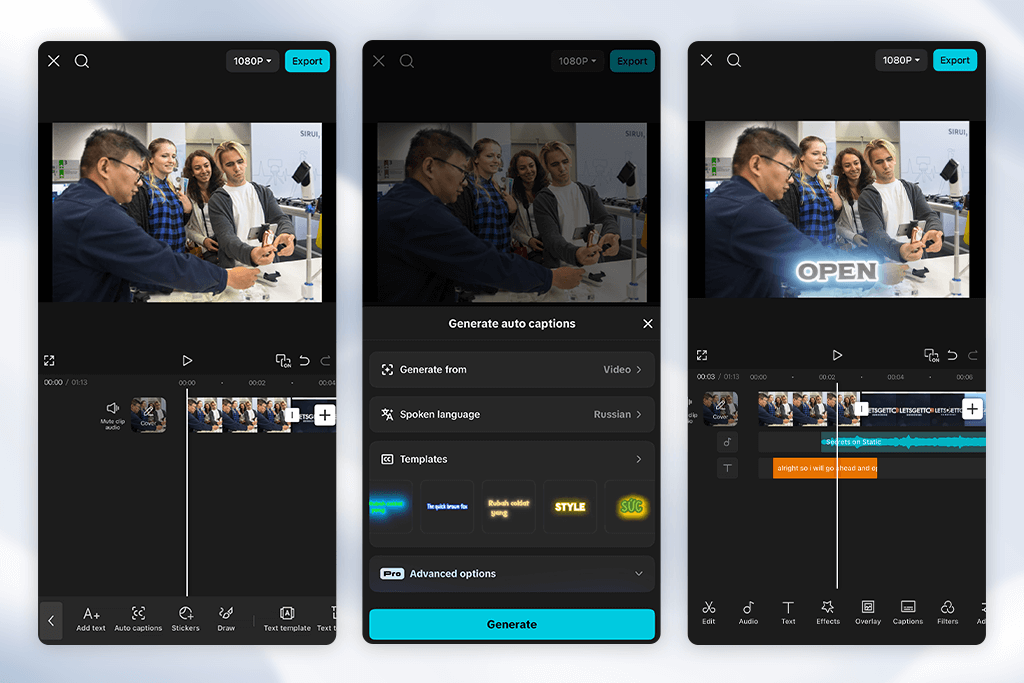
CapCut was one of the first free video editing software with no watermark. I tried because it’s widely used for short-form content. I tested it with fast vertical clips from our series that included quick cuts and music. The caption tool worked fast and was mostly accurate, especially with natural, everyday speech. It performed best with short phrases and clear audio.
Editing captions right on the timeline felt smooth and intuitive. Correcting errors, breaking lines, and timing the text didn’t slow me down. I could turn a raw clip into a captioned video very quickly.
“CapCut’s biggest strength is caption styling. Animated highlights, dynamic text, and bold emphasis work perfectly for TikTok and Reels. ”

However, keeping captions minimal and aligned with brand guidelines required extra effort. The default styles lean toward flashy rather than subtle. Also, this app for captions had limited options for team collaboration, making it harder to use for larger projects.
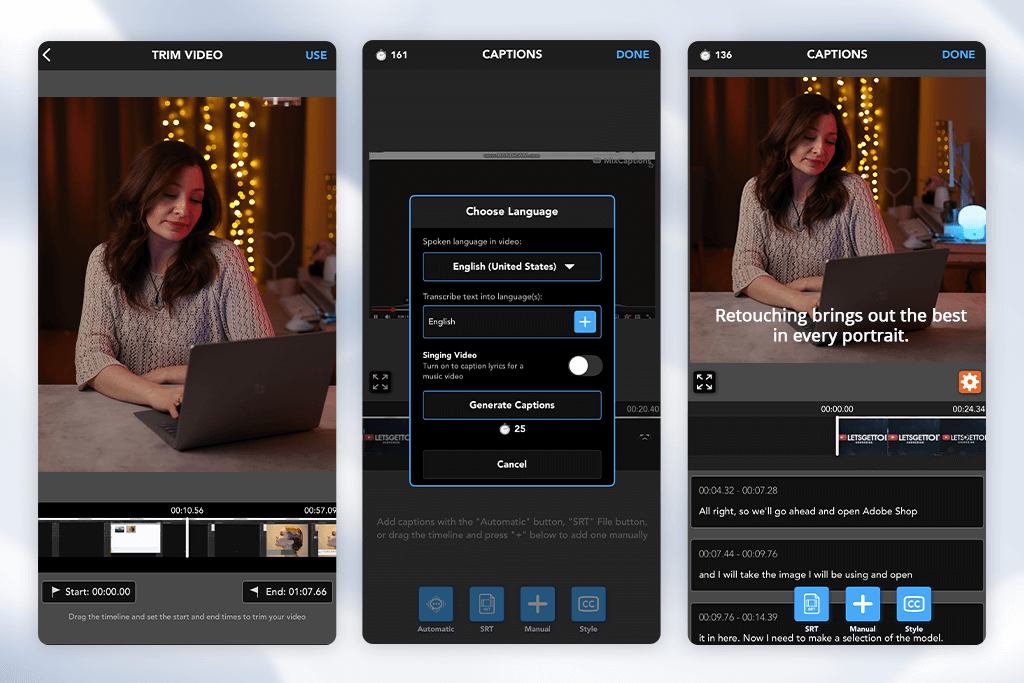
MixCaptions worked like a straightforward, dedicated auto caption app. I tested it with clear instructional videos where the speech was very important. It transcribed the words accurately when the audio was clean, reliably handling common accents and a normal speaking pace.
Editing the captions was simple and fast, directly inside this free video editing app. I could correct mistakes right away without getting lost in complicated menus. The captions were clear and easy to read, but the design options were very basic. Fonts and styles were simple, and branding tools were limited for more visual projects.
“Simple and easy to use. It focuses only on captions, which I appreciated. As long as the audio was clear, the accuracy was good.”

MixCaptions was reliable when I needed subtitles quickly and clearly. It’s not meant to replace a full video editor, but for simple captioning tasks, it worked well every time.
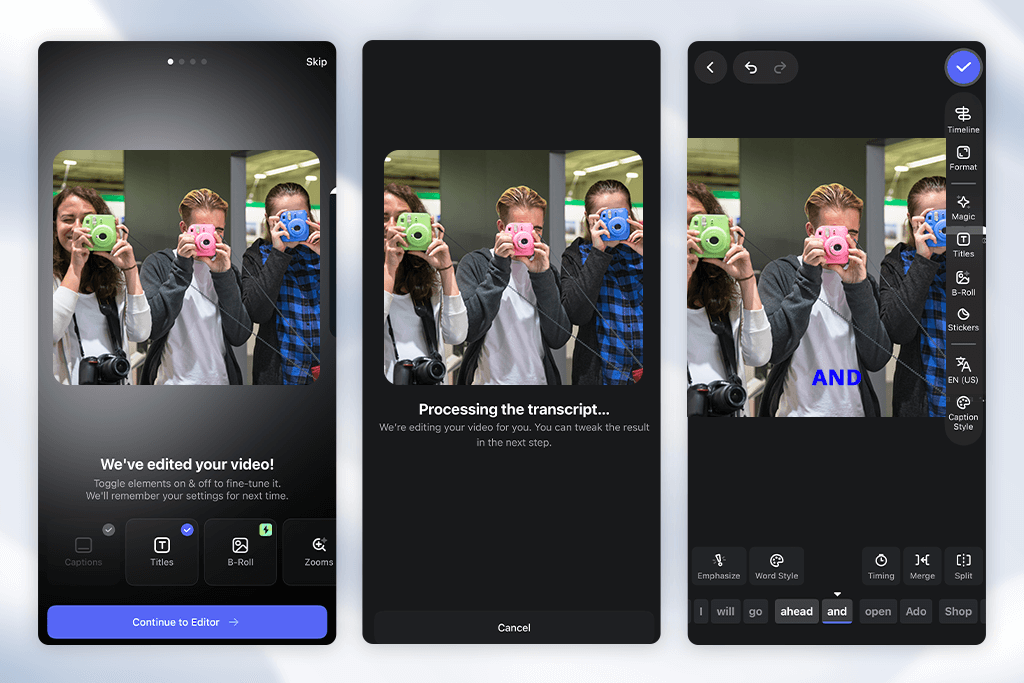
VEED seemed like a complete online tool from the very beginning. I uploaded a few campaign videos straight from my web browser. It created captions quickly that were mostly correct, even with different people talking.
Editing the captions in VEED was very user-friendly. I could easily change the timing, correct the text, and style the captions without any hassle. Working directly in the browser was convenient, especially for remote work.
“In collaborative projects, VEED proved to be a good fit. It made sharing drafts and gathering feedback straightforward, and its export options supported all major platforms.”

The caption design options felt balanced. I was able to adjust text style, size, and position without adding distracting effects. Branding was easy to manage and stayed consistent. Overall, it suited clean, professional social videos well.
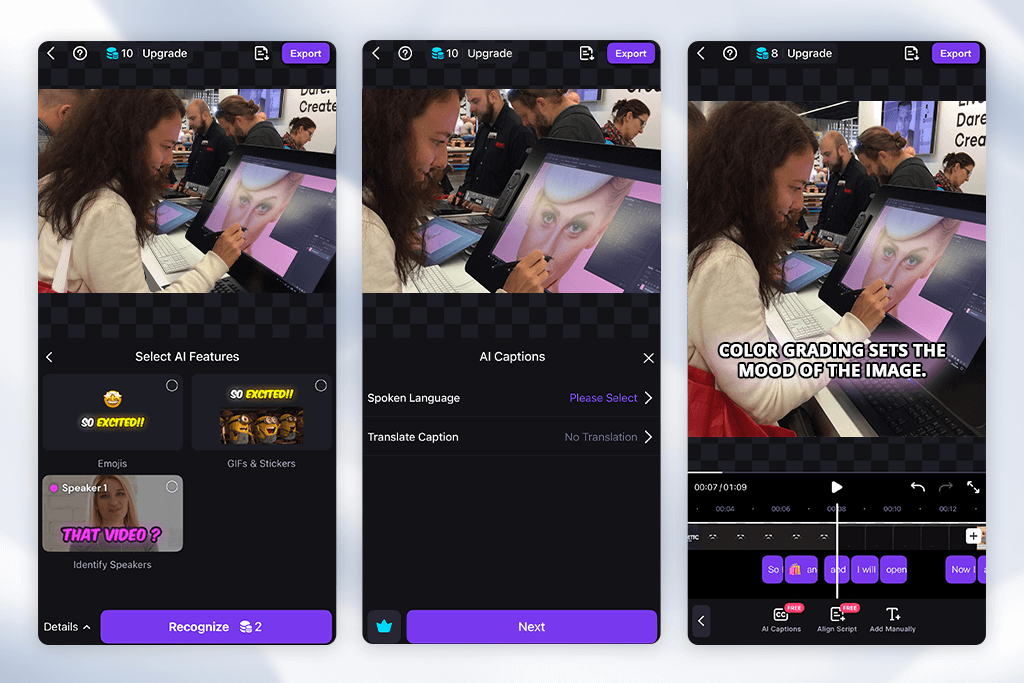
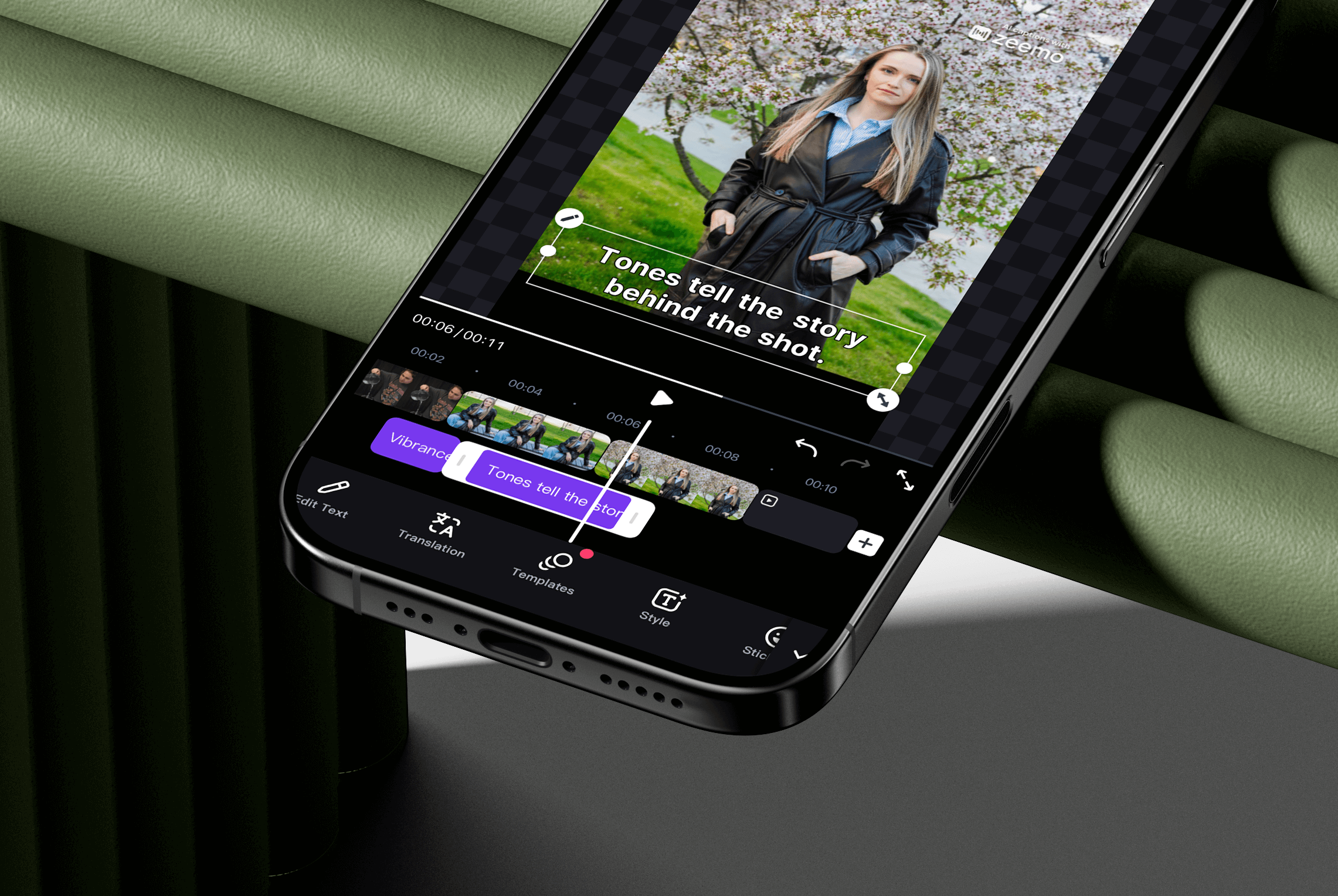
During my tests, Zeemo stood out as an easy subtitles synchronizer rather than a full editing platform. I applied it to short learning clips from our “60-Second Skills” series. The automatic subtitles appeared quickly, synced well with speech, and needed very little correction. Even with rapid talking, the results stayed reliable.
Editing captions in Zeemo was very fast. I could correct errors, change the speed, and adjust line breaks in just seconds. The entire process was designed for quick, repetitive tasks.
“The captions looked polished from the start and rarely needed corrections. It was the perfect fit for posting new content every day.”

The caption style was clearly made for phones. The text was easy to read, placed to avoid buttons, and the subtle animations didn’t distract. Zeemo understood vertical video better than most apps, making the captions feel right at home on social media.
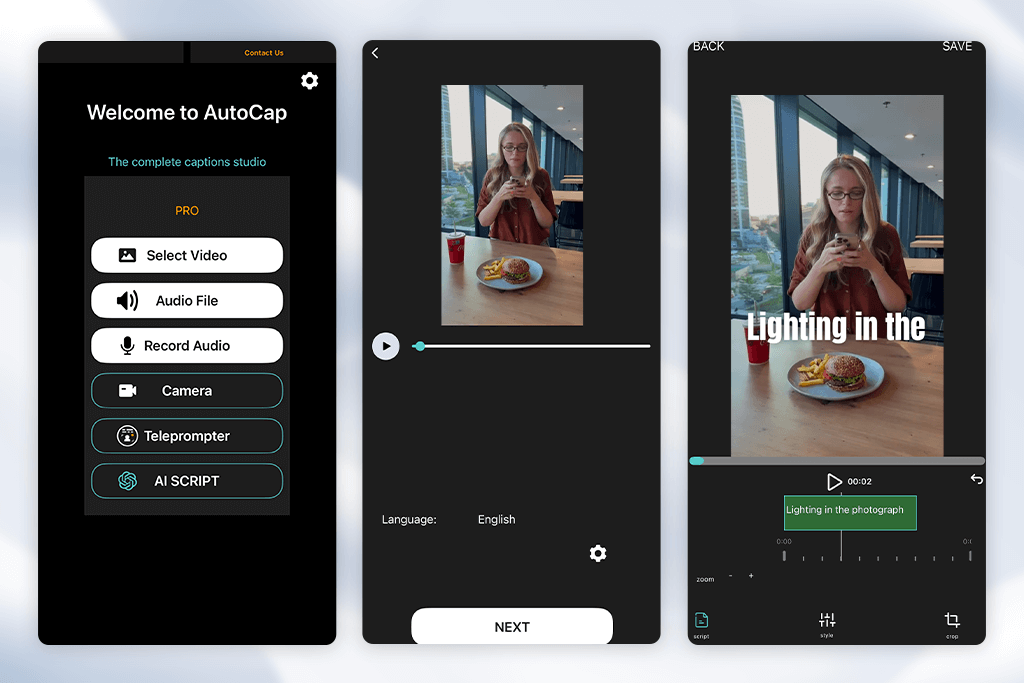
AutoCap was the simplest tool I tried, unlike more advanced iPad video editing apps. I mostly used it to quickly add captions to very short video clips. The app created captions almost immediately, which was great. However, how accurate those captions were depended completely on having clear audio.
The editing features were quite basic, yet functional. While I could correct text and adjust timing swiftly, the tool lacked any advanced controls for pacing or styling.
“I won’t use it for campaigns or polished videos, but it is useful when I need captions fast and didn’t care about design.”

Design choices were very limited. Fonts and styles looked old and couldn’t be adjusted much. It was hard to match brand rules. The captions were clear, but visually very basic.
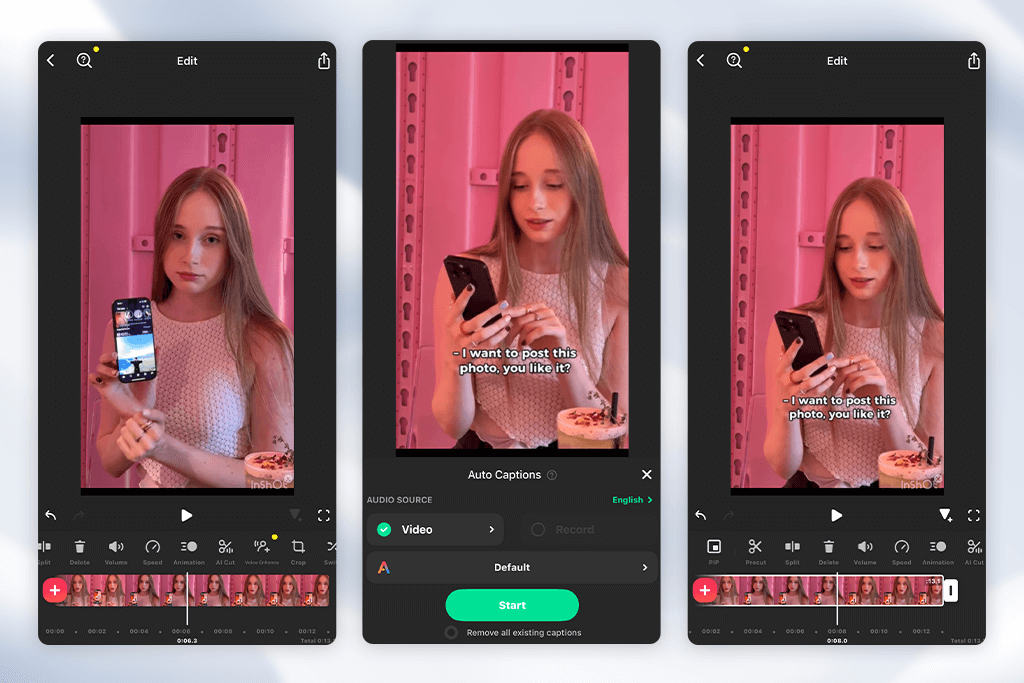
Because I had used InShot before as a free video editor for YouTube, adding subtitles didn’t take much effort. I worked entirely on my phone, moving smoothly between clip edits and caption placement without breaking the workflow.
Caption accuracy was okay, but weaker than in AI video captioning apps. I had to fix more mistakes, especially with fast talking. On the plus side, editing captions on mobile was fast, so corrections didn’t feel annoying.
“When I needed to edit on the go, InShot is reliable. It handled fast, mobile-focused edits well, though it isn’t suited for team workflows or high-volume production.”

InShot was good for styling captions. Fonts, colors, and animations looked nice for social content. Keeping captions consistent across videos took more effort, and it focused more on creativity than branding.
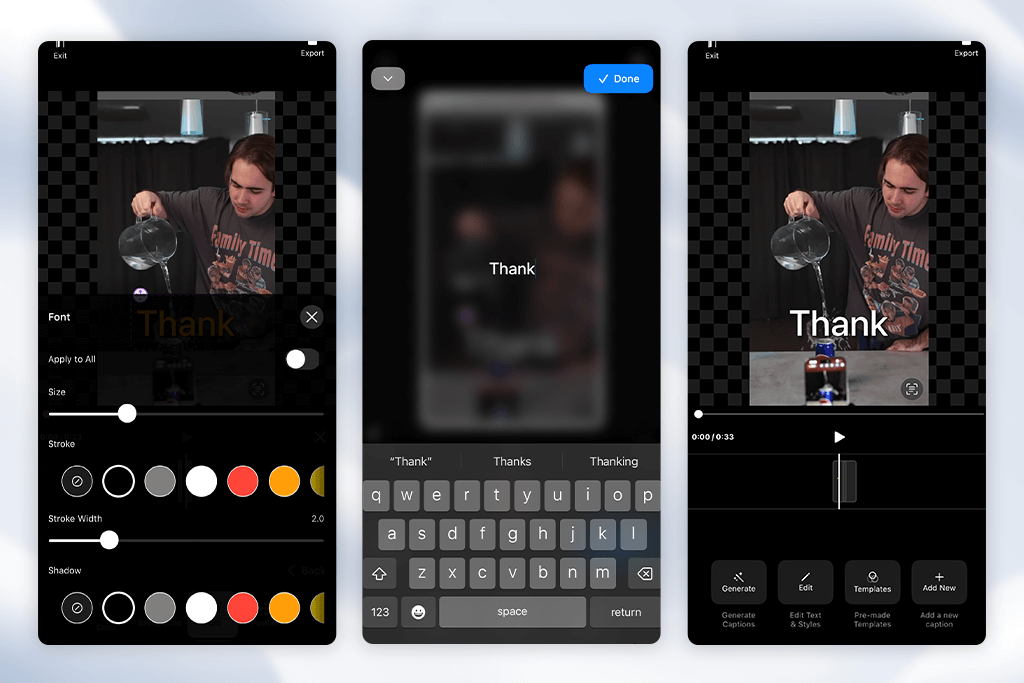
Kaptioned felt more serious and business-focused than the other apps. I used it for professional tutorial videos. It was very accurate at transcribing clear, full sentences, making the final result easy to understand. The caption editor was clean and simple.
“Kaptioned wasn’t designed for trendy or viral videos. This auto caption video app is more professional. The captions are accurate and easy to read, even in long videos.”

The customization options were limited, but in a polished way. The captions remained clear and neutral without any distracting animations or effects. This made the AI software an excellent choice for straightforward educational videos.
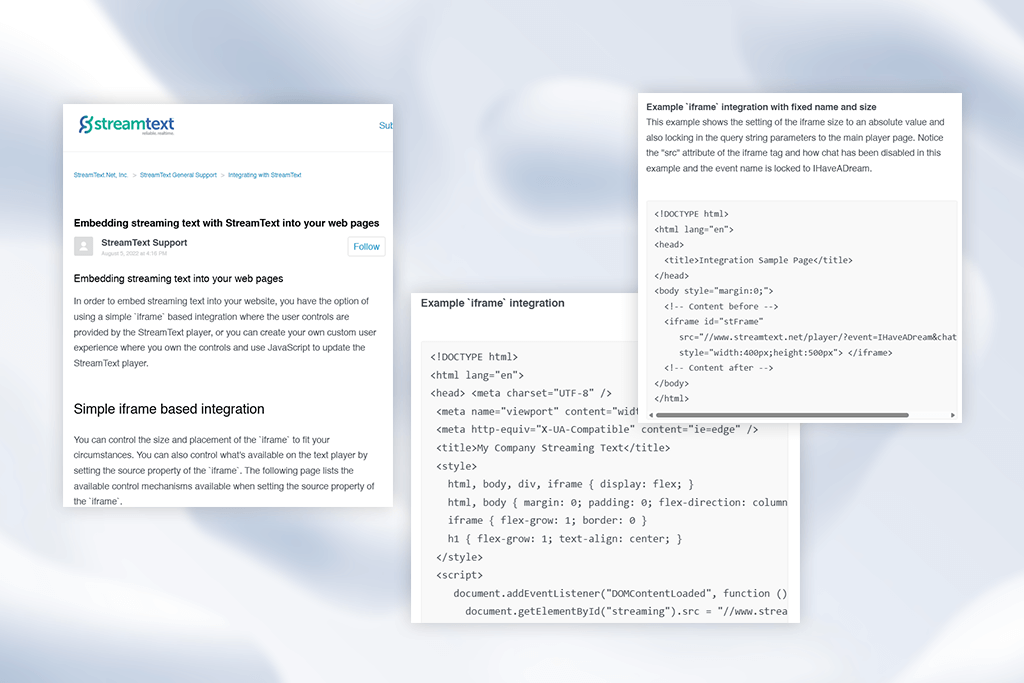
StreamText was different because it really focused on accessibility. I tested this AI video editor with educational videos, where being clear and compliant was important. The captions were consistently accurate and well-timed.
The editing tools were all about precision. The interface looked a bit old, but it worked. There wasn’t much opportunity for creative choices; the priority was clearly on accuracy.
“StreamText isn’t for short videos like TikTok. But for official or regulated projects, it’s very reliable for accuracy.”
The design choices were very basic. This free auto caption app focused on function, not design. Captions were simple and unstyled, so it wasn’t a good choice for social media.
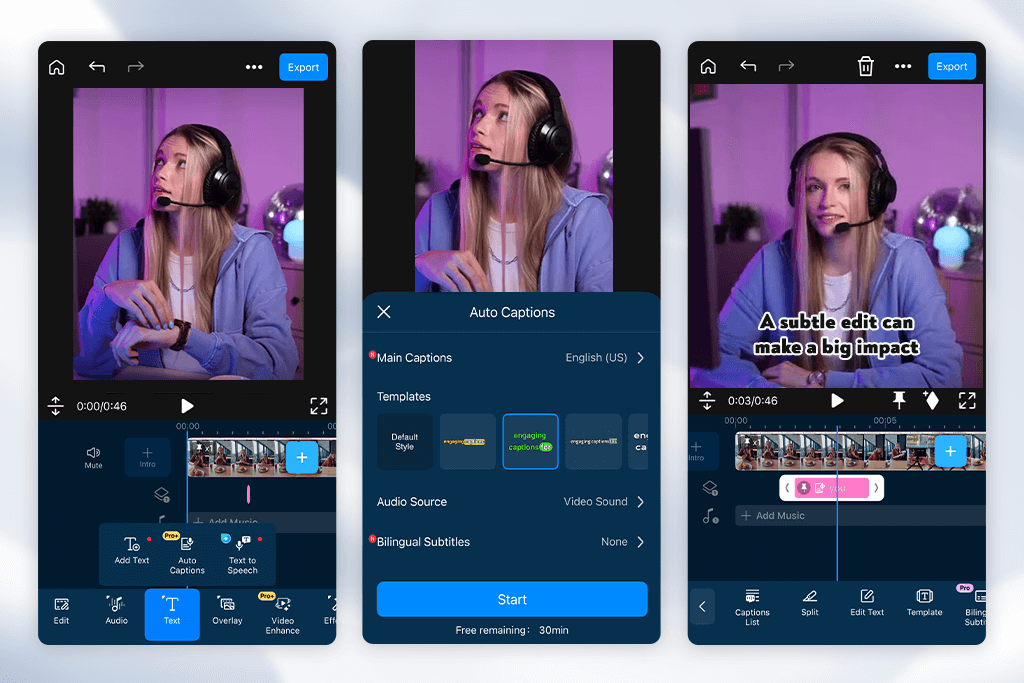
When I opened PowerDirector, I saw it was a full vlog editing software, not just a caption app. I tried it on a longer tutorial. The detailed timeline let me sync captions to audio very precisely. The AI captions were accurate with clear sound, but I had to fix them manually when the speech was fast or when the sentences were long.
To get precise results, you need to spend more time and focus. Unlike quick, automatic apps, every change you make here, like setting the timing, splitting text, or placing it on screen, is a careful choice. This high level of control makes sure your captions fit perfectly with the video’s movement and cuts.
“It’s too advanced for simple social media clips. But if you’re making detailed tutorials, showing off a product, or any video that needs to look very polished, it’s a great option.”
PowerDirector’s design tools are powerful but can seem complex. You can change fonts, colors, motion, and backgrounds, but learning everything takes time. For professional or detailed work, this control is a big plus. Simpler apps can’t give you the same polished, high-quality look.
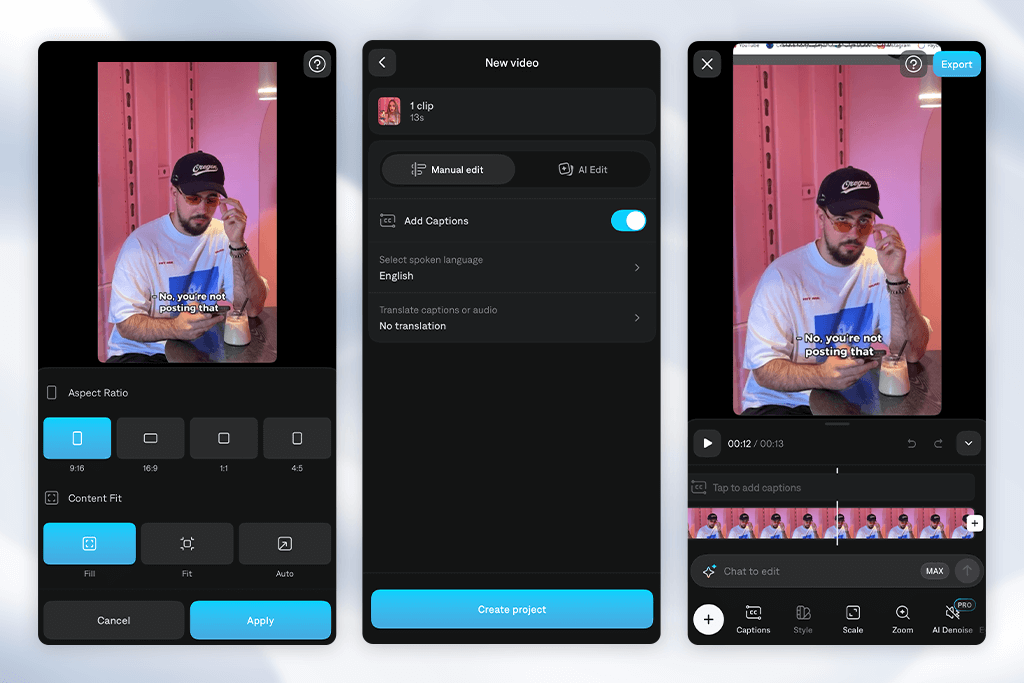
Captions AI is built to make adding subtitles easy and effective for social media. I tried it with quick, trendy video clips and was surprised by how fast it turned speech into text, even with casual language and several people talking. The AI also suggested good places to break lines and add emphasis automatically, which saved me a lot of effort.
The editing feels effortless. You don’t have to dig through complicated menus or a timeline to adjust your captions – you can make quick fixes in just a few seconds. It’s a very light, simple tool, ideal for creating many videos daily.
“This tool really stood out for its speed. I wouldn’t use it for official or heavily branded videos, but for social media campaigns, it produced excellent results.”

The styling features of this caption app are very bold and designed to catch the eye. Effects like highlighted words, gentle motion, and color accents help captions stand out on phone screens. However, there are few options for customizing the style to match a specific brand.
When our FixThePhoto team set out to review the best apps for captions on videos, we approached it as a hands-on production task, not just a theoretical review. We aimed to see how these tools would perform under real pressure - tight deadlines and actual content demands.
The evaluation was led by Nataly Omelchenko, Kate Debela, and Tata Rossi, each providing a distinct viewpoint from content creation, marketing, and quality assurance. We began by creating practical tests based on our real projects.
Nataly worked on quick videos for platforms like Instagram and TikTok, where clear captions and a fast workflow are essential. Kate focused on longer tutorial and promotional videos, which require accurate subtitles and a consistent brand style. Tata oversaw quality, carefully checking each tool for correct transcripts, proper timing, and readability on all screen sizes.
Each app was tested using the identical set of video examples. One was a 90-second tutorial with specialized terms and quick speech. Another was a short, lively promo with background music and fast cuts. This approach let us see how each tool managed common challenges like different accents, rapid dialogue, and layered sounds.
We assessed each tool on important factors like: how accurate the transcript was, how fast we could edit, how much we could style the text, what file formats it could export, and how well it fit into our existing process.
Some apps had very accurate AI but needed too much manual correction. Others had great-looking animated captions, but they were often incorrect. The top tools found a good balance, letting us create captions fast and then adjust them easily without slowing down.
Our testing made one thing obvious: dedicated video captioning apps were simply faster and more automatic than all-purpose video editors. However, the full video editing programs gave us much more control over how everything looked – we just had to spend more time on each video.
This really helped us decide: if we needed to post a lot of content quickly for social media, we’d pick a captioning app. But for videos that needed a polished, professional finish like a product ad or a detailed lesson, a full editor was the better choice.
Take advantage of the best apps for adding captions to videos, like Adobe Express, to perform this task. You just need to import a video into the application, and the tool will do the rest of the job for you. Editors can easily edit captions and customize their style to make them consistent with the overall video look.
Yes, several applications can create captions automatically. Adobe Express is probably the best option included in this list.
Adobe Express, CapCut, MixCaptions, and many other tools can translate subtitles into different languages.
The accuracy of captions depends on a specific app and such aspects as audio quality and background noise. Most apps deliver decent results, but manual corrections may still be needed.
To make the subtitles more readable and eye-grabbing, you can customize such parameters as font styles, sizes, colors, background opacity, and positioning.
Of course. Many applications come with special presets or templates optimized for different social media platforms like Instagram, TikTok, YouTube, etc., which are fully compliant with the requirements of these services.



![9 Best Kapwing Alternatives in {{%year}} [Based on Real Tests]](http://fixthephoto.com/blog/images/gallery/news_main__preview_24974.png)

![Adobe Media Encoder Crack {{%year}} [Free Download]](http://fixthephoto.com/blog/images/gallery/news_main__preview_24965.jpg)


![11 Best Snipping Tool Alternatives in {{%year}} [Free & Paid]](http://fixthephoto.com/blog/images/gallery/news_main__preview_24949.png)