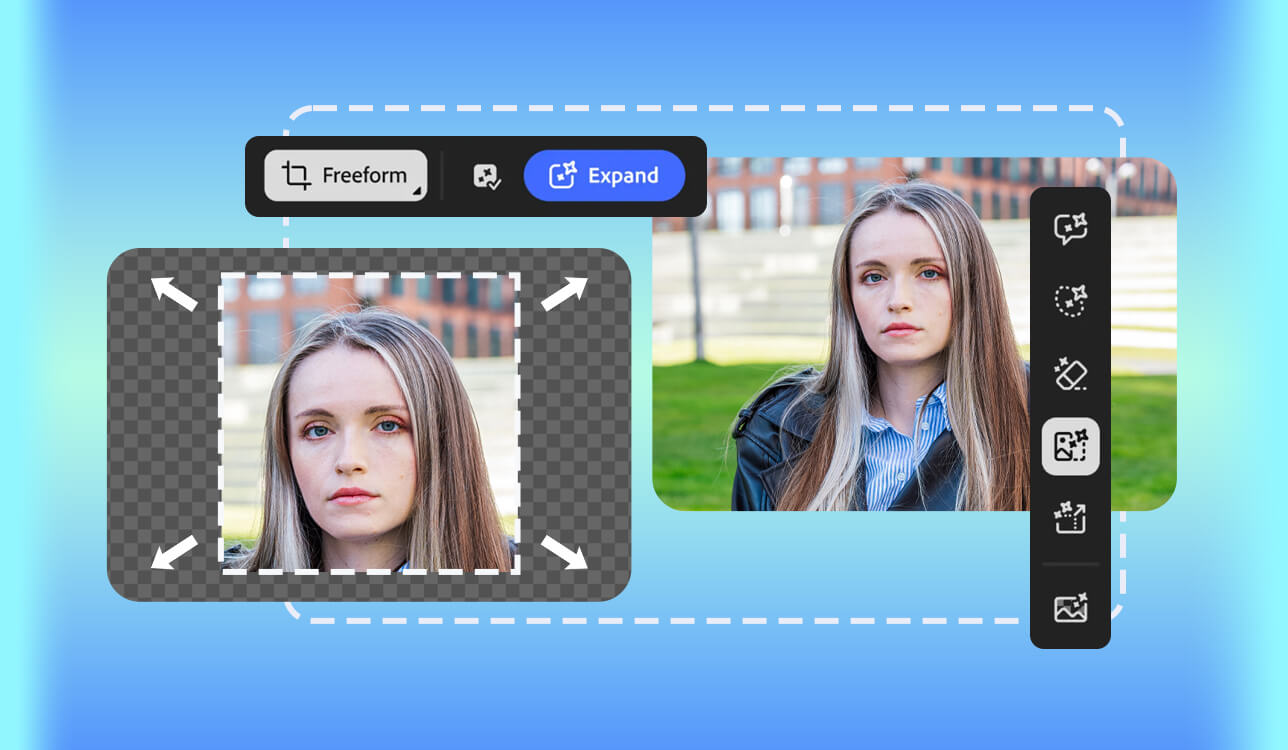
AI picture expanders have become a regular part of my work. They help me quickly adjust images for different sizes, fix photos that are cropped too tightly, and prepare visuals for social media posts, advertisements, and articles. These tools can extend the background and fill in the extra space while keeping the lighting, angles, and details looking natural, so the final image feels complete and well-balanced.
Instead of spending time fixing or rebuilding parts of an image by hand, I can expand it in just a few clicks and get a result that looks natural enough for professional use. That said, not every tool performs equally well. Some struggle with detailed objects, realistic faces, or tricky scenes, which can make the final image look off.
To find the most reliable options, I decided to test more than 15 tools AI picture expanders and compared their image quality, speed, and ease of use in real editing situations.
| Tool | Quality | Best For | Free Plan/Trial |
|---|---|---|---|

|
★★★★★ (5/5)
|
Professional edits, creative work
|
✔️
|

|
★★★★☆ (4/5)
|
Social media design
|
✔️
|

|
★★★☆☆ (3/5)
|
Quick edits & casual use
|
✔️
|

|
★★★★☆ (4/5)
|
Mobile editing & social content
|
✔️
|

|
★★★☆☆ (3/5)
|
Mobile portraits & selfies
|
✔️
|

|
★★★★☆ (4/5)
|
E-commerce & product images
|
✔️
|

|
★★★★☆ (4/5)
|
Marketplace product photos
|
✔️
|
When testing AI picture expanders, I focused on the factors that matter most in everyday editing. I checked how natural the expanded parts looked, whether the lighting and textures matched the original image, and how well each tool handled popular formats used for social media and online stores. I also considered how fast the tools worked, how easy they were to use, and whether the results needed extra editing before they were ready to use.
I also paid close attention to how each AI image expander handled challenging details such as hair, hands, and busy backgrounds, since these are often where mistakes become noticeable. Another thing I looked at was whether the tool included useful extras like background removal, image upscaling, or other editing features. Having these tools in one place makes the editing process faster and more convenient for everyday projects.
One thing I’ve learned from using AI picture expander tools is that the quality of the edges can have a big impact on the final result. Even powerful artificial intelligence software can produce unrealistic results if the outlines of a subject are unclear or the original image needs cleanup.
Over time, I’ve picked up a few simple techniques that help create smoother, more natural-looking expansions and reduce the need for extra corrections later.
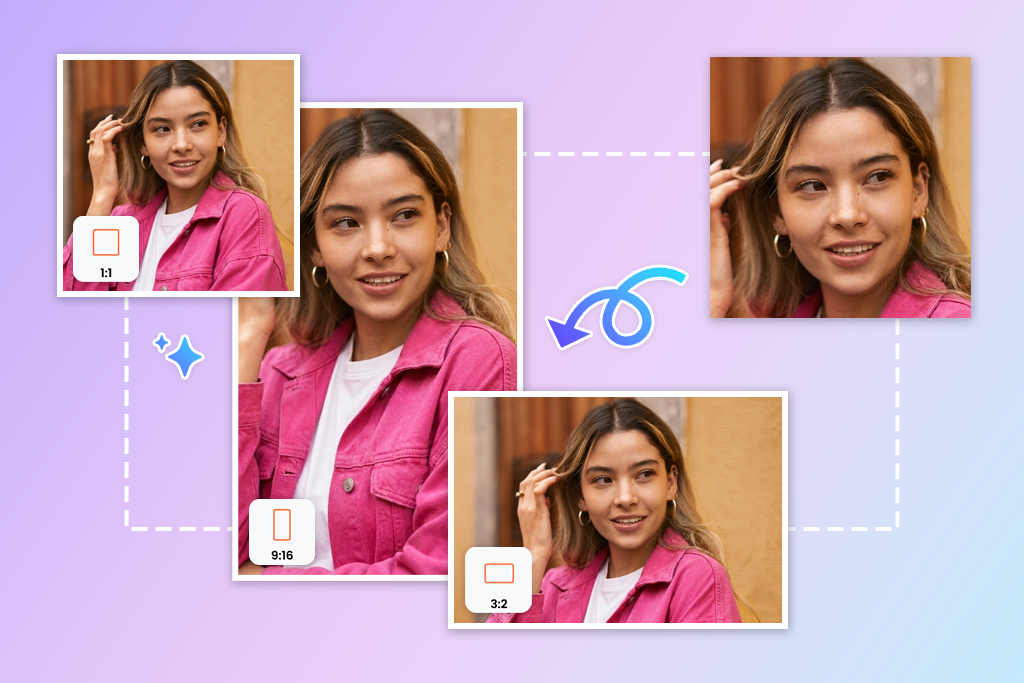
These simple adjustments can greatly improve the final result, making the expanded areas look more natural and polished rather than obviously generated.
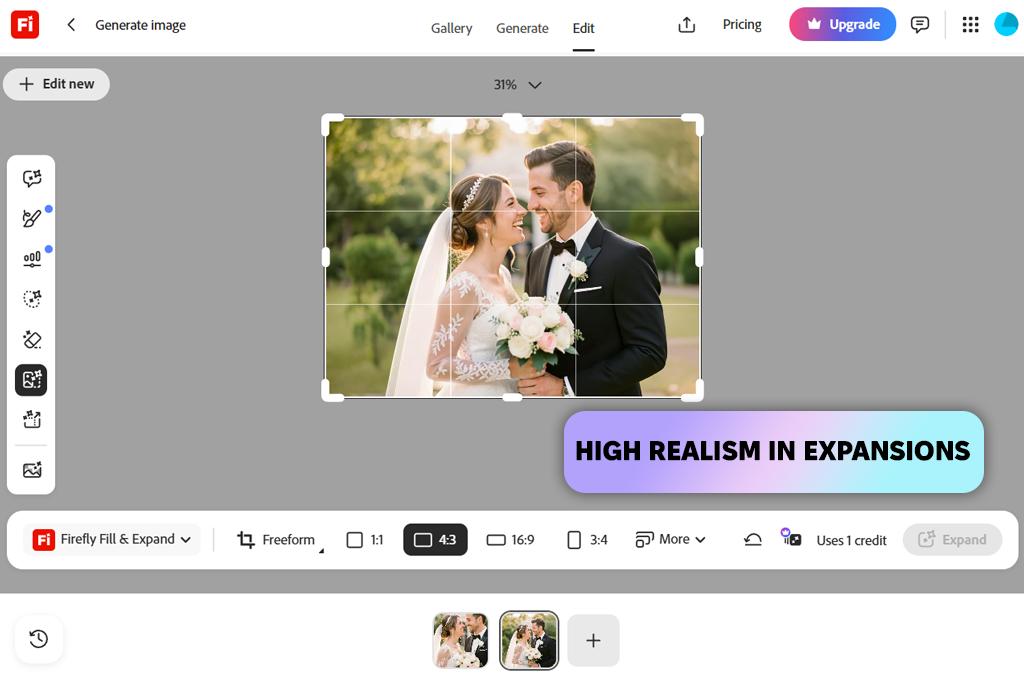
Price: 7-day free trial or from $9.99/mo.
Compatibility: Web, macOS, Windows, iOS, Android
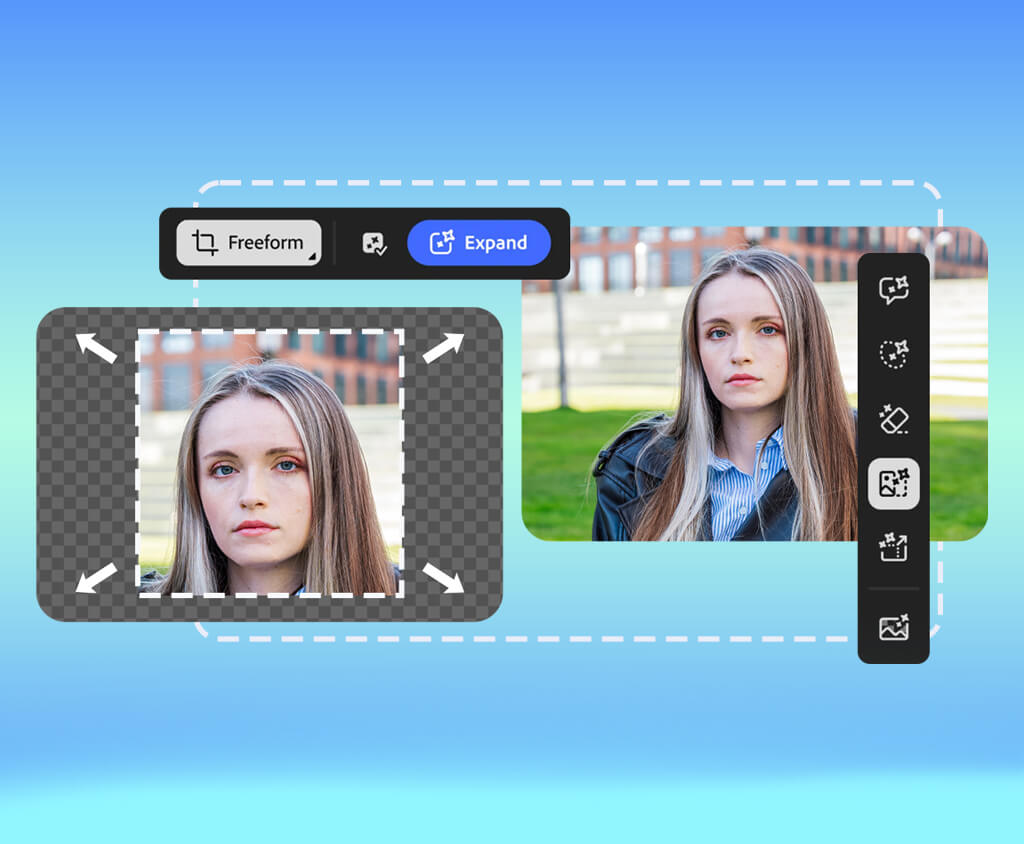
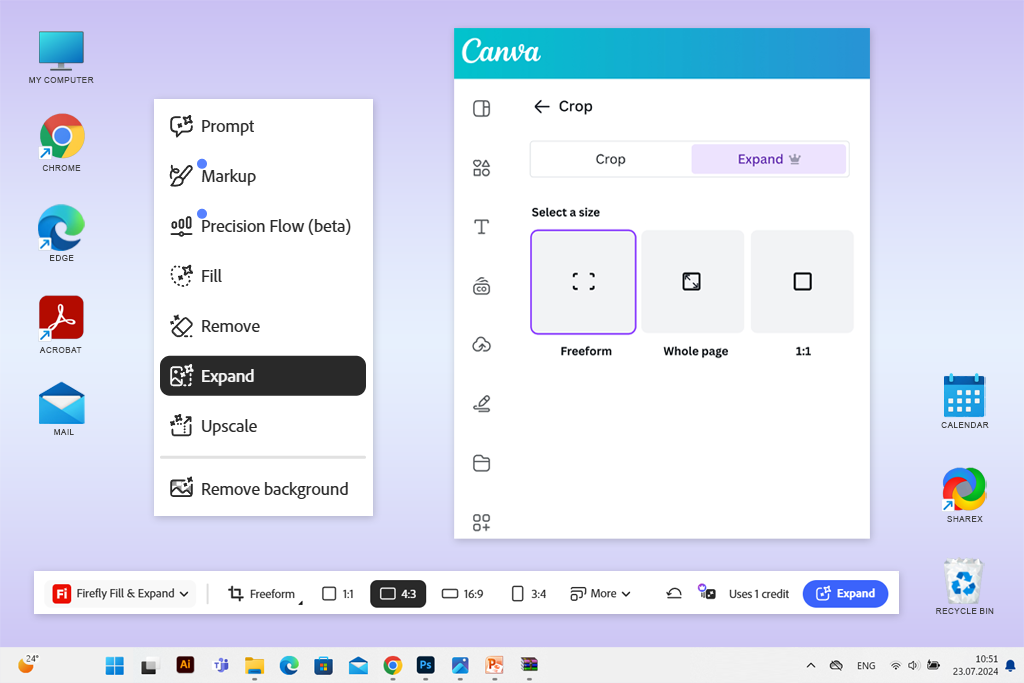
Adobe Firefly is a really handy AI image expander. It has a feature called Generative Expand, available in both Adobe Photoshop and on the Firefly website. You can stretch an image beyond its original borders, and the tool takes care of automatically generating missing areas - matching the lighting, angle, and style so everything blends in perfectly.
In my own use, I mostly resized images for different formats. For example, I turned tight, cropped shots into balanced 1:1 squares for social posts, 16:9 banners, or 9:16 vertical content - without losing the main subject or messing up the overall look.
My workflow was straightforward and fit naturally into Adobe Creative Cloud. I opened the image in Photoshop, expanded the canvas to the size I needed, and adjusted the frame to match the target format. When necessary, I added short prompts to guide the generated content, especially when creating specific backgrounds or leaving extra room for text and design elements.
What I liked most was how naturally the new areas blended with the original image. It worked especially well when I needed extra room for text or wanted to improve the composition by giving the subject more space. I also tried expanding scenes with different background ideas, and the results generally stayed consistent and realistic, even in more detailed images.
“I liked how well Firefly understood the scene. When I expanded a landscape photo, it extended the sky and buildings naturally, making the result look seamless.”

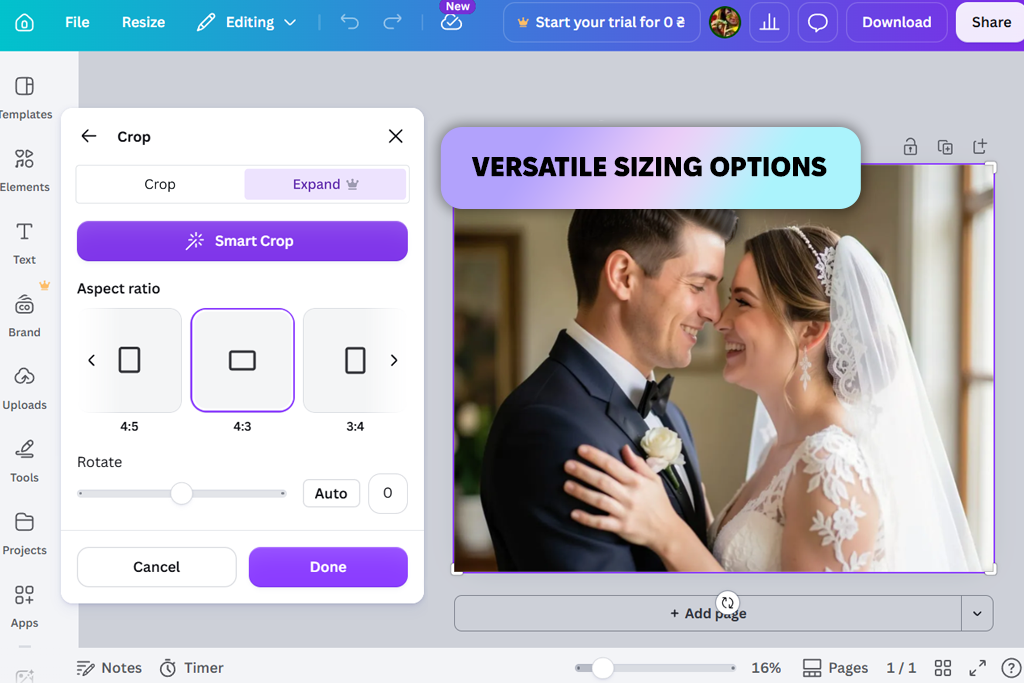
Price: Free or from $15/mo.
Compatibility: Web, macOS, Windows, iOS, Android
Canva is an AI photo expander that provides a quick way to add extra space around an image with Magic Expand. I use the Crop/Expand tool to adjust the frame, and the missing areas are generated automatically. Since it's part of the Magic Studio suite, I can also resize images, try different aspect ratios, and check how they fit in social media posts, ads, or presentation designs without leaving Canva.
In my experience, this AI tool for designers works best when I need quick results rather than perfect accuracy. It's useful for turning images into different formats like 1:1, 16:9, or 9:16, and it usually provides several versions to choose from. I also like that it can automatically match colors and the overall style of the original image, which helps the added areas blend in more naturally.
That said, the quality can vary depending on the photo. Images with simple backgrounds tend to work well, while busy or detailed scenes can sometimes look less natural.
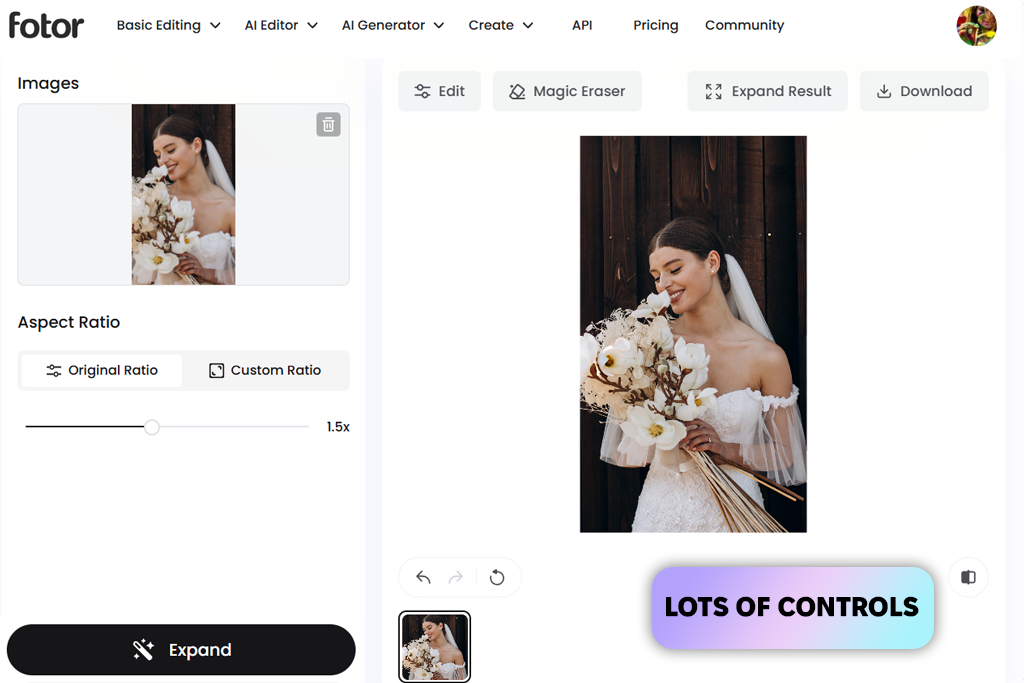
Price: Free (with watermark) or from $8.99/mo.
Compatibility: Web, macOS, Windows, iOS, Android
Fotor’s AI Image Expander (uncrop tool) makes it easy to add more space around an image and fit it into different formats. It reconstructs missing areas while keeping the colors, lighting, and overall look consistent. In my workflow, I mainly used this photo editing software to resize images for formats like 1:1, 16:9, and 9:16 when creating product photos, social media content, and simple marketing materials where speed was more important than detailed editing control.
From my testing, this tool is a good choice when the goal is to quickly resize and repurpose images. Its AI outpainting feature can extend backgrounds cleanly, making it useful for website banners, product pages, and social media graphics that need extra space.
In most cases, the main subject stayed intact, and the added areas blended naturally with the rest of the image. The only time I noticed issues was with photos that had intricate patterns or lots of small details, where the generated content could look slightly off.
“I tested Fotor on several studio portraits, and it did a good job extending blurred backgrounds. It struggled a little with fine hair details, but overall, the added areas looked natural and matched the original image well.”

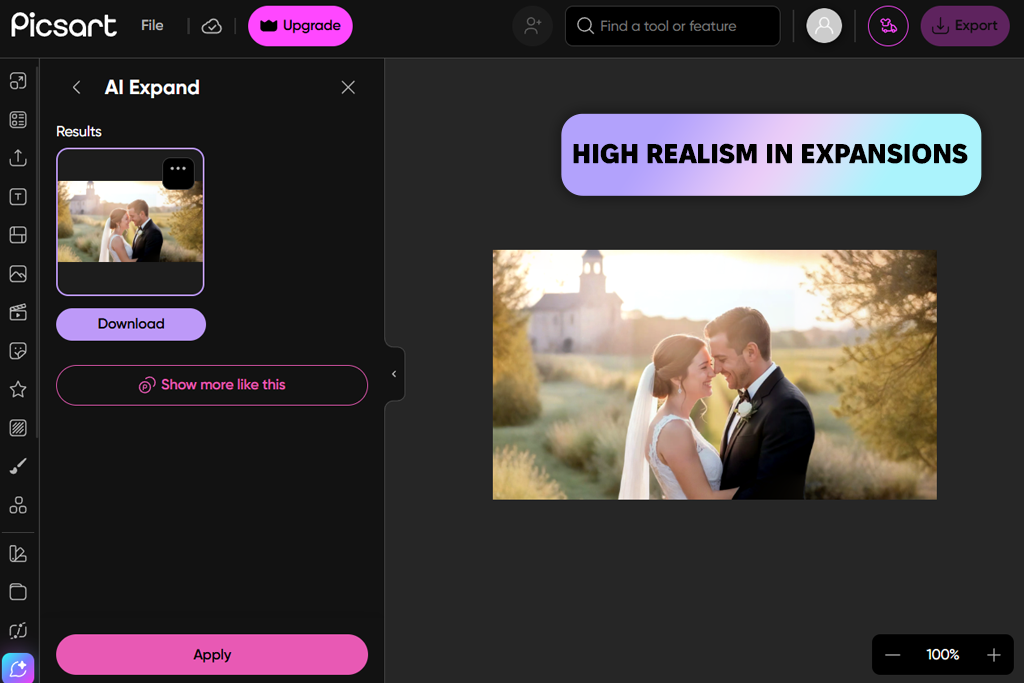
Price: 7-day free trial or from $15/mo.
Compatibility: Web, macOS, Windows, iOS, Android
In my testing, Picsart proved to be a flexible option for expanding images. Its AI image extender makes the process simple: upload a photo, select the desired format, and the tool fills in the extra space automatically. I also used it as photo enlargement software when I needed to increase the canvas size without retaking photos or spending time extending backgrounds by hand.
This AI photo expander works well with common formats such as 1:1, 16:9, and custom sizes, making it useful for preparing images for YouTube thumbnails, product pages, and marketing materials. I also tried the custom expand options when I needed more control over the framing. The results were generally good, especially with simple backgrounds, while photos with lots of details sometimes produced less consistent results.
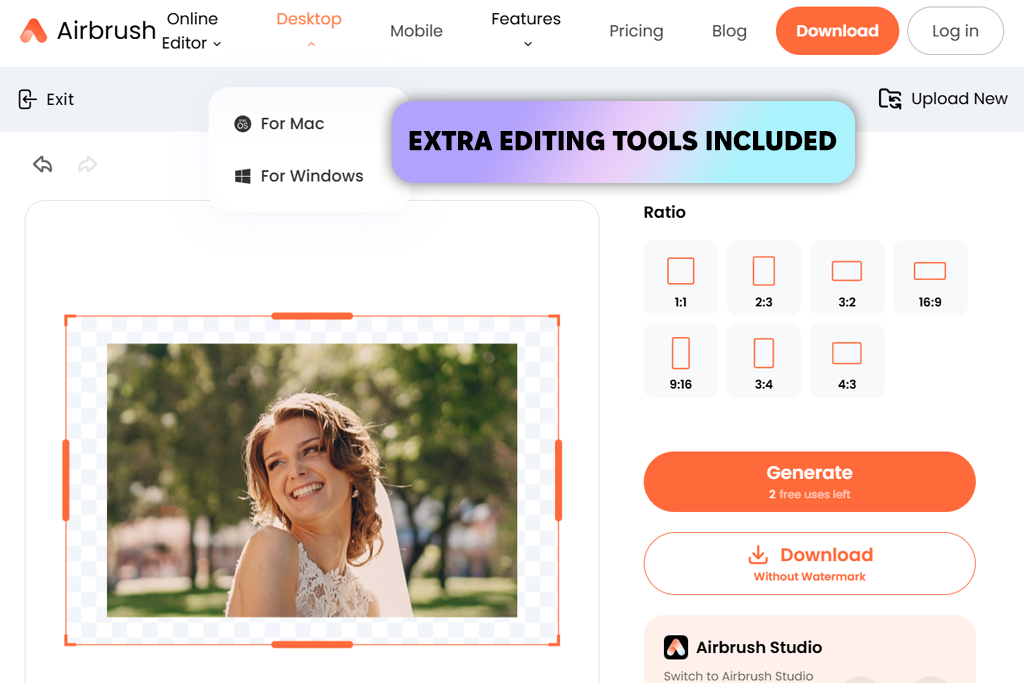
Price: Free or from $9/mo.
Compatibility: Web, macOS, Windows
AirBrush is an AI photo editor that includes an AI Image Extender (Uncrop) tool. I tested it with several portraits and product photos, and the process was very straightforward. After uploading an image, I selected the expand option, and the tool added extra space around the photo automatically. It reconstructs the surrounding areas while keeping the lighting, perspective, and overall look of the image consistent.
From my experience, this AI picture expander performs best with simple or softly blurred backgrounds, such as studio portraits or outdoor shots with shallow depth of field. In those situations, the added areas blend in naturally and make it easy to turn vertical photos into wider formats for social media. More detailed images can be challenging, and I occasionally notice small issues around hair, fine edges, or patterned backgrounds.
“AirBrush was very easy to use on my phone, but in detailed portraits, the hair edges didn’t always look natural.”
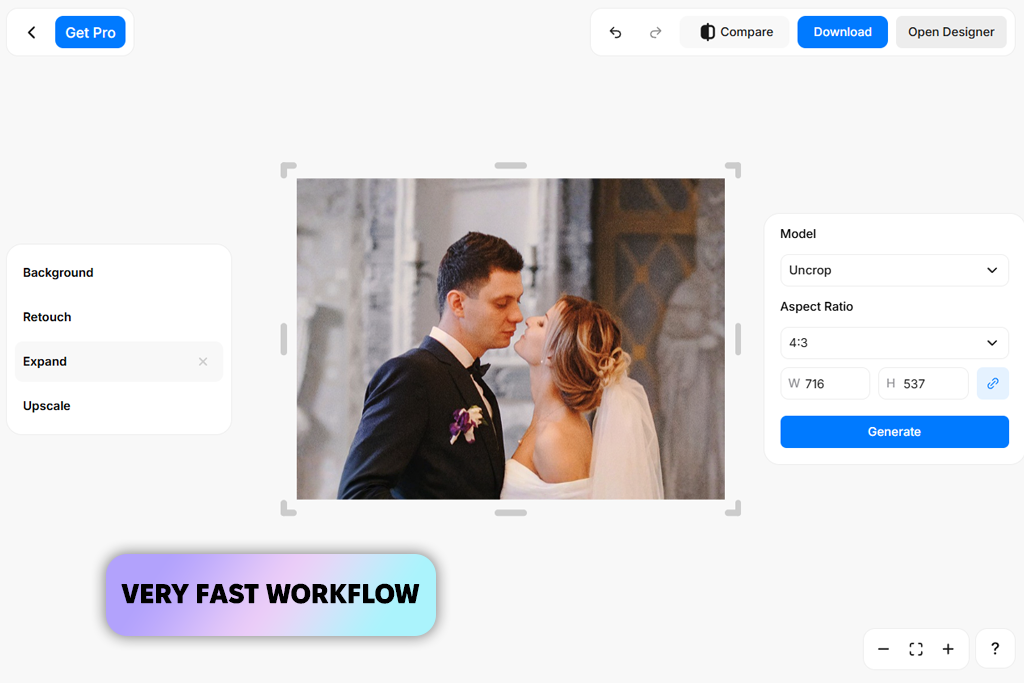
Price: Free (3 images daily) or from $10/mo.
Compatibility: Web, iOS, Android
To test Pixelcut as a free AI picture expander, I uploaded a mix of product and lifestyle photos and used the AI Image Expander to add more space around them. The process was simple: upload the image, choose the canvas size or aspect ratio, and generate the result. The tool analyzes pixel structure, reconstructs the missing areas automatically, and in many cases, the added content looked natural, especially with gradients, skies, and studio-style backgrounds.
When I tried pushing it with tougher edits, I noticed Pixelcut depends a lot on how good the original picture is to begin with. I liked that I could quickly change image sizes for online stores and social media without having to fix things by hand. The way it works with other tools, like removing backgrounds, making images larger, and erasing unwanted objects, made everything feel smooth.
It's great for fast touch-ups, but it doesn't have the detailed manual controls or layer features that you get with professional software like Photoshop AI tool.
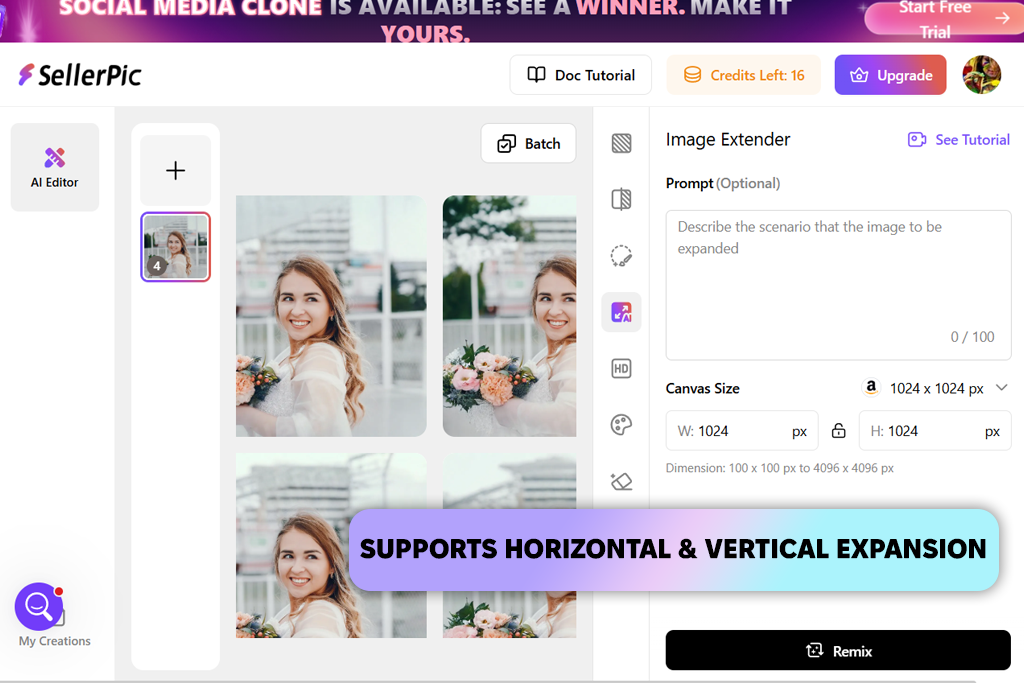
Price: Free (20 credits) or from $29/mo.
Compatibility: Web
I tested SellerPic mainly for product images, but its picture expander impressed me. I took some product shots that needed extra room for Amazon and Instagram posts, and used the tool to widen or lengthen the canvas. For the most part, it did a solid job keeping the lighting, shadows, and textures looking natural - especially with simple product photos on plain backgrounds.
This AI photo expander comes with built-in presets for different platforms, so I could quickly adjust images without needing separate resizing or cropping pictures apps. I also tried it on more detailed pictures, like fabrics and accessories. Most of the time, the tool kept things looking consistent. But when I stretched the image too far, some of the filled-in areas looked a bit repetitive or not quite real.
“It works especially well for e-commerce images, but I found it less effective for more creative or complex scenes.”
An image expander increases the size of a photo by creating new areas around the edges. Rather than enlarging existing pixels, it builds additional content that matches the colors, lighting, textures, and overall style of the original image, helping the result look natural.
Image expansion adds new space around the original photo while keeping the existing image unchanged. Cropping removes parts of the picture, and background replacement swaps the surroundings with something new. The goal of image expansion is to continue the current scene naturally.
Tools like Adobe Firefly, AirBrush, and Canva make it easy to prepare images for platforms such as Instagram, TikTok, Pinterest, and YouTube. They offer ready-made aspect ratio options and simple editing tools, making it quick to resize and adjust photos for different formats.
Yes, but you'll get better results with high-quality images. Low-resolution pictures can turn out blurry or uneven in the new areas when you expand them.
AI image expanders usually perform better with simple scenes and backgrounds. More detailed elements, such as hands, hair, jewelry, or intricate textures, can sometimes appear less natural in the generated areas.
Picture expanders tend to work best on images with simple backgrounds, soft lighting, and a clear main subject. Photos that have skies, walls, studio backdrops, landscapes, or blurry backgrounds usually give the most natural-looking results.
My team from FixThePhoto and I tested a wide range of AI picture expanders to see how well they handle extending images, uncropping, and generating backgrounds in real editing situations. We worked with portraits, landscapes, product photos, studio shots, and social media content to compare image quality, how real they look, and how fast the workflow is.
Some tools we tested but didn't put in the final list were Pixlr, Overchat, Magnific, Freepik, Stable Diffusion, YouCam Enhance, MyEdit, Picsman, PhotoCat, and PixExtender. A few weren't consistent enough in quality, and others focused more on general photo enhancement than on actually expanding images.
Kate and Robin also helped me evaluate these tools on both desktop and mobile devices. Here's what our testing process included:
We quickly realized that AI image expanders handle clean, simple backgrounds best - think skies, studio shots, or blurred scenes. But when a photo is busy or cluttered, the tools really struggle to fill in the new areas in a natural way.