I work as a tech and privacy professional, which is why I often need to assess AI-driven tools that allow companies to improve their security systems, automate repetitive tasks, and minimize risks. While testing edgy tools, I focus on their actual performance, which allows me to discover practical solutions suitable for everyday use. Due to this fact, readers and team members often ask me to recommend reliable AI fraud detection software that can help businesses protect their transactions against fraudsters.
After testing many solutions, I created a shortlist of the services that deliver the most consistent performance. However, when I decided to write this guide, I did not want to focus on the solutions I had already used. This is why I decided to thoroughly test a variety of AI fraud detection software to choose the best options for user needs.
I asked other members of our FixThePhoto team to help me. We tested the capabilities of each service, reviewed documentation, checked whether these platforms were easy to integrate into existing workflows, and compared the available solutions in terms of accuracy, practical usability, scalability, and value for money.
AI fraud detection tools included in this list rely on artificial intelligence to recognize the signs of suspicious behavior, which allows them to deliver faster performance than regular rule-based systems. They recognize suspicious transaction patterns, prevent account takeovers, flag identity fraud, assess risks, and use machine learning to improve their performance.
I chose these tools because they have powerful fraud detection features, can be integrated into existing workflows quickly, and have practical tools suitable for businesses of all sizes from various industries.
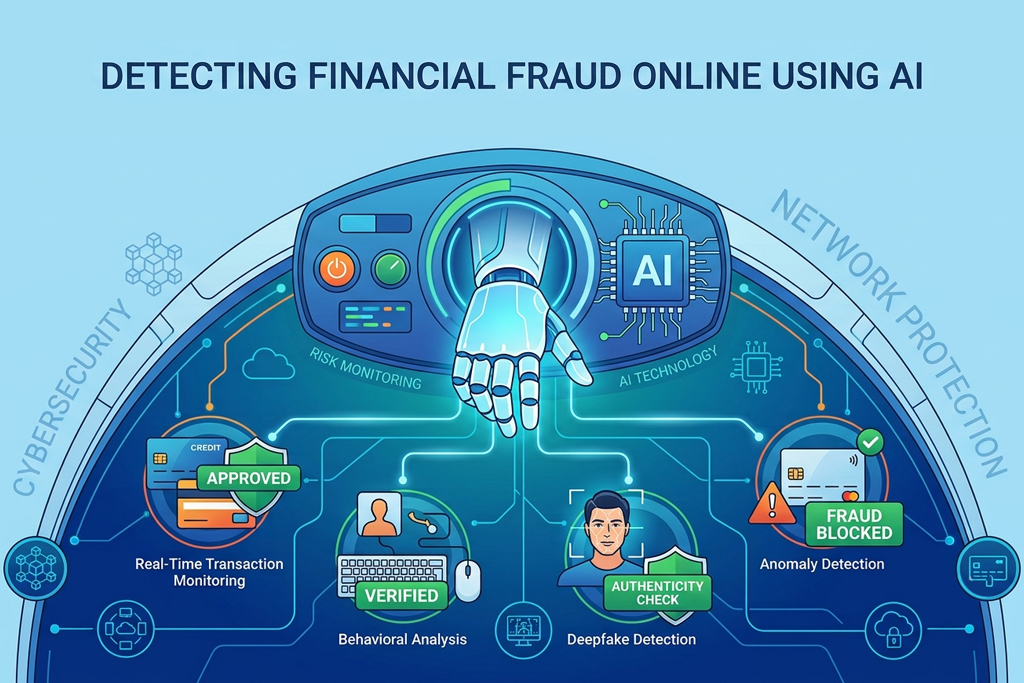
Many popular internet security suites follow a set of pre-established rules to detect fraudulent activities. However, fraud cases become increasingly complex, making them challenging to recognize.
By using AI fraud prevention software, one can process and analyze a lot of data quickly, discover suspicious behavior, and ensure that their systems will be able to recognize new attack patterns without human intervention. Here is how such solutions function:

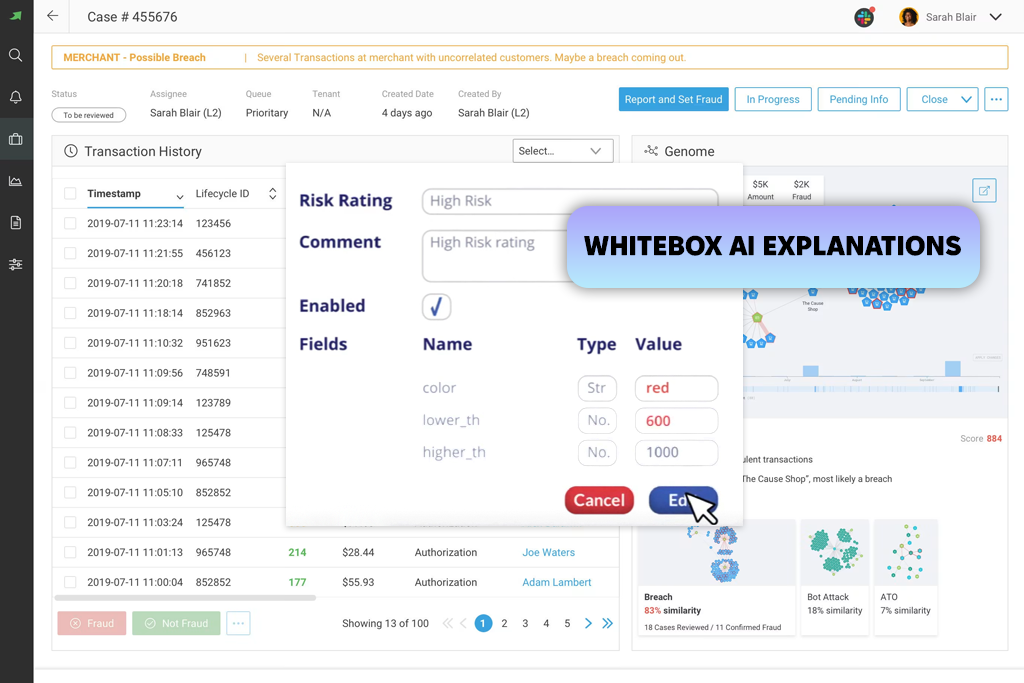
After testing Feedzai, my colleagues and I concluded that it was the best AI fraud detection software we had ever used. Initially, we thought that it was just another fraud-detection service for enterprise needs, but we quickly realized that this platform did not blindly follow static rules. While testing it, I examined how it assessed the signs of suspicious payment activity, while my colleagues tested its behavioral analysis capabilities and scam prevention tools.
We liked the fact that it made decisions almost instantly, even when dealing with multiple risk signals at once. I was impressed to see that it sent an exceptionally low number of unnecessary alerts.
“It provided enough context to help me see why some activities were flagged as suspicious. It made risk scores easier to understand, which helped me expedite my workflow, as I did not need to spend a lot of time reviewing and verifying its decisions.”

I was especially pleased by the fact that Feedzai discovered the connections between various pieces of information instead of trying to consider every event without considering its context. This service relies on behavioral intelligence with machine learning to analyze client activity and come up with transparent risk scores.
I also tested its ScamAlert feature that functions as an AI-powered assistant for detecting fraudulent messages and invoices. I believe that it will come in handy for those who need to detect social engineering attempts before proceeding to the payment stage. I was also highly pleased with the extensive customization, even though I realized that the initial implementation took longer and required more technical planning than some small teams are used to.
I was also impressed by the way Feedzai uses federated learning. This approach allows participating companies to use collective intelligence without disclosing their transaction data, making this service especially suitable for financial institutions that have to process sensitive information.
While testing this encryption software, I noticed that it supports high speed and delivers accurate results, which facilitates detecting suspicious activity and minimizes the number of false positives. This AI fraud detection software has the tools I need most when using such platforms.
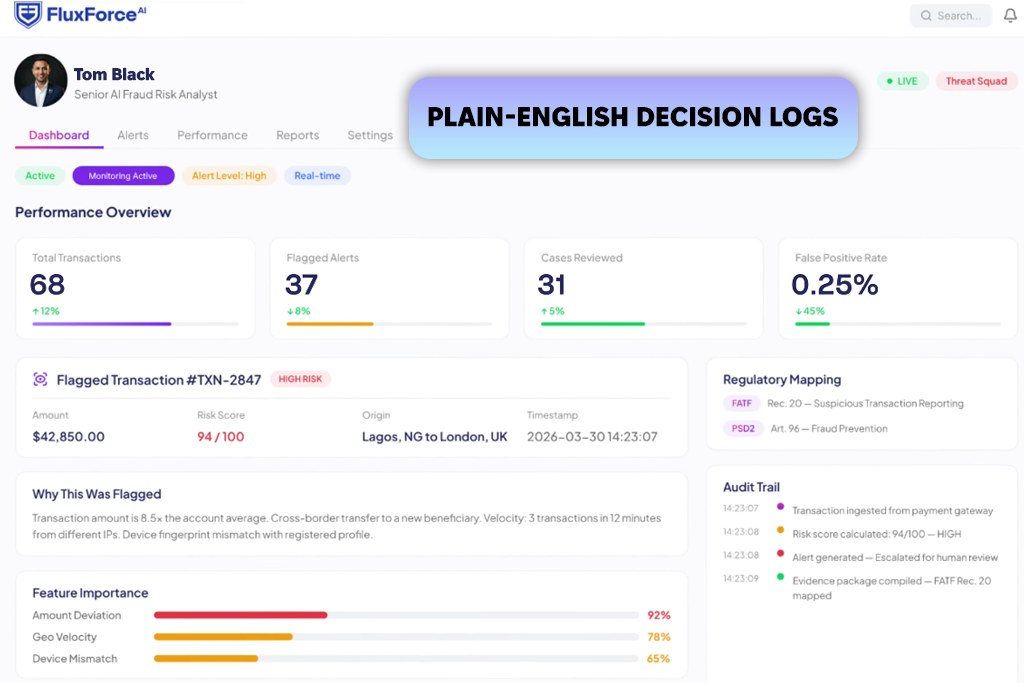
I believe that FluxForce is the best fraud detection software for organizations that need to detect complex financial fraud cases. What impressed me most about this service is not its advanced dashboard but the ease of its integration into fraud workflows. Aiden Flux does not fully replace human investigators but performs many tasks that are solved by fraud professionals when analyzing transactions.
It scores every transaction and provides detailed explanations for each decision. After reading these explanations, I was pleased with the level of transparency this system demonstrated.

When flagging a translation, this service provided a detailed explanation with references to the regulatory requirements. It helped me understand what factors triggered the notification. Such alerts are typically caused by behavioral anomalies, deterministic rules, or a multitude of factors. I liked the fact that I could configure the autonomy model depending on the risk level.
It would move low-risk transactions automatically, while medium-risk transactions would still require human review. High-risk activities are always assessed by humans. It minimizes the risks associated with complete automation. However, it might take you a while to integrate this system with banking and security infrastructure.
I also tested the AI agents tasked with biometric verification, zero-trust security options, and automated SAR/STR reporting tools. This service supports continuous learning from investigator feedback, which allows it to fine-tune its performance and make it more consistent when handling new situations. While testing this service, we noticed a decrease in the number of false positives.
It allowed our analysts to focus on high-priority cases instead of trying to review hundreds of unnecessary alerts. Every decision was easy to understand, which streamlined auditing.
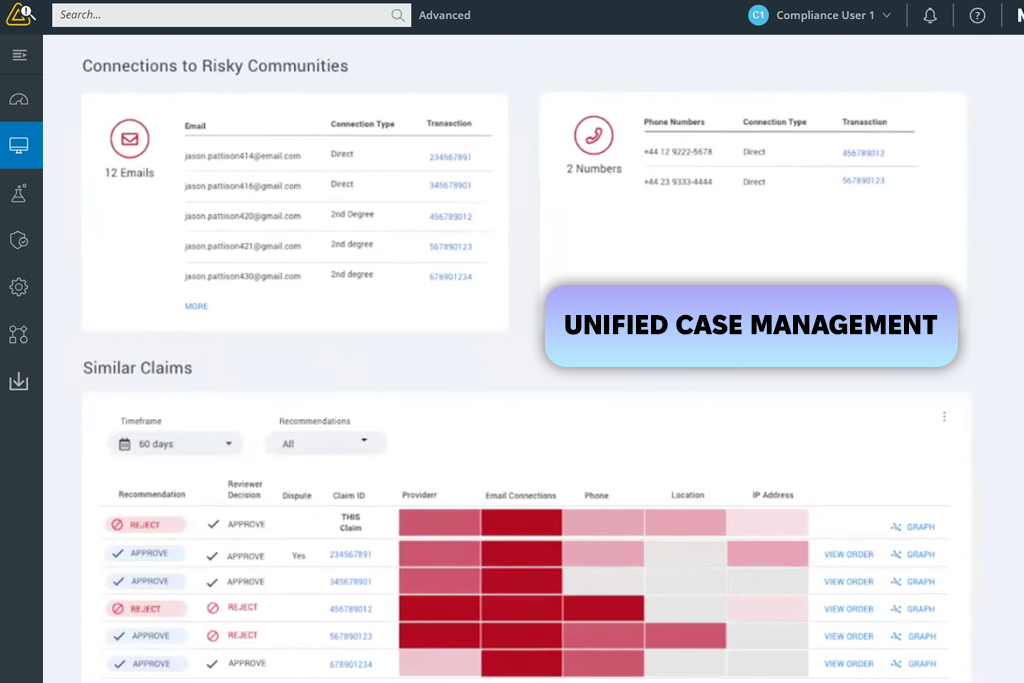
My colleague Kate advised me to consider NICE Actimize and told me that it was one of the most powerful enterprise-level services she had ever used. I decided to check whether it would live up to such praise, so I decided to test it on complex fraud scenarios.
I was impressed by the fact that it relied on both rule-based detection practices and AI models. It makes it more efficient than basic rules engines, as the system analyzes a variety of risk indicators before sending an alert.
“I liked using the case management module and was pleased by the fact that I could access a variety of tools from one place. It allows me to perform fraud monitoring, AML checks, and investigations without switching between multiple standalone products.”

While working, I often need to switch between fraud monitoring, case management, and address verification tools. Here, I can conduct investigations, streamline AML workflows, and access regulatory reporting features from the centralized dashboard without using any third-party services.
I discovered that the AI is especially handy when I need to review extensive datasets where it might be challenging to identify barely noticeable fraud patterns manually. Analyzing years of historical transactions could be quite time-consuming, which is why I welcomed the opportunity to automate the process.
While using this fraud detection software, I discovered that it did not send a lot of unnecessary alerts. An investigator who uses it won’t feel overwhelmed with the notifications about hundreds of anomalies. NICE Actimize ranks the activities and flags the issues that require careful consideration. It streamlines the reviewing process.
This platform will be especially useful for organizations that need to process large transaction volumes and meet strict regulatory requirements. It allows one to access fraud detection, AML, and compliance tools from a unified environment. Even though this system might take one a while to configure, it helps entities streamline their daily workflows.
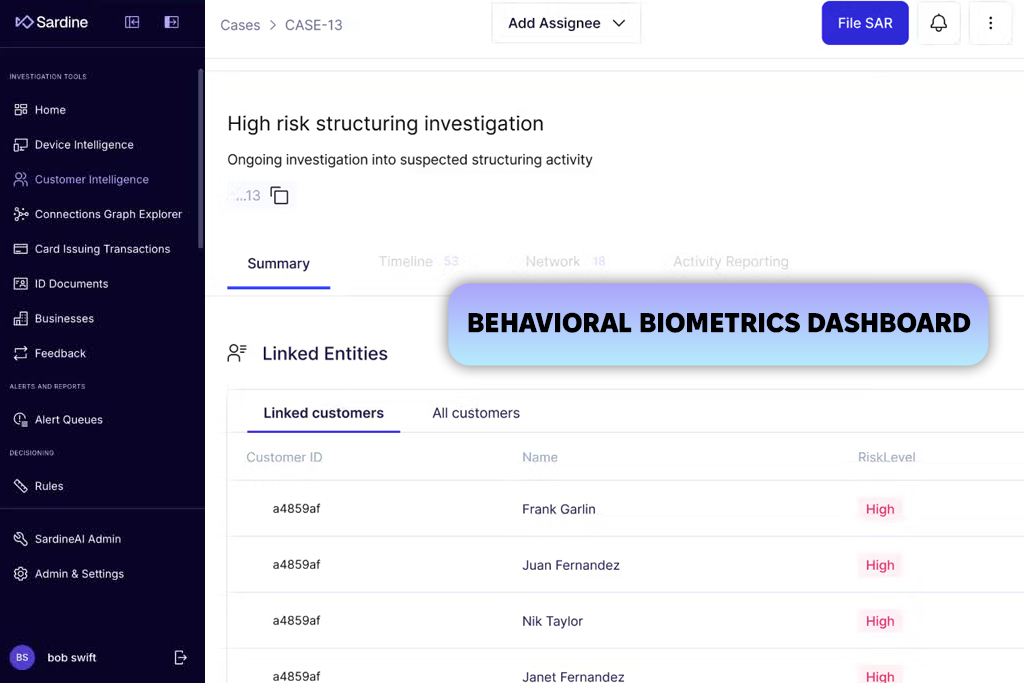
I discovered Sardine while reading a Reddit thread. It was often recommended as the top choice for digital wallets and crypto platforms, which is why I wanted to know whether it indeed stands out among other similar tools.
It has a convenient dashboard and helps investigators analyze a lot of behavioral data before making a decision. Instead of focusing only on transactions, it assesses how users interact with an app. This approach helps AI fraud detection tools analyze context when trying to differentiate legitimate activity from fraudulent behavior.
I thoroughly tested behavioral biometrics and device intelligence tools available on this platform as I wanted to assess their efficiency in real-life situations. Sardine monitors typing rhythm, mouse movements, and navigation patterns to flag possible account takeover attempts that could circumvent traditional rule-based mechanisms.
I decided to use the available AI virtual assistant for KYC and AML reviews to see whether they could quickly clear low-risk identity and sanctions alerts in the automated mode. I was pleased to discover that I did not need to investigate many issues manually. It allowed me to spend less time reviewing events. However, I realized that one needs to adjust the detection thresholds carefully beforehand.
In addition, I was interested in the consortium data network. Sardine learns and improves its performance by accessing broader fraud intelligence. It allows it to detect repeat offenders and coordinated attacks without delays. It takes it less than a second to perform risk scoring, which makes it especially suitable for business use. However, the pricing system is insufficiently transparent. Entities need to negotiate prices individually, as this information is not available publicly.
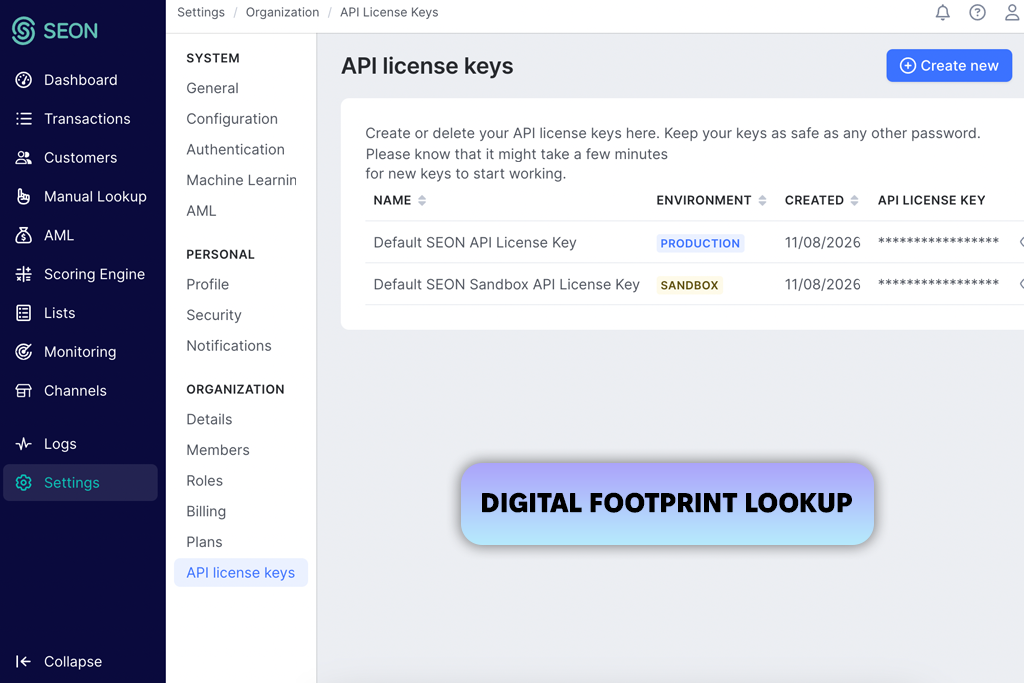
When I started to test this service, I entered an email address and a phone number to check how much information SEON would be able to find. The platform discovered a solid digital footprint quickly and detected many signals that would be challenging to verify manually.
I did not have to process a lot of raw data, as all the insights were nicely organized. As a result, the service built a risk profile that was quite comprehensive and easy to use during identity checks.
“I didn’t think the digital footprinting feature would be so useful. However, it has quickly become a part of my workflow. I could analyze a lot of signals from an email, which allowed me to spend less time on manual search.”
The more I tested this fraud prevention software, the more I liked using its explainable AI features. It was easy to create detection rules, as I did not need to understand complex logic. This service has a natural language rule builder that streamlines the whole process of introducing the rules. When it flagged a transaction or account as suspicious, SEON provides detailed summaries that clarify which signals affected its decision. It allows analysts to see the validity of the result without reconsidering every piece of data. I discovered that users who had less established online presence sometimes had less consistent risk profiles.
What I like about SEON is that it is quite intuitive and has features that make it suitable for practical uses. Besides, it stands out for its transparent pricing system, making it easier for users and organizations to make up their minds about purchasing it.
While testing its performance, I discovered that SEON was especially suitable for fintechs and expanding online businesses interested in advanced fraud detection and comprehensive explanations that allow analysts to understand every decision.
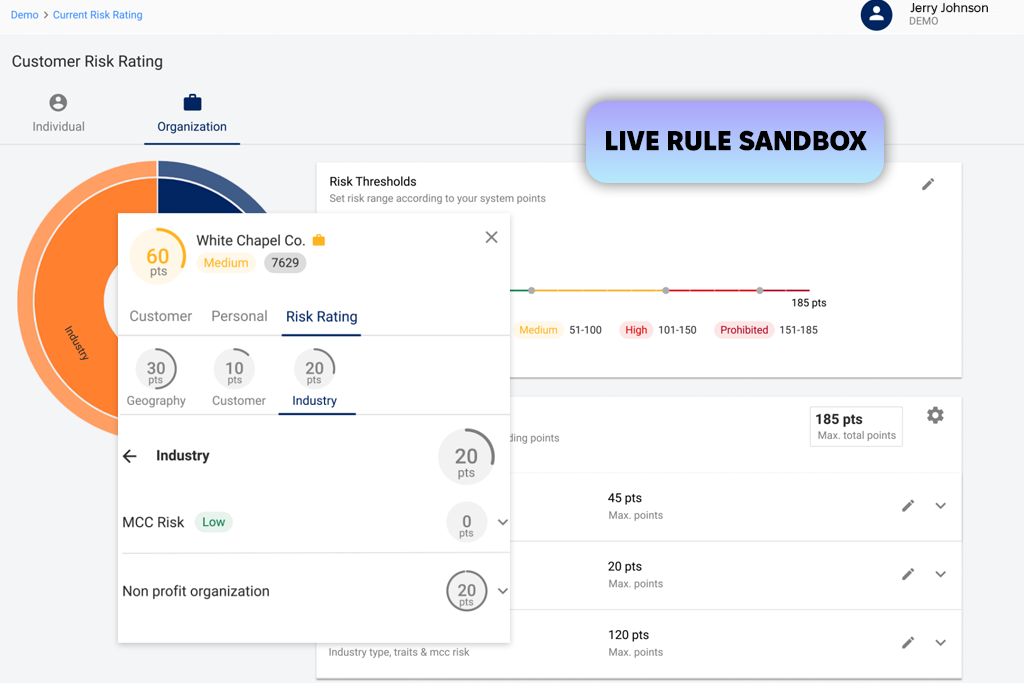
I became interested in testing Hawk AI after discovering that it allows users to access AI tools and rely on traditional fraud rules to achieve higher efficiency. I was pleased with this approach when I started using this tool. This fraud detection platform does not overly rely on AI decisions. Instead, it follows well-known compliance logic and uses machine learning to send data-driven alerts that are easy to understand.
“I was especially pleased with the rule sandbox, as it facilitates experimenting. It allows me to adjust detection logic without disrupting my production workflow, which, in turn, streamlines the testing process.”
I could change detection rules depending on the situation, test whether they remained effective in practical scenarios, and assess how they impacted alerts. It made it less risky to experiment with the rules, as I did not need to change the whole production policies right away. Hawk AI clarifies why each alert was sent, which allows an investigator to decide whether they should look into the matter further.
Even though it might still be necessary to fine-tune the performance of the model, especially when dealing with specialized environments, this process allows users to ensure that the platform fully meets their needs.
I also liked using the centralized FRAML dashboard. This service allows me to access fraud detection and anti-money laundering monitoring tools to avoid frequent context switching and expedite investigations. Due to the fact that this service supports quick real-time processing and has many uses, it’s perfect for organizations that are looking for a platform with powerful detection tools that allows them to understand why certain decisions were made.
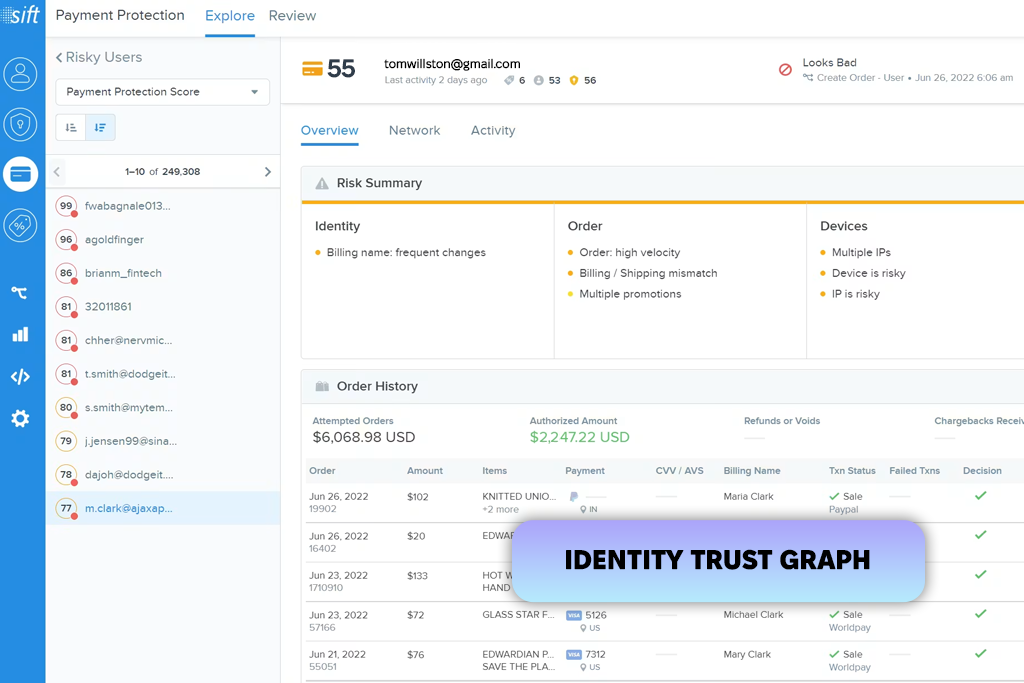
When I started testing Sift, I mostly wanted to check how long it would take it to react to new events. I did not need a service that would prioritize historical data. Via the Sift Score API, suspicious login and payment attempts as well as other actions associated with an account were scored without delays.
It allowed me to understand how this service configured its risk levels after analyzing new data. I was pleased by the fact that I did not have to wait for scheduled scans or the results of batch processing. The platform provided continuous feedback, making it quite convenient to use.
I could access payment protection, account defence, and abuse prevention features from the centralized dashboard. As I could switch between different modules swiftly, it increased the efficiency of my investigations.
Another advantage of this AI fraud detection platform is integration with Sift's global network that analyzes more than a trillion events each year and learns how to handle such issues. Due to this integration, this service can discover fraud patterns more efficiently even before their consequences for a business fully manifest.
In some cases, it flagged legitimate activity by giving some actions a higher risk score. It mostly happened in edge-case situations. However, I could review these situations quickly, as this service provided information to explain its decisions.
Even though it took me a while to configure my workflow, it helped me automate many processes. When I matched the routing logic to our business criteria, daily monitoring became more streamlined as it no longer required constant manual intervention.
When we decided to test these services, we did not want to focus solely on their lists of features or the way they were advertised in marketing materials. This is why I decided to check how they handled the issues fraud teams had to face daily. I wanted to understand whether they could recognize the signs of suspicious activity and make the right decisions when investigating a problem. I ranked lower the solutions that detected every threat but sent too many unnecessary alerts and distracted analysts with notifications.
One of my top priorities was checking detection quality. I considered whether these services detected behavioral patterns well, analyzed device signals and transaction data, and considered identity information to differentiate legitimate activity from suspicious behavior. In addition, I wanted to see how well these systems could explain the decisions they make, as it’s important for analysts to understand the main factors that resulted in an alert.
We also wanted to assess the overall efficiency of a workflow. Kate considered how long it took for a service to send an alert and checked whether it was possible to investigate the issues promptly. Besides, we wanted to find tools that automated compliance tasks without affecting the transparency of the decision-making process.
We ranked higher the platforms that supported fraud detection and were easy to integrate into KYC or AML workflows. Such services are perfect for improving the performance of compliance teams.
“While testing these services, I liked the fact that we weren’t trying to choose the ultimate winner. We were more interested in discovering practical solutions that would allow users to understand what an alert is about and minimize the number of tasks users needed to perform.”
Robin also wanted to see whether these solutions were practical and easy to use. We examined their suitability for different uses, checked integration requirements, considered the available customization options, and checked how much configuration the models needed to deliver consistent results. Some services stood out for their outputs. Others impressed us with their flexibility, even though they were more challenging to set up.
In addition, I considered whether these platforms could provide top-grade security without causing any inconveniences for users. The best solutions had powerful fraud prevention mechanisms and safeguarded user data without focusing on false positives. Besides, such services were easy to use and were suitable for daily operations.



![7 Best Free Monogram Makers [{{%year}} FixThePhoto Choice]](http://fixthephoto.com/blog/images/gallery/news_main__preview_29343.jpg)


![7 Best Magazine Mockup Generators [{{%year}} FixThePhoto Choice]](http://fixthephoto.com/blog/images/gallery/news_main__preview_29336.jpg)


![7 Best AI Voice Designers [{{%year}} FixThePhoto Choice]](http://fixthephoto.com/blog/images/gallery/news_main__preview_29367.jpg)