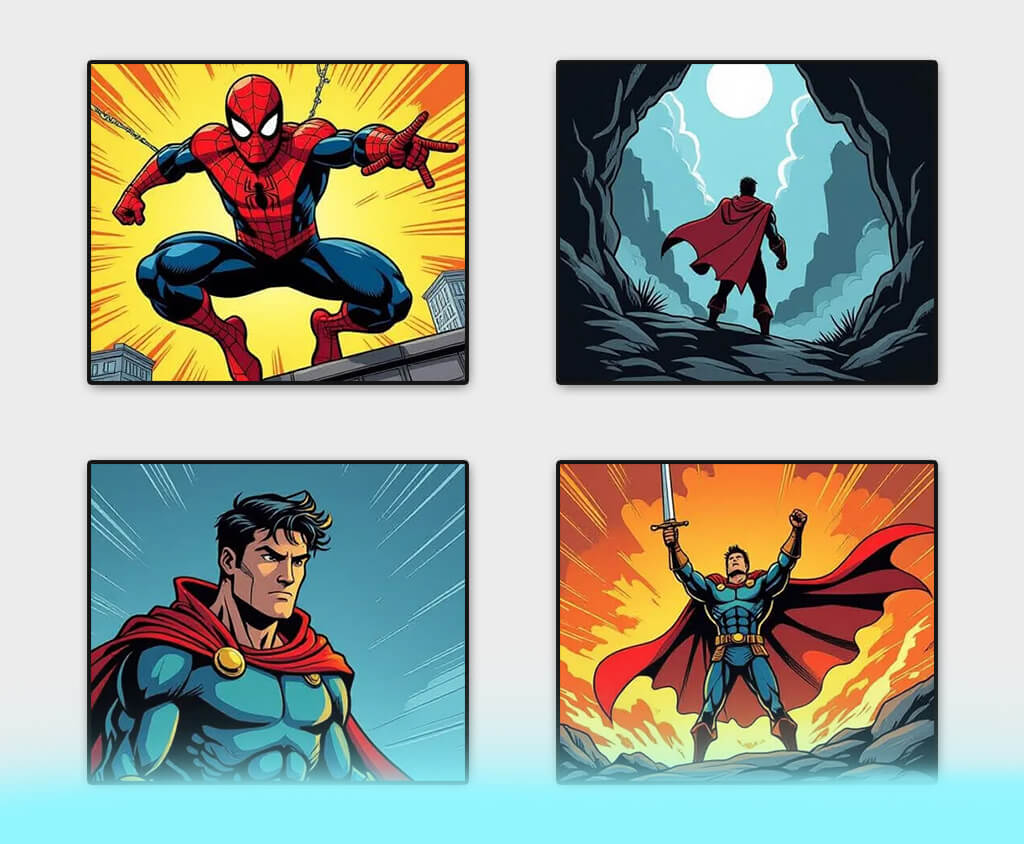
Ever since I was a kid, I was a huge fan of comics – the fast pace, the beautiful art, the expressive faces – just one image could tell half the story. Some time back, I began creating my own comic series Neon Divide, a sci-fi story that takes place in a dystopian town where memories act as currency. I finished the script and the dialogue, but when it came to art, I ran into a roadblock.
I like professional drawing skills, and sadly, I couldn't afford a professional artist to illustrate an entire series. That’s why I made it my goal to find the best AI comic generator that would help produce the images I needed for my project without compromising on quality or tone.
Initially, I hoped that I could pick the first AI comic book generator I saw, and it would do what I needed. However, after testing a couple of options, I understood that this process is a lot more complicated than I thought. I wanted a solution that wouldn’t simply generate characters but could also manage to preserve a cohesive art style across multiple scenes, while adhering to my descriptions of the lighting, mood, and perspective, as well as dialogue placement.
I wanted to find a platform that could transform my script into polished comic panels rather than isolated images. I also hoped to try out various angles, facial expressions, and visual effects. Moreover, I wanted an AI that would maintain continuity between panels to ensure they all feel like a part of the same comic.
This led me to try out a bunch of comic and cartoon AI generators. I added the same scenes from Neon Divide to all of them, evaluating how successful they were at tackling the tone, expressiveness, detail, and visual consistency. Certain platforms were great at handling action, but didn’t manage to preserve coherent character appearances. Meanwhile, others were great at generating facial expressions, but the backdrops looked flat and uninspired.
Since I ended up with a lot of work on my hands, I decided to invite my colleagues from the FixThePhoto team to test these platforms with me. Together, we put together a list of the most popular AI comic book creators, determined our requirements, and started generating comics for a variety of needs.
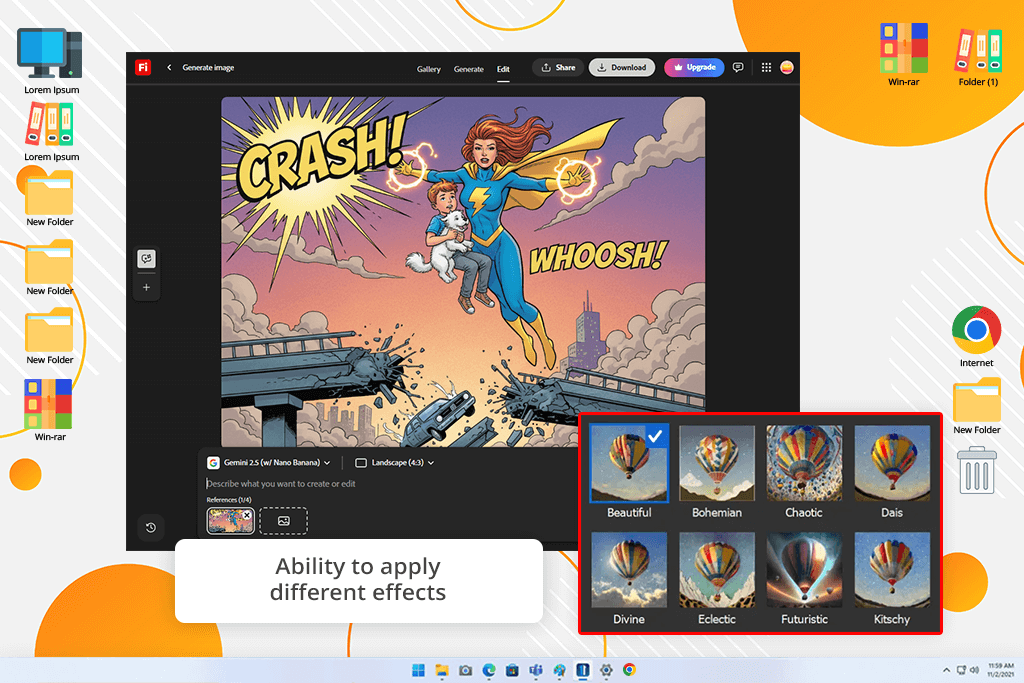
When I first tested Adobe Firefly I didn’t expect it to become the best AI comic generator on the list. I’ve employed it for graphic design in the past, but never for generating sequential artwork.
I started by providing brief scene prompts from my scripts, like “two characters talking on a rainy street, soft neon lighting”, and Firefly delivered beautiful panels that fulfilled my exact requirements within seconds.
“I was incredibly impressed by the quality of the visuals. Firefly is great at picking the right colors and lighting to make the comic panels feel cinematic. I added a couple of dialogue lines, and the result looked polished and professional. It's quick, efficient, and more artistic than I thought.”

I particularly appreciated the stylistic customization provided by this platform. It allows me to adjust the line weight and contrast as well as request specific moods, including “nostalgic manga ” or “gritty noir hues.”
Additionally, I managed to easily integrate Firefly into Photoshop, making the subsequent editing process a lot more convenient. If your goal is to produce pro-grade comic book imagery while enjoying complete control over all its aspects, you can’t go wrong with Firefly.
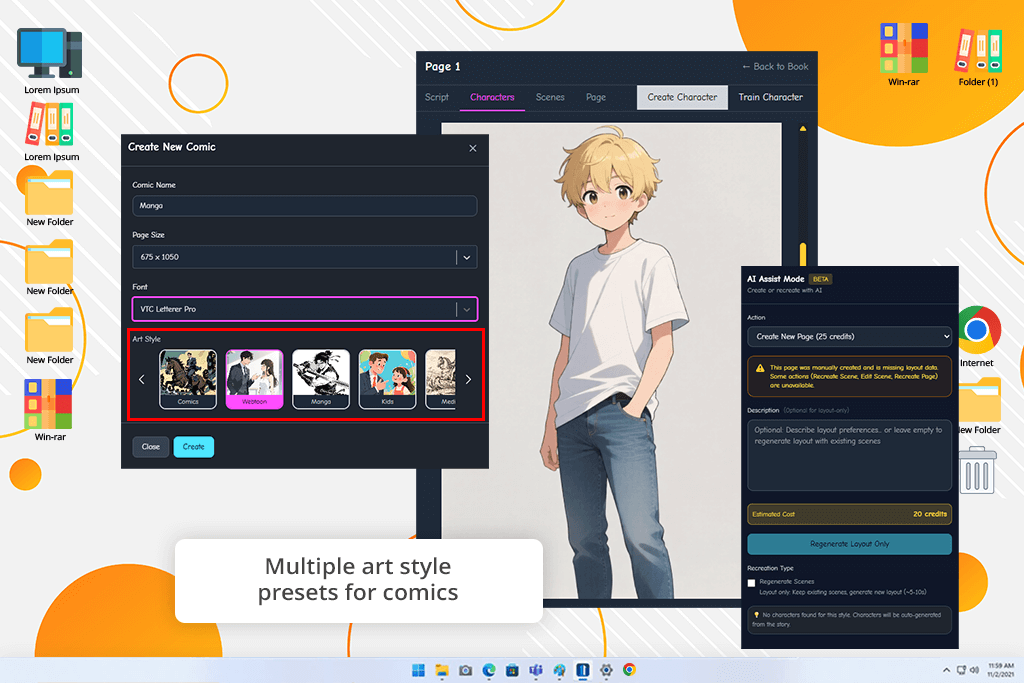
ComicsMaker AI is a fantastic solution for story-focused creators like me. Rather than having to mess around with several tools, I used this platform to create both the imagery and the panel layouts.
I imported my script, chose an art style I liked (opting for a semi-realistic manga approach), and in just a couple of minutes, ComicsMaker AI generated the first 3 pages of my project. Afterward, I could rearrange the different elements, edit the dialogue, or re-render images without having to start from scratch.
“This tool helped me fully immerse myself in the shoes of a comic creator. I imported my script, chose a style, and ComicsMaker AI produced a complete layout almost immediately. It isn’t always perfect when generating faces, but it’s great at maintaining storytelling consistency.”

The best part? It excels at maintaining the look of a character between panels, which is the downfall of the vast majority of AI art generators. For my test, I made a 6-page comic in less than two hours, which would probably require a week of manual work otherwise. ComicsMaker AI struggles with complex backgrounds, but if cohesive storytelling is your priority, you’ll be happy with this choice.
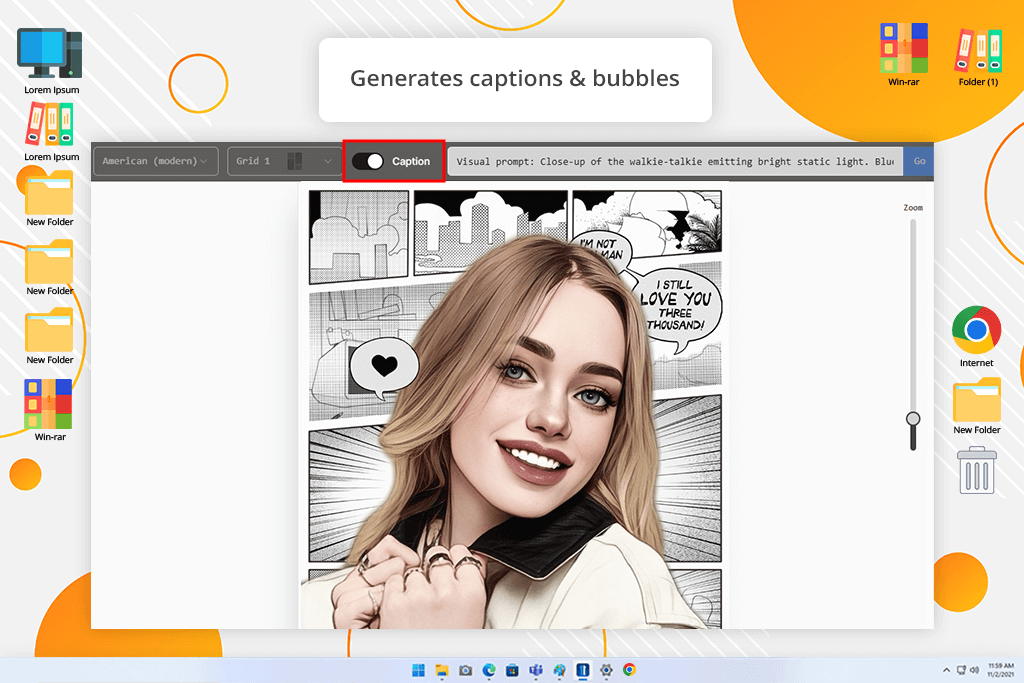
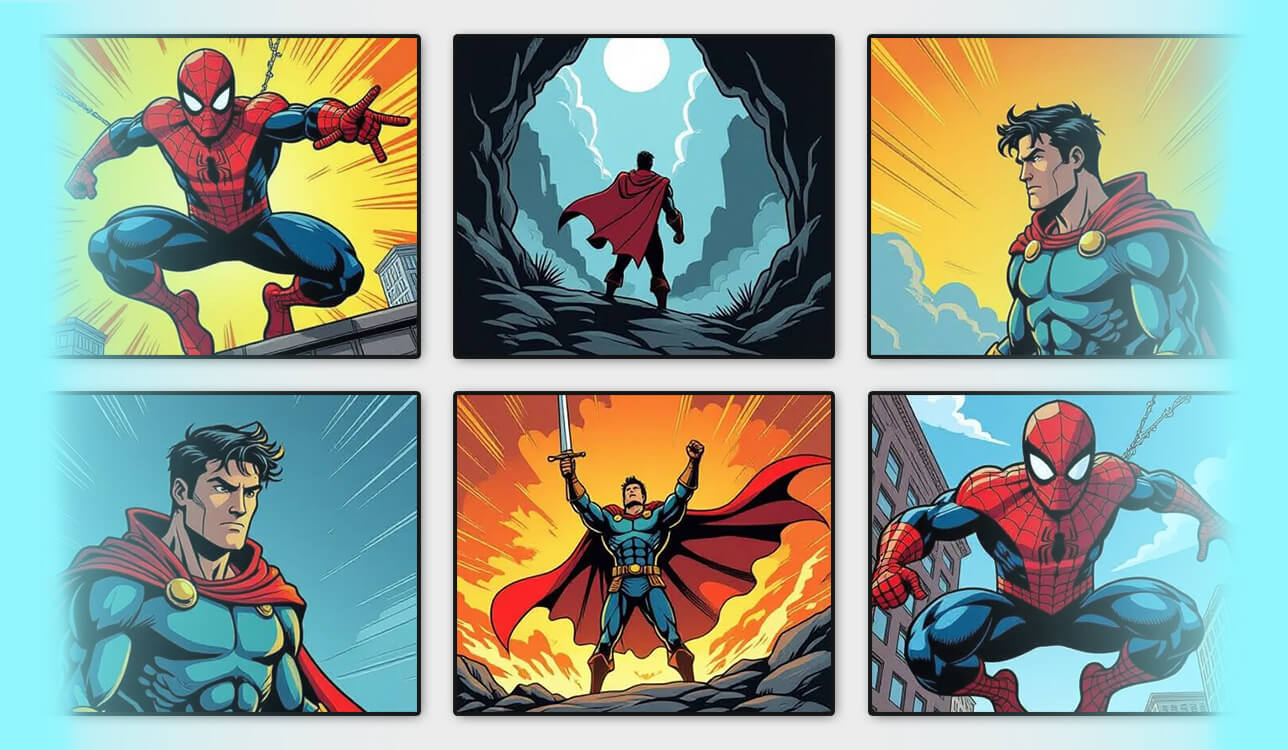
This solution made me feel like I was working together with a coworker rather than trying to create a comic book with AI. I provided a brief scene description and the dialogue, and AI Comic Factory automatically divided it into panels, generated speech bubbles, and ensured the facial expressions were relevant for every line. I also appreciated how smart the layout intelligence of this AI image generator was, as it zoomed in to show emotions and produced wider scenes for action.
“Using this solution is very fun. I managed to create a humorous superhero comic in less than 20 minutes. The AI is great at doing action poses while providing a satisfying vintage comic book style. I'd appreciate more style variety, but I love what already is there.”

I made a fantasy combat scene, and this platform did a great job rendering dynamic motion. The linework resembles western comics, producing striking, clean, somewhat exaggerated lines. Making separate panels is simple, but the performance can drop a bit when dealing with highly intricate images. Overall, if your goal is to find a versatile full-cycle AI comic book generator, this is a great option.

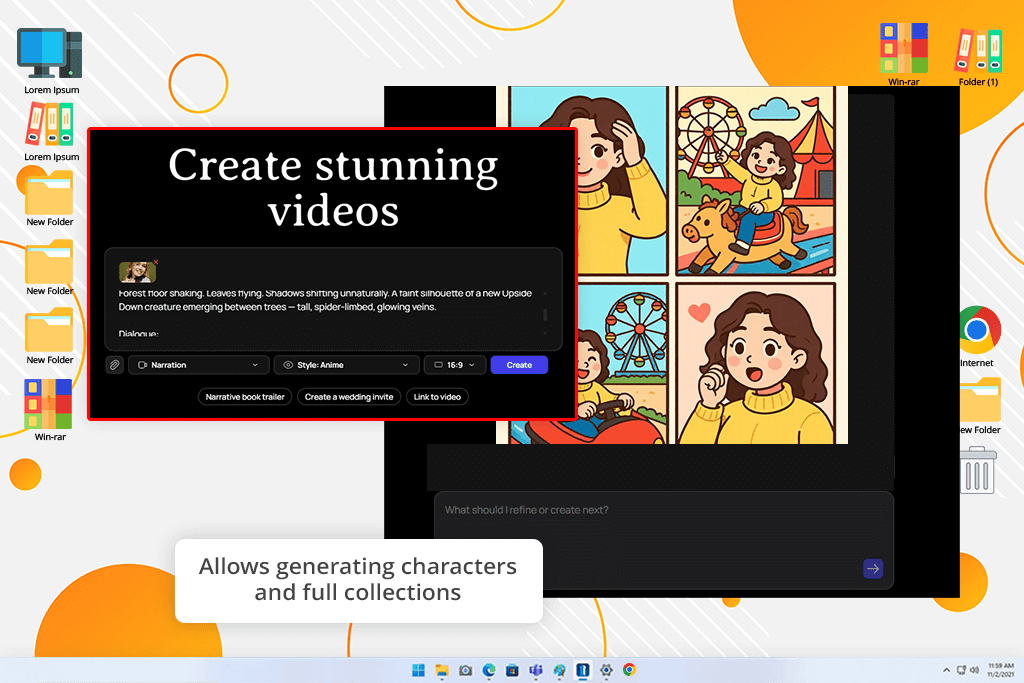
When using Dashtoon, I started by importing storyboard sketches and prompts into the provided “Storyboard to Comic” menu. The AI managed to recognize the characters from the little imported reference, added them to its built-in character library, and generated panel-by-panel renders with consistent designs. It's incredibly fast, taking only a couple of minutes to deliver results that would require hours of Illustrator and Photoshop work. Dashtoon's character library and “Style DNA” claims felt legit: my main character preserved their hairstyle, clothing, and face across all generated panels.
“The level of detail provided by this solution is very impressive. Al panels resemble concept art from a film. It's a great choice if you need to tell a mature, moody story.”

Next, I leveraged the editing functionality of this artificial intelligence software, tweaking panel sizes, applying a cyberpunk manage aesthetic, and creating text bubbles. This AI comic strip maker also has a Magic Erase feature for getting rid of unwanted elements, as well as auto coloring.
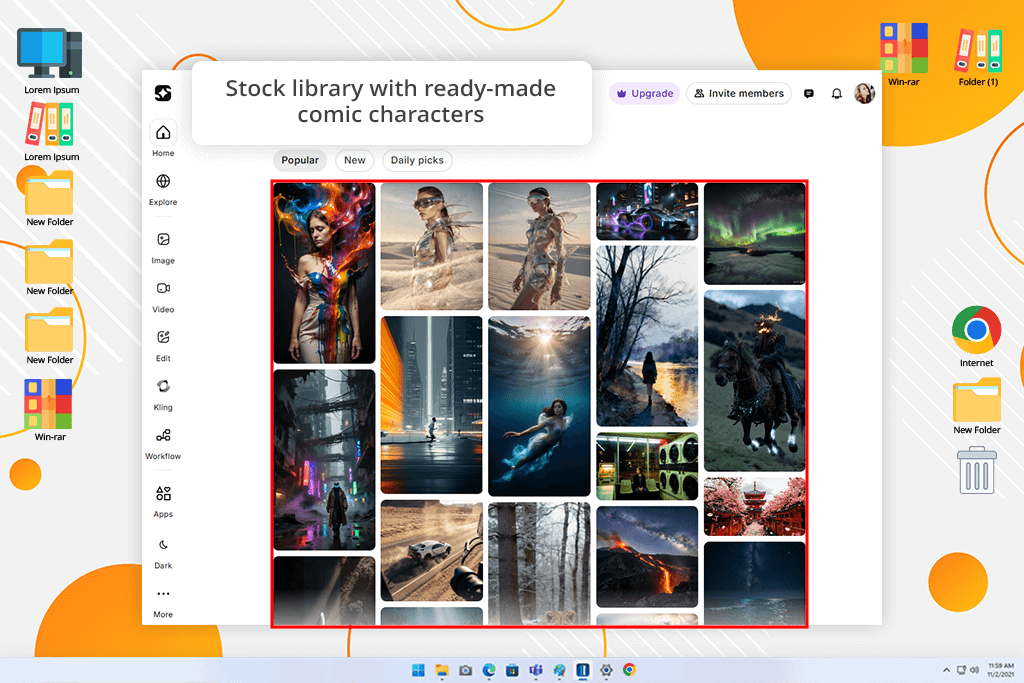
ImagineArt gives you complete freedom when it comes to making comic books. I used it to produce characters for a dreamscape-based comic story that resembled the vibes you get from Paprika and Blade Runner. This AI comic art generator did a great job conveying the visual style I imagined, delivering characters with expressive faces and evocative color harmony. I love the dramatic effects you could create, for instance, achieving cinematic lighting or applying stylistic overlays that give the scene a certain look.
“ImagineArt can act as a dependable creative partner. I provided it with a short story and it used the included dialogue to generate relevant panels. It wasn't perfect, but going through all the steps felt incredibly intuitive.”
I particularly liked the imagination involved in crafting compositions. I provided unconventional prompts like "floating city reflected in an ocean of light” and this image cartoonizer converted them into captivating, high-resolution comic backgrounds. Even though I needed to resort to a different platform to make panels and speech bubbles, ImagineArt’s main benefit is its capability to generate visually awe-inspiring keyframes.
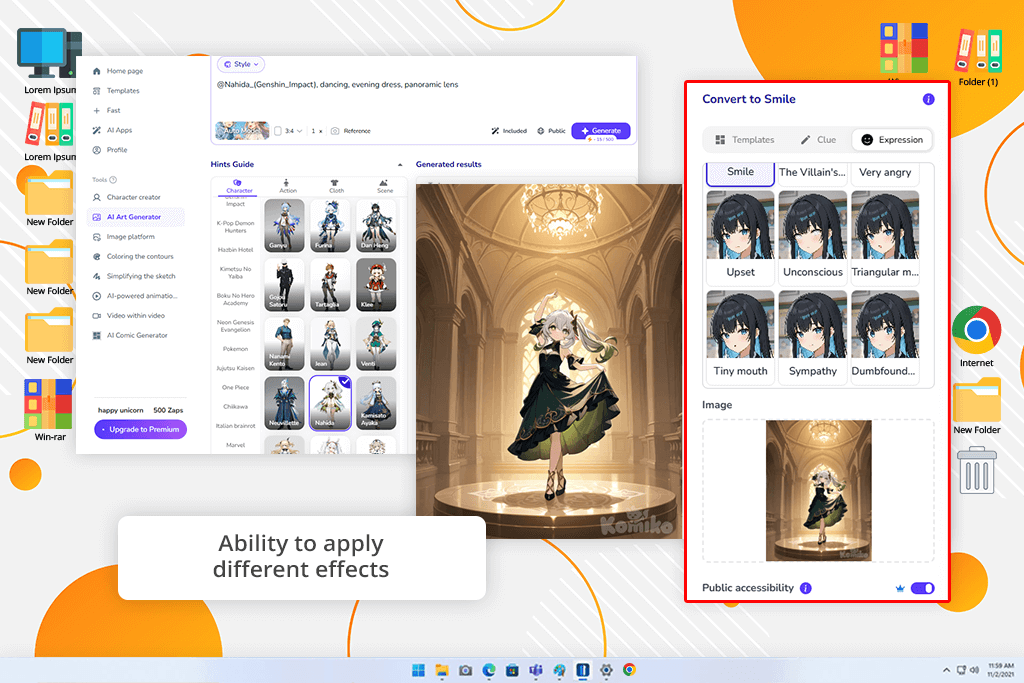
“I primarily employed Komiko for making characters, and this solution has proven to be great at conveying personality through art. Moreover, my characters looked consistent across all the scenes in the comic, which is very important.”

I loved how efficient Komiko is at remembering the design of different characters and its capability to place dialogue bubbles in empty areas. Additionally, this cartoon pictures app lets you publish your creations online in just a couple of clicks. Overall, Komiko is primarily aimed at creators who are interested in storytelling but lack the necessary technical skills.
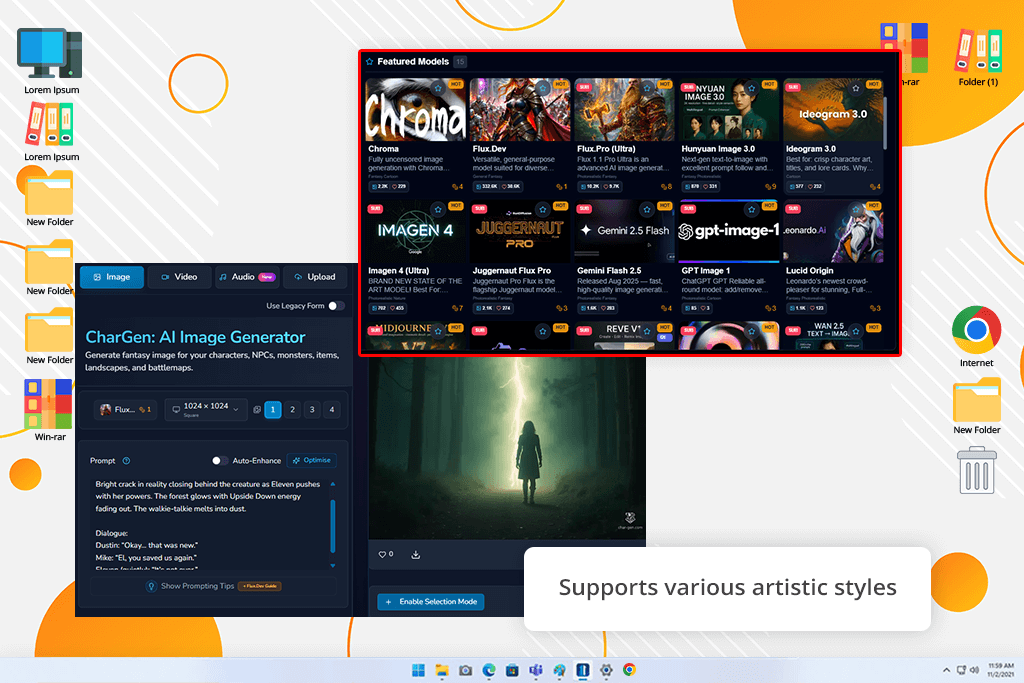
CharGen isn’t a dedicated comic maker, but it’s a great tool for ensuring character consistency, which is usually a big issue with other tools. It helped me create a set of characters before I started making individual panels. After I finalized a style, settling on a semi-realistic anime aesthetic, I produced over 20 expressions and poses for every member of the cast.
“This solution is very fun to use. It has an eye-catching, somewhat over-the-top style that is ideal for short, comedic stories. I used it to create a meme strip about a clumsy sorcerer, and it looked hilarious.”

It preserves the proportions, attire, and facial structure across different images. Afterward, I opened the generated characters into Photoshop to create the panels by hand. It's not jaw-dropping, but if visual continuity and detailed world-building are important to you, CharGen is a great option to consider.
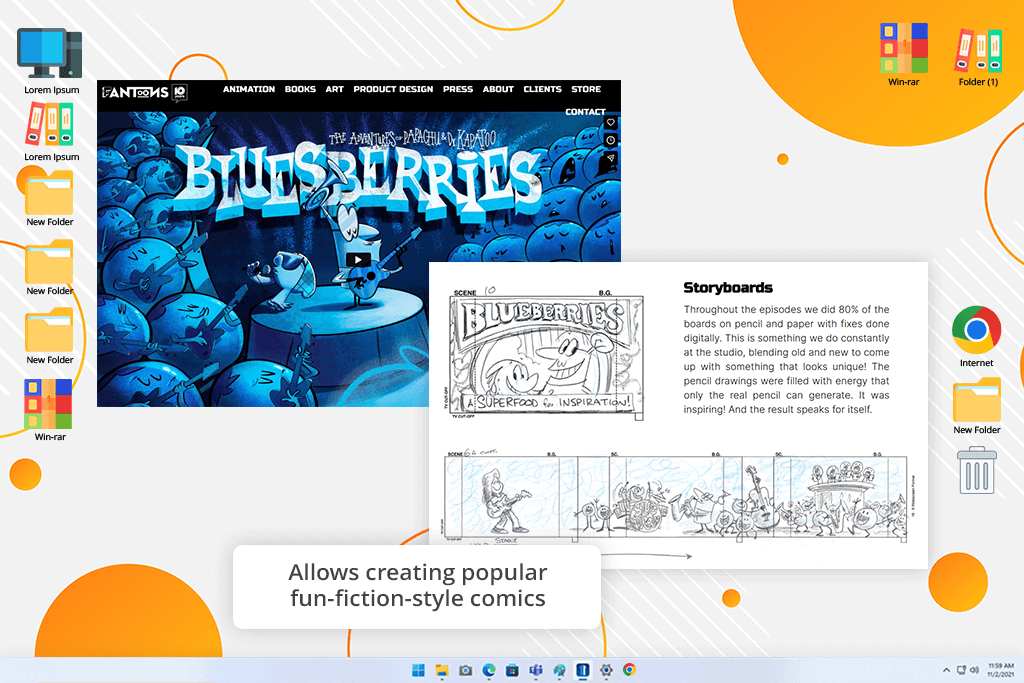
I employed Fantoons to make a set of AI cartoon images for a comedic 3-panel comic about a slacker android barista who can’t stay up long enough to take an order. I provided several brief prompts regarding the character and mood “silly android, cozy café, exaggerated cartoon style” – and after just a couple of seconds, the platform generated images that looked like they were taken from a Saturday morning cartoon.
“Great option for tech-savvy users. It allowed them to customize everything, including art style and line thickness. It has a steep learning curve, but mastering it is worth it.”

I particularly love how this cartoon generator creates facial expressions. The android’s face changed from sleepy to panicked to arrogant in perfect sequence, while the background, though basic, matched the tone instead of detracting from the scene. This solution also properly interpreted punchlines, conveying the idea behind my comic. This AI photo editor let me adjust the color palette to achieve softer hues that matched the branding of my social media pages.
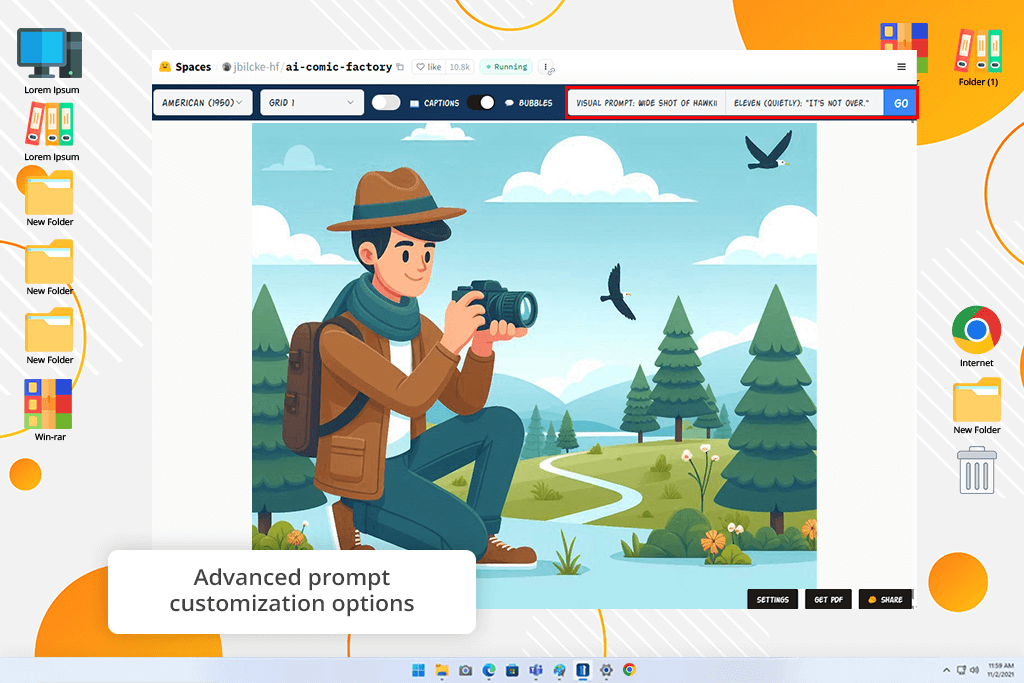
Unlike most other comic and cartoon AI art generators, this solution is built on open-source models, requiring a bit more effort to use. I tried several diffusion models optimized for manga-like art while looking for options that were good at producing consistent character designs. I chose the aforementioned Neon Divide project for this test. I wanted to see if Hugging Face could deliver cohesive scenes with a cinematic, hand-drawn feel.
“Fun tool to use for brainstorming. It helped me come up with a variety of story concepts and dialogues before I even started generating images. A great option for getting rid of a creative block.”

After doing quite a bit of prompt experimentation (“neon-lit alley, reflective surfaces, protagonist with mechanical eye, panel view from below”), I received results that matched the vision in my mind nearly perfectly. Hugging Face is also impressively versatile, allowing me to adjust the model weights, seed values, and even combine checkpoints to blend styles. As such, I generated the background using one model and the characters using another before putting the two together in Photoshop.
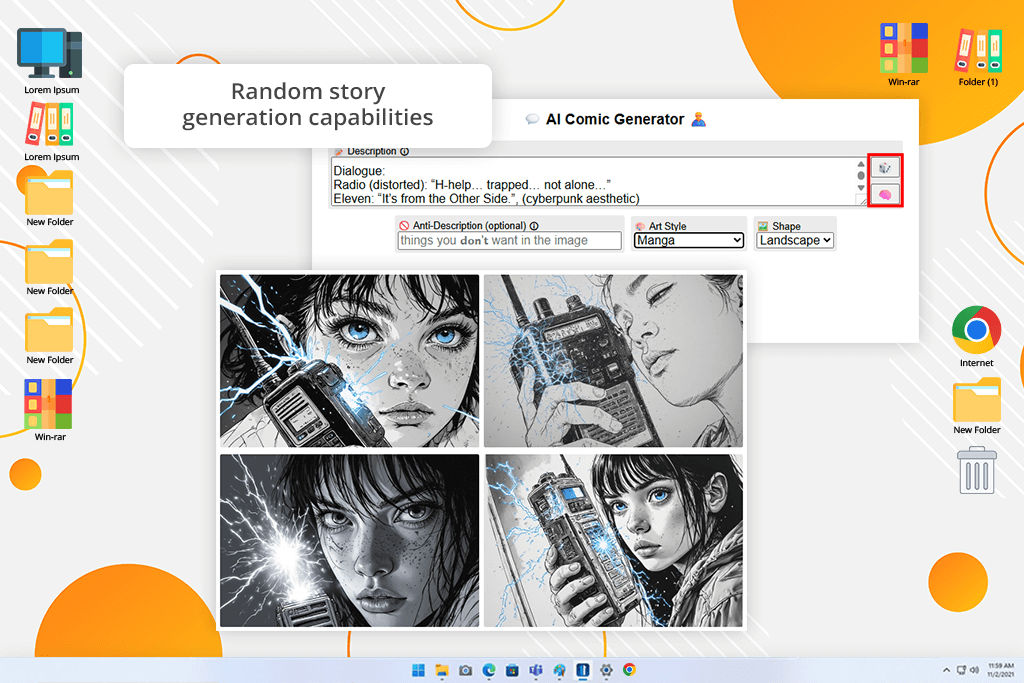
If your desire to create a comic book with AI goes beyond generating visuals, Perchance deserves your attention. While it can’t produce images, this platform can be used along with other tools to establish a full-cycle pipeline. It helped me break through a creative block when pondering which direction to take my comic into.
Additionally, Perchance helped me come up with new ideas for scenes and characters (“setting: futuristic, mood: melancholic, character type: reluctant hero, twist: AI rebellion”), delivering different combinations based on the provided tools.
“This is a great option for tackling art and dialogue. It helped me create a short sci-fi comic, streamlining the creative process despite still being limited when it comes to visuals.”
Not all results make sense, but if they click with you, it feels like you've struck gold. For example, at one point, Perchance inspired me to create a short comic about an old mech pilot working at a ramen shop. After finalizing the story concept, I used a different platform to generate the visuals.
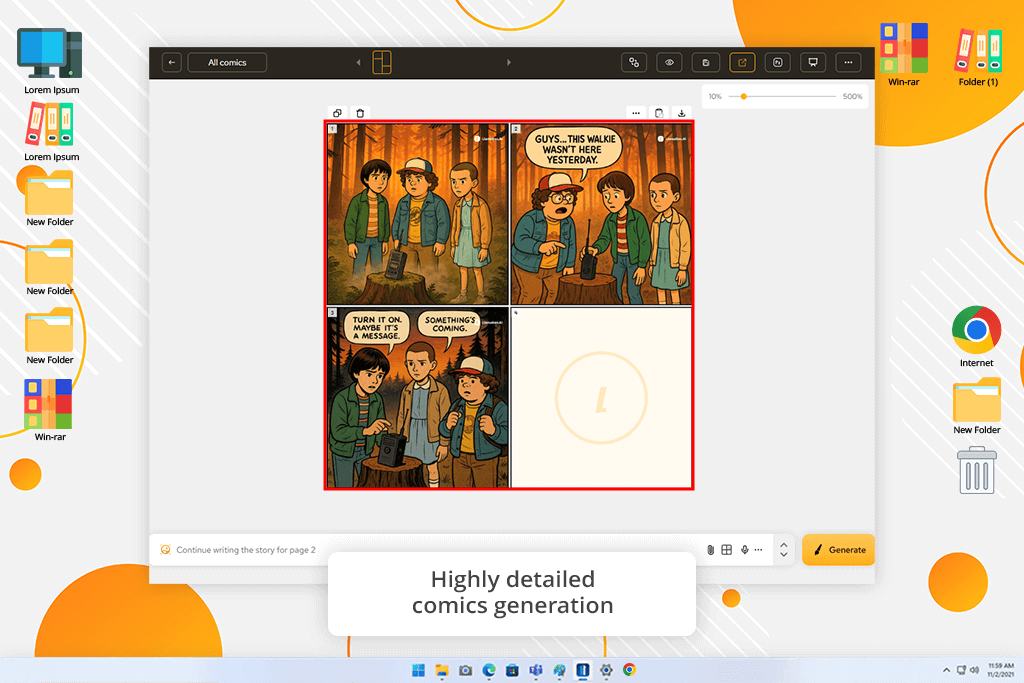
After providing an intricate scene prompt (“two astronauts arguing inside a dimly lit cockpit, emotional tension, cinematic framing”), Llamagen produced both the images and the dialogue that fit the story. Moreover, the facial expressions were a perfect fit for speech bubbles, and the pacing of the story felt organic. Additionally, the AI-generated comic did a great job adjusting the camera angles to increase the emotional impact of the image.
“I enjoyed using Llamagen AI despite some of its wonkiness. It does a great job processing both the visuals and the dialogue, even if I had to re-generate some images to avoid facial distortions.”
Obviously, it's not perfect. The faces of the characters can get distorted, and the AI sometimes interprets the script too literally, forcing you to re-generate the output. Llamagen AI still feels like it's in its early stages, but there is a lot of promise here. If the platform continues to develop, it will eventually allow you to make a comic book entirely using AI, blending imagery, dialogue, and direction together. Even now, it feels like a responsive co-writer with tremendous artistic skills.
Once we FixThePhoto decided to test the best AI comic generators, we discovered a whole new dimension of digital storytelling. Our crew consisted of me, Robin Owens, Eva Williams, and Vadym Antypenko, as we represented a combination of comic nerds and curious tech reviewers.
Since we all offer a different area of expertise, we focused on different aspects: Robin on story flow and dialogue generation, Eva on visual consistency and image quality, and Vadym, our resident tech genius, on testing prompts, rendering performance, and model stability.
We began by selecting a wide array of comic builders and AI graphic novel generators – from intuitive solutions that craft the entire story in a few clicks to more professional tools that demand custom prompts and editing. We used the same base concept for all platforms – a short sci-fi comic about a time traveler trapped between alternate realities. We examined how each option handled both the visuals and the narrative aspects, as well as character consistency and emotional tone.
We established a creative pipeline that consisted of writing a short scene, then adding it to the AI tool via descriptive prompts. After generating the images, we’d evaluate how good it was at telling the story and preserving character designs from panel to panel. We also measured the rendering speeds and noted the efficiency of editing and re-generating the outputs.
Once the tests were complete, our shared workspace had hundreds of AI-generated panels – some stunning, others completely unacceptable. We discovered that all AI cartoon and comic generators have their “preferences”: some produce more realistic images, while others were closer to anime/manga in style. Overall, the efficiency of these tools is incredible, as it only takes a couple of minutes to generate a scene that would usually require hours of manual work.
It’s an interesting process that combines artistic vision and guidance with machine generation. As Eva described it during one of our meetings: “AI isn’t replacing comic artists – it’s just giving us a faster, crazier sketchbook.”