When I first started freelancing, setting my prices was more difficult than the design work itself. In 2025, I could spend a few focused hours creating a clean design, and one client would happily accept a $600 quote, while another would question every detail and ask why a "simple logo" cost more than a ready-made template.
I soon realized that freelance graphic design rates are about much more than the hours you spend on a project. Your experience, the client's expectations, the value of the work, the number of revisions, usage rights, and how clearly you explain what's included in your price all play a part.
In this guide, I'll share the freelance graphic design rates I use for hourly work, logo projects, branding, social media graphics, and design work for small businesses.

Most freelance graphic designers charge between $25 and $150+ per hour. If you're just starting out, rates often fall between $25 and $50 per hour. Designers with more experience, especially those focused on branding or creative direction, commonly charge $85 to $150+ per hour, and sometimes even more.
The freelance graphic design rates per hour vary because graphic design includes many different types of work. Designing a simple Instagram post is very different from creating a complete brand identity, packaging, or a full advertising campaign, so the pricing is different too.
A new designer may ask about $250 for a basic logo, while an experienced branding specialist can charge $3,000 or more for a full identity that includes research, strategy, fonts, colors, and brand guidelines. Even though both are called logo design, they involve very different levels of work.
Here's a quick overview of typical pricing:
| Service Type | Common Price Range |
|---|---|
|
Hourly Graphic Design Work
|
$25–$150+/hour
|
|
Logo Design
|
$150–$1,500+
|
|
Brand Identity Package
|
$1,000–$5,000+
|
|
Social Media Design Package
|
$150–$800+
|
|
Marketing Materials
|
$100–$1,000+
|
|
Website Visual Design
|
$1,500–$10,000+
|
For many businesses, hiring a freelancer is a flexible option instead of bringing on an in-house designer or working with a large agency. Depending on the budget and project, freelance services for businesses can cover anything from simple marketing graphics to complete branding.
Use these prices as a general guide, not fixed rates. What you actually pay or charge depends on the designer's experience, the size of the client, the complexity of the project, the deadline, and how much planning and strategy the work includes.
Hourly pricing is easy for clients to understand, especially when the scope of work isn't fully defined. If someone tells me they need "a few design tasks every week," I usually don't offer a fixed project price right away. An hourly rate works better because the workload can increase or decrease from one week to the next.
I usually choose hourly pricing for smaller jobs, ongoing design support, ad resizing, layout updates, presentation slides, file revisions, or any work that's difficult to estimate upfront. It gives me more confidence because I'm paid for the actual time I spend on the project instead of relying on an estimate made before I know the full scope.
Here's a general guide to hourly rates:
| Experience Level | Hourly Rate |
|---|---|
|
Beginner / Junior Designer
|
$25–$50/hour
|
|
Mid-Level Designer
|
$50–$75/hour
|
|
Senior Designer
|
$85–$150+/hour
|
|
Specialized Designer
|
$100–$200+/hour
|
One mistake I made early on was billing only for the time I spent designing. If a poster took two hours to create, I charged for two hours. It took me a while to realize that freelance work involves much more than the time spent in the design software.
Before I even start designing, I spend time reading the brief, understanding what the client wants to achieve, reviewing references, asking questions, and sometimes explaining why one direction makes more sense than another.
The same idea applies to famous graphic designers. They aren't paid only for the time it takes to create the final design. Clients pay for their experience, creative judgment, and ability to find the right solution quickly and with confidence.
If a poster takes two hours to design but another hour for client discussions, revisions, exporting, and delivery, it isn't a two-hour job. It's a three-hour one. That's why hourly freelance graphic design rates should cover the entire workflow, not just the time spent creating the design.
One mistake I often see is designers lowering their prices just to compete. I understand why, especially when you're trying to land your first clients. But very low rates often lead to the most difficult projects, with unclear requirements, endless revisions, tight deadlines, and clients who don't see design as professional work.
These are the mistakes I recommend avoiding:
I notice the same issue in other creative jobs. For example, people learning how to become a freelance photographer often focus on finding clients but forget to include editing time, equipment, travel, software, taxes, and client communication when calculating their rates.
The same is true for graphic designers. Creating the design is only one part of running a freelance business.
I prefer freelance graphic design rates per project when the scope is well defined. If a client needs a logo, brand kit, social media graphics, a flyer, brochure, packaging, or a website concept, a fixed price is often simpler than tracking every hour.
Many clients also prefer this approach because they know the total cost before the work begins. They don't have to worry about how many hours the project will take. For me, fixed pricing also rewards experience. If I can deliver a strong design more quickly because I've done similar projects before, I shouldn't be paid less just because I work efficiently.
For example, a beginner may charge $150–$500 for a logo, while a mid-level designer might charge $500–$1,500. A designer who includes brand strategy, research, and a complete visual identity can charge $1,500 or more. The price depends not just on the logo, but on everything that's included in the project.
A basic logo package may include one final logo and the standard file formats. A more complete package can also include several design concepts, a color palette, font recommendations, brand mockups, social media previews, and a simple brand guide. Both are logo projects, but they offer very different value to the client.
I usually define:
For example, if a client hires me to design a logo but later asks for Instagram templates, a business card, and packaging mockups, the project has grown beyond the original scope. In that situation, I update the quote or prepare a separate price for the additional work.
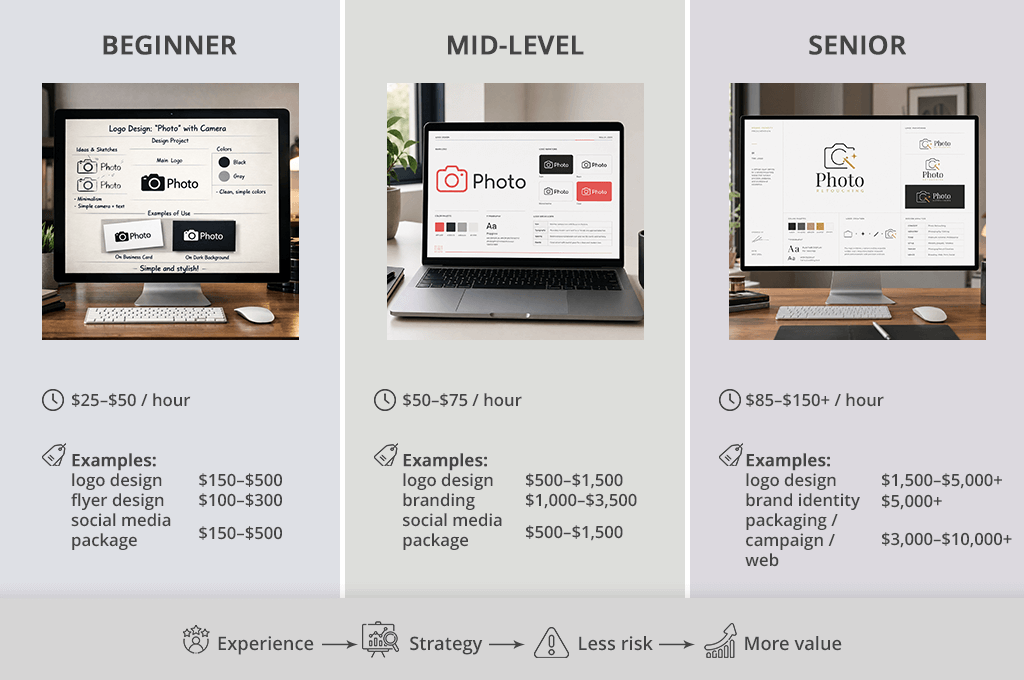
Experience affects pricing more than most beginners expect. A new designer may know how to use Photoshop, Illustrator, or Canva, but an experienced designer knows how to turn a client's ideas into an effective design. That's what makes the difference.
When you're just starting out, the focus is usually on building a portfolio, gaining experience with clients, and learning how long different projects actually take. So, freelance graphic design rates for beginners often range from $25 to $50. A basic logo may cost $150–$500, a flyer $100–$300, and a small social media package $150–$500.
A better approach is to offer simple, clearly defined packages instead of competing on price alone. Rather than advertising a "cheap logo," I'd create a starter logo package with a clear list of what's included. Even with a beginner-friendly price, it looks more professional and gives clients clear expectations.
Mid-level designers often charge $50–$75 per hour. By this stage, they usually have a solid portfolio, a smoother workflow, and enough experience to advise clients instead of simply following directions. Typical project rates are $500–$1,500 for a logo, $1,000–$3,500 for branding, and $500–$1,500 for a social media design package.

At this stage, clients aren't just paying for design skills. They're paying for someone who understands their business and can make the right creative decisions. That's why experienced designers usually charge more for logo design - they bring insight, not just attractive visuals.
Experienced designers often charge $85-$150+ per hour and take on larger branding and marketing projects. Their fees typically start around $1,500 for a logo and $5,000+ for a complete brand identity, with the final cost depending on the size and complexity of the project.
An experienced designer does more than create good-looking visuals. They build designs that work across packaging, ads, social media, websites, presentations, and other marketing materials. That experience helps avoid costly mistakes, saves time, and gives the business a more professional, consistent image.
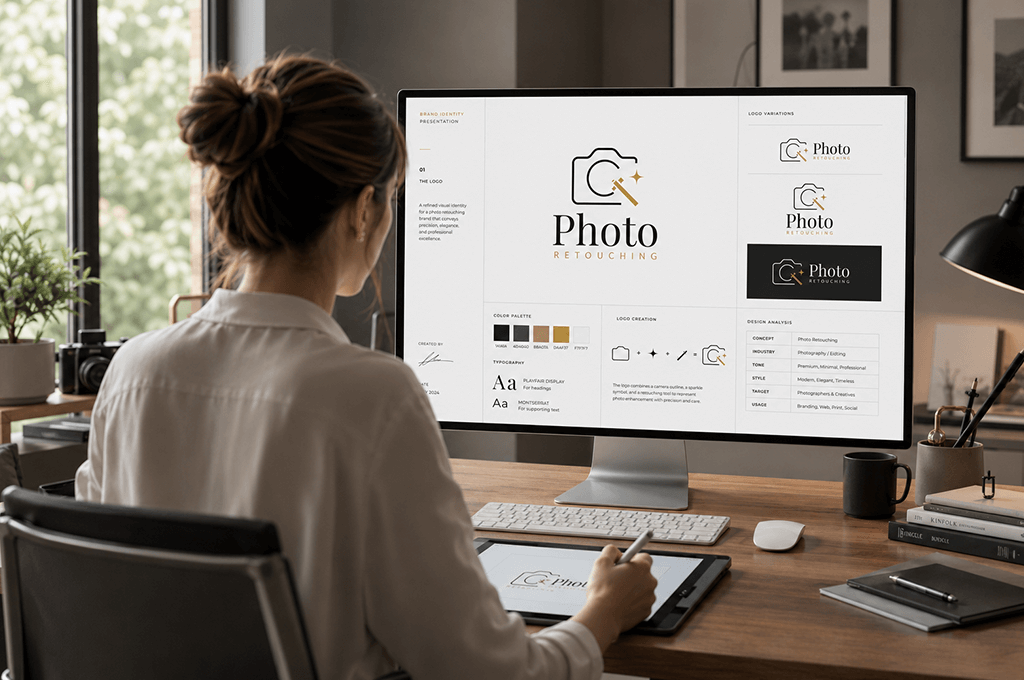
Setting a graphic design rate for logo design isn't easy because many clients compare it with low-cost templates and marketplace logos. A logo may look simple, but it often becomes the first thing people recognize about a business.
A basic logo usually costs $150–$500, making it a common choice for small businesses, personal brands, or designers who are just starting out. A more complete branding package - with research, multiple logo concepts, typography, color selection, mockups, and brand guidelines - can range from $1,500 to $5,000+.
The main difference is what's included. A basic logo package may offer one design and a few standard file formats, while a more complete package often includes:
When I set a price for a logo, I ask myself one question: is the client paying for a simple graphic, or for the visual identity their business will be known by?
If the logo will be used on a website, packaging, advertisements, business cards, social media, invoices, product labels, and other business materials, it deserves more than a basic price. The wider its use, the greater the designer's responsibility to create a logo that works everywhere.
But when a business needs a unique identity that people can recognize and use consistently over time, a custom logo is usually the better choice.
I usually divide graphic design rates for logo design into three simple categories:
I price logo design based on the value it brings, not just the hours it takes. A logo created in five hours can represent a business for years. Clients are paying for the designer's experience and ability to make the right decisions, not simply the time spent creating it.
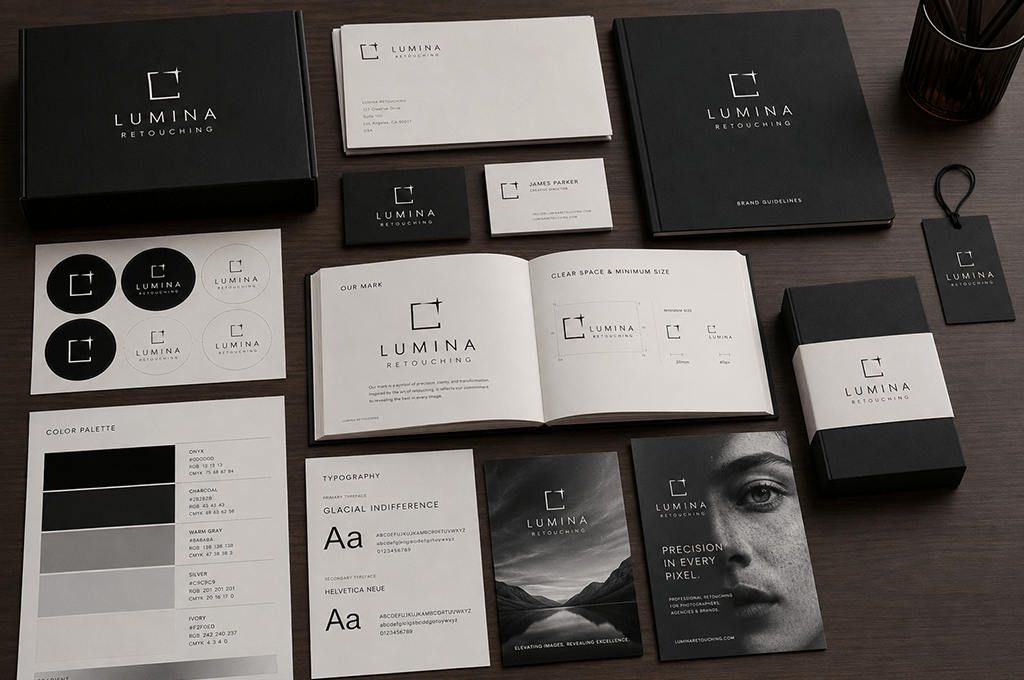
Branding costs more than logo design because it covers the entire look of a business, not just one graphic. While a logo is one part of the brand, branding shapes how the business appears across its website, social media, packaging, advertising, presentations, and printed materials.
A basic brand kit usually costs $500–$1,500, while a complete brand identity often ranges from $3,000 to $7,500+. Projects that include brand strategy, detailed guidelines, packaging design, campaign assets, or creative direction are usually priced even higher.
A branding project usually covers much more than clients expect. Along with a logo, it can include a color palette, typography, icons, patterns, social media templates, presentation designs, photo direction, and brand guidelines. That's why I don't treat branding as a simple design task when setting my prices.
Here's a simple way to break down branding packages:
To me, branding is where value matters more than hours. If a strong brand helps a business stand out, earn trust, attract better customers, and increase sales, its price should reflect that impact.
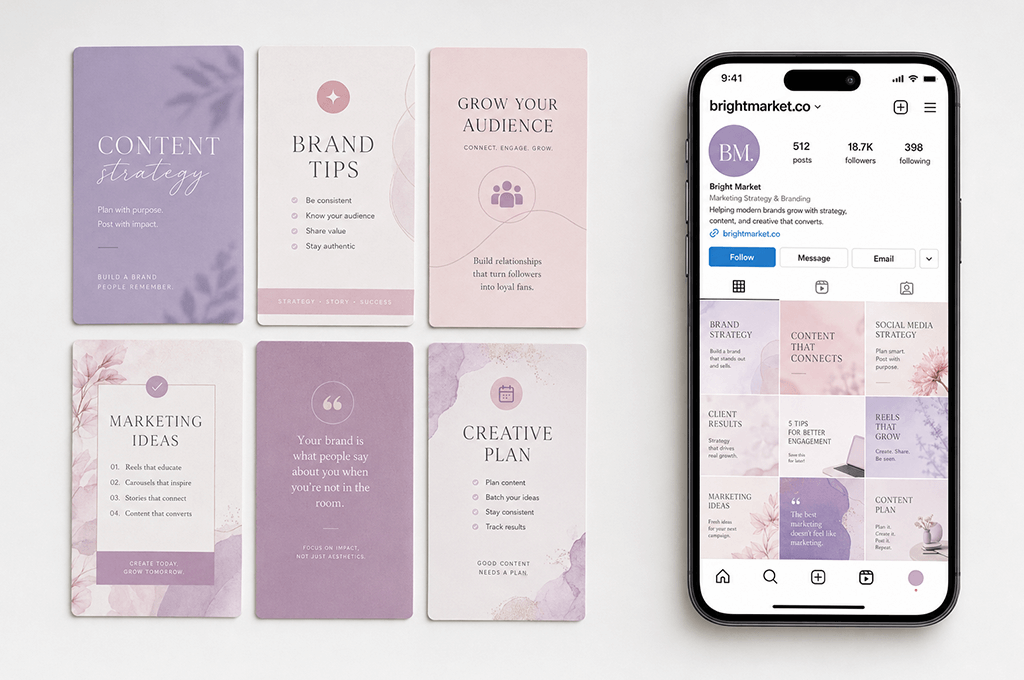
The cost of social media design depends on the scope of the work. A single post, a carousel, a set of reusable templates, and a full monthly content package all require different amounts of time and effort.
Designing one social media graphic usually costs $25–$150. Multi-slide carousel posts are often priced at $75–$300 because they require planning across several pages and a consistent visual flow. Ongoing content packages generally range from $300 to $2,000+, with the final price based on the number of graphics, stories, cover images, and editable templates included.
For example, a basic package might include Instagram posts, Stories, Reel covers, and editable templates. A more advanced package can also include a visual style guide, layout rules, and designs sized for different social media platforms.
This matters even more for businesses learning how to build a brand on social media with photography. In that case, good design is about more than attractive posts. It helps create a consistent visual style, match graphics with photos, and make the entire feed feel like one recognizable brand.
| Social Media Design | Common Rate |
|---|---|
|
Single static post
|
$25–$150
|
|
Carousel post
|
$75–$300
|
|
Story design
|
$20–$100
|
|
Template pack
|
$150–$800
|
|
Monthly package
|
$300–$2,000+
|
Adobe Express is a good option for creating branded templates once the main visual style is already in place. I wouldn't rely on it for full brand development, but it's useful for making quick marketing graphics and everyday business content. For more detailed design work, I still prefer Photoshop and Illustrator.

Small businesses usually want straightforward pricing. Their budgets may be smaller than those of large companies, but they still need professional design that helps build trust with customers.
Typical freelance graphic design rates for small businesses include $300–$700 for a basic logo package, $700–$1,500 for a starter brand kit, and $250–$800 for a social media package. A flyer, menu, or brochure can cost anywhere from $100 to $1,000+, depending on the amount of work involved.
When I work with small businesses, I usually offer fixed packages instead of only quoting an hourly rate. Most business owners care more about the final cost than the number of hours involved, so package pricing is easier to understand.
A better offer sounds like this:
“For example, my starter brand package includes a logo, a color palette, font recommendations, three social media templates, and web-ready files.”
Experience isn't the only factor that affects freelance design rates. Prices also increase when a project involves strategy, commercial use, tight deadlines, multiple file formats, or work that has a bigger impact on the client's business.
A design for a personal blog isn't priced the same as packaging for a product sold in stores. The same goes for a single Instagram post compared with a complete campaign that includes multiple designs and assets.
Revisions are an important part of pricing, so I always set a clear limit. Without one, even a small logo project can turn into weeks of unpaid work.
The same idea applies to the things to know before hiring a freelance videographer. Clients should understand what's included before the project begins. Design works the same way. A clear quote should outline the deliverables, design process, file formats, usage rights, revision limits, and any additional costs.
Other factors that can increase the price:
Source files can also affect the price. If a client wants editable Photoshop, Illustrator, or InDesign files, I don't automatically include them. They provide more flexibility for future changes, so I often charge for them separately.
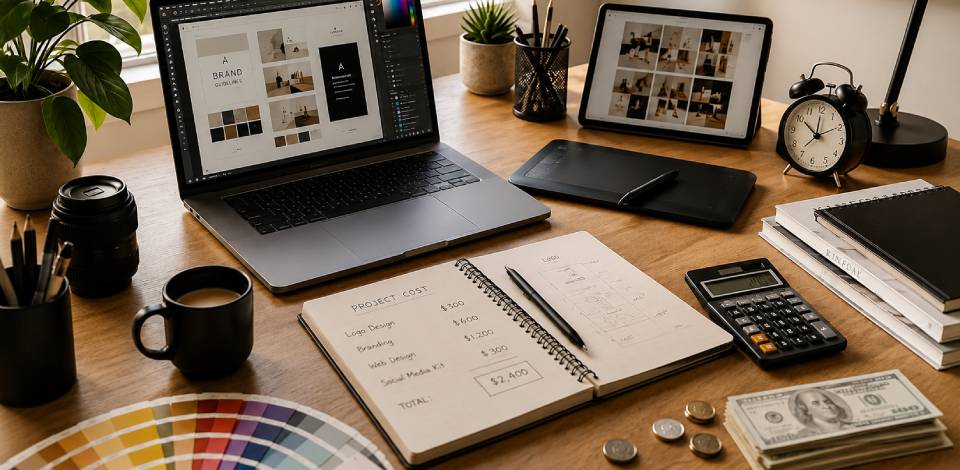
When I prepare a design quote, I don't guess the price or copy another designer's rates. I break the project into smaller tasks and estimate the time for each one. This helps me set a fair price and avoid charging too little.
For example, a logo project is rarely just creating one logo. Even a simple design usually involves research, collecting references, developing concepts, presenting ideas to the client, making revisions, preparing the final files, and organizing everything for delivery. Clients only see the finished logo, but the price should reflect all the work that goes into it.
Here's an example of a logo project estimate:
| Task | Estimated Time |
|---|---|
|
Research And References
|
2 hours
|
|
Logo Concepts
|
5 hours
|
|
Client Presentation
|
1 hour
|
|
Revisions
|
3 hours
|
|
Final Cleanup and Export
|
2 hours
|
|
File Organization
|
1 hour
|
In this example, the project takes about 14 hours. At $50 per hour, that comes to $700. But I also leave room for the small tasks that come up during almost every project, such as replying to messages, making small edits, creating extra file versions, or checking that everything is ready before delivery.
That's why I always add a buffer for admin work, revisions, and unexpected requests. In this case, I would quote around $800–$900 instead of $700. It better reflects the full project, not just the time spent designing.
This approach is much safer than dropping the price to $200 just because a client asks for a discount. A lower quote may help win the project, but it often leads to problems when the work takes longer than expected.
Freelance graphic design rates typically range from $25 to $150+ per hour. Just like the advice in tips to become a photographer freelancer, your rate should cover more than the design itself. It also needs to account for software, taxes, client communication, and other business expenses.
Hourly freelance graphic design rates vary based on experience, location, area of expertise, and the type of project. Beginners often charge $25–$45 per hour, while experienced designers typically charge $75–$150+ per hour.
Project rates vary widely, from about $100 for simple marketing materials to $10,000+ for large branding or website projects. A logo typically costs $150–$1,500+, while a complete brand identity usually ranges from $1,000 to $5,000+.
Beginners usually charge $25-$50 per hour. Common project rates are $150-$500 for a basic logo, $100-$300 for a flyer, and $300-$1,000 for a starter brand kit.
Logo pricing usually depends on experience. Beginners often charge $150-$500, mid-level designers $500-$1,500, and experienced brand designers $1,500-$5,000+, depending on the project's scope, revisions, strategy, and what's included.
Use hourly pricing for ongoing work or projects with a flexible scope. Choose project pricing when the work is clearly defined, such as a logo, brand identity, packaging, social media templates, or presentation design.
Raise your rates as your portfolio grows, your schedule fills up, clients accept your quotes without hesitation, or your work delivers more value to businesses. It's usually easier to start with new clients and adjust prices for existing ones over time.