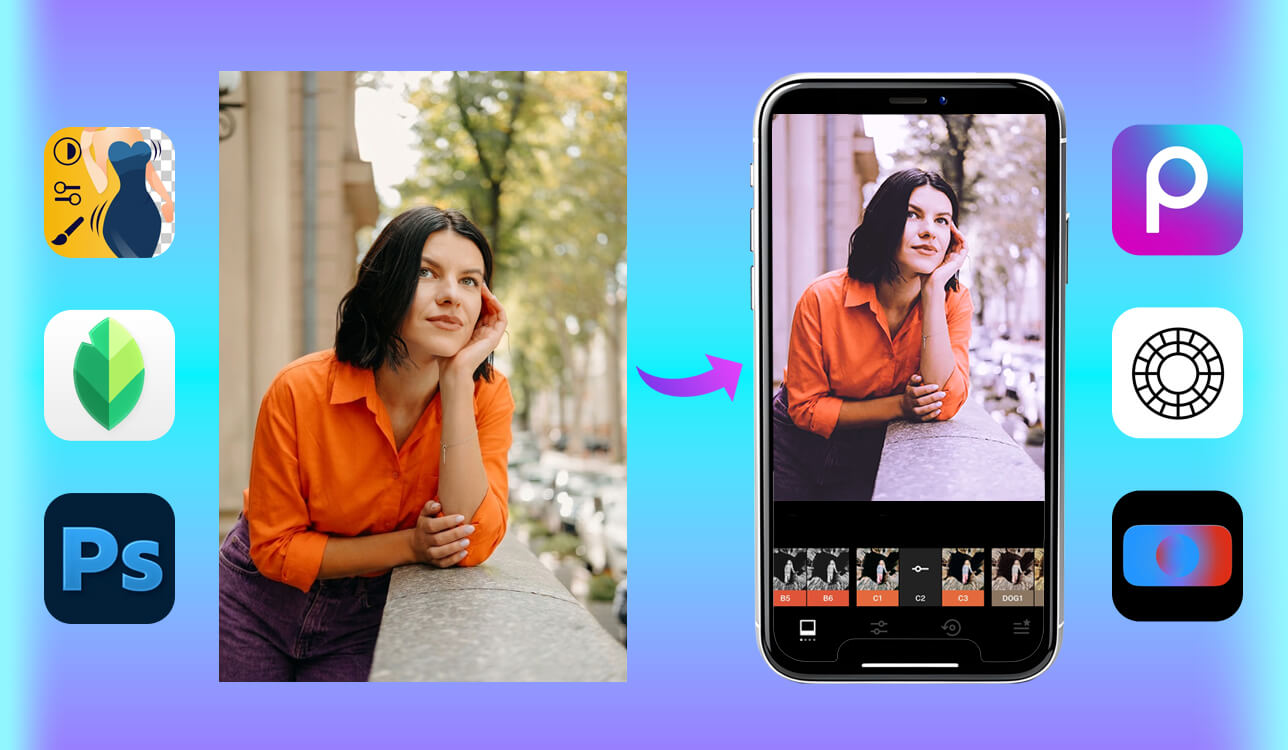
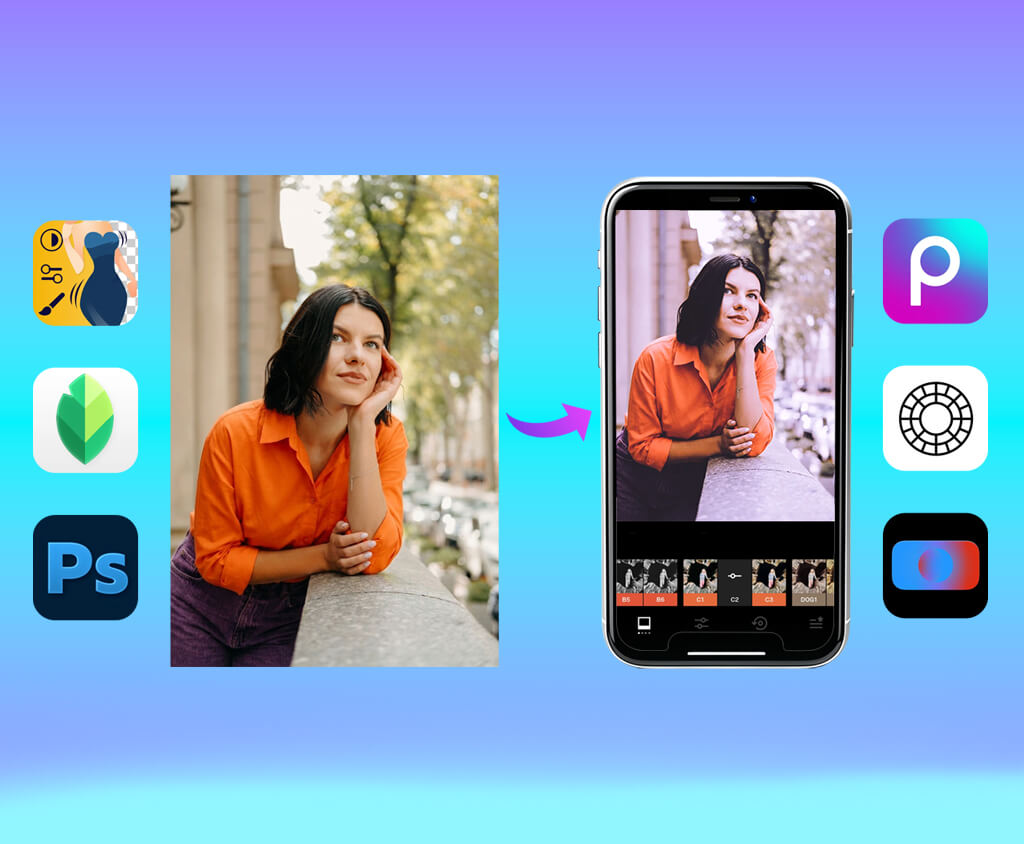

I understood I needed a solid app for effects and color styling when I began shaping the look of my travel page. I was posting short atmospheric clips and image collections online, but the visuals didn’t feel unified. Certain presets made people’s faces appear strange, others pushed scenery colors too far, and low-light shots often came out unrealistic. I wanted something that could maintain the same polished mood across all my content while still keeping the images natural and believable.
At first, I tried many well-known apps and used them on the same set of photos and videos from a short weekend trip. The content included city shots, coffee shop moments, street scenes, and evening clips, so keeping the same visual style across everything was very important.
After testing different options, I noticed that most apps focused more on flashy effects than accurate color adjustment. Some presets looked great on one image but made others look terrible because there weren’t enough tools to fine-tune the result.
Since I was creating and editing content almost every day, I needed a filter app that could work quickly without slowing me down. Fast exporting for social media was especially important, along with presets that looked good on both photos and short videos, because my workflow constantly moved between the two.
During testing, I also understood which editing tools mattered most for me. I wanted adjustable effects, natural-looking skin tones, cinematic color styling, and solid RAW file support so I could keep my content looking polished and consistent.
In the end, I found an app that matched my editing style perfectly. Instead of covering photos with heavy effects, it improved lighting, detail, and mood while still keeping everything realistic. That made a huge difference to my project because all of my photos and videos finally started to look connected and consistent. Looking back, picking the right filter app was more than just choosing a visual style - it became an important part of creating a recognizable brand for my content.
My colleagues from FixThePhoto team also helped me test the best filter apps. Together, we collected recommendations from photography forums, Instagram creators, Google search results, and even ChatGPT suggestions. We used personal portraits along with photos from my project to carefully test filters, color tools, and other editing features to see which apps delivered the most natural and consistent results.
To get realistic editing results, the goal is to improve the photo without making the editing obvious. Natural-looking images come from careful adjustments, balanced colors, and a consistent style - not from heavy effects or overly dramatic filters.
The first step is always using a strong original photo. Editing can improve an image, but it cannot completely fix poor lighting, strong blur, or badly overexposed areas without reducing quality. Natural-looking results usually come from photos that already have balanced lighting and a good composition. It’s better to think of editing as improving what is already there, not completely changing the image.
The second step is making gentle adjustments instead of relying on heavy filters. Small changes to brightness, contrast, and color temperature usually create more natural results than dramatic one-tap effects. For example, rather than using a strong cinematic preset, it often works better to slightly warm the colors, brighten darker areas a little, and soften bright highlights to keep details visible. Good editing should improve the image without making the edits obvious at first glance.
The third step is keeping skin tones and colors looking natural. This is where many edits start to feel unrealistic. Too much saturation or strong color changes can make people, landscapes, and lighting look artificial. Even when adding a creative style to a photo, it’s important to keep skin tones close to how they appear in real life, so the image still feels believable.
The fourth step is editing only the parts of the photo that need changes instead of applying the same effect to the whole image. Real lighting is uneven, so small local adjustments - like brightening a face without changing the background - usually make the photo look more natural.
Finally, consistency is more important than strong effects. When editing several photos, try to keep the brightness, colors, and contrast similar across all images. Realistic editing is not only about making one photo look natural - the whole set should feel like it belongs together and was captured in the same atmosphere.
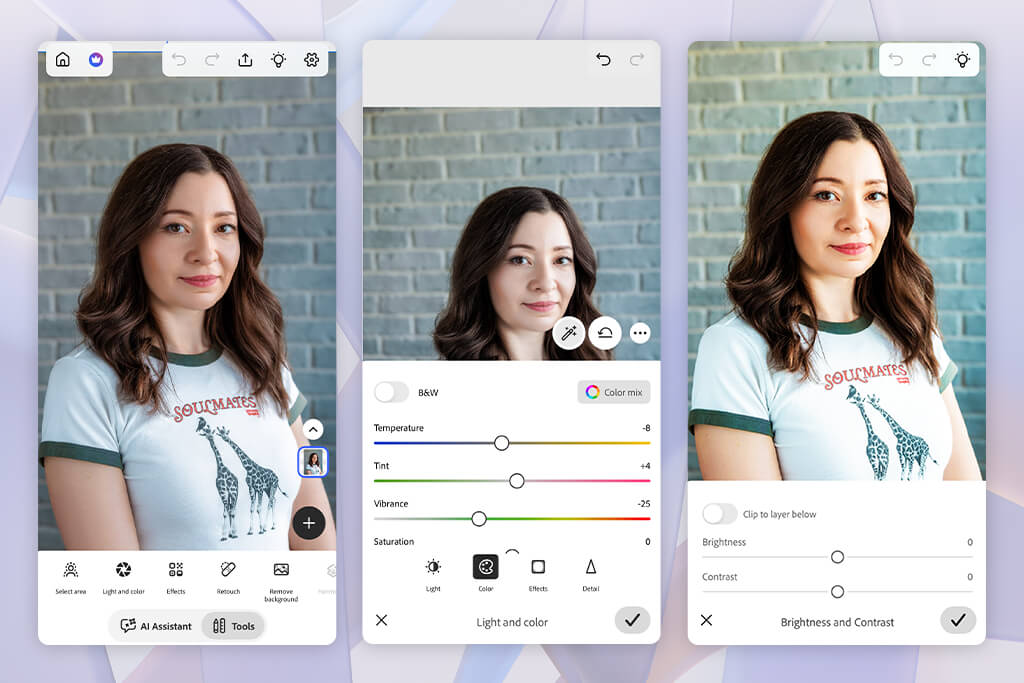


Photoshop on iPhone, which is also available for Android, became the center of my editing workflow while I was handling a large collection of images captured in restaurants, busy streets, and evening locations. Every shot looked different because of changing light sources and uneven tones, so my goal was to make the entire series feel visually connected and balanced.
In my workflow, I start with the auto-enhance tool but never leave it as is - I manually adjust the highlights, shadows, and color warmth depending on the photo. For neon night shots, I lower the highlights a lot to keep lights from washing out, and for daytime street photos, I lift the shadows slightly so faces and buildings stay visible.
“It's very powerful for a phone filter app - almost like a mini Photoshop. But sometimes it's slow, and it can be hard to use if you're new to pro editing.”

The feature I appreciated most was the precise local editing. Instead of changing the entire picture, I could improve only the areas that needed adjustment. In one café shot, for example, I brightened the person while keeping the cozy atmosphere and soft background lighting untouched.
That level of precision is hard to find in mobile editors, which is why this Photoshop app stood out to me for creating realistic and balanced edits.
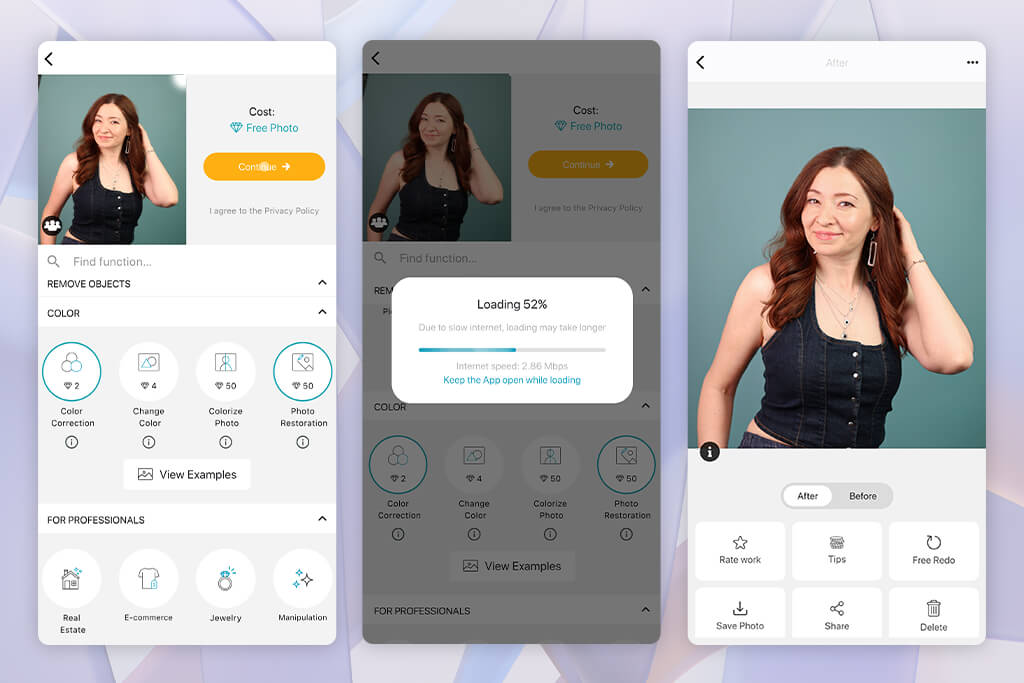
I started using this picture filter app mainly for portrait photos, especially influencer-style shots and street photography, where the lighting changes a lot. What I like most is how it makes pictures look naturally better without over-smoothing skin or changing facial features too much - unlike many other free photo editing apps I've tried.
The features I rely on most are portrait retouching, skin cleanup, and targeted light adjustments. In softly lit café portraits, for example, I can brighten the area around a person without changing the cozy background atmosphere. This helps the subject stand out naturally while keeping the original feeling of the scene. Because of that, the editing process feels smooth, realistic, and easy to control.
One thing I especially liked was how easily I could control the strength of each adjustment. Keeping the edits subtle helped me fix uneven lighting and small skin imperfections without losing the natural appearance of the photo. It also gave me better control over the final look and made it easier to keep all my images visually consistent.
I usually save this app for the last part of my portrait editing process. Before sharing or publishing photos, I use it to make small final improvements quickly and cleanly. It helps me polish the images without slowing down my workflow or overcomplicating the editing process.
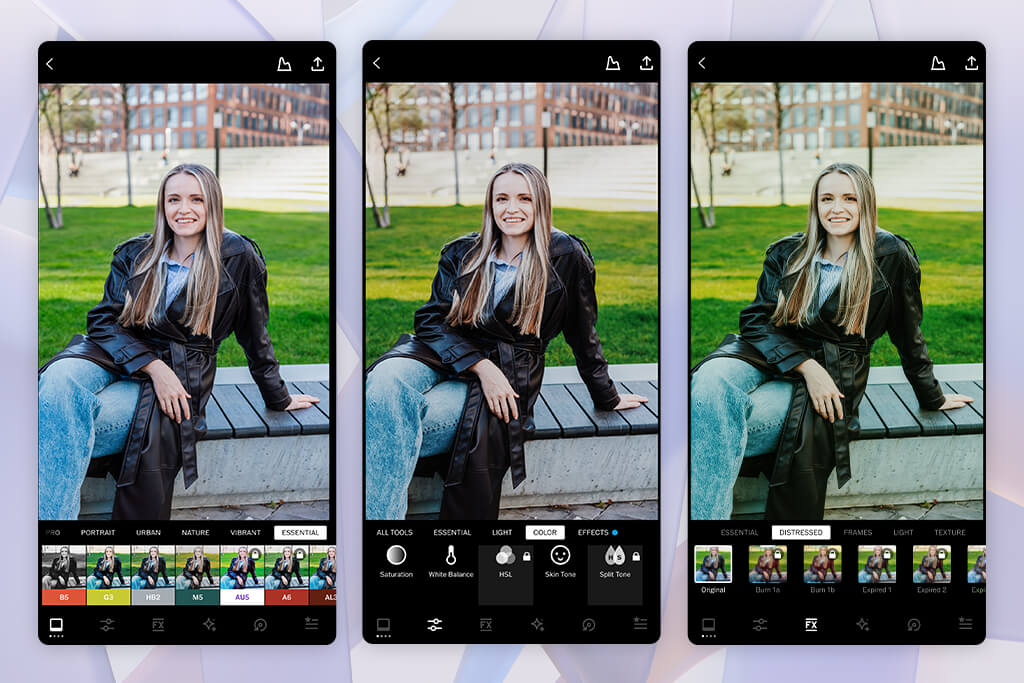
I tested VSCO a lot because it's built around filters as its main feature. I used it mainly on travel photos to see how its film-style filters work in very different settings - from bright city streets to dark indoor spaces.
My editing process became much more organized over time. I usually start with a VSCO A6 / M5 / C1 VSCO Lightroom preset and then fine-tune brightness, contrast, color temperature, and grain based on the scene.
For sunset and golden hour photos, I prefer softer warm tones, while colder shades fit rainy streets and urban scenes better. I also try to keep the grain and fade effects similar across all images so the whole gallery looks visually connected and consistent.
“I love the clean, soft filters, but most of the best features are only available in the paid version.”

Because VSCO's filters are designed to copy analog film instead of digital fixes, they change the mood of a photo completely. On street shots, faded presets softened the contrast, dulled the colors, and made bright areas fade smoothly. On café photos, warmer filters added a soft, cozy feel that still looked natural.
The best part is that it keeps your whole photo feed looking consistent. Even when the lighting changes, VSCO filters like F2 / HB2 / K2 help all your pictures share the same look. I usually pick one main filter and then make small changes to brightness and warmth so each photo fits the scene, but the overall style stays the same.

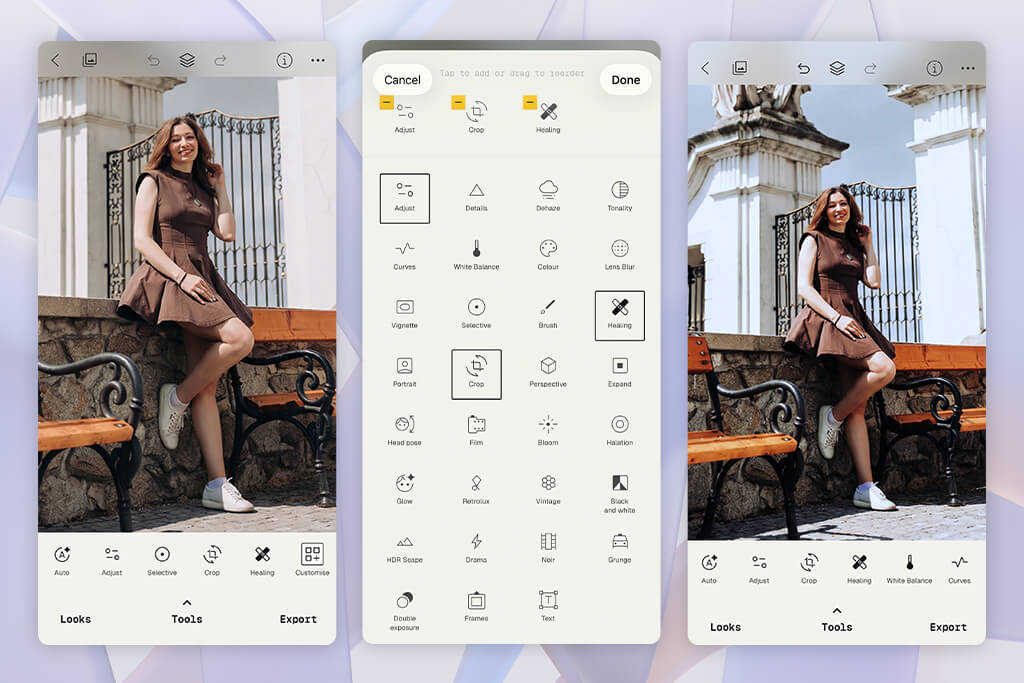
Snapseed became my main tool for editing Instagram photos. Instead of using it for heavy visual effects, I relied on it to correct lighting, improve details, and balance colors before adding any creative style. This preparation made my final edits look cleaner, more natural, and more consistent.
Although Snapseed includes creative presets like Glamour Glow, Drama, and Vintage, I mostly used it to fix lighting and exposure problems before applying any final style. For example, I adjusted night street photos, so later cinematic filters would not make shadows too harsh or increase visible noise. Doing this first noticeably improved the final results in other editing apps.
Its main role in my workflow is preparing photos before adding any creative style. Without these basic corrections, filters often make flaws more noticeable instead of improving the overall mood. Once the lighting and exposure are balanced, even simple presets from other apps look cleaner, more natural, and more professional.
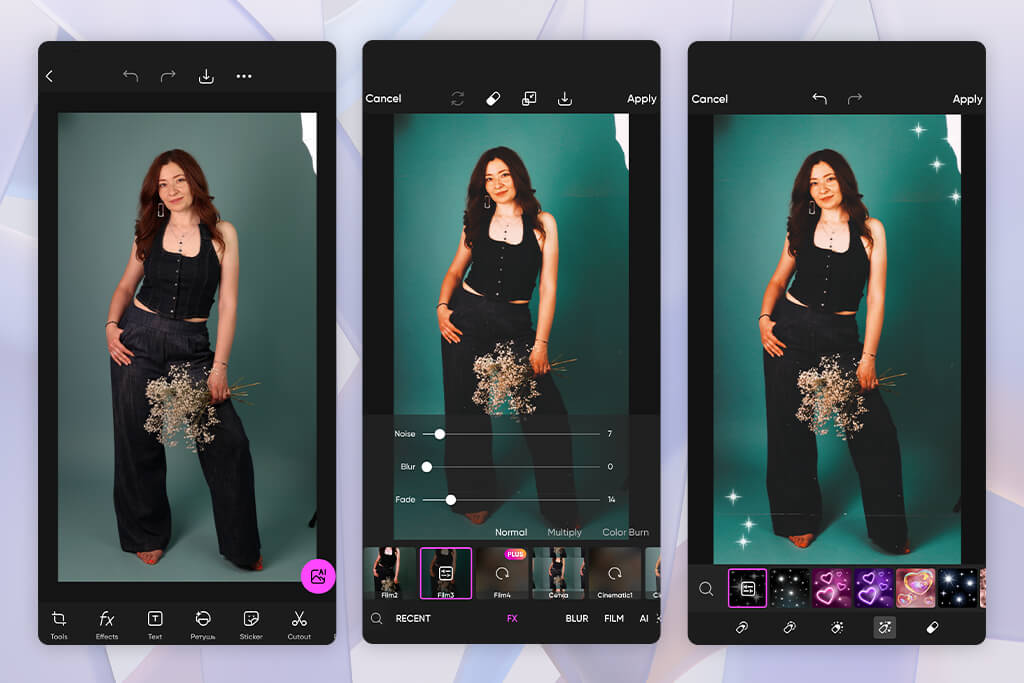
I tested Picsart as a tool for bold filters and effects, not for keeping a consistent look. I used it on lifestyle and experimental travel photos where the goal was to grab attention and get engagement, rather than keeping a clean, uniform style.
Filters like Neon Glow, Cyberpunk, and Magic FX are very bold and creative, focusing more on dramatic visual changes than natural color correction. In my testing, these effects completely changed the mood of ordinary street photos by adding intense colors, glowing lights, and a futuristic atmosphere. Because of that, the image filter app works especially well for eye-catching social media content that needs to grab attention quickly.
“Fun app with many effects and AI tools. It can feel a little crowded sometimes, but you can do almost everything in one app.”

The downside is that it's hard to keep a consistent look. Since the filters vary a lot in how strong and different they are, your photos can end up looking like they come from completely different styles - even within the same feed.
For my workflow, this photo editing software for PC is something I use when I want to create bold, eye-catching visuals instead of keeping a clean and consistent style. It’s especially useful for making dramatic content that instantly grabs attention on social media rather than polished branding-focused images.
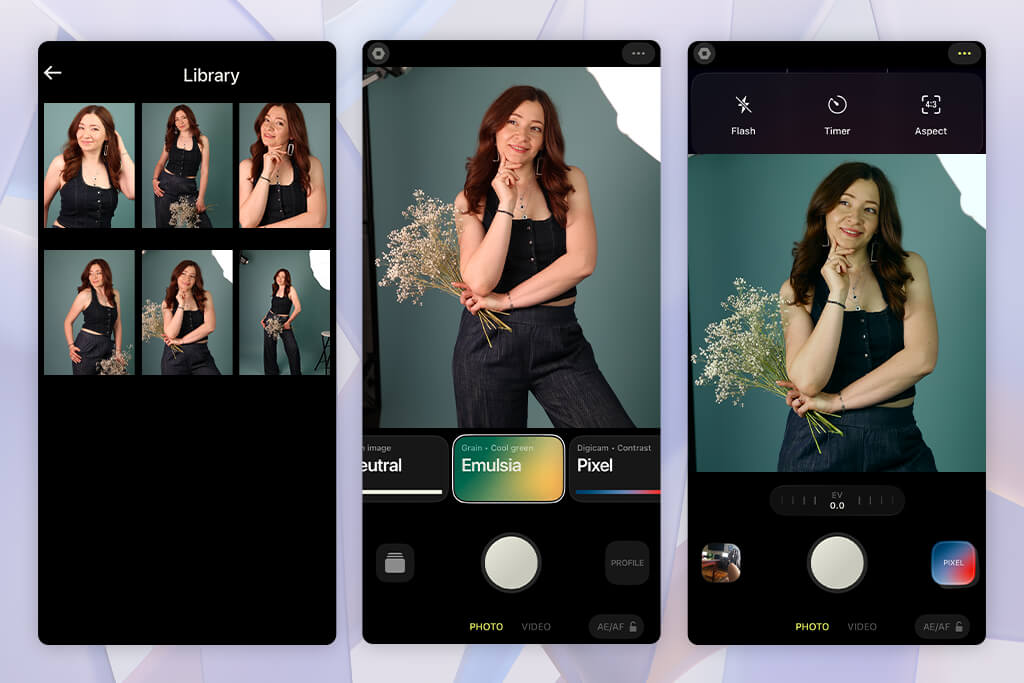
I tested Lampa as a fast, filter-focused mobile editor made for quick, good-looking results - it's often used by my fellow Instagram photographers. I used it mostly during travel shoots when I needed an instant improvement to my photos without having to make a lot of manual adjustments.
Filters offered by this photo filter app, like Cinematic Warm, Soft Film, and Urban Cool, are designed to change the mood of a photo instantly. For example, the cinematic presets quickly adjust contrast, warmth, and color intensity, so that raw photos look more polished in just seconds. When I used it on street photography, it helped create a consistent tone without needing detailed tweaking.
However, the final result depends a lot on the quality of the original image. If a photo has poor lighting or exposure problems, the filters often make those flaws even more noticeable instead of improving them. Because of this, Lampa works better with photos that already look fairly good rather than images that need serious correction.
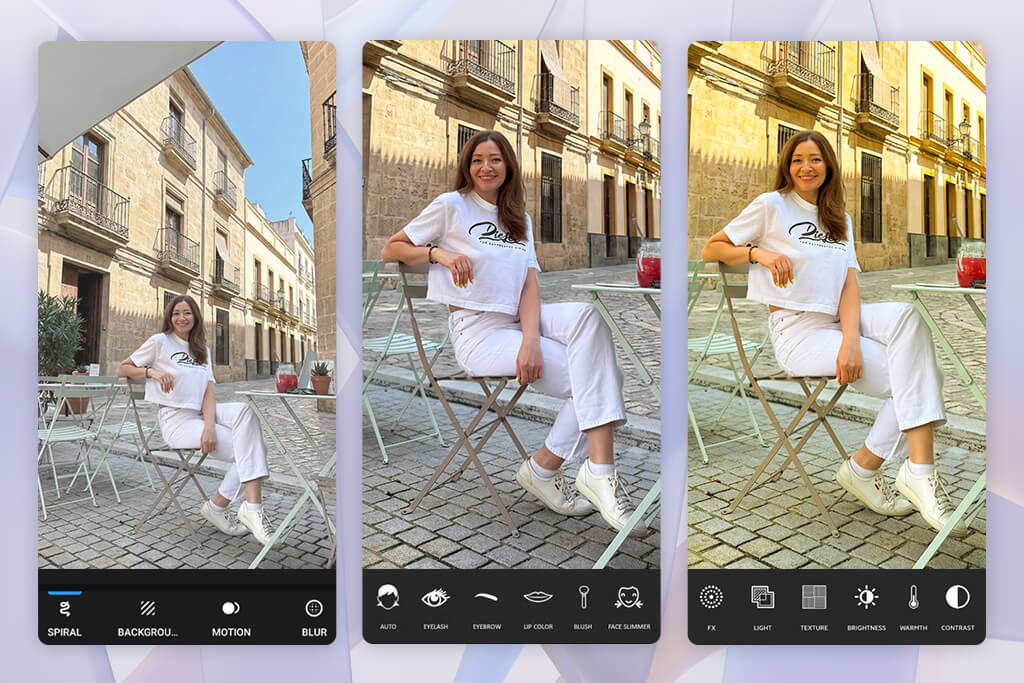
FaceArt was part of our testing as a quick and easy beauty editing app for portraits and selfies. I mainly used it on casual travel photos and street selfies taken in difficult lighting when I needed fast improvements without spending time on manual editing. I wanted to see if the app could make photos look cleaner and more attractive while still keeping faces natural instead of overly filtered.
Its biggest advantage is how naturally it applies beauty filters like Smooth Skin, Bright Portrait, and Natural Glow right after importing a photo. For example, when I tested it on slightly dark outdoor portraits, the app automatically brightened the skin, softened the texture, and improved facial lighting all at once. The result felt smooth and balanced, more like one natural enhancement instead of several separate edits.
“Really fun for selfies and face filters. Some effects can be a bit too strong, but the app is great for quick and eye-catching social media photos.”

During more detailed testing, I noticed that realism is not really the main focus of this photo editing app for Android. This beauty filter app is designed more for beauty-style enhancements, so stronger filters can easily make skin look too soft and remove natural facial texture.
I found that the best results came from lowering the effect intensity and using only subtle adjustments, especially on daylight portraits, where small corrections already make a big difference.
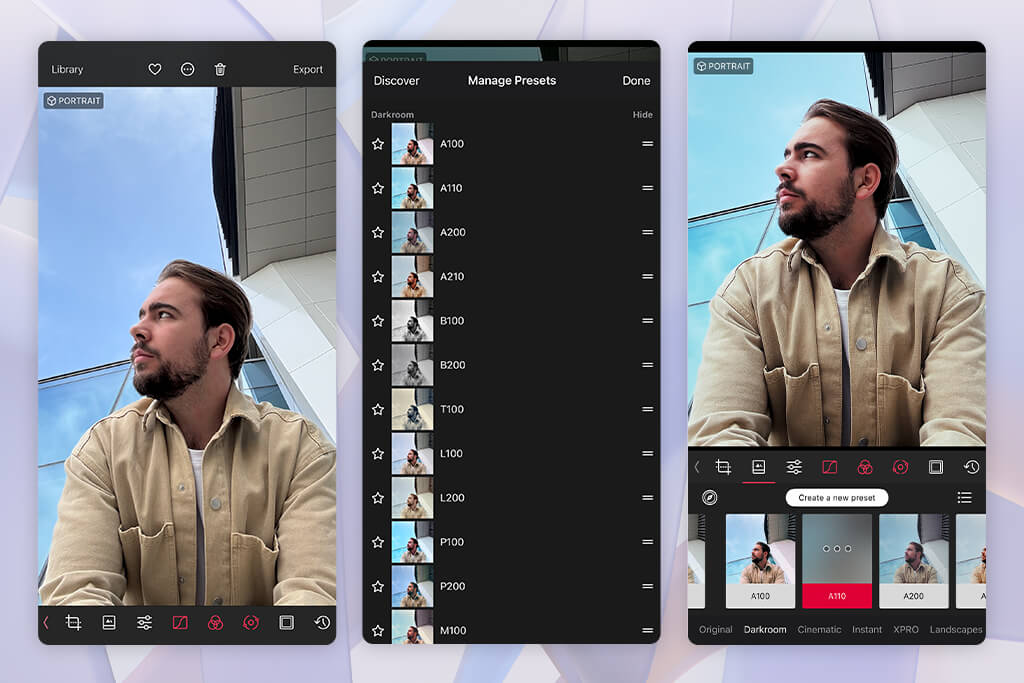
Darkroom was one of the most important apps in our testing because it sits in a slightly different category - it doesn’t just apply filters, it lets you build them with far more control. I used it on RAW travel photos and high-dynamic-range street scenes where basic filter apps completely fail to preserve detail. The goal was to see whether it could act as a “pro-level filter engine” while still staying mobile-friendly.
What stood out immediately for me in this RAW photo editor is how its filters behave more as editable color grades than fixed presets.
For example, I applied a cinematic base filter on sunset city shots, but then adjusted curves and HSL to control exactly how warm the highlights became. This meant I could keep the “filter mood” but still protect sky detail and avoid oversaturation in bright areas.
During testing, I also created custom presets for different moods and locations, including styles called “Warm Fade” and “Teal Cinematic Look.” One preset worked especially well for night city photography - I slightly softened dark areas, reduced strong blue tones, and made neon lights stand out more naturally.
After saving these settings, I could apply the same look to large groups of photos, and the results stayed consistent even when the lighting changed between shots.
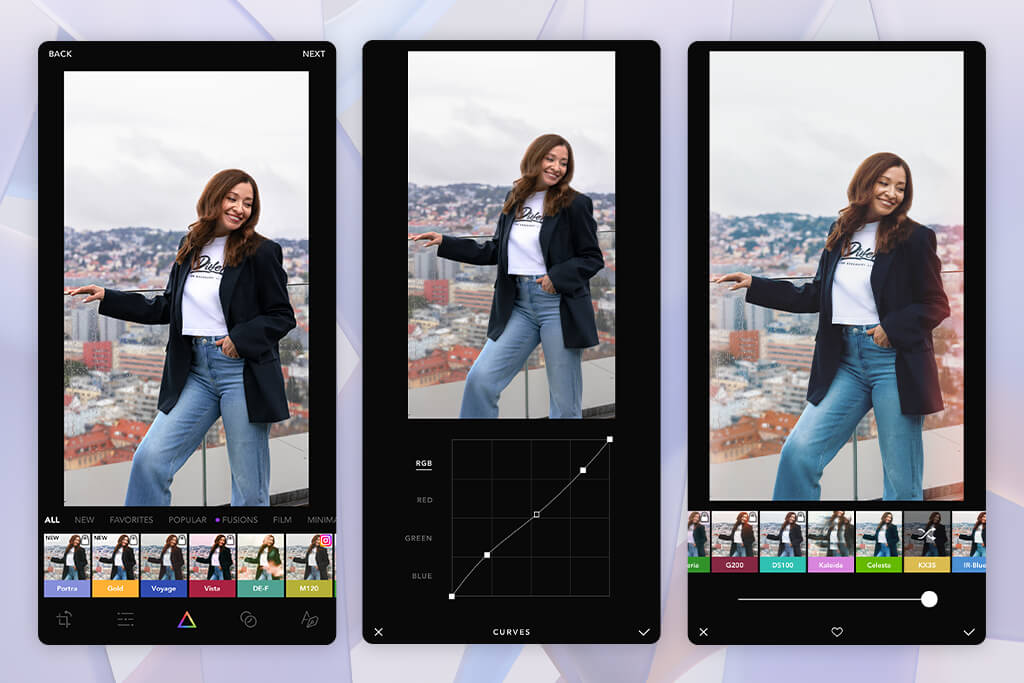
Afterlight was one of the apps we tested, mainly for its film-style filters and vintage mood. I especially liked using it on café photos, sunset street scenes, and lifestyle shots where I wanted the images to feel warm, soft, and emotional rather than perfectly polished. The main goal was to see if the app could create a natural, nostalgic atmosphere and keep that same visual feeling across different types of photos.
Its Dusty Film, Warm Fade, and Light Leak 2/3 filters combine soft color styling with film-like textures such as grain, dust, and light leak effects. What I liked most was how easily the app created a vintage atmosphere without needing a lot of manual editing.
For example, when I used a warm faded filter with light grain on café photos, the images instantly looked like old film snapshots. In street photography, the same effects added extra warmth and depth while keeping the editing process quick and simple.
“Great filters and nice vintage-style effects. The app is very easy to use, although after some time, the effects can start to feel repetitive.”
During longer testing, I noticed that this grain filter app works best when the effects are used carefully. If I added too many styles at once - like heavy grain, bright light leaks, and strong contrast - the photos started to look unnatural and overly edited.
This was especially easy to notice on bright daytime images, where the extra effects often distracted from the natural lighting instead of improving the photo.
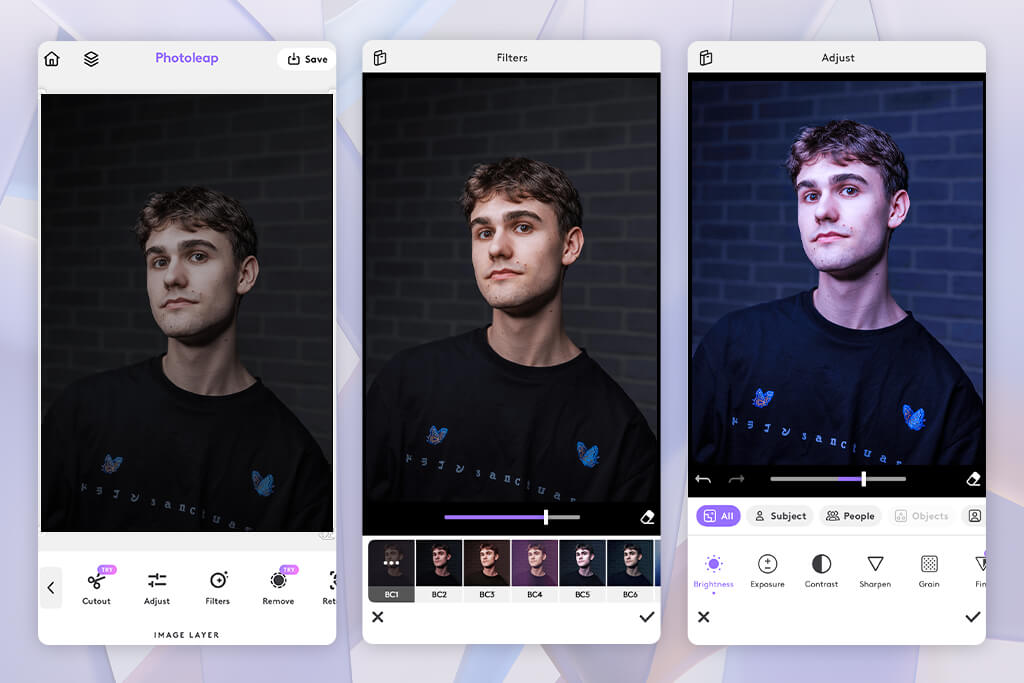
I tried out Photoleap to see how well AI-powered filters work, not as a regular photo editor or camera app for iPhone. I wanted to find out if AI filters can do more than just adjust colors - and if they’re actually useful for real projects. I tested it with travel portraits, city street photos, and creative concept images, and I pushed the filters to their limits to see what kind of artistic changes they could make.
Unlike regular filter apps, Photoleap doesn't just tweak colors - it reimagines the whole photo. When I tried AI filters like Dreamscape, Cinematic AI, and Art Style Transfer on a simple street shot, the app didn't just adjust the look. It changed the lighting, the background feel, and the entire mood. Sometimes the result looked more like digital art than a real photo, especially with the more creative AI settings.
The biggest problem I noticed during testing was that the results were not always consistent. The same filter could look completely different depending on the lighting, framing, or distance from the subject. For example, I used a cinematic-style filter on a softly lit café portrait taken near a window, and the photo kept natural skin tones with a warm and balanced atmosphere.
However, the same filter gave a very different result on a bright outdoor landscape shot in strong midday light. The colors became too vivid, while the darker areas looked much deeper and less natural, which completely changed the atmosphere of the image. Because of this, it was difficult to keep a stable and recognizable style across a full set of photos.
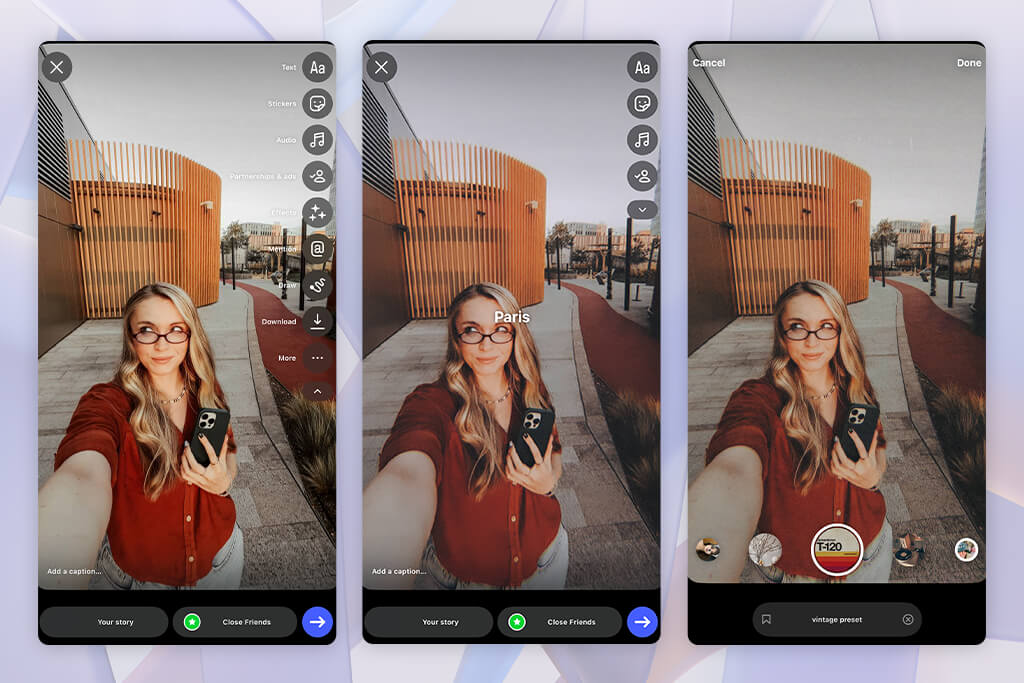
Instagram photo editor was tested mainly as the last step in my workflow rather than a full editing app. I wanted to see how much control I could get using only Instagram’s built-in filters and adjustments before publishing content. To make the test realistic, I used the filters on café photos, travel portraits, and street shots in the same way I would when preparing posts for social media.
The filters are designed to be simple and fast to use. For example, warm filters can make café photos feel softer and more balanced, while cooler tones give street images a calm cinematic atmosphere. However, these effects mostly change the general mood of the photo and do not offer deep control over detailed color correction or advanced editing.
“Easy for quick posting and fast filters. The editing tools are very simple, so it works better for social sharing than serious photo editing.”
While testing this Instagram filter app, I ran into one big problem: you can't fine-tune anything. There are no tools to adjust specific colors, fix bright spots, or map out shadows and highlights. So, when you use popular filters like Clarendon, Juno, Lark, Gingham, or Ludwig, they can't handle tricky lighting well. If your photo is too bright, too dark, or has weird colors, these filters often make it worse instead of fixing it.
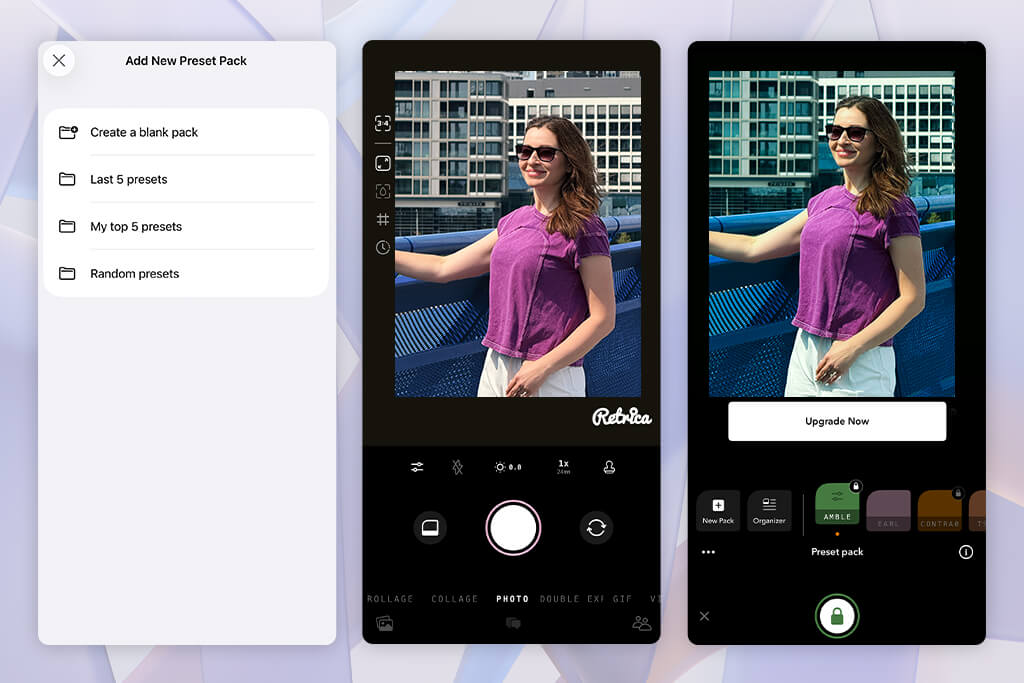
Retrica works as a live camera filter app that adds the visual style while you take photos, instead of after editing. I used it during busy street photography sessions and nightlife shoots where lighting changed quickly, and there was no time for post-processing. It also works really well for users who want to make a photo look vintage without needing any editing experience, making it a great choice for quick and stylish results.
What makes Retrica great is how fast it works. You can see cinematic, vintage, or soft-glow filters right on your screen as you take the photo, so you already know what the final picture will look like. For example, when I walked through the city at night, I used warm vintage filters that gave neon-lit scenes an instant mood boost, with no editing after.
But there's a clear downside: you can't change much after taking the photo. Once the shot is saved, you have very little room to fix or adjust anything. If the lighting or framing is a bit off, the filter can't really help in a controlled way. That means your results depend a lot on getting things right while shooting.
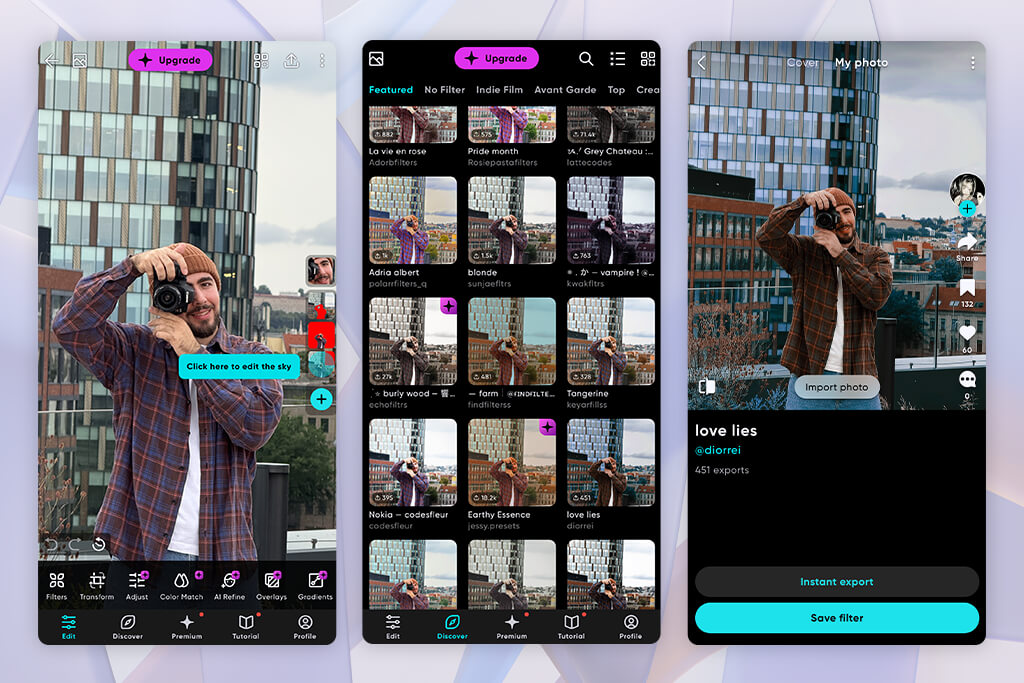
I tested Polarr as the most powerful beauty filter app in my entire workflow. Unlike just applying presets, it lets you build your own complete visual style from scratch. I used it a lot on large travel photo collections, where I needed to keep the same look and feel across different countries, lighting situations, and cameras.
Its system gives you deep control over color. I used tools like HSL (hue, saturation, lightness), tone curves, selective color grading, and light mapping to design my own filters - like "moody travel" and "soft cinematic city." For example, I turned down the green colors in city shots, lifted the shadows a bit to add depth, and warmed up the bright areas to create a consistent cinematic look across all my photos.
“Packed with advanced features and detailed settings. It may seem confusing in the beginning, but it offers a lot of freedom once you get comfortable with it.”
Once you create a filter preset, you can apply it to large groups of photos in just a few clicks. This is especially useful for real projects because it keeps everything visually consistent. Even when images come from different locations or lighting conditions, the final results still feel connected and professionally styled.
My team - Kate Debela, Eva Williams, and Ann Young - treated this like a real-world content workflow test, not a quick app review. We weren’t interested in “which app looks cool.” Instead, we wanted to know which tools actually work well when you're editing hundreds of photos taken in different lighting, styles, and for different client needs.
We created a fair testing system by using the same photos in every photo filter app. The set included street scenes, dim city nights, cozy cafés indoors, and plenty of portraits. Each team member focused on a different aspect: Kate Debata checked whether colors stayed consistent across large batches of images; Eva Williams looked at how fast and easy each app was to use under tight deadlines; and Ann Young examined technical details like tone curves, skin tones, and highlight recovery. This approach helped us avoid personal opinions and compare results more fairly.
During testing, we used the same types of photos in every app to compare the results fairly. For example, we edited dark night city images to see how each app handled neon lighting, shadow details, and color balance. We also tested portrait photos taken under mixed lighting to check whether skin tones still looked natural after applying filters. Some apps created eye-catching styles very quickly but struggled to keep results consistent, while others produced more realistic images but offered less creative impact.
The results ended up being very different from app to app. VSCO-style editors were the best for keeping a clean and consistent visual style, but they were not as strong for detailed corrections. AI-based apps made editing much faster, although they sometimes made skin and textures look too artificial.
More advanced editors gave better control over lighting and colors, but they also required more time and manual work. Kate mentioned that “no single app was perfect for everything,” while Eva noticed that during real projects, fast workflow often mattered more than having the most advanced features.
In the end, our team agreed that the best filter app is not the one with the wildest effects. It is the one that works best for what you need. Ann Young said it best. Good, natural-looking editing needs both automatic help and your own control. No single app can do everything a full editing workflow can do. So instead of picking one winner, we chose different "best apps" based on your goal, whether you want speed, nice style, or steady, professional-looking results.