The film industry is evolving at a rapid pace, and AI in films is driving much of that change. Whether it’s writing scripts, generating effects, or shaping promotion, artificial intelligence is redefining every stage of movie production.
The work that used to take months or even years to complete can now be done much faster using AI tools. This allows filmmakers to bring their big ideas to life with unmatched speed and accuracy.
However, this new technology also brings debate. As AI is used more in making movies, people are asking important questions about true creativity, right and wrong, and what will happen to the skilled work done by people in Hollywood.
For a long time, filmmakers hesitated to talk openly about using AI. Admitting it could create backlash, but pretending it didn’t exist wasn’t realistic anymore. Now both major studios and independent creators understand that AI in filmmaking isn’t some general idea - it’s a regular tool that already influences daily production work.
AP News reports that at the recent Runway AI Film Festival in Los Angeles, major figures in the industry came together to talk about this new wave of AI-driven creativity.
Michael Burns, a vice chairman at Lionsgate, said that almost everyone in the movie business is using AI in some way, even if they don’t openly discuss it. Lionsgate (the studio behind John Wick and The Hunger Games) has started working with the AI company Runway. Together, they are testing how AI video tools can help with early planning and editing in filmmaking.
Runway’s work with big film studios shows that AI is becoming widely accepted in movie production. What many once saw as a passing trend is now a real tool that helps solve everyday problems - reducing costs, speeding up work, and helping creators turn ideas into visuals much more quickly.

One of the biggest changes concerning AI in filmmaking isn’t only about creativity, it’s also about money.
Making movies the old-fashioned way is known for being slow and extremely costly. A small indie project can run from $30,000 to $200,000, and big studio films can easily pass $100 million. Even the early planning stages, like writing the script, creating artwork, and building storyboards, often take three to six months before filming can even begin.
On the other hand, filmmakers who use AI say they can shorten the time it takes to make a film by 60 to 70% and lower expenses by about 40%. Jobs that used to require a team of people can now be done by one person with a good computer. For example, every film entered in Runway’s AI Film Festival was made for less than $5,000, and almost all were finished in only 1-2 weeks.
AI tools like Sora and Runway Gen-3 can create lifelike settings and people in moments. You don’t have to search for a location, build a set, or hire background actors. Now, a director can see a scene fully imagined in just minutes - work that used to take a team of artists several days using older, manual visual effects methods.
That doesn’t mean making films with AI is free or easy. But being able to test out ideas almost instantly changes everything. Filmmakers can try different scenarios, change camera views, or recreate beautiful sunset lighting without having to rent expensive gear or wait for the perfect time of day.

To work faster and save money, many film studios are now using AI. They are setting aside a significant part of their special effects budget (as much as 20%) for artificial intelligence. According to a report in Variety, this money is spent on AI tools that help them plan scenes and create digital backgrounds early in the production process.
It’s easy to understand why: AI isn’t taking creativity away - it’s making it accessible to everyone.
To see just how big this change really is, I tried a quick test while looking into AI filmmaking. I made the same 90-second scene twice - one version with regular filmmaking tools, and another using artificial intelligence software.
| Step | Traditional filmmaking | AI-Assisted filmmaking |
|---|---|---|
|
Pre-visualization
|
3 days (manual storyboarding & location scouting)
|
30 minutes (AI concept generation)
|
|
Shooting/scene setup
|
1 day (crew of 6)
|
0 days (AI-generated environment)
|
|
Editing & color grading
|
2 days in Premiere & After Effects
|
3 hours with AI-assisted tools
|
|
Approx. cost
|
~$2,500 (equipment, talent, permits)
|
<$200 (AI tool subscriptions)
|
|
Total time
|
5–6 days
|
<1 day
|
The outcome wasn’t only quicker - it was better than expected. The AI-made version didn’t have the same warm, movie-like feel, but it still looked impressive and told a clear, emotional story. It showed that even small creators can now produce visuals on the level of a mid-sized studio.

AI is slowly reshaping each stage of making a film. The process often begins with writing, where many screenwriters now turn to generative tools like ChatGPT, Sudowrite, and other AI writers.
They use these tools to spark new ideas, shape conversations between characters, or get past moments when they feel stuck. Instead of taking over the writer’s job, these systems work more like helpers that can quickly offer many different story directions.
After finishing a script, directors move to the planning stage called pre-visualization, where AI now plays a big role. Tools like Runway and Pika Labs can transform written ideas into short videos.
This lets filmmakers experiment with camera shots, lighting, or whole scenes before any actual filming begins. It’s a real time- and money-saver, particularly for independent creators working with small teams and tight budgets.
AI in the movie industry also plays a big role once filming ends, and the editing begins. Adobe, a major name in video tools, has built strong AI systems such as Sensei and Firefly into such programs as Premiere Pro and After Effects.
These AI tools can quickly fix the colors in video, outline and separate objects, improve sound clarity, and erase things that shouldn’t be in the shot. Work that once required editors to spend hours making manual changes can now be finished almost instantly. This lets them spend more time on the creative parts of their job, like shaping the story and pacing the emotion.

So, here is how AI is used in film production:
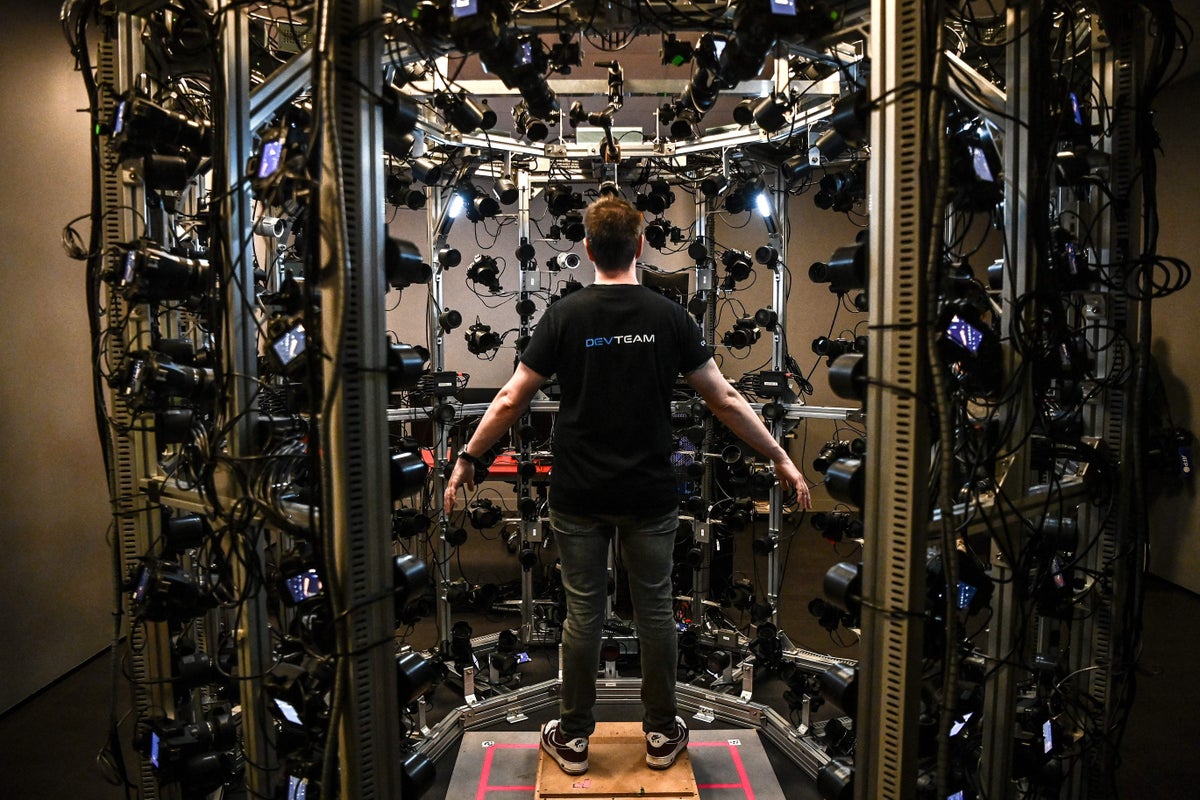
Probably, the most serious influence of AI on film production is its variety of visual effects. Not long ago, lifelike CGI could only be made by big teams working for months. Today, new AI video tools can produce realistic scenes just from written prompts.
Programs such as OpenAI’s Sora, Runway’s Gen-2, and Adobe Firefly can build entire environments, bring still images to life, or create complicated effects that used to require huge budgets. The results are impressive.
At AI film festivals in Los Angeles and New York, short films made either entirely or partly by AI have been shown next to traditionally made movies. These AI creations no longer have the obvious mistakes that used to be common - like too many fingers, strange-looking faces, or unnatural movements.
AI in filmmaking isn’t only about producing high-tech imagery - it’s also reshaping the hidden work done after filming. Today’s tools speed up editing, improve audio fixes, and help shape stories in ways that feel smoother and much quicker than before.
Adobe Premiere Pro and Firefly now use AI to handle things like finding scene changes, matching colors, and removing unwanted objects. Firefly can also create believable visuals like new skies or props right inside the editing process, saving a lot of time on VFX work.
In sound work, tools like Adobe Podcast Enhance and Descript are especially helpful. Their AI can clean up audio by cutting background noise, fixing voice levels, and even recreating lost dialogue with speech that sounds real. Tasks that used to require long, careful editing can now be done almost instantly.
Additionally, Pixflow provides tools for this stage of development, such as a sound effect library and AI voiceover generation. By integrating AI support with pre-made audio assets, filmmakers can use them to produce narration and add cinematic effects or ambient sounds.
For restoring older films, Topaz Video AI and DaVinci Resolve’s Neural Engine can sharpen low-quality clips, move look smoother, and keep colors consistent across different shots. At the same time, writing tools like ChatGPT and Sudowrite support screenwriters by suggesting dialogue, checking story flow, or improving scenes that aren’t working well.
Film studios also use smart analysis tools like Cinelytic and Vault AI. These platforms help guess how audiences might react, plan better advertising, and figure out which story ideas have the best chance of doing well.
Some filmmakers fear this approach turns movies into data-driven projects, while others feel it actually frees them to stay creative and make better decisions at the same time. Overall, these AI tools are changing how films get made - reducing the time spent on technical work and giving creators more space to focus on meaningful storytelling.


The impact of AI in film industry has become very clear. Instead of relying only on traditional design teams, studios now turn to AI to create posters, trailers, and targeted social-media content for different viewers.
With tools like Adobe Firefly and other AI image generators from the list you shared, studios can quickly produce many promo visuals or alternate backgrounds. At the same time, prediction systems track how people react to the marketing and adjust strategies on the spot.
Waymark is another company exploring what AI can do. Their short film The Frost - one of the earliest movies made almost entirely with generative AI - used DALL-E 2 for its images and other AI tools to animate them. The project showed that AI can speed up the whole production process while still allowing the film to have its own unique style.
Today, marketing teams use these tools to shape ads for specific groups and to gauge viewer interest long before a movie is released. This marks a new stage in how AI and filmmaking work together, blending data and creativity to strengthen the bond between stories and audiences.

Even with the ongoing debates, optimism is a big part of the talk about AI in filmmaking. For independent creators, AI makes things possible that used to be very difficult. Now, with tools that can generate video, help with editing, and create special effects, a small group - or even one person working alone - can make high-quality, professional-looking films right from home.
Leaders in the film industry, such as Bryn Mooser, who helped start the AI company Moonvalley, stress that artists should always be the most important part of the process. He believes the best way forward is for creators and the people building AI to work together closely. This ensures that AI acts as a helpful tool that expands what artists can do, not as something that takes their place.
Big studios like Marvel and Disney are also testing generative AI tools from the list you shared. They use them to build digital sets, plan stunt scenes, and make actors look younger without losing their real expressions. These trials are helping create the guidelines for how AI will be used in filmmaking in the years ahead.

Yes, that’s correct. AI is very likely to change or significantly reduce certain jobs in the film industry, and this shift is already underway. Here are the main risks and threats people see AI bringing into filmmaking:
AI offers huge creative and technical benefits - quicker editing, believable visual effects, help with writing, and even digital actors or voices. But these advantages also come with real worries about people losing jobs.
Tasks that follow clear, repetitive steps are the most at risk, meaning the chance of AI replacing some roles is fairly high. Jobs like junior editors, rotoscope workers, color correction assistants, and VFX cleanup artists are especially threatened because AI tools can already do much of this work faster and at a lower cost.
Screenwriters and voice actors are starting to face new challenges. Since AI tools can now write full scripts or copy an actor’s voice exactly, film studios might choose to use fewer people to save money. Even jobs like concept artist and costume designer could be impacted, because AI-based AI art generators can quickly produce hundreds of different design ideas.
However, it’s unlikely that AI will completely replace human creators soon. The bigger change will be in how jobs evolve, not whether they disappear. This means pros will need to adapt by learning to work with AI, not against it. Skills like emotional storytelling, ethical judgment, and cultural insight (uniquely human qualities) will remain at the very center of great filmmaking.
In simple terms, AI will replace some technical tasks, but it will mostly change how people work rather than wipe out all jobs. The biggest danger is that studios or unions might not adjust fast enough, which could let automation move ahead without proper rules or protections in place.
A scandalous Coca-Cola Christmas commercial, created entirely using generative artificial intelligence, became an example for the whole video-production industry. The company used over 70,000 AI-generated frames, but the result was far from “holiday magic.”
The ad sparked a wave of criticism for its unnatural animation, distorted objects, “strange” human faces, and lack of emotion - something the brand was once known for. Creators, artists, and regular viewers called the video “soulless” and “dystopian,” and many raised concerns about whether it’s ethical to replace real artists with algorithms.
This situation revealed a core issue that filmmaking is also facing today: AI can speed up the process and lower costs, but it still cannot fully recreate human emotion, warmth, and the coherence of a visual sequence.

Looking forward, the role of AI in filmmaking appears to be more about giving creators new abilities than taking their jobs. It won’t craft the next Citizen Kane or Parasite, but it can help a new director with a small budget bring their ideas to life or polish a visual effect that once needed an entire studio team.
The true value of AI depends on using it responsibly. The best outcomes are achieved when human creativity leads the way - when filmmakers apply AI to improve their art, not to replace it completely.
As the line between human and digital creativity becomes less clear, the film world is moving into a major period of change - one where imagination, ethics, and new technology all have to grow side by side. Some people see AI as a breakthrough, others as a challenge, but either way, it’s already changing how movies are made for future generations.
In The Irishman (2019), director Martin Scorsese and his team used AI to make actors like Robert De Niro, Al Pacino, and Joe Pesci look younger throughout different periods of the story. The system studied old video clips and learned from thousands of images to rebuild younger versions of their faces and keep the lighting and camera angles consistent.
This clearly shows how closely AI tools are now woven into big-studio film production and visual effects work.

Gemini Man (2019). In Gemini Man, which stars Will Smith, the filmmakers used advanced AI to create a younger digital version of him. The VFX team trained machine-learning models on old videos of Smith and combined that data with CGI to produce a realistic younger performance on screen.
This shows that AI in movies isn’t just used for small fixes - it’s now helping change major character performances in a big way.

The Frost (2024). Waymark created a short film called The Frost using generative AI for almost all of its visuals. Reports say the team relied on an AI image generator built on DALL-E 2 to produce every frame, and then used a different system to turn those still images into moving sequences.
This is a powerful example where AI didn’t just improve a film - it was the primary tool used to create it.

Sunspring (2016). The experimental short film Sunspring was completely written by an AI - a learning program named Benjamin. Filmmaker Oscar Sharp and AI researcher Ross Goodwin trained the system on classic science fiction scripts. In response, the AI generated its own original screenplay, complete with character dialogue and scene directions.
This shows one of the first times AI was used to help write and plan a movie, right from the beginning.
Industry-wide use & emerging tools. Outside of single projects, research shows that AI is becoming a common part of VFX and post-production work. One report found that about 72% of VFX studios now use AI tools, average rendering time has dropped by around 35%, and many smaller films are turning to AI to create big-budget-style effects without spending as much.
Studios like Lionsgate have also made agreements with AI-video companies such as Runway to test out generative video tools and new ways to plan scenes visually before filming.
Voice & Accent Refinement: The Brutalist (2024/2025). In The Brutalist, the team used AI tools from a company called Respeecher to improve the Hungarian accents of actors Adrien Brody and Felicity Jones. The editor explained that the software helped fine-tune their pronunciation and voice tone so the accent would sound natural to native Hungarian speakers.
The question of copyright in AI-generated film content is one of the hardest and most argued issues in the entertainment world today.
As AI in filmmaking becomes more common, copyright laws are having trouble keeping pace. One major problem is figuring out who owns the rights to content made by AI. In many places, including the U.S., copyright only covers work created by people, so fully AI-made images, scripts, or music cannot be copyrighted under today’s rules.
This is a serious risk for both major studios and independent creators. If an AI model creates a scene or character that uses elements from copyrighted material in its training data, such as an actor’s likeness, a famous set design, or a director’s distinct style, it could be seen as unauthorized copying and lead to legal issues.
The U.S. Copyright Office has stated clearly that anyone creating a project must openly state if they used AI. If large parts of a film are made by AI with little human creative direction, those sections may not be protected by copyright. This means the final work could face legal challenges or be copied by others without permission.
To stay safe, filmmakers are encouraged to:
To avoid legal problems, filmmakers are advised to:
In short, while AI offers huge new creative opportunities, it also reminds us that we must use it responsibly, be clear about how it’s used, and establish fair legal rules. This ensures that progress doesn’t come at the cost of an artist’s control over their own work.





![7 Best Free AI Video Transcribers [Reviewed & Tested]](http://fixthephoto.com/blog/images/gallery/news_main__preview_28496.jpg)