I discovered the significance of a photography licensing agreement when one of my interior photos was published in a design blog. The site’s owners did not credit me as an author and used my images as they weren’t meant to. I had taken these photos for a boutique hotel’s print brochure, but then another brand used them for its online campaign.
This situation taught me that you might easily lose control over your photos even if you are a legal copyright owner unless you specify licensing terms clearly and sign an agreement. After this case, I started to sign licensing agreements when working on every project, whether I was shooting for local brands or large companies.
In this detailed guide, I will describe everything I know about photo licensing and provide tips on how we at FixThePhoto protect our pictures and ensure compliance. Whether you are an experienced professional or just getting started, you will need to consider the things described in this article.
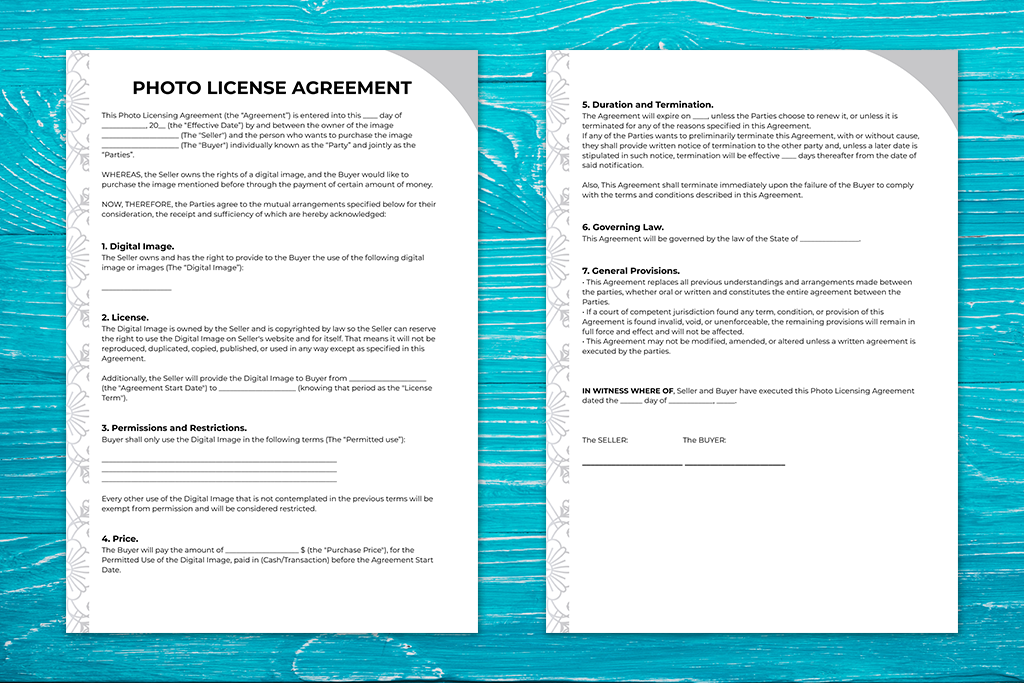
As a copyright holder, you maintain complete control over how your photos will be used, the duration of your contract, and where the images will be published. A photography license allows you to ensure that your pics won’t be reused without your permission.
A license allows you to specify:
What it doesn’t do:

This contract is called a photo licensing agreement or image use agreement. It describes all the terms clearly. The agreement is a binding contract between you (the licensor) and the client (the licensee), listing the rights they’re paying for.
A professional licensing agreement includes the following:
When I created my first photography portfolio, I realized the importance of written agreements quickly. After sending edited real estate photography photos to a small agency, I discovered that they reused them without paying. As we had signed a contract, it was easy for me to get my payment.
Our team at FixThePhoto has faced many situations when our wedding photos were reused without our permission, or our real estate shots were printed on ads in foreign markets. In each of these cases, a written photography usage rights agreement helped us win the legal battle.

A photography licensing agreement is important for many cases besides big campaigns. Whether you shoot portrait photos, take pics for brands, or create visuals for small businesses, you need to have a clear agreement to specify who will be able to use your photos and for how long. Based on my experience, signing an agreement with clear terms is beneficial for all parties.
When creating a photography licensing agreement, you need to choose the right license type. It will allow you to specify how much you want to control the use and what price your client will have to pay.
By choosing the right license, you can stop worrying about how your client will use your work. If you are just considering becoming a photographer, be sure to learn more about the existing license types. It will allow you to look like a professional when you sign your first license agreement. Here are the types I often have to deal with:
Exclusive license. It allows only one client to use the image. I prefer to reserve exclusive rights for signature campaigns or custom editorial work. Once, I licensed a black-and-white portrait to a fashion label exclusively for their winter catalog. While the license was expensive, they were able to use the image exclusively.
Non-exclusive license. It’s suitable for stock photos, regular clients, or evergreen content. Such licenses allow me to generate passive income from landscape photos. I can sell the same photo to multiple travel blogs.
Royalty-free license. Clients have to pay a flat fee to get broad rights. It’s non-exclusive by default. I typically recommend this option to clients who need to buy licensed images without spending too much. This option is especially suitable for startups.
Rights-managed license. This license means that a client has to pay for each specific use. For instance, they can pay for a print ad in one city for 6 months. It’s perfect for editorial or product campaigns.
I remember working on a commercial real estate photography project where I specified that a client would be allowed to use my photos only on a flyer one time. The client had to renew the photo usage agreement to reuse the image.
Unlimited use license. While it might sound risky, it is quite safe if you specify the timeframe. I occasionally grant unlimited platform use rights for a year. It allows my clients to use my images online, in print, and on TV. This license is expensive, but it is perfect for those who do not want to renegotiate every use case.
Personal / print release. This license type is suitable for private use. It’s perfect for wall prints, albums, and gifts. My clients often choose it for wedding albums or graduation portraits. A well-written print release vs copyright release for photographs note will protect your rights and ensure that your work won’t be misused.
Commercial photography license. This license is suitable for those who want to use photos in ads, social campaigns, and packaging. It’s often chosen by business clients. I typically use it for product photography contracts, and add exclusive rights if the client needs them.
First rights license. Suitable for editorial work. A client gets the first publication rights. However, I can still sell my image later. I typically use this license when I need to sell images to magazines and travel blogs.
When writing or re-reading a photo license agreement, you will notice that some terms are repeated often. Understanding what they mean will help you make your contract more detailed. Here are the main terms I explain to my clients before they sign an agreement:
Attribution (photo credit). Some agreements require clients to display a photographer’s name alongside the photo. It’s perfect for achieving higher visibility. This is why I typically add this clause when signing an editorial or blog license.
Sublicensing. This term is used to describe whether your client can grant rights to a third party. I prefer to restrict this unless I work on a project where a client may need it. One of my colleagues once discovered that their photo was used in a partner’s campaign without their permission. The situation was quite unpleasant.
Territorial rights. It describes where the image can legally appear. It can be used locally, nationally, and globally. While this is more important for print-heavy projects, I still use this clause when I need to control the reach. For example, I once decided to limit the rights of a photo series to North American markets only.
Modification rights. It specifies whether the other side can crop, color-grade, or otherwise change my visuals. In most cases, I agree to edits, but I am against significant image manipulation unless we have previously agreed on it. Be sure to specify this in your photography copyright contract.
Term (or duration). The period when the license is active. While it may sound simple, many people forget to include this information. I prefer to use reminders for 1-year photography copyright contracts. It allows me to offer renewals before they expire. It’s a great way to strengthen relationships with clients and increase your income.
Usage restrictions. While many people often do not pay attention to this clause written in the fine print, it describes how photos can be used. For instance, you can allow your clients to use your photos on social media but not on paid ads. Be sure to specify use cases to avoid misunderstandings.

After figuring out what licensing is, you need to understand how your photos will be used. A well-written licensing agreement should specify this clearly. Fees change depending on use cases, permissions, and possible risks. Here are the main things to keep in mind:
| Content | Note | |
|---|---|---|
|
Retail use
|
|
If the model wants to pay for usage rights, it’s typically retail
|
|
Commercial use
|
|
Pictures that look “editorial” but are used to promote something should be licensed for commercial use
|
|
Editorial use
|
|
Not allowed: logos, direct product promotion, endorsements
|
Sub-categories to describe in licensing terms:
Common confusion: Retail vs. Commercial
I have noticed that many photographers do not always describe usage accurately. Here is how to ensure that your pics won’t be sold cheaply.
| Clue | Retail use | Commercial use |
|---|---|---|
|
The subject pays directly
|
✔️
|
❌
|
|
Visuals are used in advertisements
|
❌
|
✔️
|
|
Photos are printed and hung at home
|
✔️
|
❌
|
|
Photos are utilized in an Instagram ad
|
❌
|
✔️
|
When drafting a licensing agreement, define uses like:
Every use case is different, so it’s better to specify prices for each of them separately. If your client is interested in several use cases, they will have to pay for each of them.
If you wonder how you can license your photos, below, you will find a brief description of the strategies I’ve tested personally. Whether you want to get a stable source of passive income or establish stronger relationships with brands, licensing will allow you to protect your rights and increase your profits.
License it yourself. There is no need to use any platform to get started. When you get contacted by a client, offer them to sign a licensing agreement. Be sure to:
Use stock image platforms. If you want to reduce the number of administrative tasks, you can use stock platforms. I have used such services as Shutterstock and Getty. Many of my colleagues from the FixThePhoto team use IMAGO, the platform based in Berlin. It will allow you to streamline such tasks:
IMAGO allows you to choose your licensing model. Besides, you keep your copyright. This platform is perfect for those who want to make money with stock photos without communicating with clients directly.
It might be difficult to decide how much you need to charge for photo usage. It’s much easier to choose a fee for the photoshoot. However, once you gain some experience and use a structured approach, you will discover how to choose fair licensing fees. Now, I can select licensing fees that allow me to profit and suit my clients perfectly. I consider these three main components:
When contemplating what licensing fee to choose, I consider the following:
Client type. A small company, a nonprofit, and a well-established brand have different budgets and are associated with specific risks.
Media format. Will the photo be published on social media, product packaging, TV, or billboards?
Geography. Will the image be used in one city, nationwide, or globally?
Duration. Will the photo be published once, as a part of a 3-month campaign, or for 10 years?
Exclusivity. If the client wants to stop others from utilizing the same visual, the price will be higher.
When a client of mine requested exclusive rights to use one of my pictures for 10 years across four countries for an outdoor campaign, I set the licensing fee that was three times higher than the cost of the original shoot, and they paid it without any issues. That case helped me understand that usage rights might be quite valuable.
If you do not know what licensing price to choose, use the Getty Images Rights Managed Calculator or AOP Usage Calculator to follow industry-specific guidelines.
It won’t suffice to use a verbal agreement or send a license via email. Unless you sign a proper agreement, you will be exposed to legal risks and might even lose a substantial amount of money.
For photographers:
For licensees (clients):
Mannion vs Coors Brewing Co. Photographer Jonathan Mannion sued Coors after the brand copied his photo of Kevin Garnett without a license. He won the case and was paid by the brand, which became an important precedent for future cases about licensing.
Grisbrook vs MGN Ltd (Daily Mirror case). Photographer Alan Grisbrook did not sign a licensing agreement with a newspaper, which later published and sold his photos without his explicit permission. He won the case, but the court emphasized the importance of signing formal agreements.
Piracy compensation case. Photographer Daniel Morel posted his photos of a natural disaster on Twitter; AFP and Getty republished them without a license. Morel got over $1.2 million in statutory damages after the court decided the case in his favor.
Unless you have signed a photo licensing agreement with well-defined terms, it will be difficult for you to build a successful career with photography skills alone. Even if you are the rightful owner of your photos, it does not guarantee that you will be able to use them as a stable source of income.
Besides, if the text of a licensing agreement is ambiguous, you may lose your case in court. This is why I always recommend that my colleagues and clients use a digital image license contract template for every release.
“I used to think that it would suffice to sign a print release. However, one of my clients submitted my portraits to a stock website. Now I always write a detailed agreement with clear terms of use. I downloaded our standard photo licensing agreement template free of charge and changed it as I see fit.”
“A real estate company once reused my drone photos across several listings without informing me. I now prefer to specify 1-year limits in every real estate photography agreement I sign.”

“Some venues require a photographer to show their business license and get photography insurance. I discovered it when I was turned away last minute. This is why one should always sign a wedding photography contract in advance.”


With the help of this simple checklist, you can check your image use agreement to ensure that it covers all the necessary points. It will help you create a detailed agreement when working with brands, publishers, and private clients.

After writing down the most important information, be sure to write precise terms of use and maintain consistency. I prefer to follow these steps when creating different types of contracts, including real estate photography contracts or deals for social media content:
Step 1. Include the names of the parties and their contacts. You have to indicate both the licensor (you) and the licensee (the client). Be sure to add your photography business name as well as other legal names, emails, and phone numbers.
Step 2. Specify license type. Specify whether it’s exclusive or non-exclusive. Your pricing will depend on it. Besides, it will allow one to reuse the photo.
Step 3. Describe usage scope and duration. Be sure to provide specific terms. Specify where the photo will be used. Mention the duration or use and the platforms where it will be published. If you use an image usage rights agreement template, it will be easier for you to remember what information to add.
Step 4. Indicate information about fees and payments. When I write this information, the exact prices depend on the specific project. I have a flat rate for editorial work. When I work on commercial projects, my pricing depends on a specific platform.
Step 5. Describe editing and credit rules. I typically write that minor edits, like cropping the images or adjusting exposure, are allowed. However, I prohibit anyone from distorting the meaning of my works.
Step 6. Add termination & renewal terms. It’s crucial to add a specific clause that describes when the agreement stops being valid or can be extended. Both parties should sign it and add a date. Regardless of the size of your project and the type of signature you use, be sure not to skip this important step.
If you are just getting started with a photography business plan, use a well-structured agreement, as it will make it easier for you to remain professional. If your clients have never signed a licensing agreement before, it will show them that you are trustworthy and take your obligations seriously.

You can use a free photography license agreement template from the following platforms to streamline the process:
It will allow you to get started with your photography usage rights agreement. However, you will need to customize each template depending on the project you are going to work on. All clients have different preferences, so be sure to write custom licensing terms.
The term refers to a legal contract that allows third parties to utilize a person’s images under certain terms describing where a picture can be used, in what way, and for how long. It does not require giving up your copyright.
A photo license allows you to grant use rights to someone. Copyright belongs to you as a photographer unless you decide to transfer it.
It should be signed. Besides, you need to include a date, describe the usage terms clearly, and add information about the fee and copyright. You can also utilize a photography watermark to protect your previews.
While nobody will ask you for it when you take pictures, you will need to use it to work legally and charge your clients. It’s especially important for real estate photographers, as many places require you to have it.
If your agreement includes a reuse clause, you can use it. Otherwise, it will be necessary to get a new license.
Your rate may depend on usage, platform, reach, and whether you want to grant someone exclusive rights. A broad license for a billboard might be more expensive than the shoot.
You can find a commercial photography license agreement template or pay for legal services. It will allow you to protect photos online and describe the terms of use clearly.
Yes. They will be taxed as business income. Track them to get returns.
After signing an agreement and paying for it, you can utilize the picture as described in the terms. If you need to expand use cases, you will need to update your license.
While there is no federal license, you will need to get a local license if you want to build a legal business and open your own studio.
If you don’t have a licensing agreement, anyone will be able to reuse or even sell your pics without your permission. You may lose money due to this.
Not in every case, but it is typically stated in editorial and stock image licenses. Be sure to describe it in your photo use agreement.
Yes, if there are recognizable people in your pics, and your photos will be utilized commercially.