Back in the day, a client of mine looked at some of her preview photos, felt flabbergasted, and asked: "Is that how I look? Does the camera really add 10 pounds and make me appear fatter than I am?” That day gave me pause since it wasn't the first time I've heard people mention something like that.
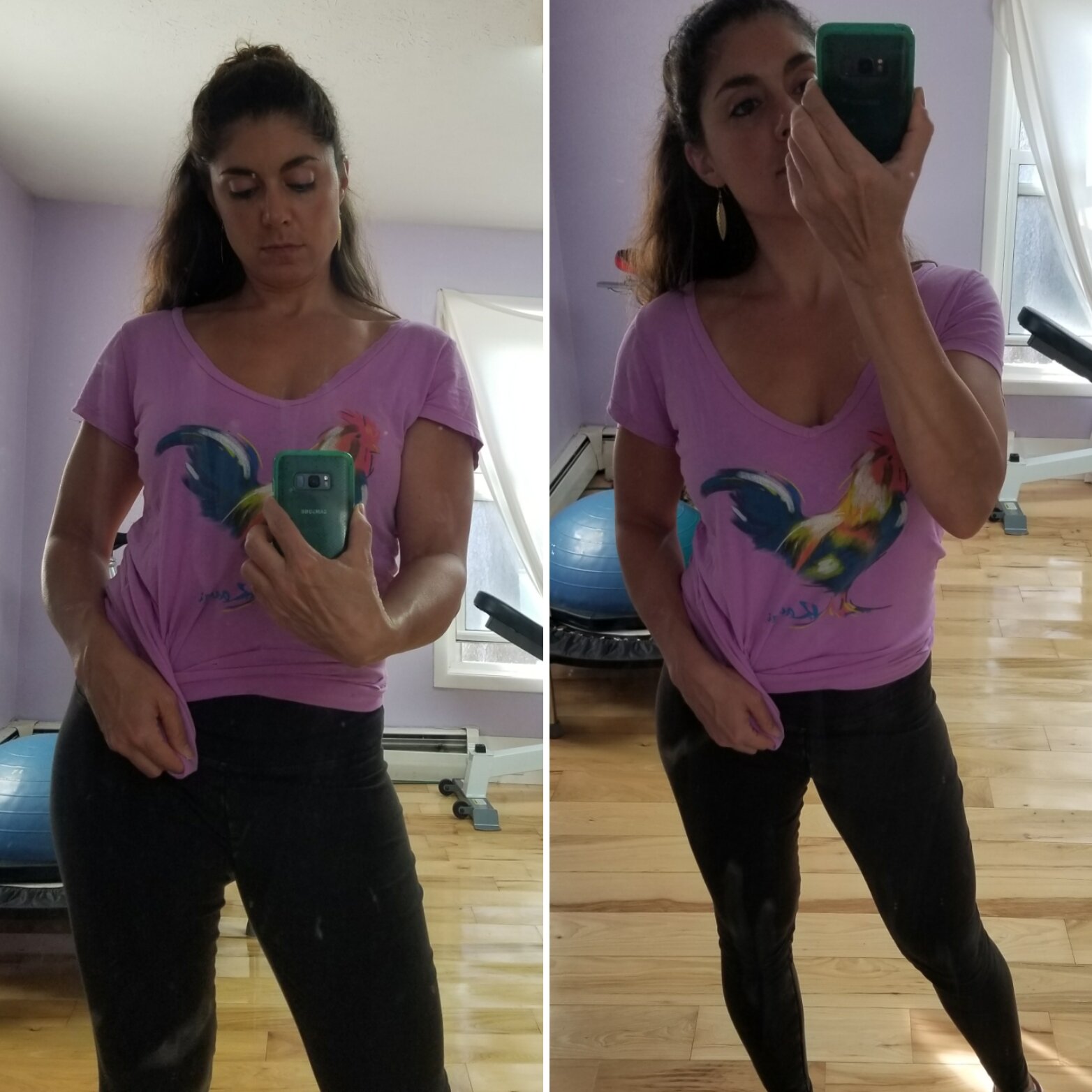
I went through a similar experience myself. In a group selfie I posted on my socials, I looked significantly bigger than in reality. A few days after that, my friends and I took another picture from a higher angle – and I instantly looked slimmer and more attractive. Same body, same week – just a different angle and slightly differing photoshoot themes completely changed how good I look.
The concept of “camera adds 10 pounds” doesn't refer to changes in your body – it refers to distortions, lighting tricks, and perspective shifts. Wide lenses can stretch body parts out while low angles add visual weight. Lastly, rough shadows tend to exaggerate curves.
On the other hand, longer focal lengths, aesthetically appealing loop lighting, and natural poses help take balanced, more flattering portraits.
I can't possibly recall how many times I've seen clients complain, "Oh my God! I look a lot heavier than I do in my mirror!" and that’s valid. It’s true that the camera adds 10 pounds in some situations. Because it’s not your body morphing, it’s the camera that’s deceiving you and changing the perception of your looks.
I did another test on myself. Took one photo at waist-level and ended up having a double chin. And the second one was from above my chest-level, which made me appear about 10lbs lighter even though it was the same day and I was wearing the same clothes.
Learning how to find your angles is the key to snapping flattering portraits instead of ones you can’t even stomach to look at. How to ensure the camera doesn’t add 10 pounds anymore?
Here are my recommendations:
These tricks helped me ensure that many clients come away from our photoshoot stating that it’s the first time they felt the photos actually showed them how they are. I didn’t have to use Photoshop. I simply picked the right angles, lighting, and perspective to provide a more accurate representation of their appearance.
The way your photos turn out isn’t just affected by angles and lenses, as there are numerous other factors in play. After doing shoot after shoot, I’ve picked up on a variety of nuances that can allow you to understand why many people ask “Why does the camera add 10 pounds?”, when in reality it all comes down to perception – not the camera.
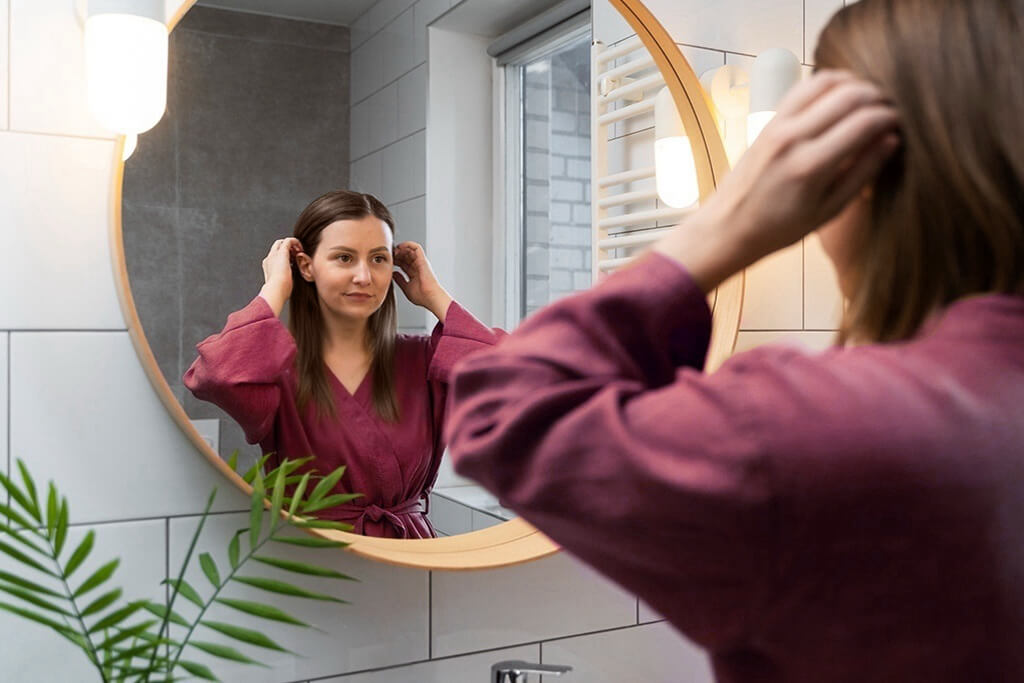
Candid vs. posed. A posed portrait allows you to be in charge of the angles and expression, while candid ones tend to make you appear bulkier than you are. Standard mirror picture poses, like turning your body a bit, elevating your chin, or keeping the camera at eye level, can already do wonders for making you look slimmer.
Clothing choices. Fitted clothing helps sculpt your build, while loose or oversized items create the appearance of additional weight.
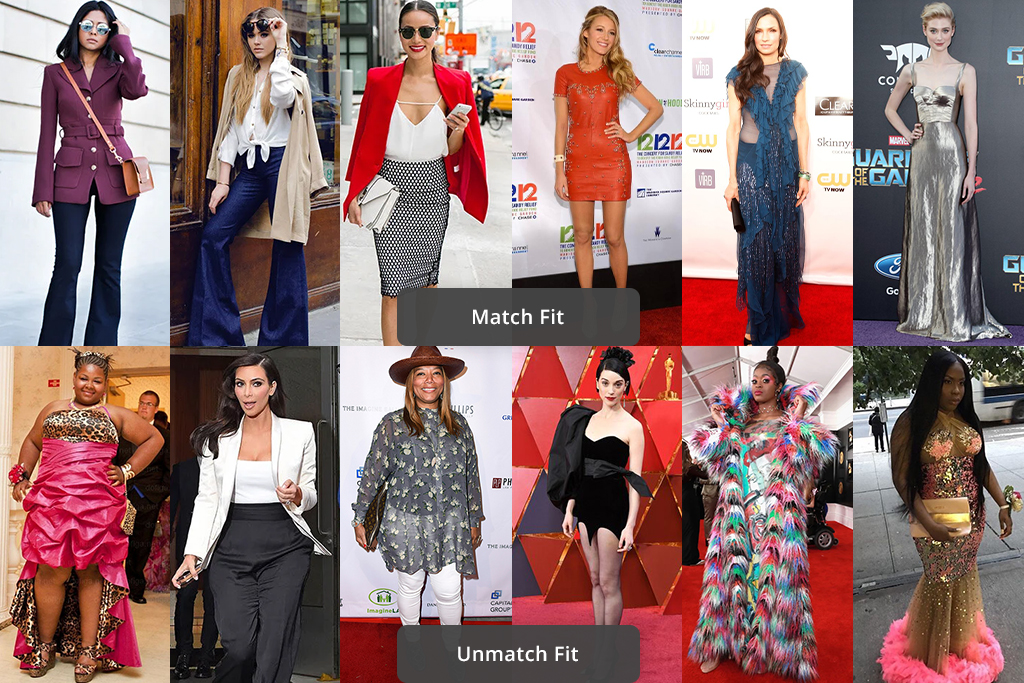
Lighting. Soft, diffused lighting makes you look slimmer, while rough or dim lighting exaggerates lines and your body proportions.
Time of day. Morning lighting tends to look flattering, while evening lighting can make you appear bloated or heavy.
Filters and apps. Digital tools can make you look thinner in comparison to raw, original photos.
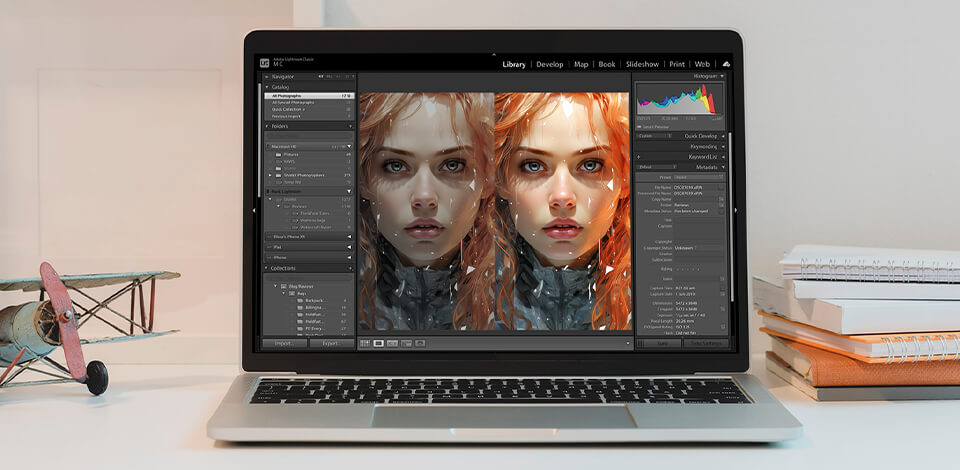
Editing. Experienced retouchers can ensure you look as slim as you want while preserving your natural appeal and not over-editing the photo.
All of these factors often lead to the question: is a mirror or camera more accurate? The fact is that a mirror reflects a dynamic, more flattering version of your body under familiar lighting, while the camera captures a single moment of you in specific lighting and perspective conditions. Both are "accurate," but both are also subjective representations of you in different moments – it's just that photos tend to look more unappealing than the mirror reflection.

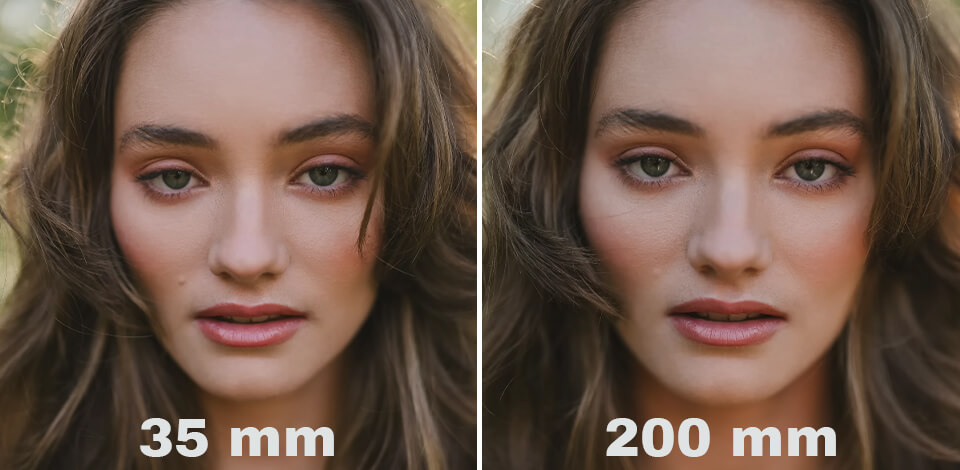
Lens distortion has a huge impact on how your body looks in a picture. When I initially began using wide-angle lenses, I was surprised by how much they can distort the body, increasing the nose size, widening the shoulders, or bulking up your entire frame.
Meanwhile, once I picked up a telephoto lens, I managed to take pictures of the same subject in the same conditions, but now they appeared thinner and better proportioned. They looked like two differently built people, just because of the lens.
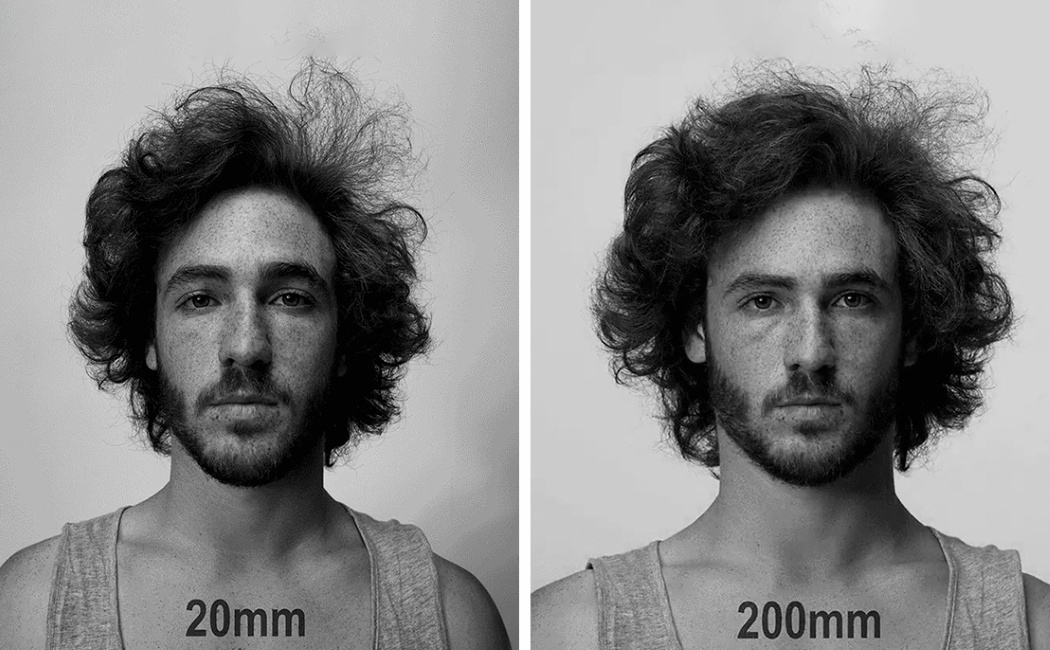
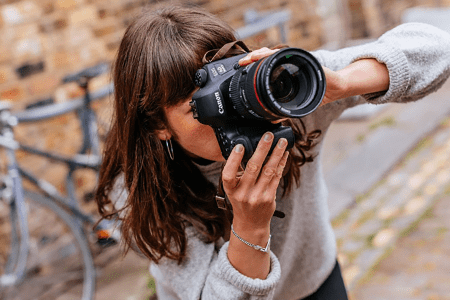
After hearing the “Does the camera add weight?” question so many times, I dove deeper into this subject with the FixThePhoto team during a studio photoshoot. We took photos of a colleague with a Canon 24-70mm lens on a Canon 5D Mark IV, going from 24mm to 35mm, 50mm, and 70mm. With every change, we stepped back to ensure the subject’s face filled the frame the same way.
The difference was incredible. When shooting at 24mm, the facial features were visibly stretched, while at 70mm, the subject's face looked natural, properly proportioned, and more accurate.
That’s why there are so many clients who think that the camera does add 10 pounds. They simply don’t know about lens distortion. Wide angles exaggerate things, while longer focal lengths do the opposite.
Meanwhile, if you don’t like how specific parts of your body look, for example your chin, you can simply use a dedicated app to get rid of double chin to make a quick and simple edit after the photoshoot without making your appearance look artificial or over-edited.
Learning how all these concepts work helped me optimize my approach to portrait photography, and these lessons are part of the reason why most of my clients state they finally look like themselves in the photos I send them.
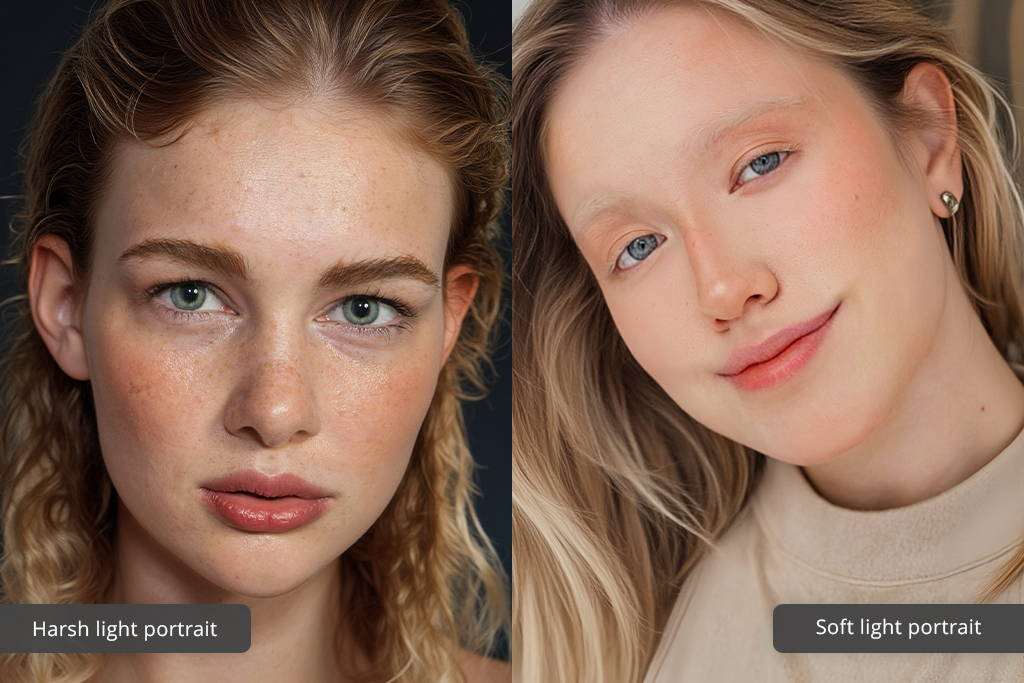
Lighting might seem like an irrelevant detail when it comes to how heavy someone looks, but my tests say differently. I've had plenty of examples when the same person is wearing the same clothes, but in different lighting, and the outcomes couldn't have been more different.
Soft, diffused lighting smooths skin, hides flaws, and shapes the body in an appealing way. Rough, direct lighting? It highlights all the unflattering features you don’t want to show.
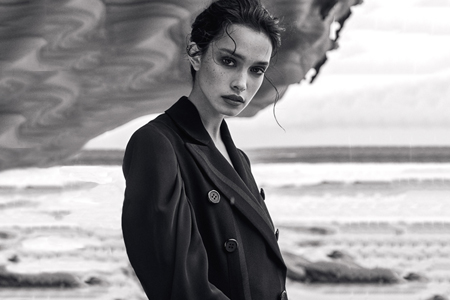
When we test taking outdoor portraits, we always check how the lighting affects the subject. For example, when shooting on a beach, golden-hour light makes skin glow and can make even a regular outfit look like it belongs in a magazine. Meanwhile, if you take photos at noon, the sun will be ruthless, casting deep shadows that exaggerate lines, wrinkles, and curves in the most unflattering way possible.
When working indoors, I tend to employ modifiers like softboxes and diffusers to achieve an appealing, soft glow. This little trick helps me make the faces of my models look slimmer by simply replacing flash with a soft light source. In a studio environment, black background lighting can be perfect for isolating the subject, strengthening the contrast, and achieving a cinematic slimming effect.
Once again, this isn’t about how many pounds the camera adds, but rather how bad lighting adds visual weight where there is none in reality. That’s why setting the lights properly should take priority even over posing.
The lighting plays an important role in framing the story about your body. If it’s soft and even, you look attractive, confident, and true to your perception of yourself. If it’s rough and direct, you can feel like you're looking at a different person when seeing the photos later.
As a photographer, I think that lighting isn't just about different techniques, but psychology as well. Such an understanding helps me ensure my clients recognize themselves in my photos without ever having to worry about perceived added weight.
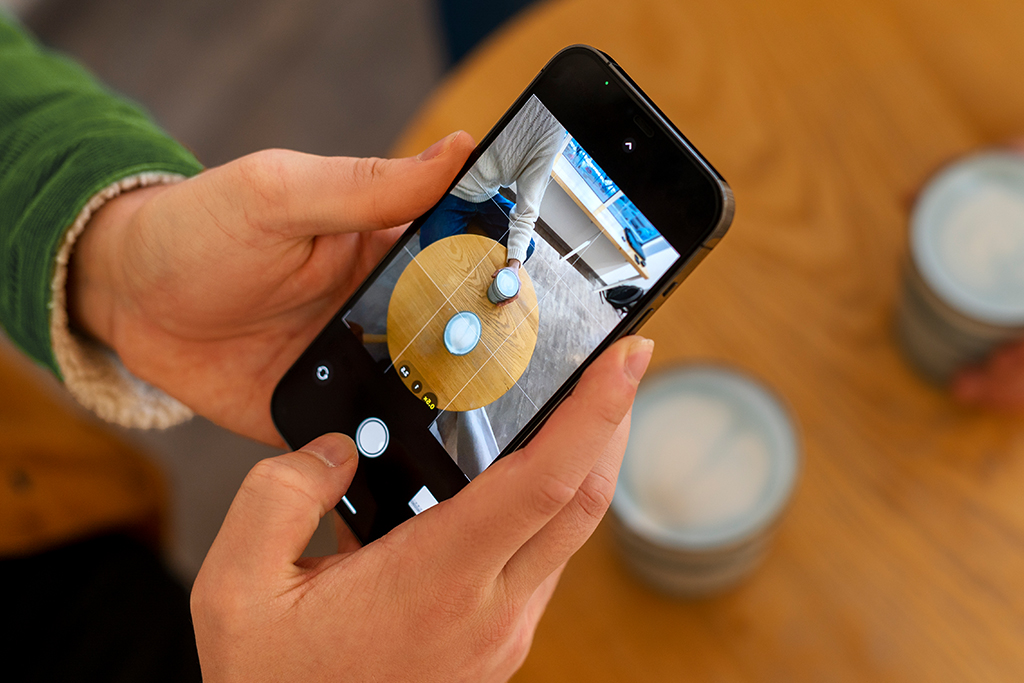
Countless times, I've heard people say, "Why does the camera add weight? I look so much larger in my phone photos than I do in the mirror!” Your phone camera can definitely capture your body in an unflattering way, and it's not because you suddenly became a lot heavier. Most smartphones are equipped with wide-angle lenses, and they tend to expand the closest subject, which results in fuller faces and thicker bodies.
If you want to get the most realistic, flattering results possible, consider checking out the best phone camera lenses, as using an external lens can do wonders for adjusting the perspective and minimizing distortion.
“As a photographer, I constantly advise my clients to hold their smartphone just a bit above eye level to make the face look slimmer and get rid of the 'camera adds 10 pounds' curse.”

I experienced this issue when one of my clients compared a phone picture to a professional portrait captured just a few seconds later. Same subject in the same pose, but the smartphone camera exaggerated facial features in a way the DSLR didn’t.
Lighting can also be important here. Some phones use a strong flash that flattens the facial structure and makes the shadows deeper, making you look fuller.
So does the phone camera add 10 pounds? Not in a literal sense, but it distorts perspective that makes it look like it does. If you're solely reliant on your smartphone, the angles, distance, and lighting can all contribute to making you look heavier and less appealing. Thankfully, even a basic nose photo editor can fix many of the created issues while ensuring your photo doesn’t look over-edited.


If your goal is to ensure your photos show you the way you see yourself, you can deal with all major issues afterward. Get the FixThePhoto app and try editing one picture for free to see how game-changing some high-quality retouching can be.
Perspective is often the trickiest thing to handle when planning out your shots. Approach the subject too much with a wide lens, and you’ll notice the model’s forehead becomes larger, the nose dominating the scene, and the body being stretched beyond a realistic measure. Gain some distance with a telephoto lens, and the same subject becomes slimmer, properly proportioned, and closer to how they envision themselves in real life.
I’ve seen this hundreds of times. A selfie with a wide lens will always make me look rounder and less defined than if I switch the phone camera to portrait mode and take the picture from a greater distance.
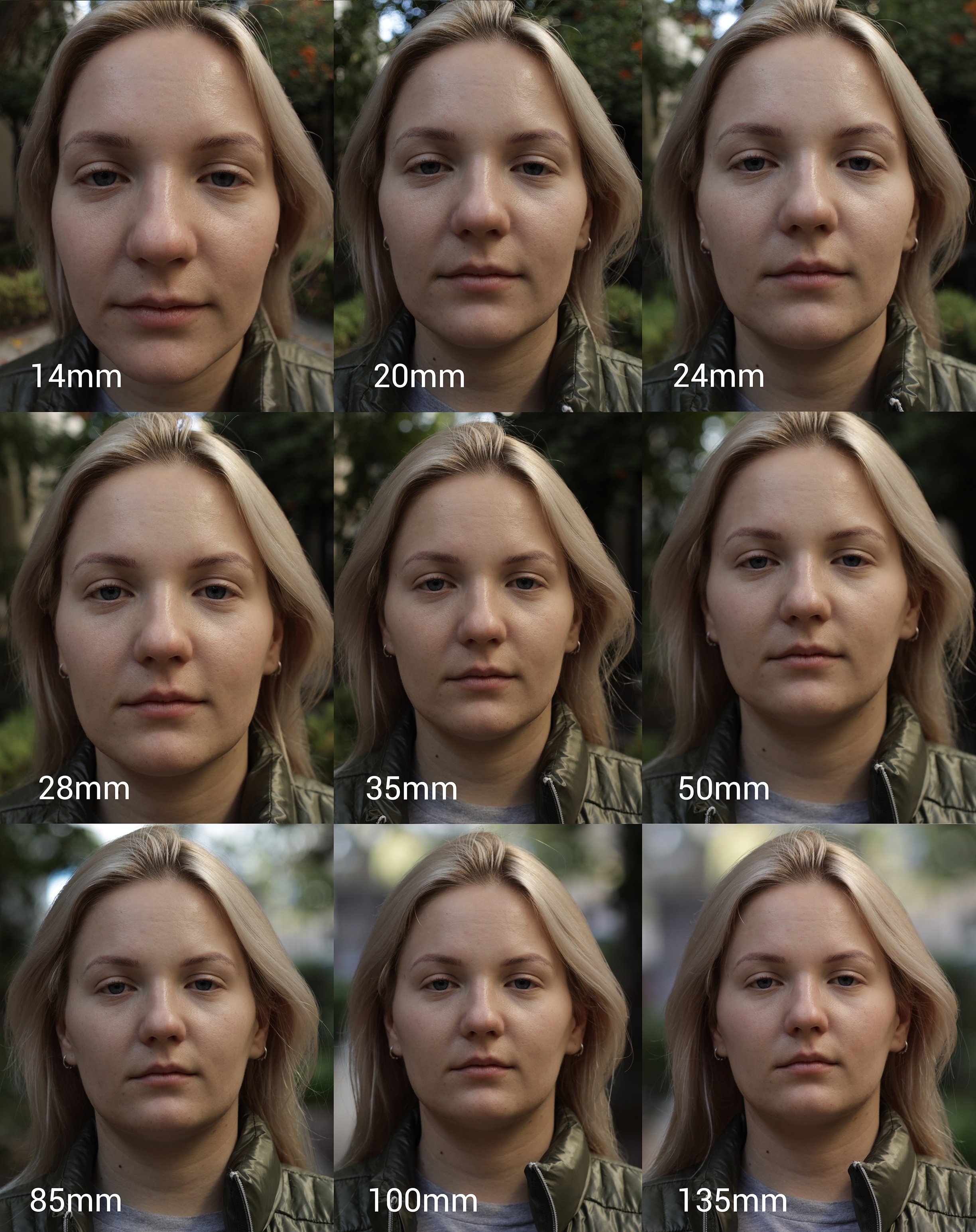
The most surprising examples came when I looked at these photos side-by-side:
This juxtaposition between all these shots explains why forced perspective photography ideas are so popular. They are all achieved by experimenting with different lenses, distances, and angles.
Similar to the previous case, this isn’t just a matter of technical prowess, but psychological trickery. If your body looks distorted, that’s when people start repeating the “camera adds 10 pounds” mantra, when it’s just the camera’s lens providing an unflattering perspective.
I often get asked, “Why is my mirror reflection a lot more beautiful than how I look in photos?” and it once again boils down to lighting and perspective. When taking a photo of yourself in the mirror, you're ordinarily dealing with soft indoor lighting, typically near a window, which creates subtle, flattering shadows. You're also constantly moving – controlling the angle and facial expression in every moment, making it easier to look attractive.
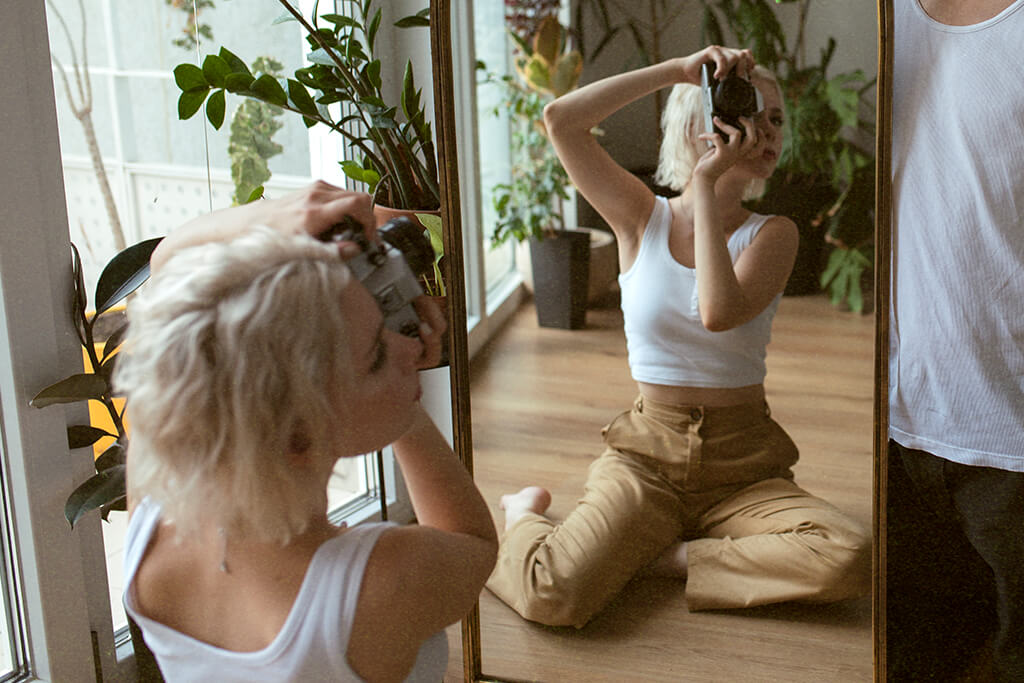
Meanwhile, with a camera, you're frozen in a single moment of time, often in significantly worse conditions. Rough outdoor sunlight tends to make wrinkles and shadows more pronounced, while overhead lights cast unflattering highlights and rough under-eye shadows. If you're also using a wide-angle lens, the result gets even worse, which will eventually lead to you asking yourself, “Do cameras add 10 pounds?” instead of realizing that it’s all a matter of poor lighting and perspective.
During my photoshoots, I’ve seen plenty of examples of my clients being surprised at how different a phone selfie is from a professionally lit portrait. The same subject can seem exhausted, fuller, and pale in the former, but full of life, thinner, and confident in the latter. It’s still the same person – the only thing that changes is what gear you use and how.
When it’s all said and done, the mirror provides a more familiar, flattering version of yourself, while a camera produces a more technical interpretation. Both are “right” and “wrong” at the same time. Thankfully, with proper lighting and a correctly chosen lens, the results you get with a camera can be just as flattering as the version of yourself that you see in your mirror.
That depends on the shooting conditions. With a proper angle, lens, and lighting, a camera can actually slim you down. However, if you think that a picture you took doesn't match your actual appearance, you can use something like a skinny face app to adjust your proportions without looking artificial.
Most smartphones have wide lenses that distort close-up photos. Hence why selfies tend to make the face look fuller and the body thicker in an unflattering way.
Definitely. By picking a longer lens, flattering lighting, and attractive poses, an expert photographer can completely eliminate the distortion that adds weight.
Yes. Soft, diffused lighting makes your facial features more pronounced, while rough lighting casts strong shadows that emphasize flaws and add weight.
No. Editing is very useful, but you can take control of the situation during the photoshoot itself by picking the right angles, lenses, and setting up the lighting properly.
Yes. By placing the camera above eye level, choosing a longer focal length, and posing at a subtle angle.
Not to that extent. Due to being dynamic, videos tend to eliminate most distortions, but poorly chosen angles and wide lenses can still make you look heavier than you actually are.



![Loop Lighting Photography [Setup & Examples]](http://fixthephoto.com/blog/images/gallery/news_main__preview_27935.jpg)