I work as a photographer and retoucher at FixThePhoto. Throughout my career, I’ve used different lighting setups and adjusted them based on shooting conditions. Recently, I understood that many people who read our blog are genuinely interested in the best off camera flashes currently available. They want a budget-friendly option to upgrade their initial lighting kit. That’s why I decided to study the topic in detail and create an overview of worthy models.
When using an off camera flash, you can conveniently control the direction of lighting, its intensity, and even overall mood. Thus, you achieve complete flexibility in creating expressive portraits, one-of-a-kind compositions, and top-notch creative shots. Besides, such flashes help surpass shadows, get evenly lit scenes, and minimize red-eye defects.
Picking the best off camera flash is a real challenge. There are lots of models, but you need to be attentive with their specs and compatibility. I’ve come across different flashes, including weak ones, confusing, or unreliable for practical tasks. To help you choose a perfect option for your specific needs, I partnered with my colleagues, and we tested over 20 off camera flashes that are in demand today.
 ★★★★★ (5/5)
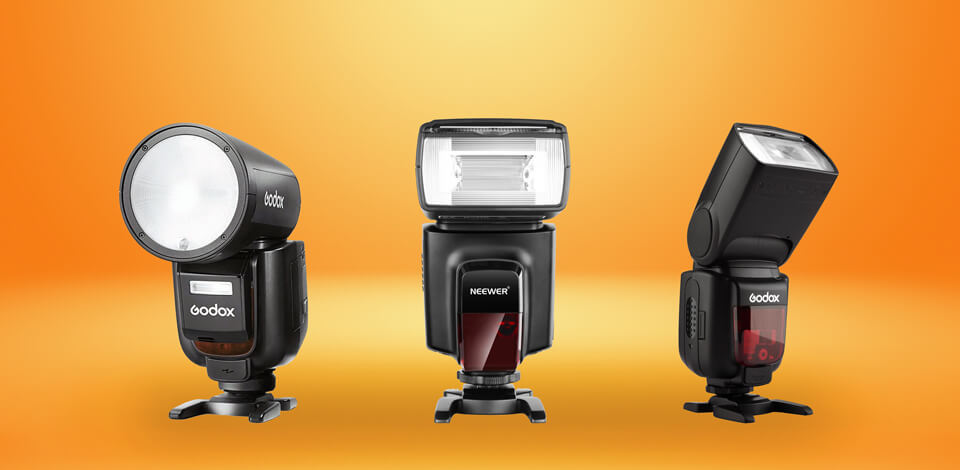
Godox V1 can be deservedly called the best off camera flash. It has a well-thought-out round head that produces soft and even lighting. Besides, it delivers consistent output no matter your initial lighting conditions. Other strong points are wireless compatibility with popular camera brands and a rechargeable battery. The recycle times are incredibly fast.
Determined to find the best off-camera flash, I compiled a list of the most important factors to keep in mind. I wanted to create comprehensive recommendations for photographers with different needs.
Compatibility. Whether you are looking for the best off camera flash for Canon, Nikon, or any other model, make sure it is compatible with your gear.
Power and performance. When selecting flashes, I favored those with proper guide numbers and adjustable power settings. This is paramount for anybody taking photos in changeable lighting.
User-friendliness. Even advanced flashes should be intuitive to use. I considered such features as recycling time, controls, and triggering options.
Build quality and size. I highly recommend choosing durable yet lightweight flashes, so that you can carry them around without problems.
Versatility. Opt for flashes that can work both on and off camera. Besides, choose models compatible with different modifiers and accessories to easily switch between shooting scenarios.
Price-quality ratio. No need to purchase extremely expensive cameras. There are decent models with good features that cost $40 - $199.
I can’t imagine a wedding photoshoot without a portable off camera flash. Using it, I can fully control lighting even in challenging conditions, while taking mesmerizing photos. I’d like to share some handy tips on how to use such a flash during wedding shooting:
With an off camera flash in my bag, I feel confident that every photograph will be arresting and properly lit.
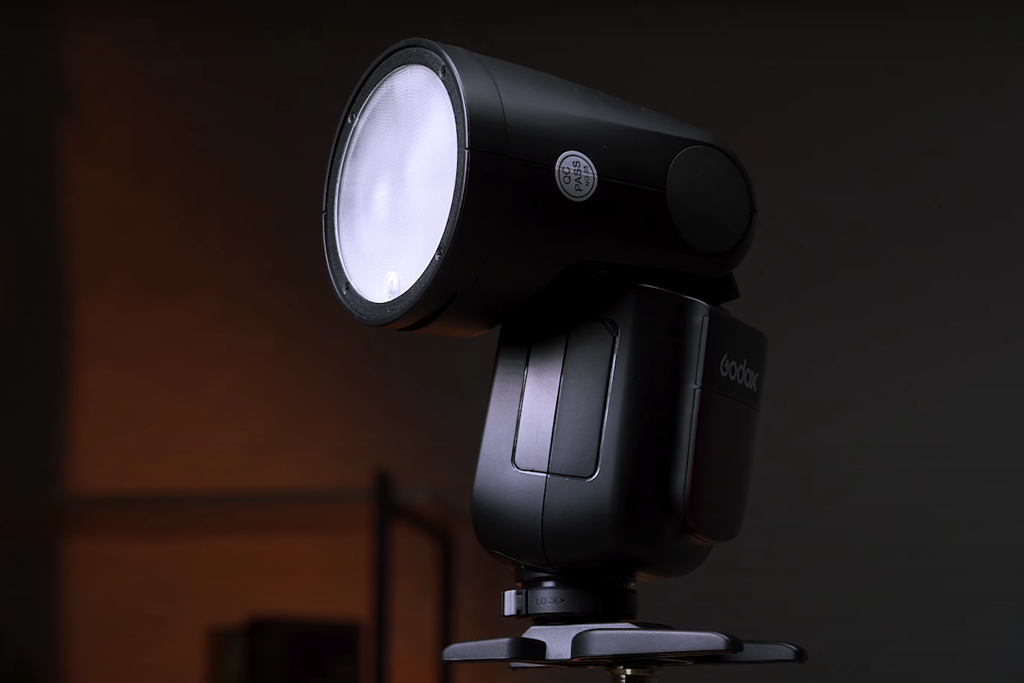
Sync speed: up to 1/8000s | Recycle time: 1.5 seconds | Bounce head: -7° to 120° | Swivel head: 330° | Flash duration: 1/300s to 1/20000s | Power range: 1/1 to 1/256
The Godox V1 is a pro-level off-camera flash, built for serious portrait and wedding work. It features a magnetic round head for more diffused, natural-looking light, a dependable 2.4GHz wireless system, and a fast 1.5s recycle time. I used it with my R6 Canon camera and Godox XPro trigger during an outdoor wedding shoot. I received beautifully lit close-ups with soft highlights. This is exactly what you want in emotional, candid moments.
The battery life was impressive. I shot all day and didn’t need to top it up once. Besides, this off camera flash has a 1.5s recycle time, so I never missed a moment. TTL and HSS performance were dead-on. I had perfect exposures, even with moving subjects and backlight. The only trade-off was its price. It is more expensive compared to simpler manual models.
My partner Ann used the Godox V1 in a studio shoot with her Canon 5D Mark IV. She was impressed with the soft light that resembled a natural one, especially when bounced or modified.
She praised the durable build, easy setup, and secure hot shoe connection. The built-in LED modeling lamp came in handy for visualizing light direction before each shot. But she was also a bit skeptical about the cost, though the performance is top-notch,
“I like this flash because it is incredibly intuitive and powerful. It works quickly and produces just the needed amount of light. The rechargeable battery is a nice bonus.”

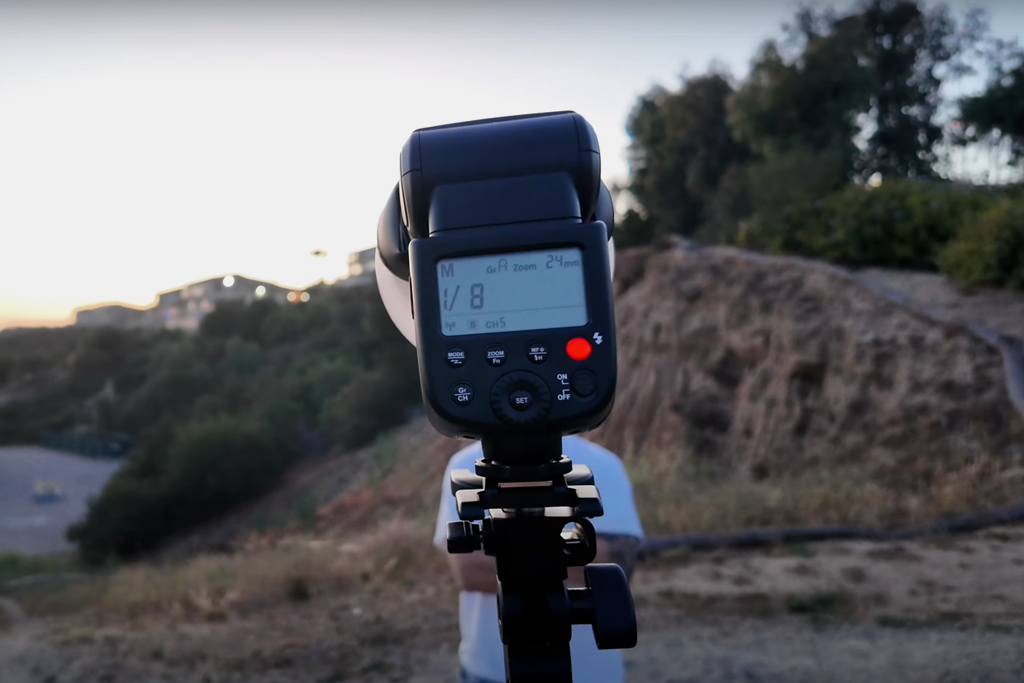
Sync speed: up to 1/8000s | Recycle time: 0.1 to 2.6 seconds | Bounce head: -7 to +90° | Swivel head: 360° | Flash duration: 1/300s to 1/20000s | Power range: 1/1 to 1/128
We tested the Godox TT600 recently and it impressed us a lot, especially considering how affordable it is. I tried it in a few portrait sessions, both outside and in the studio, using the Godox XPro trigger. This Nikon flash gave me bright, even light every time, even when shooting in full sun. The wireless connection was flawless. The were no misfires, even when I worked at a distance.
Manual controls were easy to get the hang of. Besides, the light came out sharp and even. Full power recycle time dragged when using alkaline batteries, but once switched to high-capacity Ni-MHs, there were no problems. Ann attached this flash to her Nikon D3400 with a macro lens when taking close-up shots.
She mentioned that this off camera lens for Nikon was very convenient. Besides, she liked the included flash diffuser and bounce card, as they helped soften the light in tight spaces. The only downside is that the flash is slightly oversized for a smaller camera body.
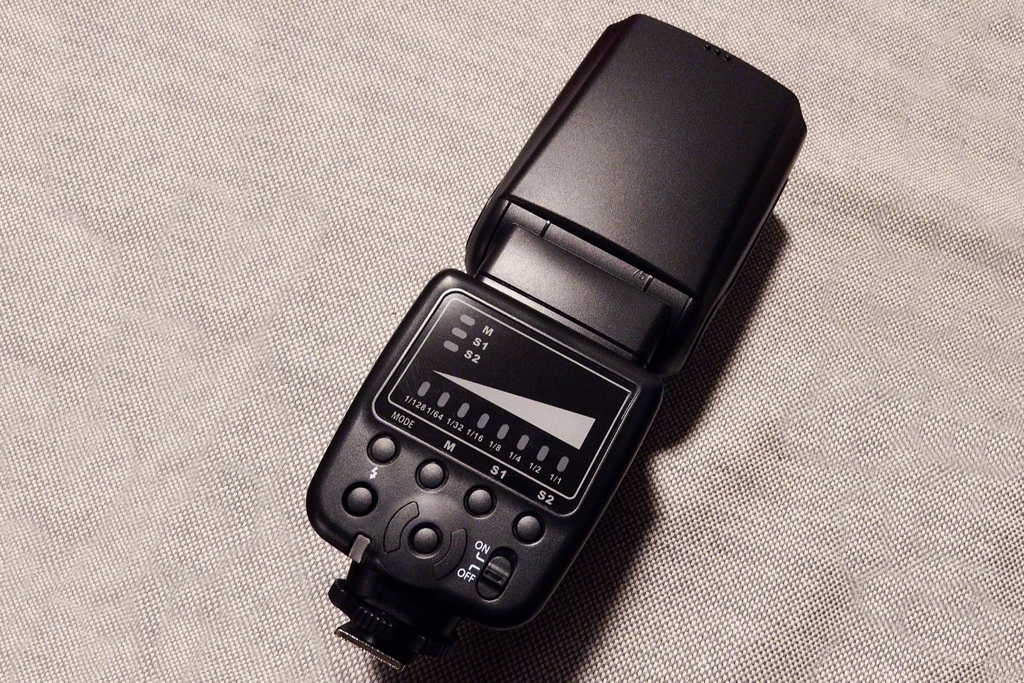
Sync speed: 1/250s | Recycle time: 2.8 seconds | Bounce head: -7° to 90° | Swivel head: 270° | Flash duration: 1/200s – 1/20000s | Power range: 1/1 to 1/128
The PHOTOOLEX FK300 is powerful, dependable, and budget-friendly. It is the best off camera flash setup for beginners or anyone looking to save. I tried it in the studio and during an outdoor shoot with a couple. Thanks to the flexible heads, it was easy to bounce light just where I wanted. I also appreciated the consistent exposure and neutral color tone. 5600K daylight output looked great, so you don’t need to correct colors a lot later.
With a recycle time of roughly 2.8 seconds on solid AA batteries, this flash performs well for everyday shooting. The design is lightweight but feels slightly cheap. Moreover, the 1/250s sync speed isn’t great for fast action or tricky lighting. Ann used it on her Canon 60D, mainly for casual portraits and product images. She liked that flash was simple and user-friendly. However, she ran into some compatibility issues with newer Canon cameras. The lack of TTL limits your shooting a bit.
“I think this flash is a great option for beginners who want to figure out how off camera lighting works. It has S1/S2 modes and will probably last for a long time thanks to a decent build quality.”

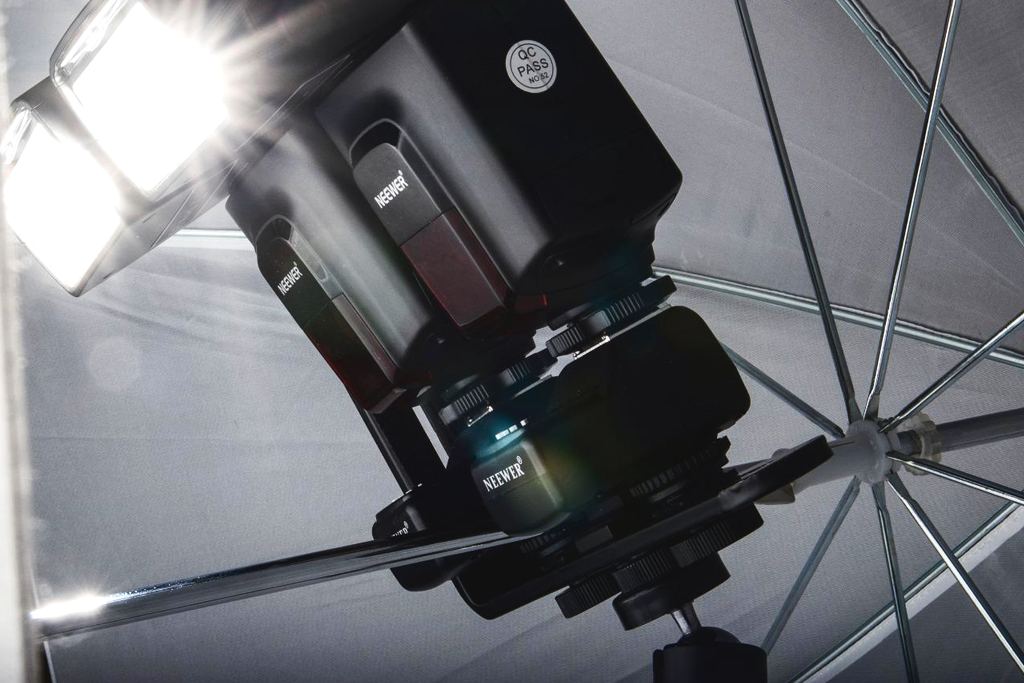
Sync speed: 1/20000s | Recycle time: 3 seconds | Bounce head: 0° to 90° | Swivel head: 270° | Flash duration: 1/300s to 1/20000s | Power range: 1/1 to 1/128
The Neewer TT560 turned out to be one of the best off camera flashes for Sony users. It is a solid, wallet-friendly model, which will please photographers looking for a simple manual option. I paired it with the Sony A7III and a remote flash trigger, when taking portrait images outdoors portraits and photographing products indoors. It delivered clean, bright light. Moreover, it offered a very flexible flash head that tilts and swivels 270°. This is perfect for bounce flash setups.
The best part about this flash for Sony A7 III is its simple design. You get straightforward manual control with LED indicators for power. As for shortcomings, the recycle time was a little slow with regular alkaline batteries. If you frequently capture fast-moving scenes, it may not be the perfect option. Ann tested the TT560 off camera flash with her Sony A7II and received soft, diffused family portraits. She praised its small weight, easy operation, steady color temperature, and accurate manual power range.
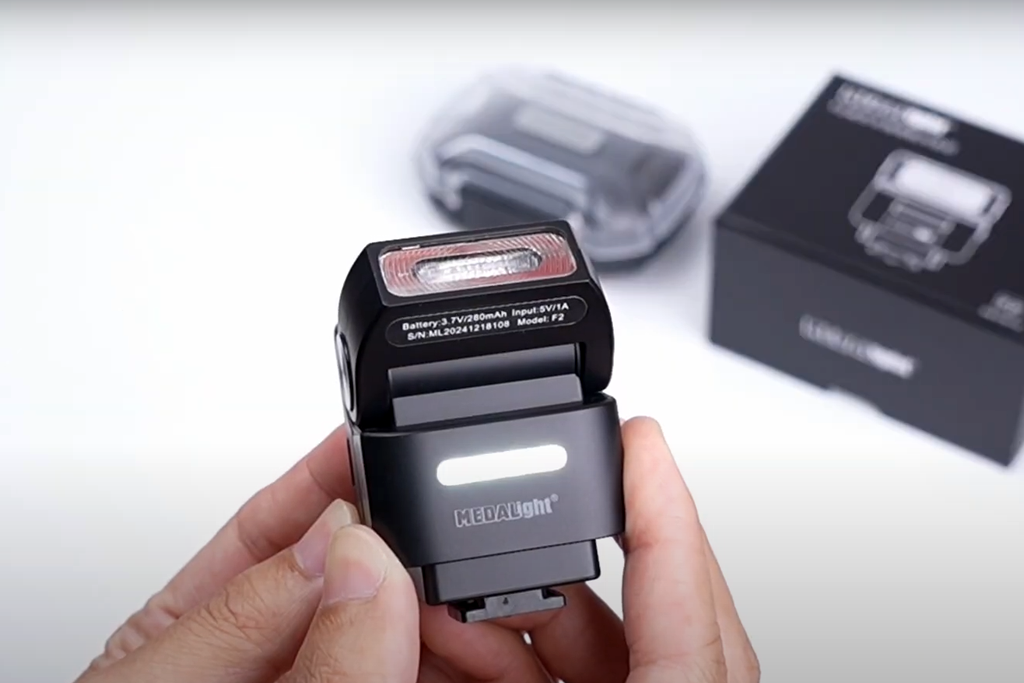
Sync speed: up to 1/500s | Recycle time: 2 seconds | Bounce head: -10° to +80° | Swivel head: limited to tilt only | Flash duration: 1/400s–1/1000s | Power range: 1/1 to 1/8
The MEDALight F2 Mini is a compact yet powerful off camera flash with many handy features. We believe it can satisfy photographers looking for a lightweight, portable device with USB-C charging and a built-in 2.4GHz wireless trigger. It is particularly great for real estate shoots when speed and mobility are paramount.
While shooting an apartment interior and later a city portrait with my Sony a6500, I tried the F2 Mini off camera flash. I mounted it on a light stand quickly, thanks to its magnetic base and 1/4” thread. I really liked the quick USB-C charging. You don’t have to bring spare AA batteries. Besides, you can take advantage of the built-in LED fill light when working in poorly lit places. The light it produced was soft and clean, though not super powerful. Generally, it is great for small setups, but it struggles with larger rooms or wide angles.
“This is a perfect model for any indoor photo sessions. It is small, but it recycles fast and supports wireless triggers, emitting sufficient light.”

It is a device that syncs your camera and a flash wirelessly. A good trigger supports TTL and connects your gear in a matter of seconds. Make sure you get a trigger that is compatible with your camera brand.
Use a wireless trigger, optical sensor, or radio transmitter. Wireless triggers work best, as they allow you to control your flash from a distance, with no cords involved. This makes it easy to manage lighting during portrait or event photo sessions.
It depends on your shooting style. Softboxes are great for soft, flattering light. Photography umbrellas are easy to use and spread light evenly. For location shoots, compact clip-on or magnetic modifiers work well. If you want more drama or color effects, try using grids or gels.
A bracket holds your flash and any attached modifier firmly in place. It also allows you to tilt or adjust the direction of the light. This is important when using bigger modifiers, so your gear stays safe and stable.
No, you don’t. One flash is enough to shape beautiful light. If you want more creative control, you can add a second for fill or a third for background effects.
Most of them do. That’s what makes them easy to use anywhere, even without outlets. For all-day shoots, it's a good idea to bring backup batteries.
Some flashes are made for specific brands, especially for auto (TTL) functions. But with a universal trigger, you can usually use them in manual mode with any camera. Always double-check compatibility if you want full features.
My colleague from FixThePhoto Ann and I tested off camera flashes in realistic settings to give accurate, practical feedback. We worked with manifold models, including Godox MS300, Godox MF12, Godox iM30, ULANZI SL01, NEEWER Z1-C, Godox Wireless GN33, Godox AD200 Pro, Profoto B10X, Godox Lux Master Retro, Altura, and Godox iM30. We tested them while taking portrait and event photos, both outdoors and indoors.
We began by testing setup and ease of use, paying close attention to how well the flashes worked with Nikon, Canon, Sony, Fujifilm, and Panasonic brands. We also analyzed whether cameras offered TTL support and reliable wireless triggering. Such features are essential for real-world shooting.
After that, I tested how each off camera flash handled fast shooting. I measured the light strength and how quickly it could fire again without getting too hot. Reliable power and fast recycling are must-haves for shooting weddings or other dynamic events.
To see how modifiers affected performance, Ann used each flash with softboxes and umbrellas. She made sure the light stayed soft and consistent, which is paramount for high-quality portraits and styled lighting.
We also checked whether the wireless trigger worked smoothly at a distance. Misfires or lag can completely spoil your experience. Reliable range is crucial when you need to move the flash around for quick adjustments.
Photographers interested in travel-friendly setups pay special attention to battery life and portability. So, when on location, I checked if flashes could handle all-day shoots. Next, I evaluated how convenient they were to pack and carry.
We added only the best flashes to our list. Some were left out because they didn’t deliver steady power, had trigger issues, or didn’t work smoothly with modifiers.



![7 Best AI Handshake Video Generators [{{%year}} FixThePhoto Choice]](http://fixthephoto.com/blog/images/gallery/news_main__preview_28493.jpg)
![8 Best AI Tattoo Generator Tools [+Good Prompts]](http://fixthephoto.com/blog/images/gallery/news_main__preview_28202.jpg)
![Stable Diffusion Alternatives [1 Prompt – 9 Competitors]](http://fixthephoto.com/blog/images/gallery/news_main__preview_28384.jpg)


![Remove Logo From Clothes AI App [FREE]](http://fixthephoto.com/blog/images/gallery/news_main__preview_27732.png)