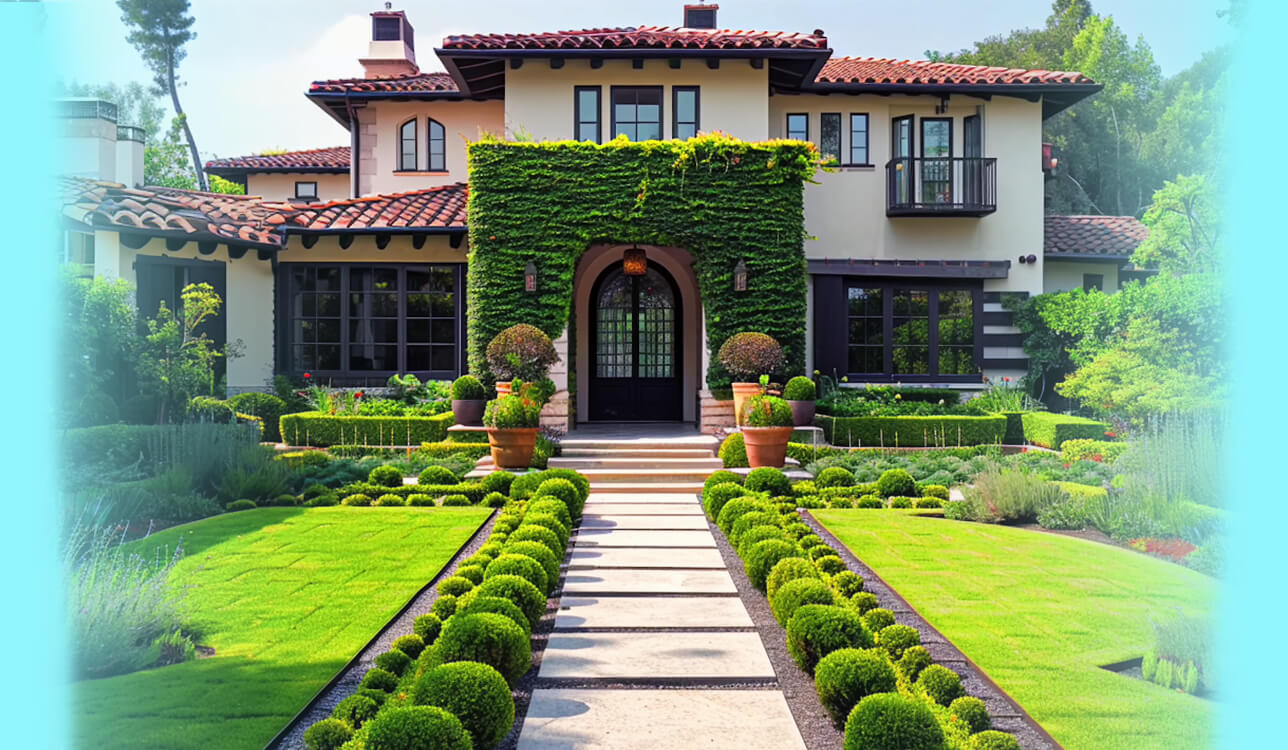
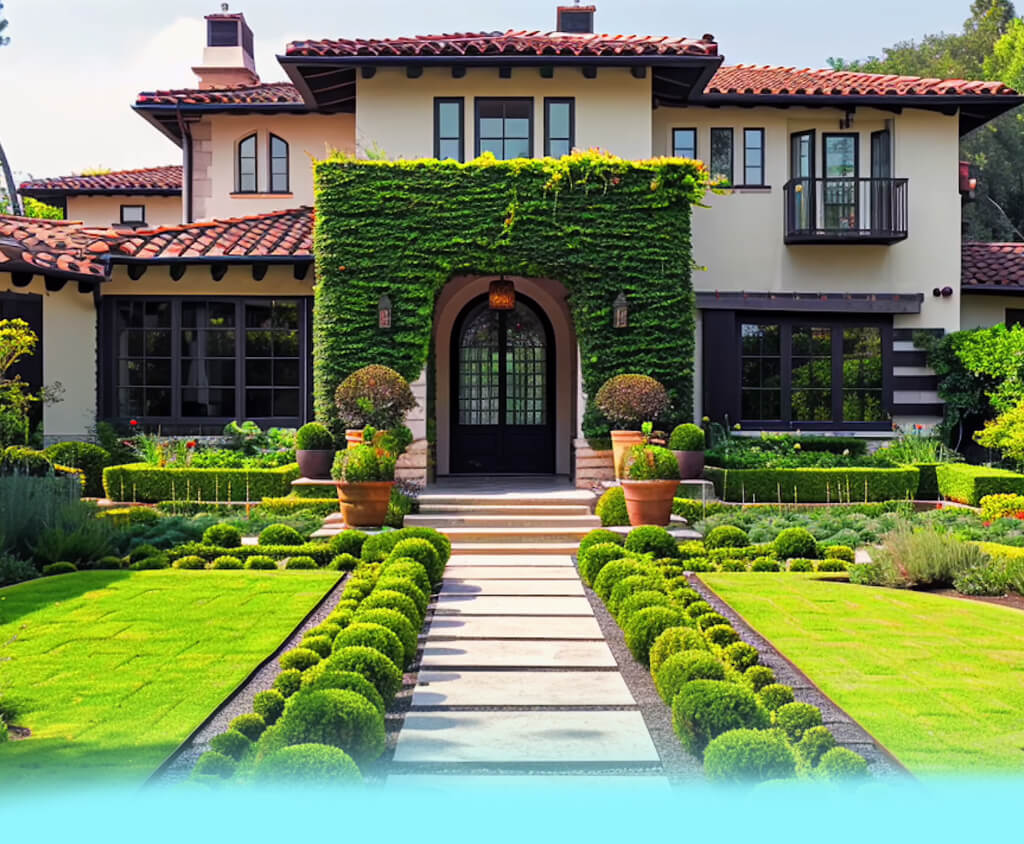
As a photo retoucher at FixThePhoto, I specialize in real estate photography. My main responsibility is to ensure properties look clean, bright, and market-ready in images. Recently, I’ve noticed a rising trend. Clients want more than just aesthetic edits. They’re requesting visual previews of landscaping improvements. Such demand motivated me to explore some of the best landscape design software to better meet their needs.
I went the extra mile and tried out over 20 landscape design software to create this guide. A few programs impressed me with smart features, e.g., easy drag-and-drop editing and huge collections of plants and outdoor décor. But not all of them were great. Some software lacked versatility or didn’t produce lifelike results. I also looked closely at how each one works with actual property layouts. This is paramount when you're dealing with property photos.
Helping clients imagine what their outdoor areas could look like on a regular basis, I noticed that more and more AI landscape design software appear on the market. So, I got curious whether these features are really as helpful as they sound. Sometimes, they seem to be pricey frills.
My tips for using AI in landscape design:
Follow these tips to make the most of AI in landscape design:

Operating system: Windows, macOS, web and iPad
Price: Free or from $19.99/month
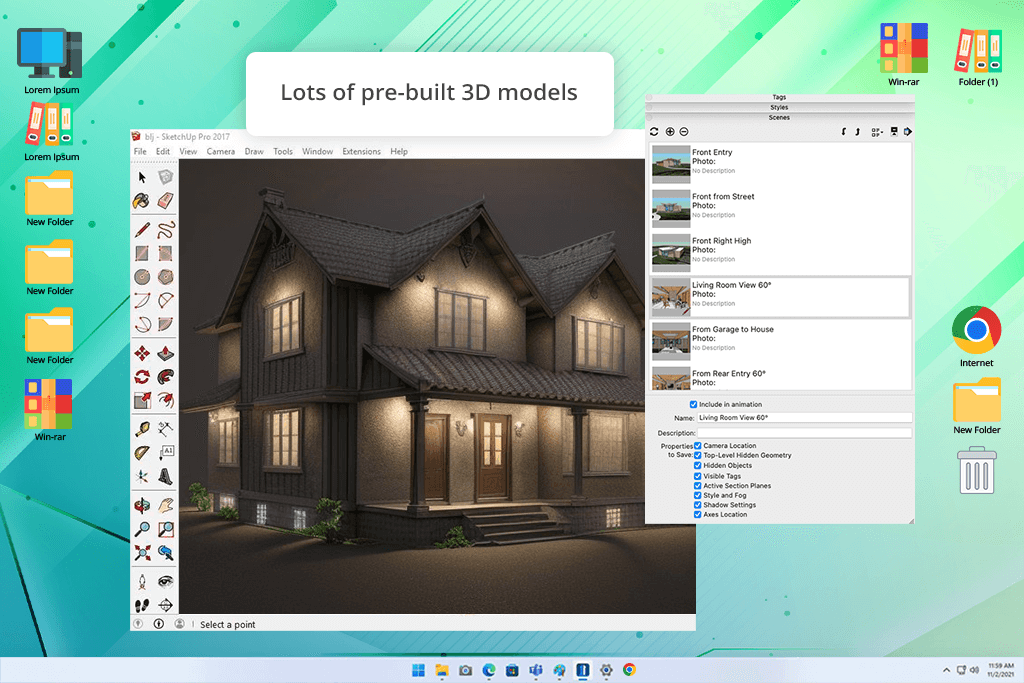
Designing outdoor spaces with SketchUp is an enjoyable experience. I used it for different tasks, including reimagining a backyard and sketching a rooftop retreat. With the provided tools, it is easy to build realistic 3D terrains from basic 2D outlines. I could shape paths to follow hills, position patios, and simulate sunlight based on location and time of day. The bragging point of this free architectural design software is the 3D Warehouse. It is an enormous collection of over four million pre-made elements. There you can find virtually everything from lush trees to stylish outdoor seating. It is helpful if you strive to add detail and personality to your projects.
SketchUp provides a real-time shadow feature, which is a lifesaver for outdoor projects. I could watch how sunlight shifted through a space hour by hour, season by season. It helps me create more immersive and lifelike designs that surpass static images. It gave clients a true sense of how their gardens or patios would feel throughout the day. However, this flexibility comes at a price.
If you have little experience using 3D modeling software, the interface can feel overwhelming at first. Besides, most rendering tools are plugin-based, so creating top-notch visuals requires some extra time and tech setup.
Operating system: Windows, iPad
Price: From $90/month
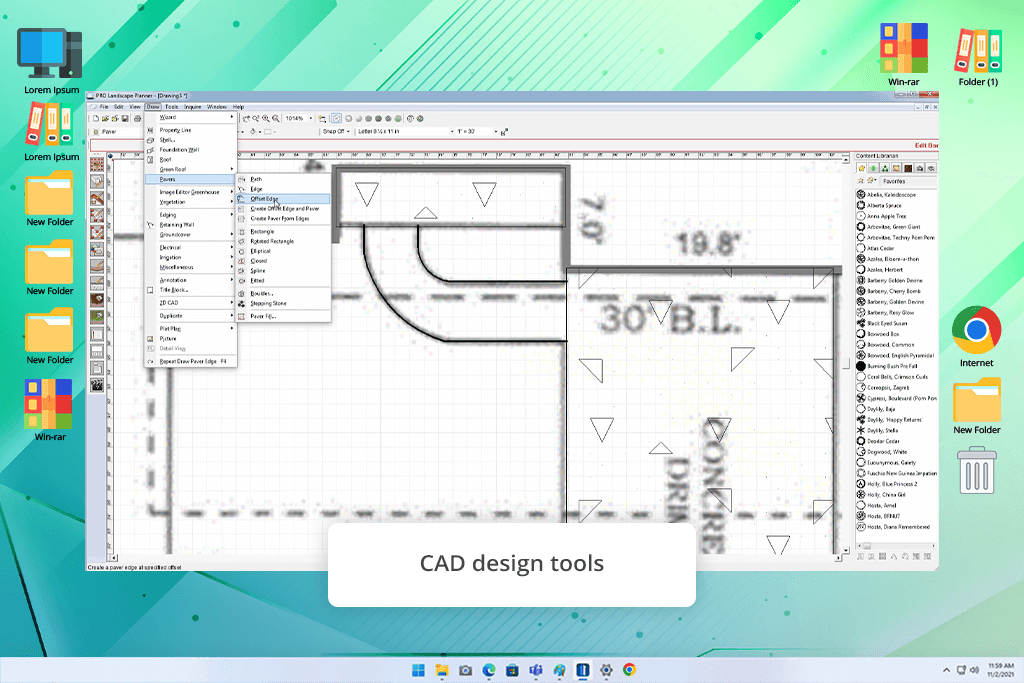
When testing this landscape design software for Mac and Windows, I first uploaded real photos of client properties and used the photo imaging tool to breathe life into them. Next, I added lush plants, stylish pavers, ambient lighting, and furniture. All these elements are available in a huge library of 19,000+ design items. It felt like designing in Photoshop, but this software is specifically focused on landscapes. Then I decided to create a scaled CAD drawing for a patio layout that included both hardscaping and irrigation. Finally, I tried out the 3D rendering tool and produced a short walkthrough video so that my client could envisage walking there.
During testing, I was genuinely impressed by two smart AI tools built into PRO Landscape. The AI Eraser let me wipe out old landscaping in seconds, while the AI Cutout Tool made it surprisingly easy to layer in new trees, lighting, and décor even with busy or detailed backgrounds. If you want to work on the go, take advantage of the free landscape design app. I often used it to start projects on location and finish them later on a desktop. As for disadvantages, the UI is dated. Plus, if you’re new to CAD or large-scale design, you need to spend quite a lot of time mastering the program.
Operating system: Windows, macOS
Price: Free trial or from $153/month
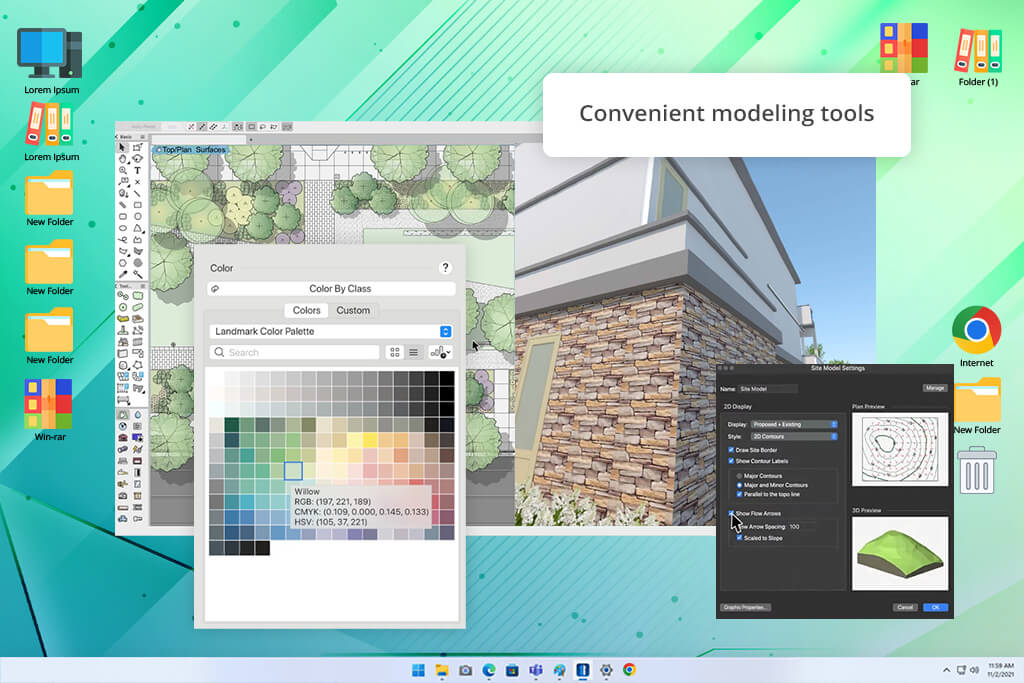
With Landmark from Vectorworks, I reimagined a large backyard by dividing it into functional zones. It featured lush planting beds, paved walkways, tranquil water features, and ambient lighting. First off, I imported GIS data and high-resolution terrain scans captured by a drone on my Wacom tablet. Next was the Schematic Design phase. At that point, I transformed my loose sketches into intelligent design elements, then built them out into a refined and immersive 3D landscape model.
If you want to keep a close eye on all elements of your project, this is probably the best 3D landscape design software you can find. It synced and updated my 2D drawings, 3D designs, and schedules automatically. I was also impressed by how flexible it is with file formats. It supports over 20, including Revit, SketchUp, AutoCAD, and Rhino. Just keep in mind that this landscape design software is powerful, but it’s not exactly beginner-friendly. If you haven’t yet used free CAD software, you need to spend some time before you can tap into everything it offers.
Operating system: Windows
Price: Free trial or $599/license
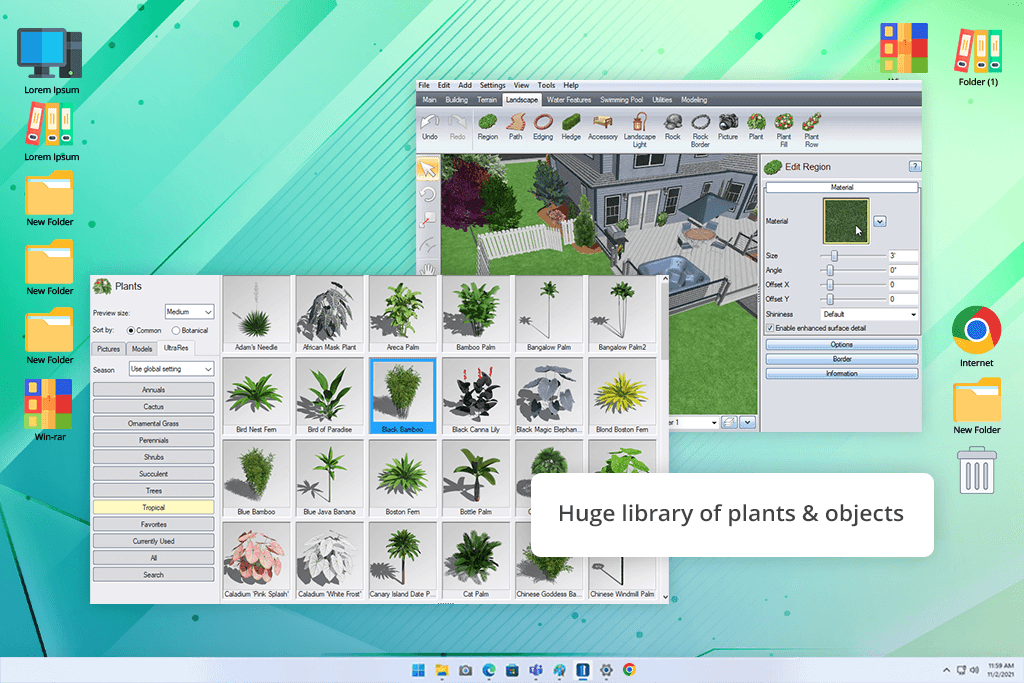
Designing with Realtime Landscaping Architect was easy and interesting. I reimagined a quiet suburban yard, luxurious pool area, and lots of other spots to understand its capabilities. Starting in 2D plan mode, I outlined patios, decks, and fences. The drawing tools are very intuitive. Then, I started to evaluate the entire design in 3D.
I like how this professional landscape design software added realistic elevations and shifting shadows. Still, this program is graphics-intensive, so I run it on my laptop for AutoCAD to handle the task.
The selling point of this software is its ability to mix traditional CAD plans with eye-catching 3D visuals. Clients get a layout that’s ready to build, plus a preview that looks nearly real. I tested it on a pool project and used the built-in wizard to add decking, a fountain, and even night lighting that reflected beautifully on the water. It looked almost like a photo.
The plant library is a major bonus, too. There are over 8,000 plants, and you can search by planting zone. On the downside, the interface calls for pudding. Moreover, it only runs on Windows, so Mac users are out of luck.
Operating system: Web
Price: Free or from $29.99/month
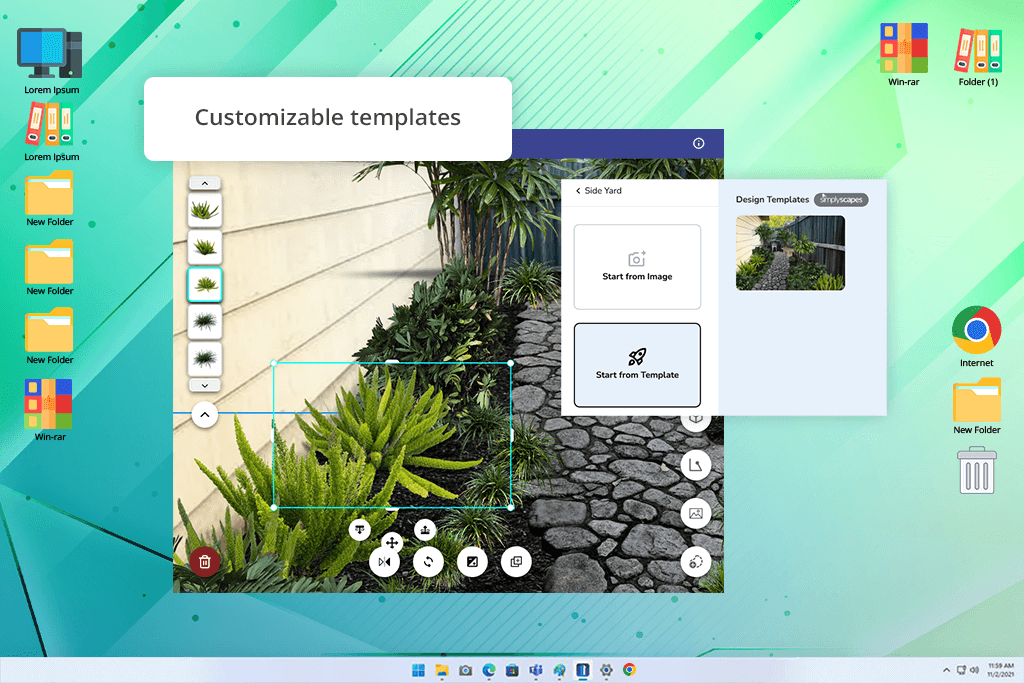
I immediately understood that Simplyscapes was a great online tool tailored for both casual users and professionals like landscape photographers. I used it in a recent real estate renovation to redesign a compact backyard. Starting with the “Buzz and Bloom” template, I quickly made a visually balanced layout.
The platform offers drag-and-drop functionality, along with a diverse selection of plants, walkways, and borders. That’s why, customization was smooth and intuitive. So, I believe this is the best landscape design software for homeowners looking for quick yet detailed landscape planning.
Simplyscapes offers a very intuitive interface. Therefore, you don’t need to navigate complex toolbars or menus. Designed with beginners in mind, it allowed me to create a vibrant, balanced layout within minutes, ready for client presentation. A notable feature is its location-based plant recommendations.
However, the plant and element library is somewhat limited relative to premium software. Besides, it lacks 3D or photorealistic rendering capabilities. Thus, it serves best as landscape design software for entry-level users.
Operating system: Windows, macOS
Price: From $59.99/month
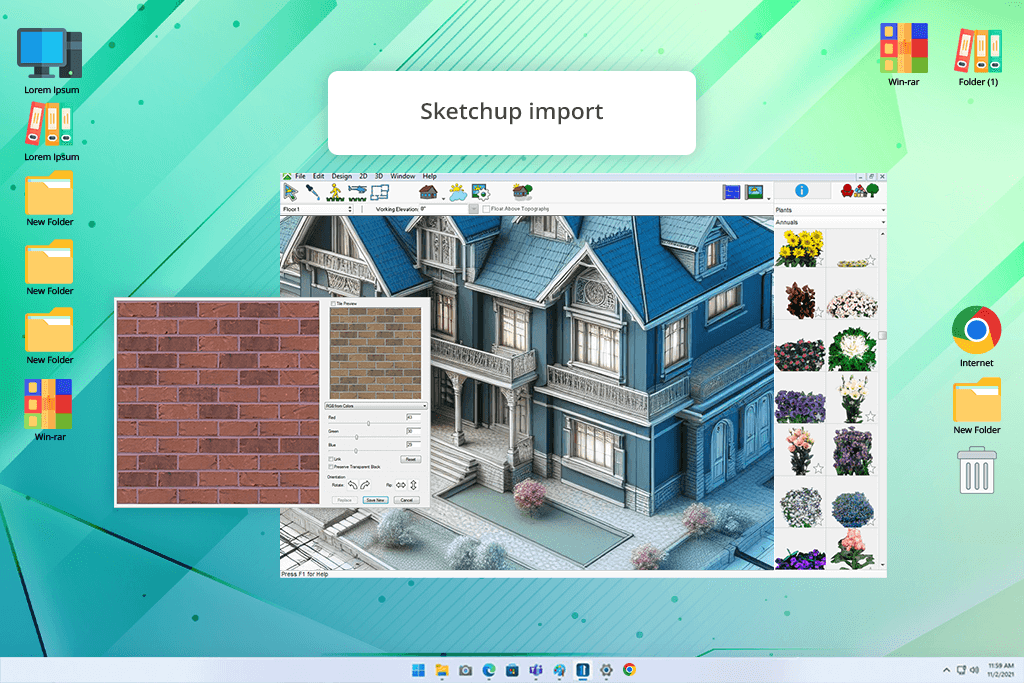
When looking for the best landscape design software for beginners, I also tested Punch! Home & Landscape. This is a versatile design program available for both Mac and Windows. It is suitable for creating detailed landscaping plans with minimal effort. For a recent client project, I used it to plan a full backyard transformation on my laptop for graphic design.
Thanks to drag-and-drop features, I managed to place hardscape elements, namely, fences, patios, and decks effortlessly. The updated 2D engine delivered clean, precise visuals that I could easily tweak. Generally, I made a clear, professional presentation from start to finish.
Once the hardscape was done, I started adding plants. There is a built-in library and the handy PlantFinder tool for the task. I filtered options by region to make sure everything I chose would actually “live” in the client’s climate. Then I tested the Automatic Growth Tool.
It showed how the garden would develop over the years from young saplings to tall, shady trees. Customizing the fence was just as enjoyable. With the Fence Designer, I switched up styles, materials, and colors. Keep in mind that software technically supports Mac, but it works better on Windows. On my Mac, the process slowed down during rendering.
Operating system: Windows, macOS, iOS, Android
Price: Free or from $5/month
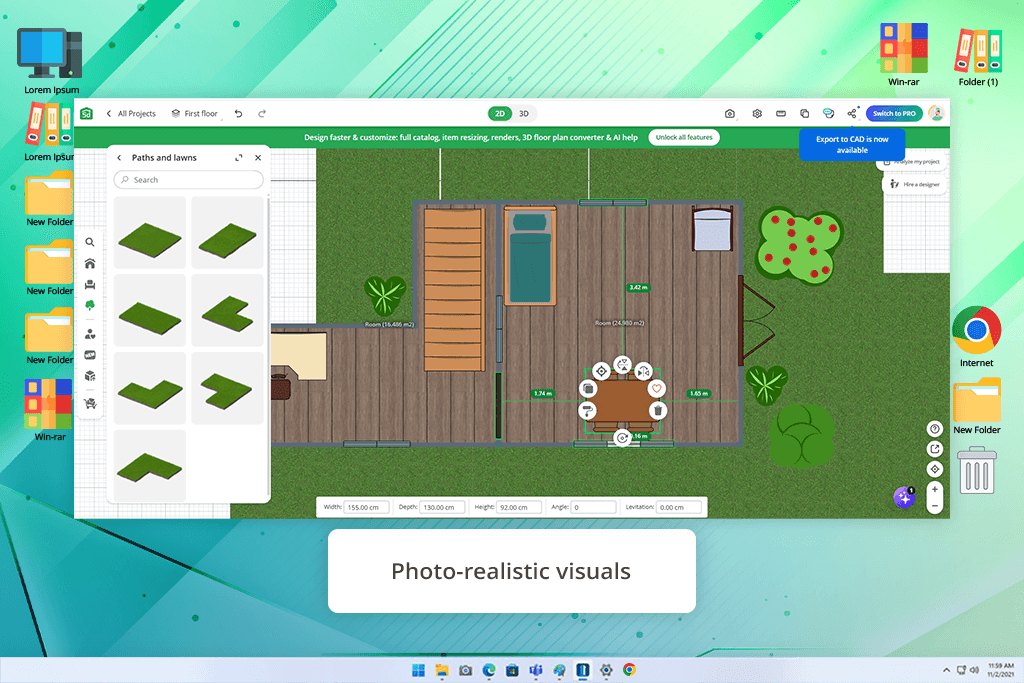
Planner 5D proves you don’t need to break the bank to get quality landscape design software. I used this free program on my Lenovo computer for graphic design to plan a full backyard transformation. Starting in 2D, I mapped out property edges, garden zones, and existing structures.
Thanks to the smooth drag-and-drop editor, laying out fences and decks was easy. With its beginner-friendly tools and sharp 3D previews, Planner 5D shows that even newcomers can create plans that look like they came from a pro.
Once I had the framework in place, I browsed through the rich collection of trees, shrubs, lawn chairs, fountains, and other elements. I could easily fine-tune each item’s size, color, and texture. What really caught my eye was the built-in AI tool.
It suggested layout options based on my preferences. Still, don’t expect blueprints worthy of a landscape architect. This tool isn’t built for fine-detail CAD work. But if you're a fan of DIY projects or just learning the basics of design, it’s a fantastic starting point.
Surely. Many landscape design tools are beginner-friendly. You don’t need a design degree to get started. I recommend trying Simplyscapes and Planner 5D. They both offer drag-and-drop tools and ready-made layouts that make creating your dream yard a no-brainer.
But if you'd rather skip the learning curve, opt for real estate photo editing services. They can turn photos into professional outdoor scenes. This is a great option for showcasing a property, impressing clients, or planning renovations without lifting a finger.
Vectorworks Landmark, PRO Landscape, and SketchUp are the go-to choices for many architects and landscape contractors. They offer a full toolbox of advanced features, but may take some time to master.
Yes, you can. Still, remember that Adobe doesn’t have purpose-made software for landscape design. Currently, designers and architects take advantage of free drawing software from the Creative Cloud Suite. Photoshop is widely used for rendering landscapes, applying textures, and enhancing visual presentations.
Adobe Illustrator is useful for creating precise, vector-based plans and diagrams. Together, these programs can support detailed landscape design work, especially when used alongside other CAD or planning tools.
You should consider your experience level, the complexity of your projects, your available budget, and the operating system you use (Windows, macOS, or web). Beginners should look for intuitive, template-based tools, while professionals may require advanced features such as Building Information Modeling (BIM), 3D rendering, and CAD integration. If possible, test the program before purchasing it.
Make sure a program has an intuitive user interface, extensive plant libraries, and support for both 2D and 3D visualization. Nice bonuses are terrain modeling, lighting simulations, and the ability to import or export CAD files. For professional use, client presentations, project estimates, and high-resolution renderings are especially important.
I and my colleagues from FixThePhoto conducted meticulous testing of leading landscape design software, including AutoCAD (Autodesk), Land FX, Vizterra, Dynascape, DreamPlan, Chief Architect Home Designer Suite, Structure Studios, Morpholio Trace, FloorPlan Home & Landscape, and Virtual Architect.
Not all platforms met our standards. We excluded those that lacked 3D modeling or planting tools, had outdated or difficult-to-navigate interfaces, were too specialized for general users, or were overpriced.
I focused on how well each landscape design tool could support layout visualization, outdoor scene creation, and clear communication of design concepts. This matters a lot for professionals in real estate, digital content production, or DIY home improvement. Here's the process I followed during my testing: