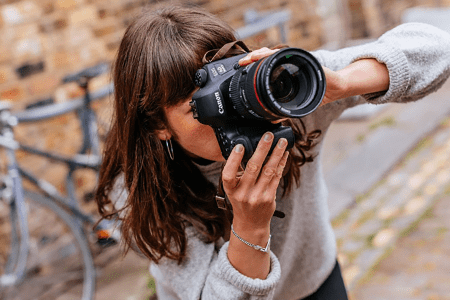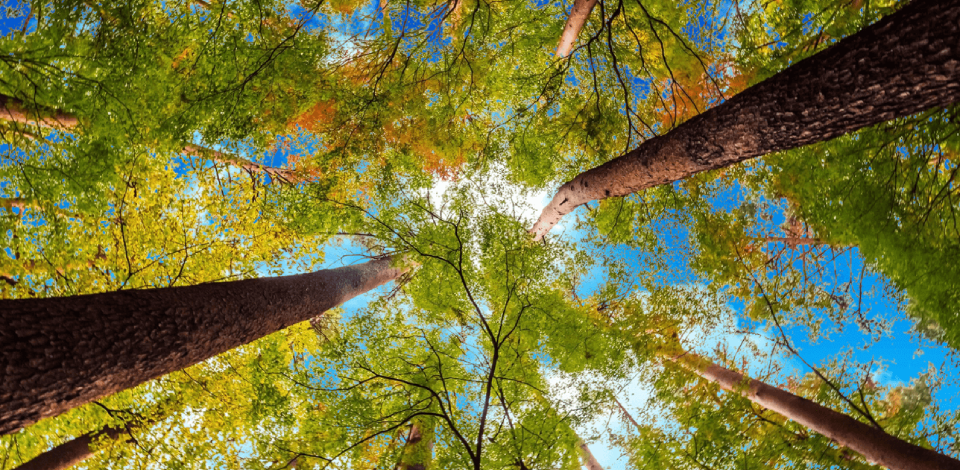
POV, short for point of view, refers to where your camera is placed when you take a shot. For example, you can snap images from your own eye level, shoot from the ground, or point down from above. Each position gives your photo a different mood. POV can change how big or small objects look and even set the mood of your images.
As a photographer at FixThePhoto, I often hear: “Is point of view the same as POV photography?” While they sound similar, they’re not exactly alike. Point of view is about your camera’s position – like shooting from above or below. POV photography, especially on Instagram or TikTok, means capturing a moment as if the viewer is living it, like seeing through your eyes. One common style is the “hands-in-frame” shot, such as holding a coffee cup or a passport.
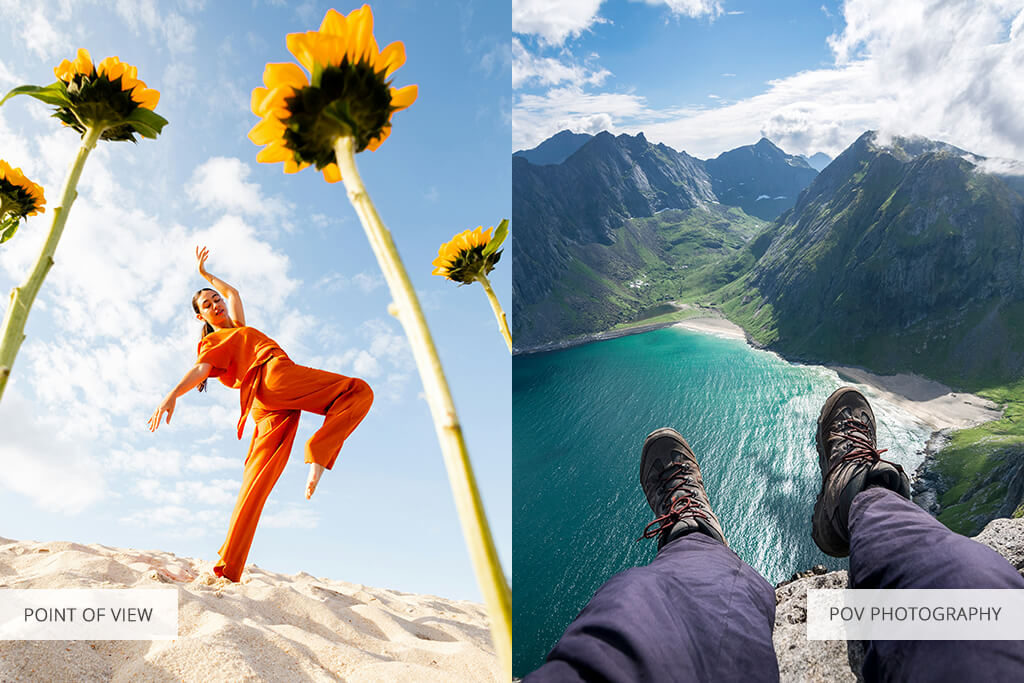
When we talk about photography point of view, we’re talking about where the camera is in relation to what you’re shooting. It can be looking up, looking down, or right in front, at eye level. These angles directly affect what viewers will think and feel when looking at your picture. Whether you plan it or not, you’re always choosing a POV before hitting the shutter.
A first-person point of view is a great method to create content, especially if you're sharing on social media. You can take photos from down low, like you’re lying on the ground, or from height with a drone. Even if your images don’t show things how we usually see them, these angles help tell stories as if a viewer is right in the moment.
For me, POV isn’t just about snapping photos from different spots. The main thing is to tell a story. Moving the camera even a little can change the vibe of the picture and what people focus on. You can try to show others a scene in a way they’ve never seen before.
The way you position your camera affects how people see and feel about your photo. For instance, by tilting the lens or changing your spot, you can make something stand out, evoke certain emotions, or shift the meaning of the scene. It’s a powerful trick of the trade. Here are a few of the angles I use. Each of them helps me show things in a unique way.
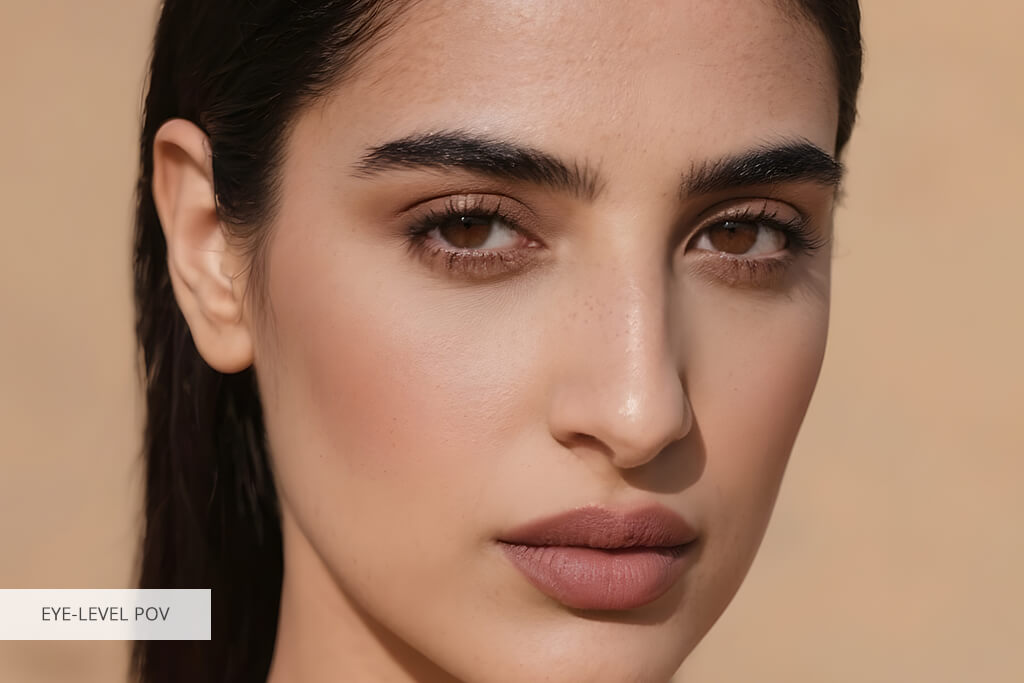
Eye-Level
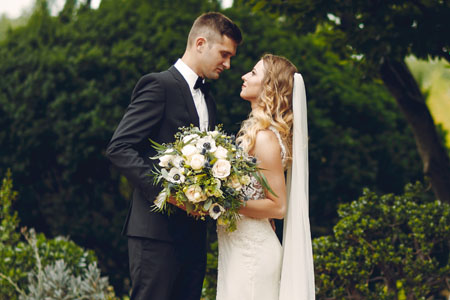
Shooting from eye level means your camera is straight across from the subject’s eyes. It feels comfortable and balanced, like having a face-to-face chat. That’s why it’s perfect for portraits or casual, natural moments. I use this POV photography shot angle when I want the viewer to feel connected to the subject, making them feel they’re seeing things eye to eye.
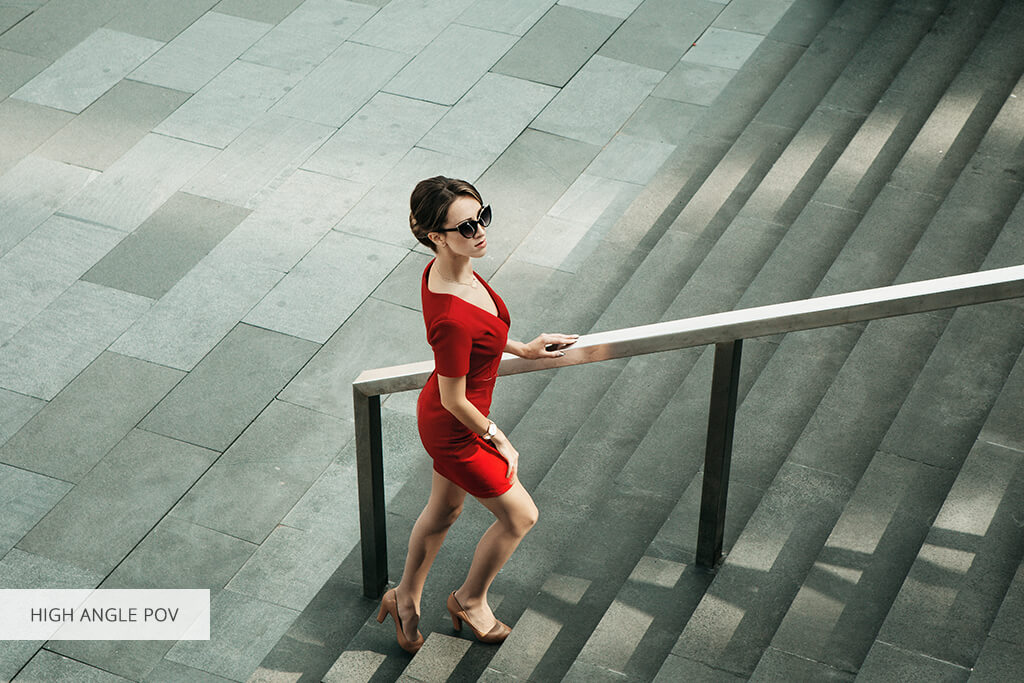
High Angle (Looking Down)
Taking a photo from above can flip the power in the picture. The person or object below may look smaller or more fragile. I opt for this approach when I want to show that the subject is feeling shy, lost, or just not in control. To pull it off, I sometimes stand on stairs, grab a chair, or raise my camera above me.
Low Angle (Looking Up)
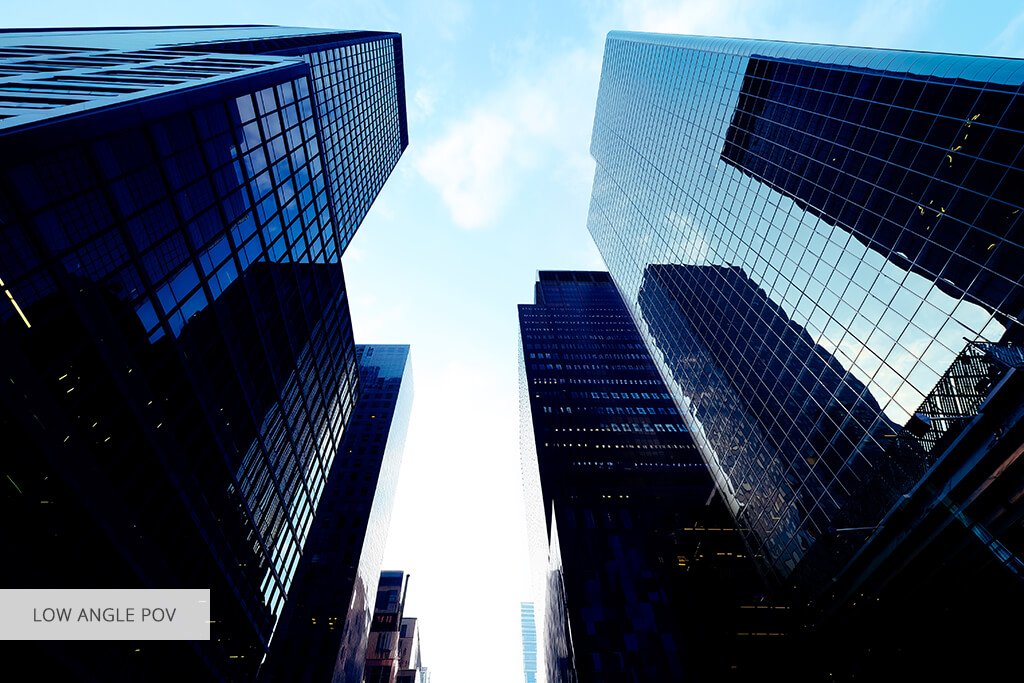
Photographing your subject at a low angle, you can make a person look confident, powerful, or just bigger than they are. I usually squat down or even lie on my belly to get that shot. It’s not the cleanest way to take a photo, but sometimes you have to go the extra mile to get the perfect angle.
Bird’s Eye View
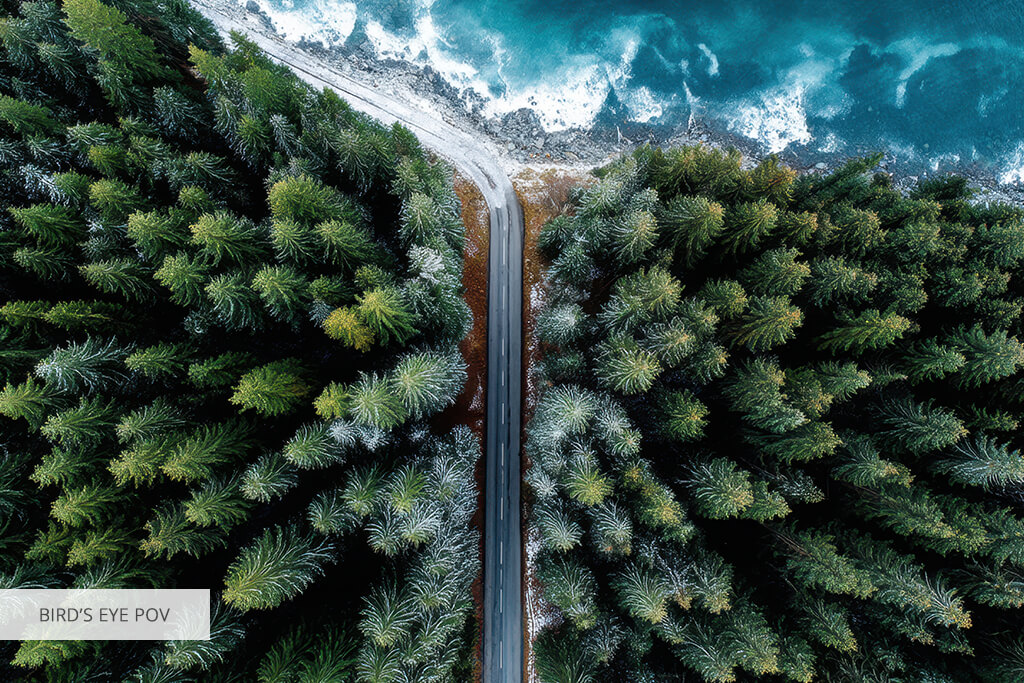
When sticking to the birds eye POV photography method, I can make everything look neat and organized in photos. It’s a perfect angle to photograph food setups or buildings seen from above. If I don’t have access to a high spot, I’ll use a drone or a tripod that stretches out over the subject. I genuinely love bird’s eye view in photography when I want to show something in a fresh way.
Worm’s Eye View
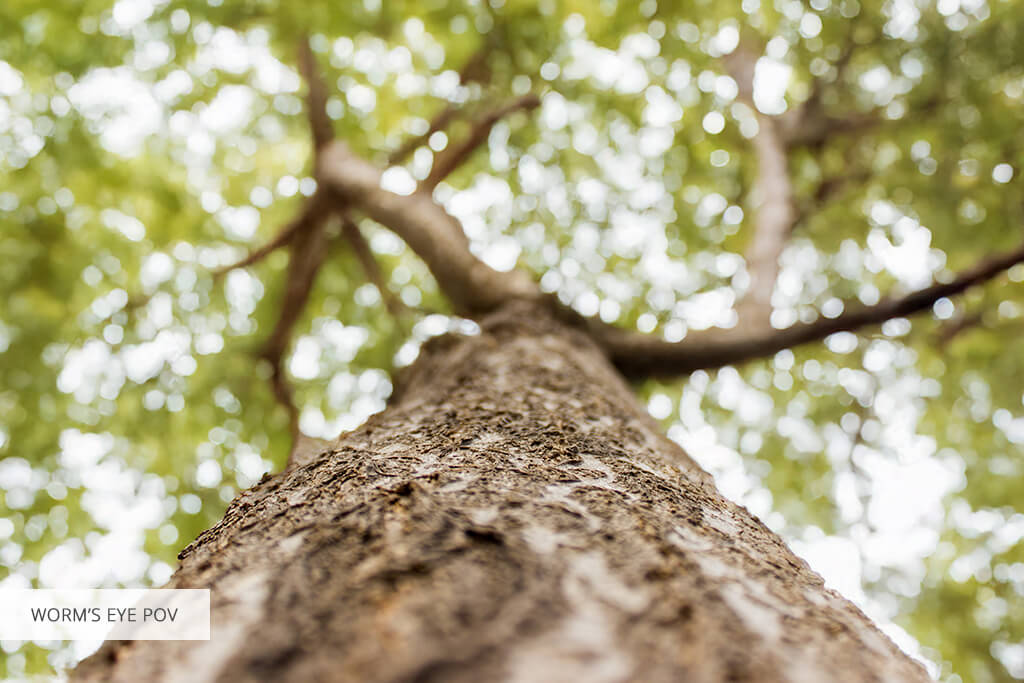
You need to hold the camera really low, like you’re seeing the world from a bug’s point of view. It flips the usual way we look at things and makes tall subjects like trees or skyscrapers look even more powerful. I often lie on the ground to get this shot. Though worm’s eye view in photography may not be the most comfortable, it’s worth it.
Over-the-Shoulder / Obstructed POV
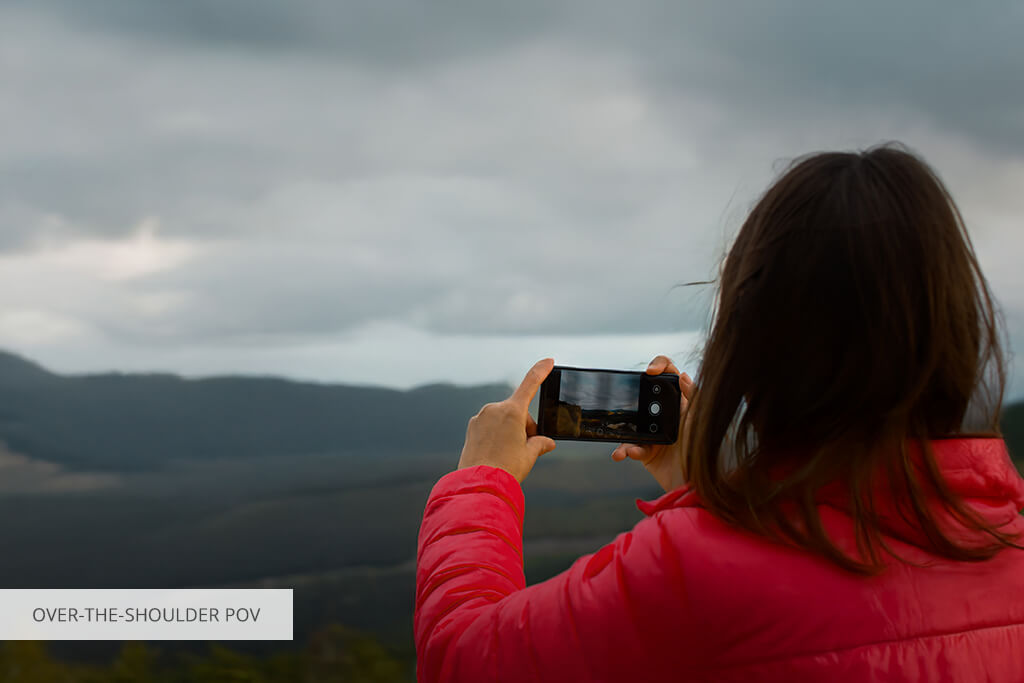
Showing part of a person or object at the edge of the photo makes the viewer feel like they’re right there, looking in. It’s a great way to pull people into the story, as if they’re seeing things first-hand. I often use POV angle in photography when shooting through doorways, windows, or when someone’s holding something.
Where you put your camera has a big impact not only on photography composition, but the entire story your photo tells. Shooting someone at a low angle can make them look bold, while looking down can make even a big object seem soft or fragile. I like to think of POV as a powerful tool that can help photographers make viewers feel a particular way about what is depicted.
Your camera angle has a direct impact on how big or small something looks in a photo. When photographing from below, a person or object can seem powerful. If you shoot from above, they may look alone or less important. I use this technique to stir emotions in the viewer.
In photography, point of view sets the tone for who’s calling the shots. A straight-on view feels equal. But if you tilt the camera upward, you subject will start looking more important or even intimidating. Once I understood this, my photos acquired true emotional depth.
There are different POV in photography, and picking the right angle doesn’t come from rules. It hinges upon the story you want to share. Every photo conveys something, and you can control the visual narrative by changing the position of your camera. I always think about what feeling or focus I want when selecting angles.
Set the Mood with Your Angle
Shooting from above can make your subject seem delicate or vulnerable, like they’re small in a big world. Shooting from below can make them look strong or powerful, even a bit scary. I decide on the point of view by imagining the feelings I want the photo to spark.
Match Your Angle to the Genre
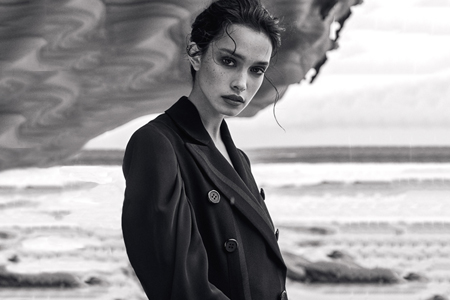
Each photography style calls for different camera angles. In street photography, I usually choose first person POV photography style or shoot a little below to make the viewer feel part of the moment. Architectural pieces look great from higher spots or balanced angles that show off the building’s design. For people and fashion shots, angles for full body portraits, namely, from the waist or hips, keep bodies looking balanced and natural.
In Relation to Lens Choice
Your lens plays a big role in shaping the photo’s point of view. A wide-angle lens makes nearby objects look bigger and adds depth, especially if you combine it with a dramatic camera angle. A telephoto lens does the opposite. It flattens the scene, making things look closer together. It helps when the background is too busy. For top-down food shots, I stick to clean, centered food photography angles with a 35mm or 50mm lens. They help me preserve sharpness and avoid warping.
Even a well-planned photo can end up looking disappointing if the point of view is poorly chosen. I made such a mistake when I was starting my photography path. It’s more common than you think, especially when you're in a hurry or playing around with creative angles. But hey, that’s all part of learning.

One big mistake in photography POV is using too many different angles without a reason. It can make a photo series feel messy and hard to follow. I always try to keep the look consistent. If I start with a low point of view, I stick with it unless I have a good reason to switch, e.g., showing a new aspect of an object or part of the story.
It’s easy to get carried away with extreme angles just because they can. But if the angle doesn’t add meaning, it will just make the photo look odd. I’ve learned that not every subject needs to be stretched or exaggerated. An eye-level point of view does the job perfectly in many cases.
When you’re focused on getting a cool angle, it’s easy to forget about the background. Sometimes, lines look warped or buildings lean the wrong way. You may even catch something in the frame that doesn’t belong. I always double-check for these things, especially when using wide lenses. If something’s out of place, I either change my angle or fix it afterward.





![How to Take Pics of Shoes to Sell in {{%year}} [+Popular Fails]](http://fixthephoto.com/blog/images/gallery/news_main__preview_25469.png)
![How to Create Neon Effect in Photoshop [+FREEBIES]](http://fixthephoto.com/blog/images/gallery/news_main__preview_27937.jpg)

![Photography Licensing Agreement [+FREE TEMPLATES]](http://fixthephoto.com/blog/images/gallery/news_main__preview_27938.jpg)