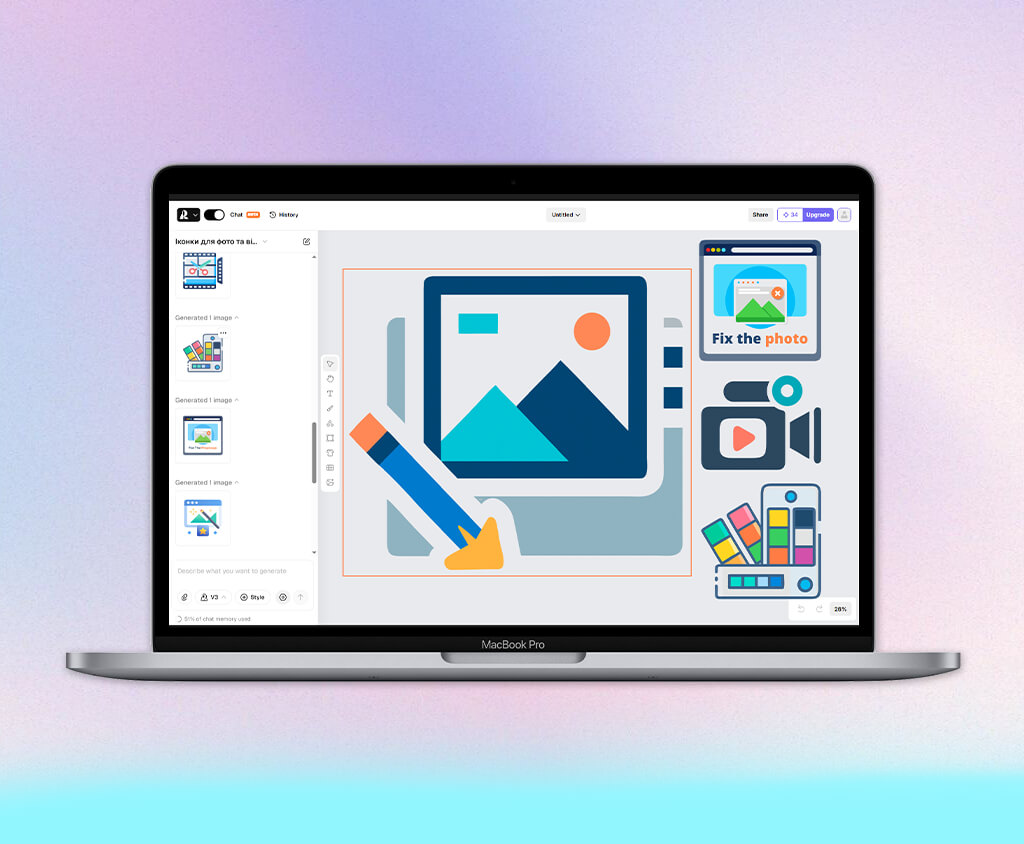
When planning my app, I hoped that making icons would be a quick and simple step, but that turned out not to be the case at all. It took me hours to browse through different free icon libraries, only to discover that none of the available options was a good fit. They either felt generic or couldn’t be put together into a single set. I also didn’t have a big enough budget to hire a professional designer, and I needed results quickly.
As such, I decided to look into various AI icon generators. Initially, I didn’t think that an AI-generated design could satisfy my requirements. I wanted to receive unique, scalable icons suitable for both mobile and web use, all done in the same style. They also had to offer a specific style that would fit the contemporary, minimalist vibe of my brand.
The icon AI generator I needed also had to be intuitive and beginner-friendly since I don’t possess professional graphic design skills. The perfect solution should let me adjust the colors, line width, and overall style in just a couple of clicks. Export parameters are also important, as I needed to save my designs in both SVG and PNG formats to preserve their sharpness regardless of where I add them.
The issue with most tools is that their results are either too generic or come with an abundance of features I’m not interested in. After trying out a bunch of them, I strived to find a balanced solution that would provide versatile AI features with handy editing functionality packed into an intuitive UI.
I collaborated with members from the FixThePhoto team to try out a broad range of AI icon creators while also studying relevant forums, reviews, and Reddit threads. We put together a list of the most frequently recommended tools and prepared a testing plan to ensure they’re not only well-suited for my app, but also for other designers' needs.
AI produces high-quality icons by leveraging machine learning, design theory, and semantic understanding to emulate the behavior and skill set of an experienced designer. The foundation of its functionality is built on the capability to learn from expansive databases of existing icons, graphics, and visual assets.
By studying millions of images, it recognizes patterns that make icons stand out, properly handles proportions and spacing to preserve clarity even at a smaller scale, and implements stylistic trends – from minimalistic flat designs to more intricate, illustrative icons. Such a foundation enables an icon creator AI tool to produce completely new icons that have a familiar look without stealing anyone's existing designs.
Whenever you type in a prompt like “shopping cart” or “eco-friendly leaf,” the AI doesn’t take the words literally. It analyzes the concept and comes up with visual metaphors that depict the intended message efficiently. It employs design principles automatically, juggling shapes, symmetry, and proportions, while making sure the icon is clearly visible at any size.
Additionally, the AI factors in aesthetic aspects like color palettes, saturation, and clarity, which are essential for legibility and visual appeal. All of this combined lets AI generate icons that look unique and eye-catching, allowing you to receive top-tier results without any graphic design experience.
Instead of just creating one icon, AI is great at generating several variations within seconds, which is something that would take a human designer hours of work. It can provide results in different styles, color palettes, and perspectives. Additionally, the AI can learn from user interactions, providing better results based on edits or feedback, which establishes a collaborative loop where the human user and artificial intelligence improve the result together.
The result is a combination of creativity, efficiency, and precision. AI-generated icons are not only visually appealing and easy to recognize, but also can be scaled up and down as you see fit. AI relies on technical design rules and semantic awareness to generate pro-grade designs that implement your vision to the tiniest detail.
Well-written prompts specify the subject, style, desired colors, context, and intended use. Poor prompts are generic, short, and don’t provide context, making it impossible for the AI to properly interpret the idea behind the icon.
| Concept | Good Prompt | Bad Prompt |
|---|---|---|
|
Shopping Cart
|
✔️ “Minimalistic shopping cart icon, line art, black and white, optimized for mobile apps”
|
❌ “Icon of a cart”
|
|
Email
|
✔️ “Flat design email icon with envelope and a drop shadow, 64x64 pixels”
|
❌ “Email icon”
|
|
Leaf / Eco
|
✔️ “Eco-friendly leaf icon, basic geometric shapes, vibrant green, for website header”
|
❌ “Green leaf”
|
|
Calendar
|
✔️ “3D calendar icon with striking colors, contemporary style, for desktop software”
|
❌ “Calendar thing”
|
|
Search
|
✔️ “Line art magnifying glass icon, minimalistic, for search function in a mobile app”
|
❌ “Magnifying glass”
|
|
Settings
|
✔️ “Dark mode settings gear icon, flat vector style, high contrast”
|
❌ “Gear icon”
|
|
Chatbot
|
✔️ “Cute chatbot icon, friendly facial expression, rounded shapes, vector format”
|
❌ “Robot icon”
|
|
Notification
|
✔️ “Notification bell icon, outlined style, small size, UI-friendly”
|
❌ “Bell icon”
|
|
House
|
✔️ “Basic house icon, line art, B&W, scalable vector for app”
|
❌ “Home icon”
|
|
Medical
|
✔️ “Medical cross icon, flat design, red color, suitable for mobile app buttons”
|
❌ “Red cross icon”
|
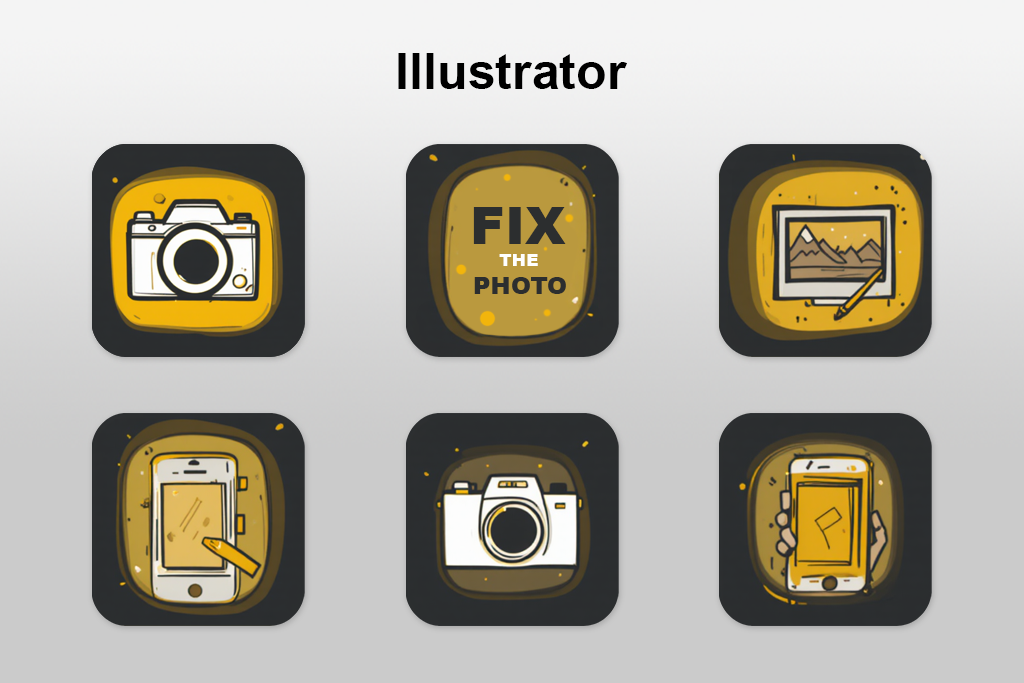
When I first saw that Illustrator is often recommended for making AI generated icons, I initially felt worried, as I know that even free Adobe software is rather complex and aimed at professional designers. Still, I decided to try it and was pleasantly surprised by both how intuitive it was as well as the quality of the result.
I started by typing in an intricate prompt that described the desired idea, style, color palette, and intended use behind the icon. My experience shows that the more descriptive, the better and more professional the result you’ll get. For instance, writing “minimalistic shopping cart icon, line art, monochrome, suitable for mobile apps” helped me receive a well-balanced design, while a generic prompt like “cart icon” led to boring, forgettable results.
“Illustrator’s AI functionality is perfect for generating high-quality icons. It produces creative and well-balanced designs that are provided in vector format, which is perfect for upscaling.”

By employing Adobe Illustrator’s AI functionality, particularly Firefly, I managed to produce several variations of every icon almost instantly. Such speed helped me try out a variety of styles, line techniques, and color combinations without having to do any manual changes, which has saved me countless hours of work.
This software also deserves praise for generating icons that are all provided in vector format, allowing you to scale them without lowering their quality or messing up the proportions. The designs look great both in smaller and larger sizes, which is essential for an icon that will be used in different UI contexts.
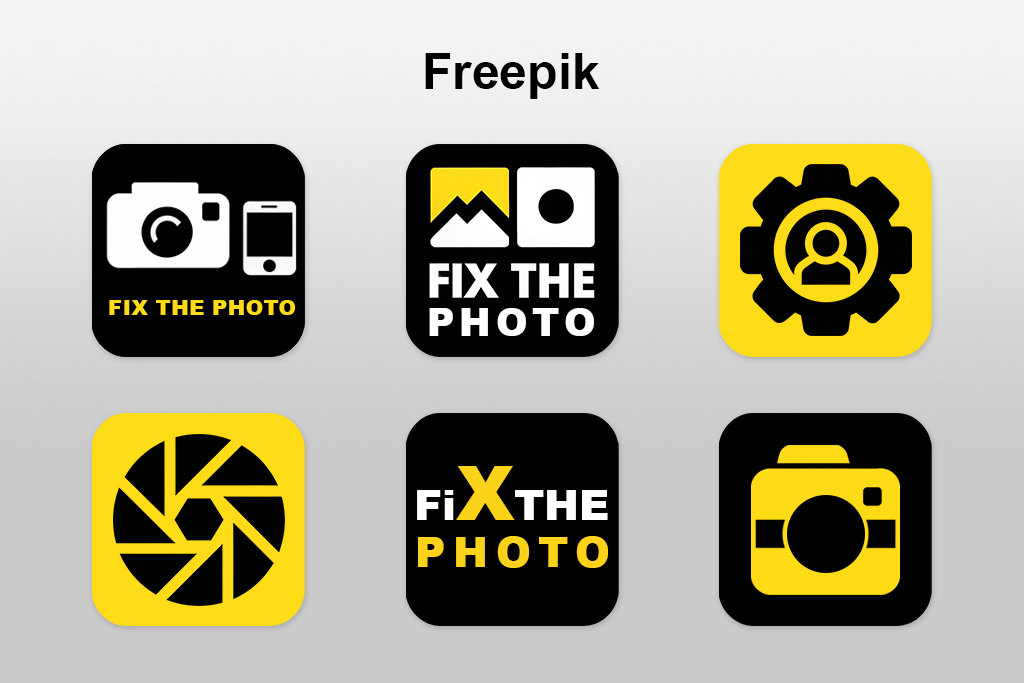
The first thing that caught my eye about this AI icon generator is its easy-to-navigate UI. Writing prompts like “minimalistic shopping cart icon, line art, monochrome, suitable for mobile apps” allowed me to receive multiple beautiful results within seconds. The AI is great at understanding the desired style and message, producing clean, visually-balanced icons that can be added to any project you need.
I also liked the speed with which this AI logo generator can produce several variations, making it simple to try out various color palettes, line thickness settings, and the amount of detail included in the design. Freepik can act as an AI-powered assistant that will iterate on your ideas until you’re completely happy with the output.
“It streamlines the process of generating icons. Simply write your idea out, and in just a second, you'll receive a set of tidy-looking web-ready designs. If you’re in a rush to meet a deadline, this is exactly what you need.”

Freepik’s AI has also impressed me with how integrated it is into the platform’s main asset library. You can use any created design with the available Freepik assets to ensure your project has all the visual resources it needs. Additionally, you can pick from a variety of export settings and formats to ensure the icons you get are optimized for mobile and web use and don’t suffer from a loss in quality.
Lastly, I liked the AI’s ability to process context and semantics. After I typed in “eco-friendly leaf icon for a website header,” Freepik generated multiple designs that were different from each other while conveying the intended idea clearly, showcasing a deep understanding of symbolism and visual metaphors.
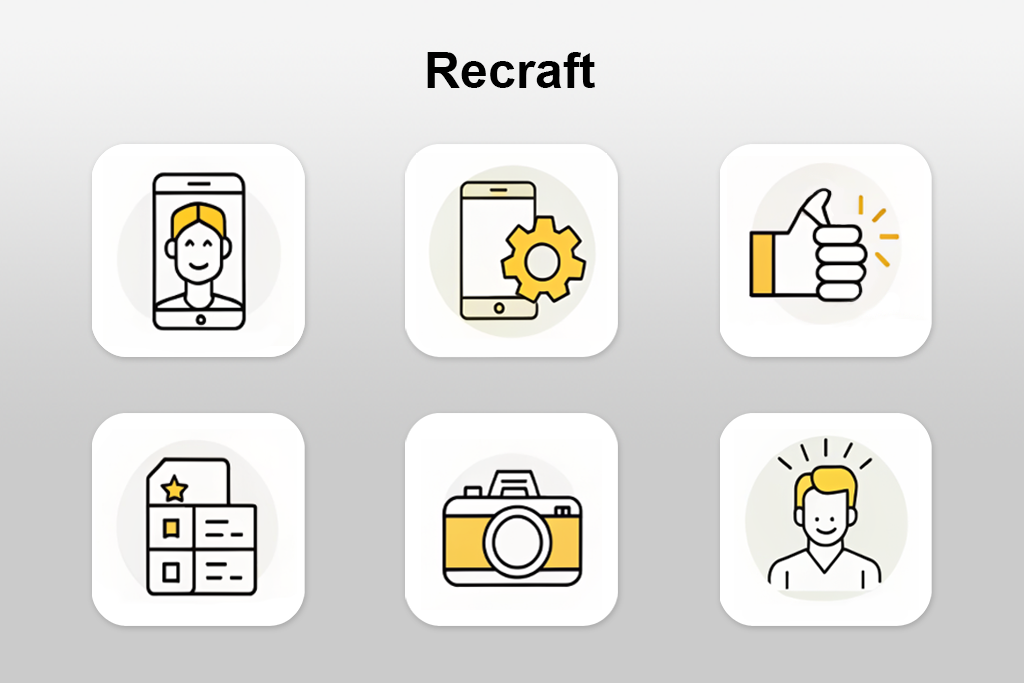
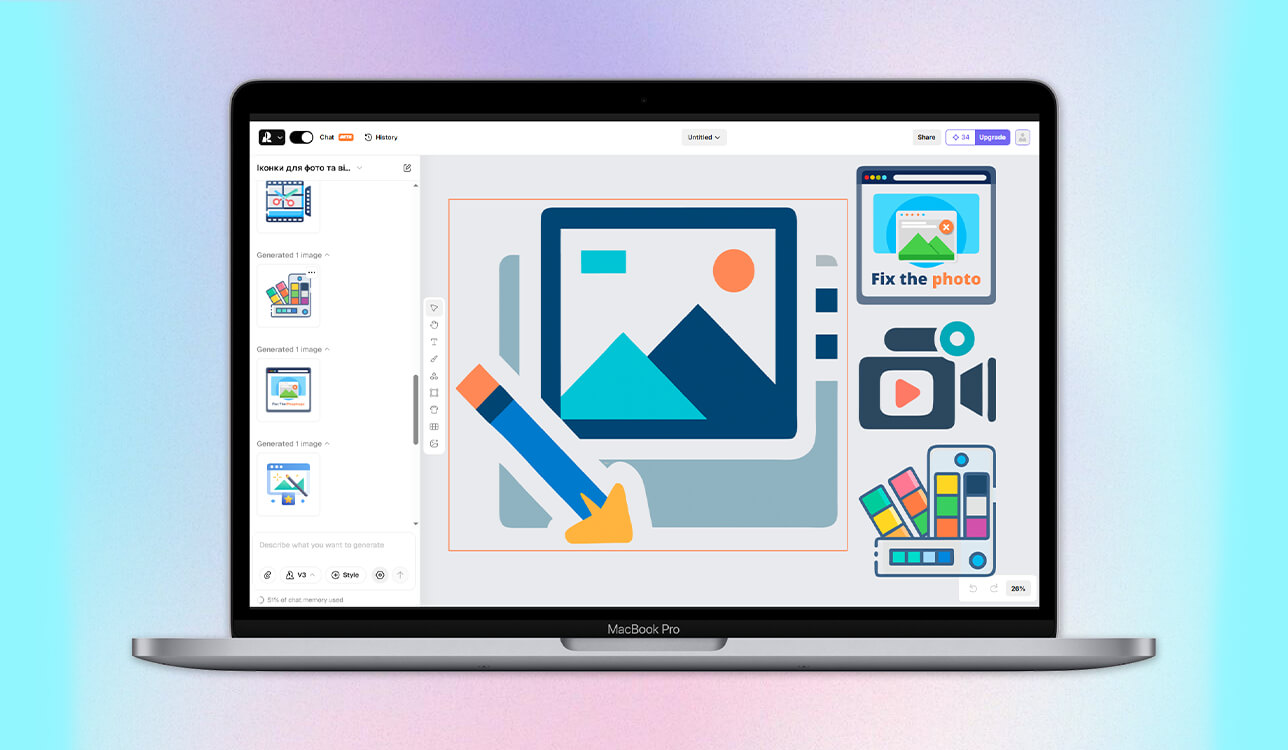
I tested Recraft by typing in intricate prompts, akin to what I did with Adobe Illustrator and Freepik, mentioning the idea behind the icon, desired style, and color scheme, as well as the intended use. This helped me examine how accurate the AI-generated icon is in relation to my instructions.
I instantly appreciated how intuitive Recraft’s UI is, as it makes it very easy to write prompts and produce icons within seconds. I used prompts like “minimalistic shopping cart icon, line art, monochrome, suitable for mobile apps,” and after just a couple of seconds, I received several professional-looking and balanced variations. This AI image generator can also deliver a wide range of styles while establishing a cohesive aesthetic for every icon in a set.
“Recraft is very enjoyable to use. It’s super quick, and the style recommendations are very useful if you don't know which way to go with your design. As long as you provide a well-written prompt, you’ll be happy with what you get.”

I greatly enjoyed the provided AI-powered style recommendations. After I typed in a basic prompt, the platform suggested complementary color palettes and different style variations that would be a good fit for my idea. I tried out a variety of approaches, including flat designs, line art, and various more illustrative styles.
Moreover, the AI does a good job analyzing the context of the prompt. After I typed in “eco-friendly leaf icon for a website header,” the generated icons accurately depicted the concept via clear and easy-to-interpret visual metaphors. Recraft does a great job combining creativity with efficiency, generating icons that are ready to be used for professional projects.
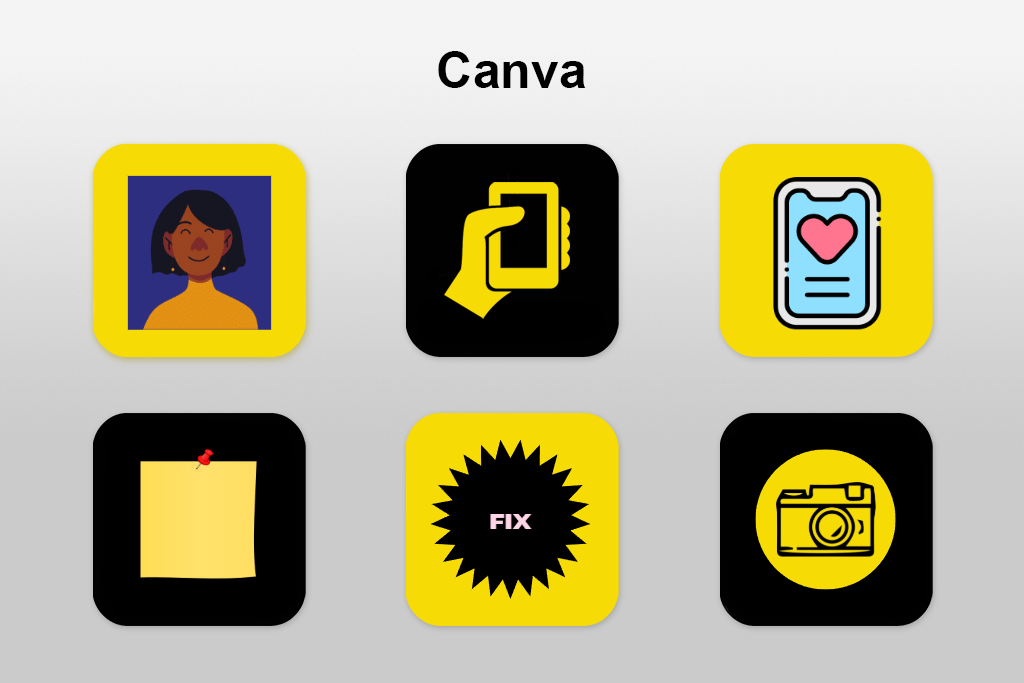
While Canva isn’t a specialized AI icon maker, it still provides such functionality. This platform is intuitive and easy to use, but what I was most interested in was learning how well it’s suited for handling well-written prompts. I wanted to check if Canva can take a description of my idea and transform it into a professional-looking, scalable icon.
I wrote the same prompt I used for Recraft, and the result was pleasantly impressive, offering a balanced design, clean geometry, and an easy-to-understand visual metaphor that did the concept in my head justice.
“I love how beginner-friendly Canva is when it comes to generating and enhancing icons. If you lack advanced graphic design skills. However, if you prefer to fine-tune every single aspect of your creations, the provided feature set might feel too restrictive.”

I was impressed by how Canva manages to integrate its AI functionality into the rest of the toolset. After producing the icons, this platform lets me tweak them by leveraging its drag-and-drop controls. If I wasn’t happy with the line width or the colors, I could quickly and easily change them up without having to use different software.
Additionally, Canva provides integrated recommendations for color schemes and visual styles, allowing me to establish a consistent look across the entire icon set. This feature streamlined the design process and made it a lot more manageable for me as a non-professional graphic designer.
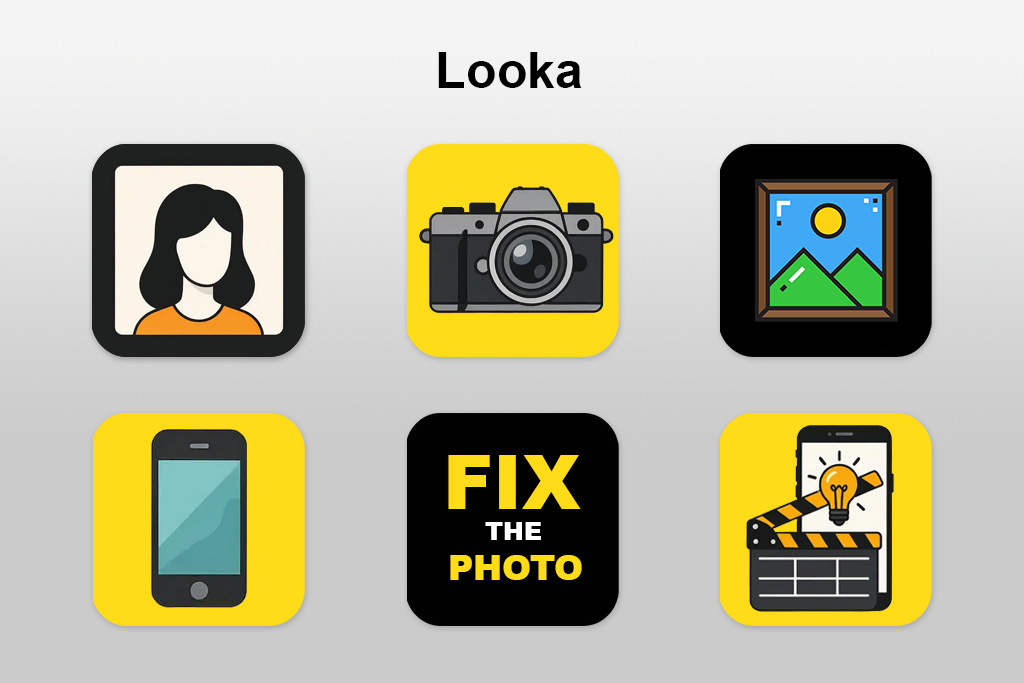
What sets Looka apart from other options is its capability to create icons with AI while ensuring they’re completely aligned with your branding. As this solution is primarily designed for making logos, it ensures that its icon generation feature is optimized for being consistent with other branding elements, which is perfect for businesses that need to preserve a cohesive visual style across different sites, applications, and social media platforms.
Look is also great at automatically recommending fitting color schemes and fonts, allowing you to produce entire asset packs instead of isolated icons.
“Looka is a great tool for establishing your brand’s visual identity. The icons you receive will be a perfect match for your logo, headers, etc. However, it’s a poor fit for experimental designs.”

When trying out this AI generator’s icon creation, I used both highly descriptive prompts and vaguer ones. With the former, this platform produced fantastic results that followed my instructions perfectly. Meanwhile, more generic wording like “modern tech symbol” usually resulted in a bland design that sometimes didn’t even meet the style of my brand.
This free logo maker isn’t supplied with professional vector design features, so even though it lets you make some simple edits, it’s incapable of detailed adjustments, meaning you’ll have to use different software for that. This isn’t a deal-breaker for most, but it’s something you should know if you’re looking for an all-in-one solution.
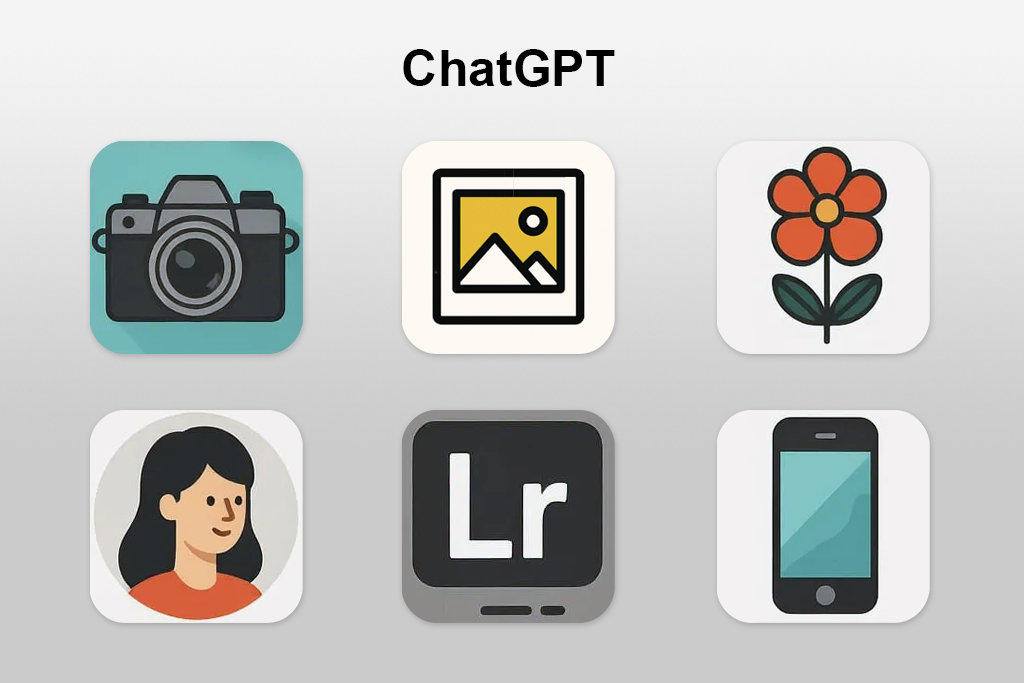
I was very interested to see what ChatGPT can do as an AI icon generator. In contrast to specialized software with premade interfaces, this platform relies solely on natural language prompts, meaning the result depends entirely on your description.
I appreciated how the generation process resembled a conversation. Rather than being forced to mess around with various menus and sliders, I could simply write out my vision, and ChatGPT provided SVG code or images that fulfilled my requirements. The back-and-forth collaboration process felt very satisfying.
“Regardless of what idea you have, as long as you describe it properly, ChatGPT will generate it for you. Even if the initial result isn’t good enough, you can continue iterating on it until you’re happy. The key here is to be proficient at using descriptive language.”

If my first try to generate an icon with AI didn’t pan out, I would just change my description to help ChatGPT understand my idea better. After a couple of iterations, you’re bound to receive a result that you’re satisfied with, all without having to master all the complex tools included in software like Adobe Illustrator.
Since ChatGPT doesn’t have a fixed GUI, it can generate icons in all manner of styles, from flat and line art to watercolor and hand-drawn. All of this being said, the final result is still a level or two below the more specialized solutions. In the future, I plan to use this AI art prompts generator to brainstorm and visualize ideas for my icons rather than rely on it to get the final design that I will feature in my app.
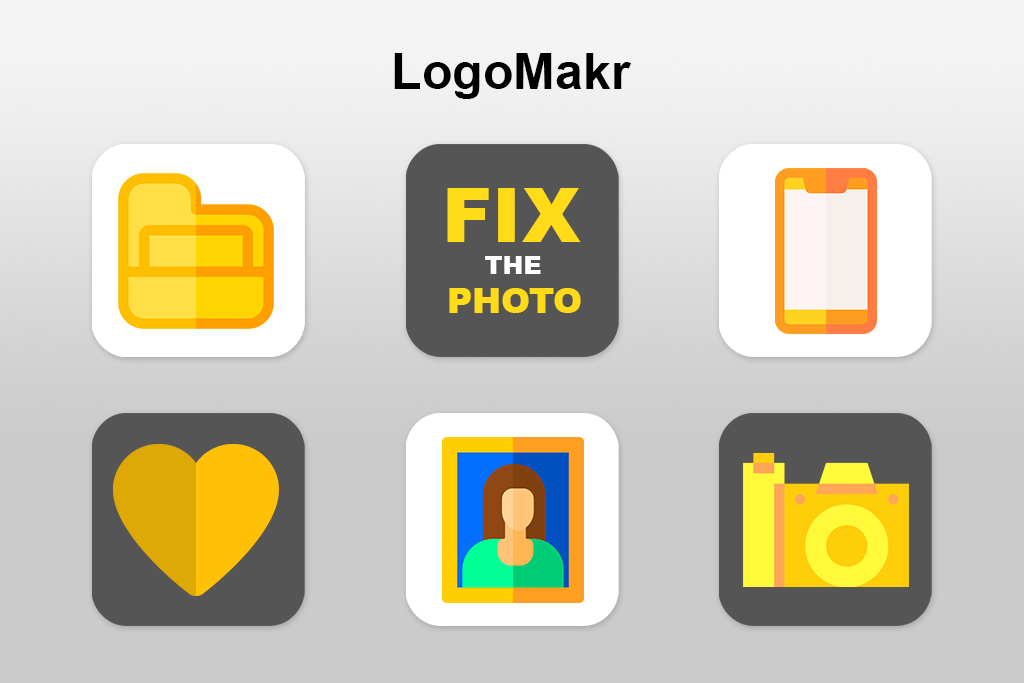
LogoMakr lets you use AI to generate icons without forcing you to deal with confusing menus or complex settings. Typing in prompts is convenient, and the platform delivers a set of results within seconds. The AI-produced icons look clean and aesthetically pleasing, while looking legible at both smaller and bigger sizes.
This tool was primarily created for logo design, meaning it’s easy to make an icon that is a good fit for the rest of your brand kit. Once I generated an icon, I could instantly check if it matched the other visual elements in my app.
“It’s pleasantly user-friendly and intuitive to use. LogoMakr allows you to generate both basic and intricate icons, which you can later enhance in different software if needed.”

I also like the automatic suggestions provided by LogoMakr, as they help enhance my designs and refine my ideas. When I generated an icon for my eCommerce app, this AI icon maker not only delivered several shopping carts, but also recommended similar designs for payment methods, shipping, wishlisting, etc. Such functionality is a godsend when you need to make an entire collection of icons in the same style.
As with most similar solutions, you can improve the quality by writing detailed prompts rather than short, generic ones. If you describe the context of the icon and the desired style, you are a lot more likely to get a design you love. However, if your prompt is only a few words long, you’ll get a bland icon that feels uninspired and amateurish. Additionally, I employed LogoMark as a free AI text effect generator, and managed to get some high-quality text logos.
Along with my FixThePhoto colleagues, we tried out a variety of the best AI icon generators while trying to give each option a fair shot. Other than me, the team included Tati Tailor, Nataly Omelchenko, and Kate Debela, each of whom focused on different aspects.
Tati relied on her refined design vision to discern how aesthetically pleasing and creative the generated icons are. Nataly focused on the technical aspects, checking scalability, file compatibility, and how the icons look on different devices and screen sizes. Kate prioritized usability, making sure the app icon generator is beginner-friendly and can be used even by non-designers.
We first devised an array of use cases that covered a variety of common real-world projects. The list of scenarios included icons for mobile applications, sites, dashboards, and brand identity packages. Next, we prepared several prompts that covered both brief and basic ideas like “flat monochrome shopping cart icon for mobile UI” and more descriptive and abstract concepts, like “eco-friendly energy icon with geometric shapes and modern aesthetics.” Such diversity helped us examine how efficient each AI icon generator is at tackling different prompts.
To give every option a fair chance, we typed identical prompts into each one during testing. We all went through the process separately, generating several icons and diligently noting down the steps we took along the way. We focused on how responsive the AI is, its speed, and whether the result required manual editing before it could be finalized. We added the icons to different environments, including mock interfaces, sites, and branding materials, to see how they hold up in the real world.
Afterward, the team reunited to put together all our conclusions. We evaluated everything from visual quality and style cohesion to how convenient it is to use the provided AI features. Tati checked if the icons offered proper proportions and clarity at smaller sizes. Nataly searched for technical problems like pixelation, vector formatting, and the range of supported export formats like SVG and PNG. Kate calculated the amount of time required to get a satisfying result without being forced to do any manual editing, which is particularly relevant for marketers, small business owners, or developers without any professional graphic design skills.
We managed to thoroughly explore each AI vector icon generator by trying out a variety of prompts. For example, we’d generate the first icon using a vague prompt and then gradually make it more and more descriptive to check the level of control we have over the result. Our goal was to determine how good the AI is at interpreting concepts and presenting visual metaphors. We’d also occasionally change our duties, having Kate focus on the technical factors, while Nataly tried out the beginner experience to provide a broader perspective for this overview.
After we were done with our test, we had hundreds of icons and in-depth documentation on our experience with all the AI icon generators featured above. We didn’t just evaluate the visuals, but also how they fit into different workflows, trying to determine which option would best benefit teams, professional graphic designers, and regular, inexperienced users. Working as a team allowed us to figure out all the benefits and drawbacks of every solution to make it easier for you to pick the optimal AI icon generator for your needs.




![5 Best Free AI Text Effect Generators [Reviewed & Tested]](http://fixthephoto.com/blog/images/gallery/news_main__preview_26859.png)


![7 Best 3D Printing Services in {{%year}} [From $1]](http://fixthephoto.com/blog/images/gallery/news_main__preview_27105.png)
![Best AI 3D Model Generators [Images, Videos, Text into 3D]](http://fixthephoto.com/blog/images/gallery/news_main__preview_26858.png)