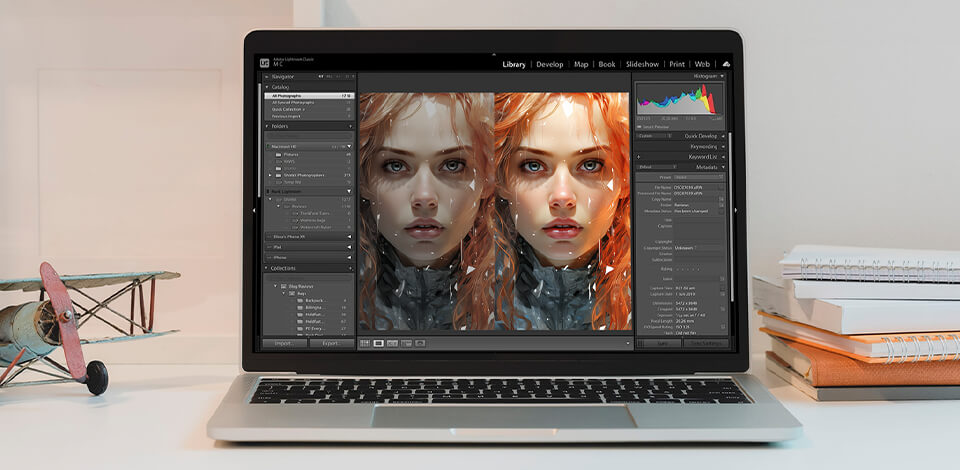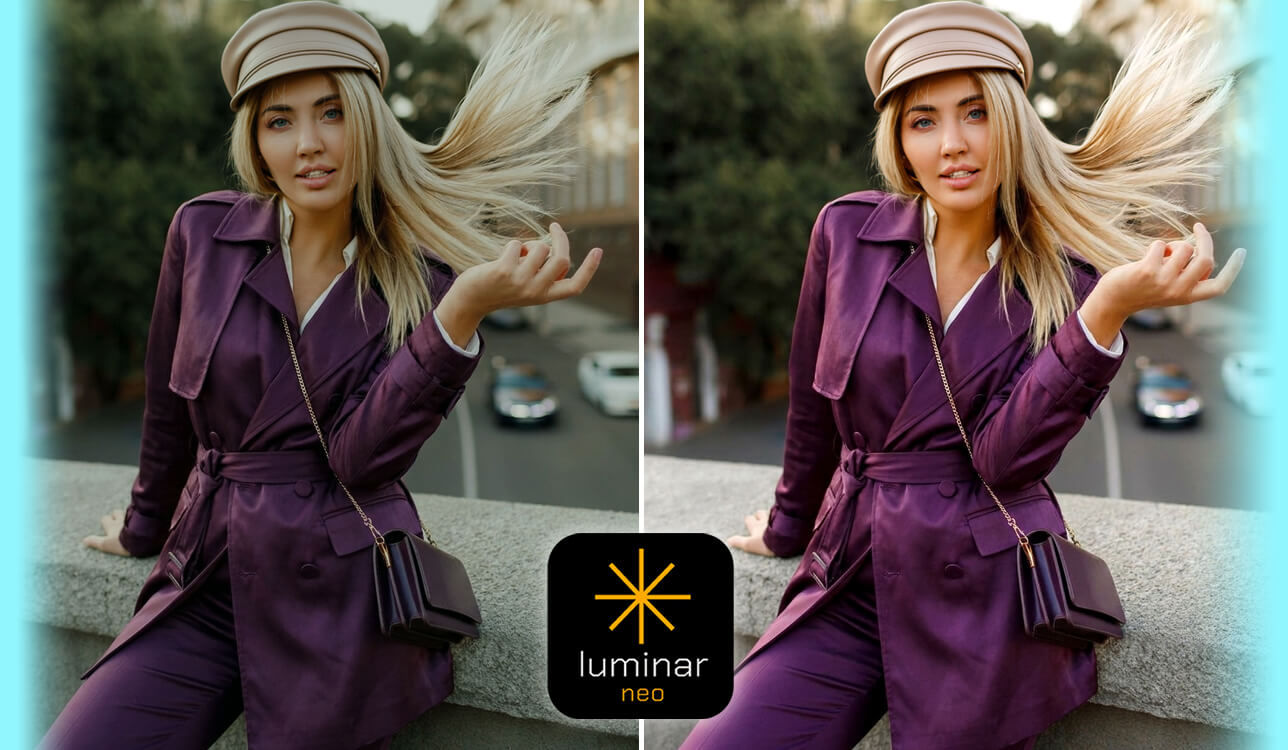
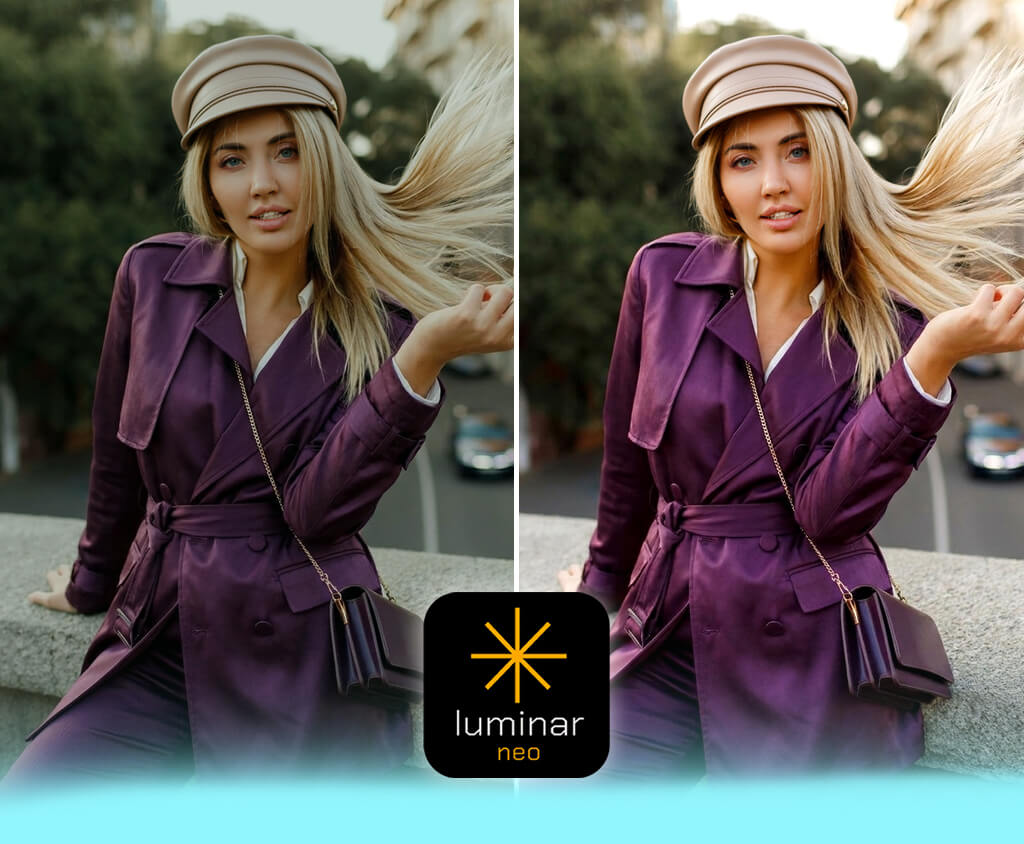
Luminar (formerly known as Luminar) comes with a powerful set of AI-driven tools, making it similar to earlier versions. When I was testing the most recent version before writing this Skylum Luminar review, I discovered that it stands out for its fast workflow, advanced masking capabilities, generative features, and highly adjustable editing controls.
Using the program, you can handle photo editing tasks faster and with little effort on your part. It works flawlessly on Mac and Windows platforms, allowing users to create detailed images and enjoy layer-based editing. The toolset is rather extensive, and you can customize the tools the way you see fit.
I like that the developers have added a high-speed core engine, so fulfilling even sophisticated tasks won’t become a problem. Thanks to the cutting-edge “modular” engine, all photo editing procedures are optimized, which means you achieve the desired result quickly.
Moreover, the software is regularly updated, so you can test the new features right after they appear. Luminar occupies less memory, which is great news for people with average computing systems.
Recently, Luminar has been significantly improved. Over the past year, it was upgraded with new tools and features. The company renamed Luminar to Luminar to achieve higher brand recognition and improve user experience.
If you need to specify which solution you are interested in, keep in mind that the company’s products have the following names:
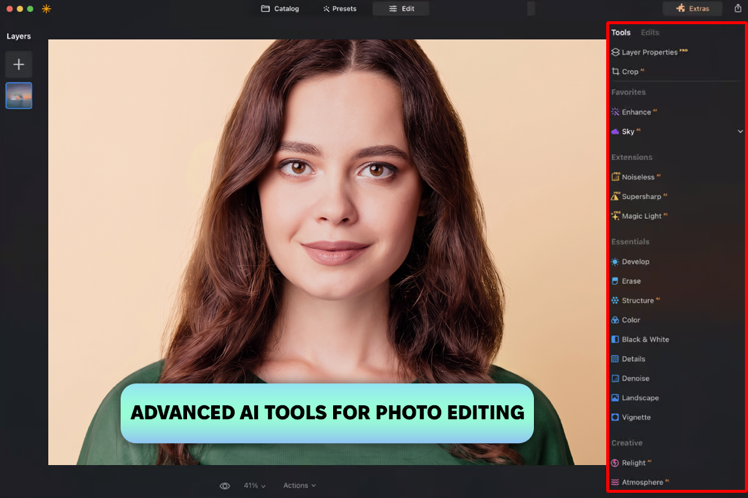
Luminar is a new program for photo editing created by Skylum. It is believed to be more efficient than Luminar AI, but it won’t become its complete replacement. In fact, Luminar was built to solve some of the AI-related issues.
Similar to its forerunner, Luminar is an AI photo editor that allows improving images in a faster way. Users can apply filters and make one-click tweaks to get a great photo. Thanks to AI algorithms, the software automatically scans pictures, deletes unwanted elements, and applies lifelike effects.
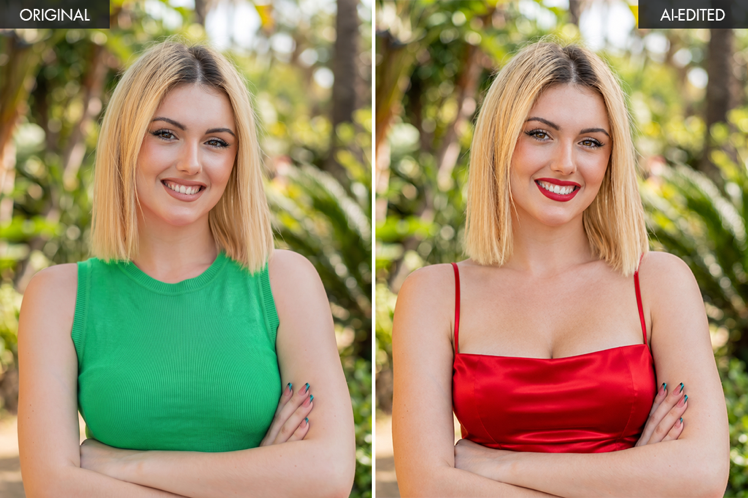
The latest update of Luminar consists of two phases, during which gradual improvements were introduced. When writing this Luminar review in 2026, I discovered that the main focus of the new version is on improved editing workflow and higher flexibility.
After the first phase, a version with an upgraded UI, a well-thought-out navigation system, fast performance, and realistic AI generative tools was released. The new interface makes it easier for photographers to access the main editing tools, allowing them to focus on photo enhancements.
The updated version also delivers better performance. It allows users to export files up to 25% faster. Preset previews now load up to 4× faster. When a user works with masking tools, the program now uses up to 33% less RAM, making it easier for photographers to process large RAW files or make advanced edits.
The update is also compatible with a larger list of camera models, including the Panasonic Lumix DC-L10, Sony A7 V Compressed RAW, and Sony A7R VI.
The second phase is scheduled for Fall 2026. It’s expected that the developers will release more Luminar AI tools. The update should feature upgrades to masking tools and Presets, new printing and export options, and several premium tools.
The new version stands out for features such as Atmosphere 2.0, Crop 2.0, Enhance AI, AI Assistant 2.0, and the improved Web Editor. Atmosphere 2.0 allows users to apply the Fog effect that changes depending on the lighting and colors in a photo, enabling photographers to achieve more natural outputs.
The Crop 2.0 feature helps users to choose from different composition variations and experiment with different approaches to framing to find the right solution quickly. The upgraded Enhance AI feature analyzes the scene before performing enhancements, enabling users to achieve a more natural result while maintaining the original highlights and color palette.
One of the main improvements in this photo editing software for PC and Mac is that it now allows users to seamlessly switch between different versions, such as Luminar Desktop, Luminar Mobile, and Luminar Web. This ensures that every user will be able to access Luminar across different devices, which is especially important when one needs to edit their images on the go.
In simple words, the 2026 update prioritizes three main areas: faster performance, streamlined editing, and more powerful AI tools. This version of Luminar photo editor allows photographers to significantly optimize their workflow and improve their photos without performing complex manual edits.
Luminar resembles the previous version of Luminar a lot if we talk about possible corrections and its general mission. In fact, both programs appeal to users with AI quick fixes, but the recently released version of Luminar looks more like a dedicated photo editor with powerful AI-driven tools, manual controls, masking features, layers, and generative tools.
Unlike the previous versions of Luminar, the current version was built specifically for photographers who want to automate routine tasks and control the output with high precision. You can use AI tools for designers and photographers to speed up common adjustments and then fine-tune the image manually when necessary. This approach makes the software suitable for both quick corrections and more involved creative editing.

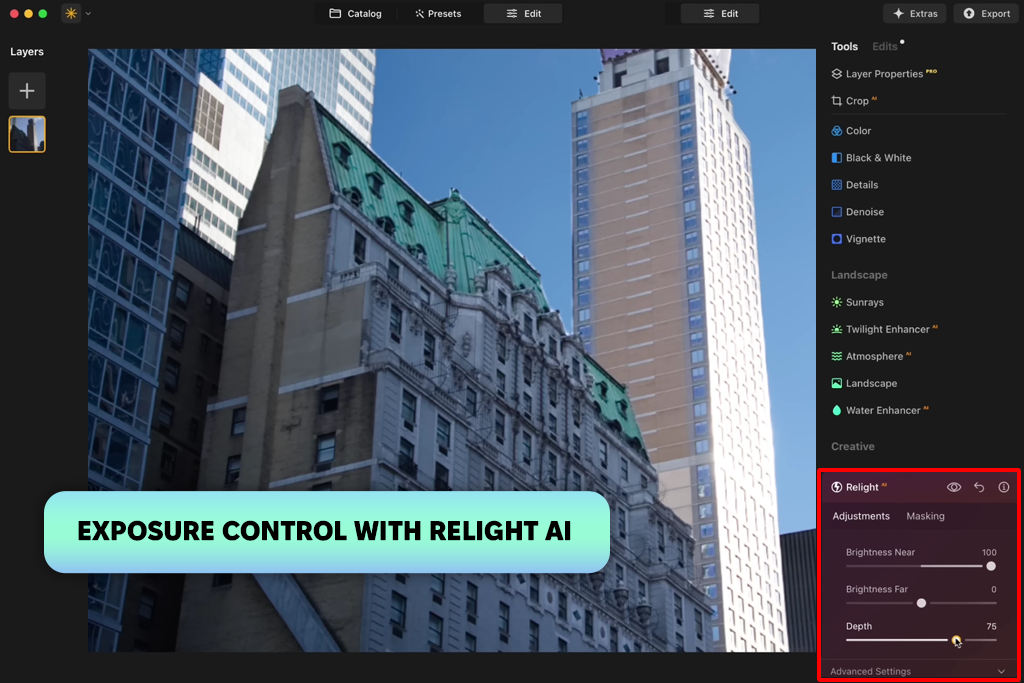
Relight AI is useful if you want to control the lighting in different areas of your photos. Thanks to AI technology, the program analyzes your photo, recognizes depth, and allows you to adjust the brightness of areas depending on their distance from the camera.
When you use Relight AI, it does not adjust exposure for the whole frame. With it, you can adjust the brightness for the foreground and background separately. This can be particularly useful for portraits, landscapes, and scenes with big differences between light and shadow.
The feature will help you achieve a well-balanced exposure without giving a flat look to your image.
You can use Luminar software to brighten a subject in the foreground or reduce the brightness of a distant background while maintaining the existing atmosphere of the photograph.
However, you should be very accurate while using this feature. Of course, HDR photos look fantastic, but if you go overboard, you may end up with a strange image that lacks depth.
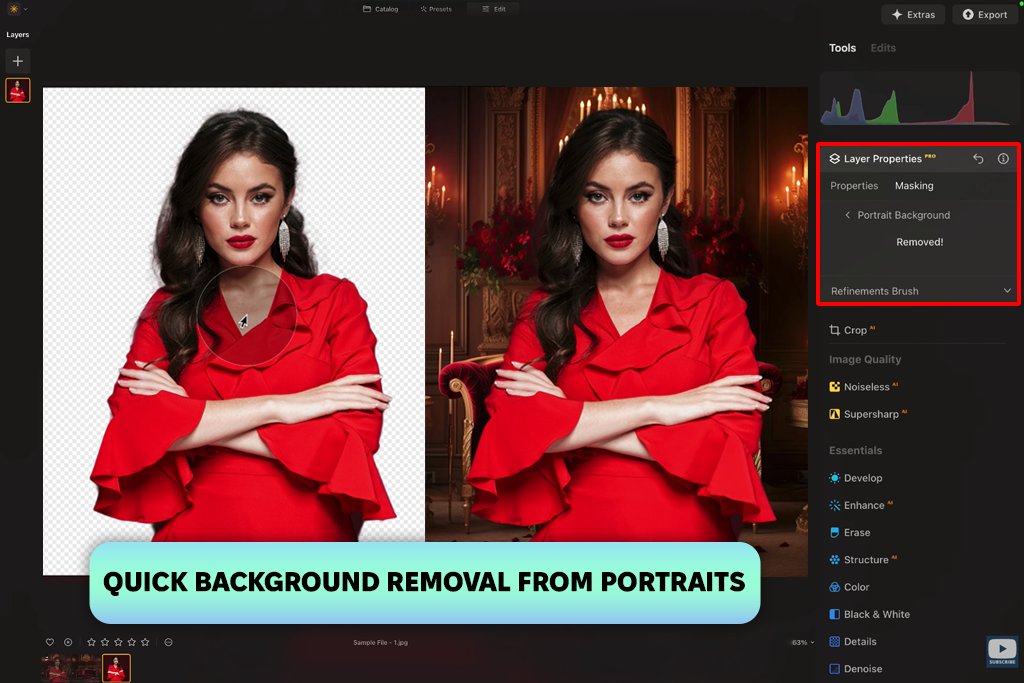
You have probably tried to select the needed areas in images manually and then proceed with masking. The process is time-consuming and requires special attention to detail. Fortunately, Luminar has a special Portrait Background Removal feature, using which you can forget about much of the hassle of manual corrections.
The feature automatically detects the main subject in a portrait photo and separates it from the background. After the subject is selected, you can replace the background, make other edits, or change the mask manually if it is insufficiently precise.
This photo editing software for beginners also allows blurring the background if you want to embellish your images creatively. Even if a person in a photo holds an object, the program can distinguish the main subject and apply the background blur while keeping the foreground intact.
When writing this Luminar photo editing review, I was especially pleased with the Portrait Background Removal feature. It will be useful for those who need to enhance portraits, social media content, product images, and other photos. It will allow you to isolate the subject automatically without using manual selection tools.
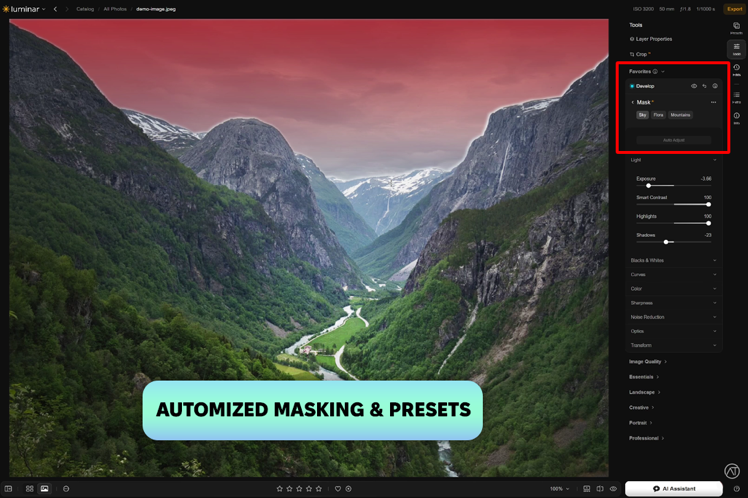
The Mask AI Tool is praised in many Luminar reviews, and that is for a reason. Relying on AI algorithms, it recognizes objects in photos and defines the depth of an image. According to the data collected, you can select different items and pieces of your shots.
The most pleasing aspect of using this instrument is that you don’t have to select objects manually. Luminar automatically recognizes specific elements of a photo and creates masks, which facilitates making local adjustments. This means you can change the exposure, color, contrast, or other settings of a particular object without affecting the rest of the image.
In case this tool fails to detect areas/objects correctly, don’t hesitate to use brushes. They are suitable for correcting different parts of a picture and controlling the masking procedure.
The version released in 2026 makes it easier for users to work with masks and achieve higher workflow efficiency. It allows users to edit detailed photographs, apply multiple masks, and work with large RAW files.
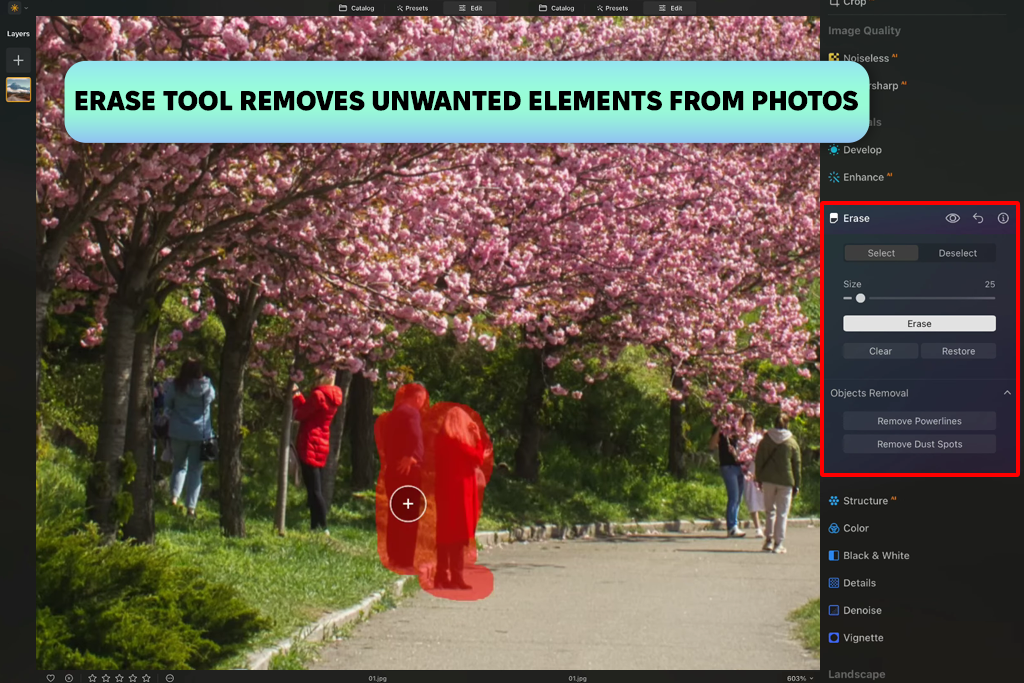
The most recent version of Luminar comes with the Erase tool that allows users to delete unwanted objects from photos. It can be useful for eliminating distracting objects, small imperfections, people in the background, or other elements that take attention away from the main subject.
There is no need to use manual cloning tools, as you can choose any element you don’t need and wait until Luminar rebuilds the area based on the surrounding pixels. This makes the tool useful for everyday cleanup and more demanding edits.
The Erase tool could be useful for those who specialize in travel, street, landscape, and real estate photography. It allows users to quickly remove such distracting elements as signs, wires, people, or objects and improve the composition of a photo.
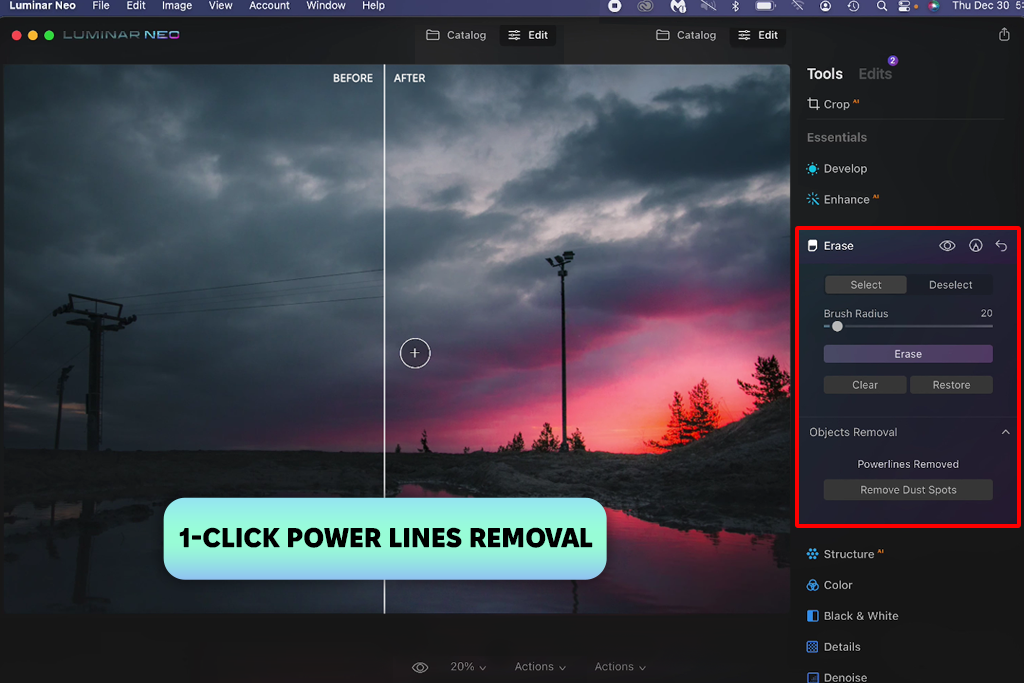
If you edit real estate photos, cityscapes, and images taken in urban environments, you are likely to see several power lines crossing the sky. Though they are an integral part of the scene, removing them from an image can totally change the mood and make photos more eye-pleasing.
With this photo editing software for beginners, you can get rid of power lines in a matter of seconds. The Line Removal AI tool will automatically detect unwanted elements and delete them without distorting the background and other elements of a photo.
This practical feature will appeal to anyone interested in architectural and real estate photography. It allows photographers to remove cables that cross buildings or the sky to make photos less cluttered with distracting elements. It can also save time when you need to clean up several lines from a complex urban scene.
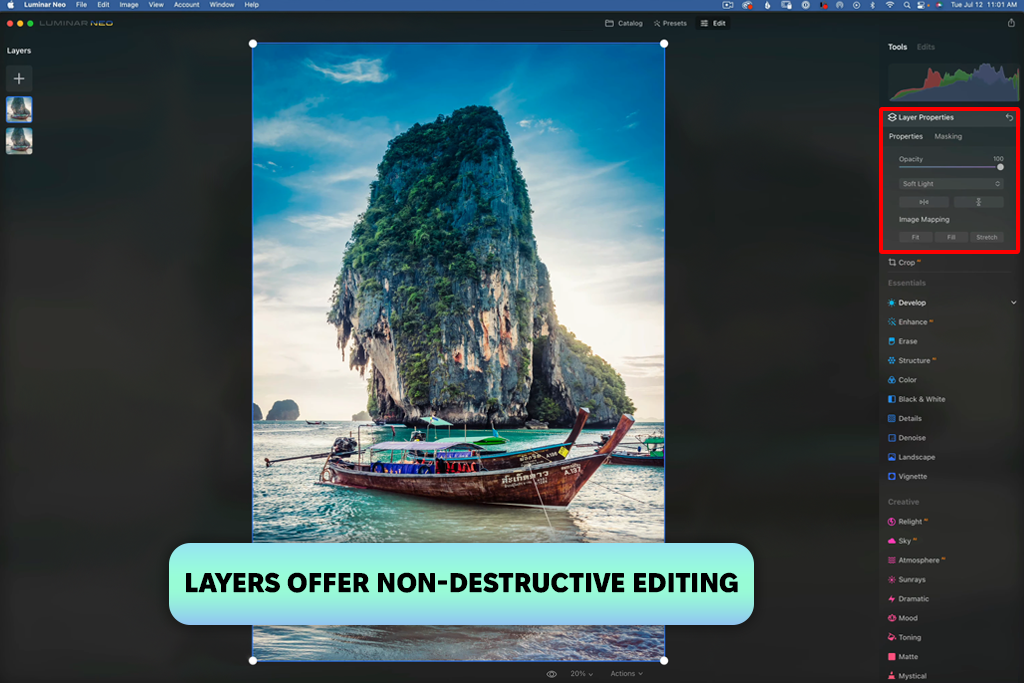
If you are a proponent of creative experiments or are keen on double exposure photography, you will definitely like the possibility of working with layers. It will allow you to add multiple images to the canvas.
Though layers disappeared during the upgrade from Luminar 4 to Luminar AI, the developers decided to return them in Luminar, allowing users to make creative edits.
Layers facilitate editing pictures in Luminar without distorting the source image. You can combine multiple images and visual elements and edit them separately. This is useful for double exposures, photo composites, creative portraits, and other edits that require combining several visual elements.
By adjusting layer opacity and blending, you can ensure that the added image and effect will blend perfectly with the source photo. This makes Luminar more flexible for creative projects, as its workflow is not based only on one set of global adjustments.
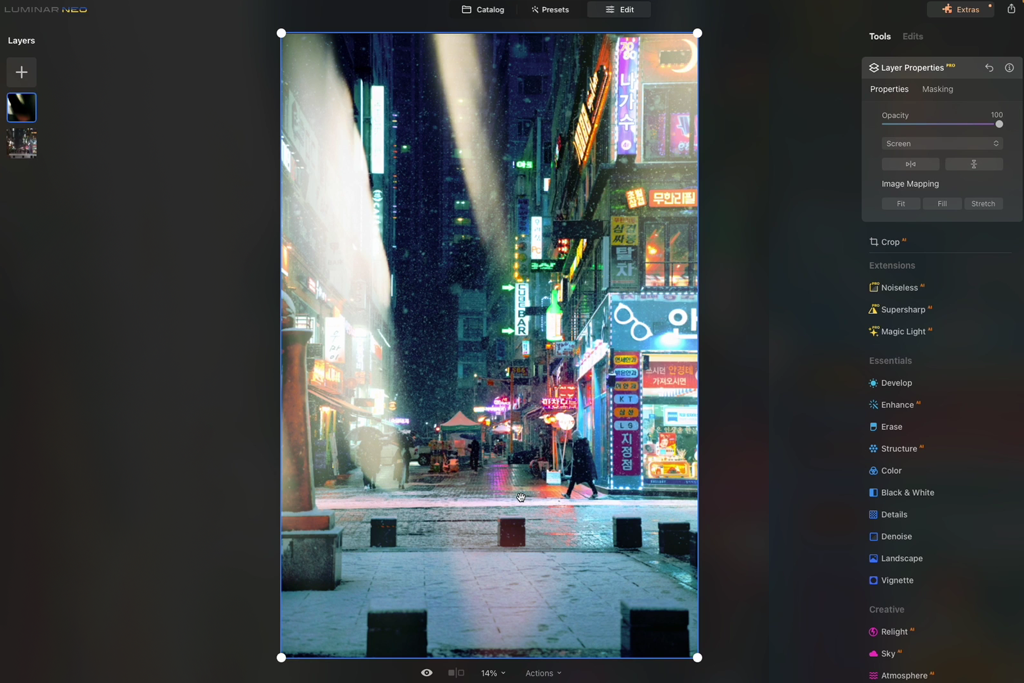
The overlaying feature deserves a special mention in my Luminar review. With its help, you can apply a gorgeous bokeh effect to the foreground without altering the background of a photo. There are also different frames and positions to play with.
You can combine overlays with layers and blend them seamlessly with the rest of the image by adjusting controls. Luminar allows you to add textures, light effects, frames, bokeh, and other decorative elements without impacting the source file. You can also adjust the size, position, and opacity of an overlay to make it fit the composition more naturally.
Overlays could be a practical solution for photographers who capture stylized portraits, social media visuals, photos with double exposures, or artistic compositions.
The program has a lot of photo editing features you expect to see in such software. Here, you can reduce noise, add interesting effects, turn color photos into black and white, apply matte finishing, and more.
Besides, you can use the Mood Tool to raise contrast and add depth to pictures, take advantage of the Scenery Tool if you specialize in landscape and real estate photography, as well as spruce up your shots with sunlight and atmospheric mist.
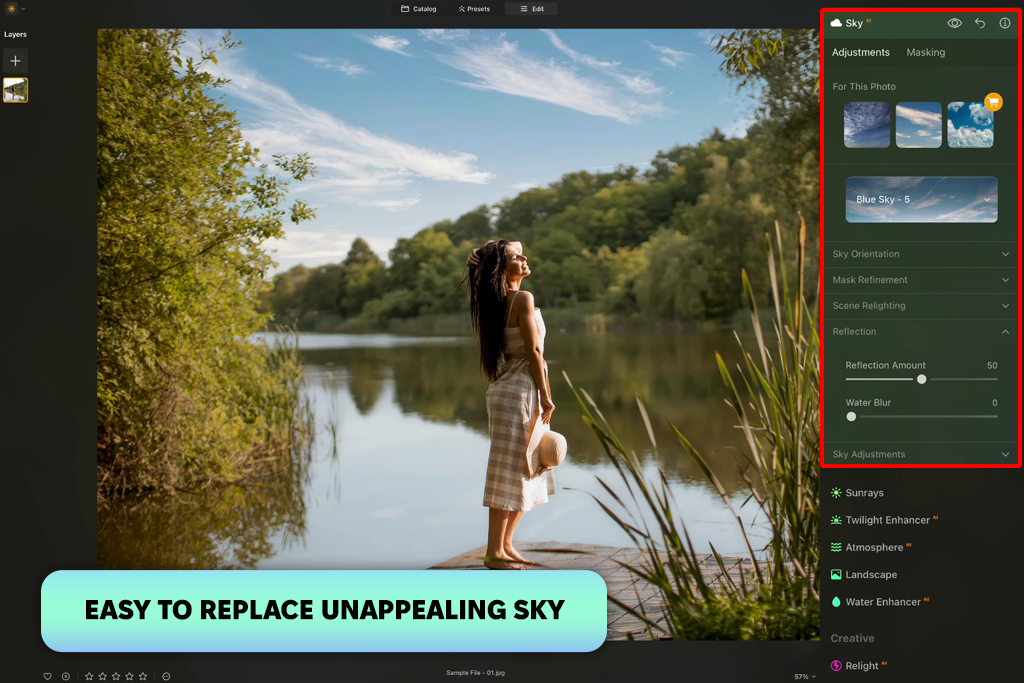
Luminar also still has the popular Sky AI feature, enabling photographers to replace the sky and transform the atmosphere in their photos quickly. If you think that the sky in your photos looks uninteresting or too gloomy, you can easily replace it with a more fitting option in this program.
Besides these creative features, Luminar comes with helpful controls for adjusting exposure, color, contrast, sharpness, noise, and tones, making it similar to other modern photo editors. This allows users to combine quick AI corrections with more traditional editing instead of relying entirely on automated presets.
Luminar offers all the tools for basic tweaks that can satisfy both newbie and experienced users. Regardless of the genre you are engaged in, you can give your pictures a professional look quickly.
Atmosphere 2.0 is one of the innovative upgrades planned for Fall 2026. Instead than coating the scene with a uniform layer of haze, its fog effect is made to react to the lighting and colors already present in a picture.
The effect can be useful for:
The key difference is natural integration: the fog is intended to fit the scene rather than look like an unrelated overlay.
Creating an ambient look without manually mixing several layers is appealing for my editing workflow. Since fog won't enhance every shot, I would maintain a modest effect and make sure the main topic is still visible.
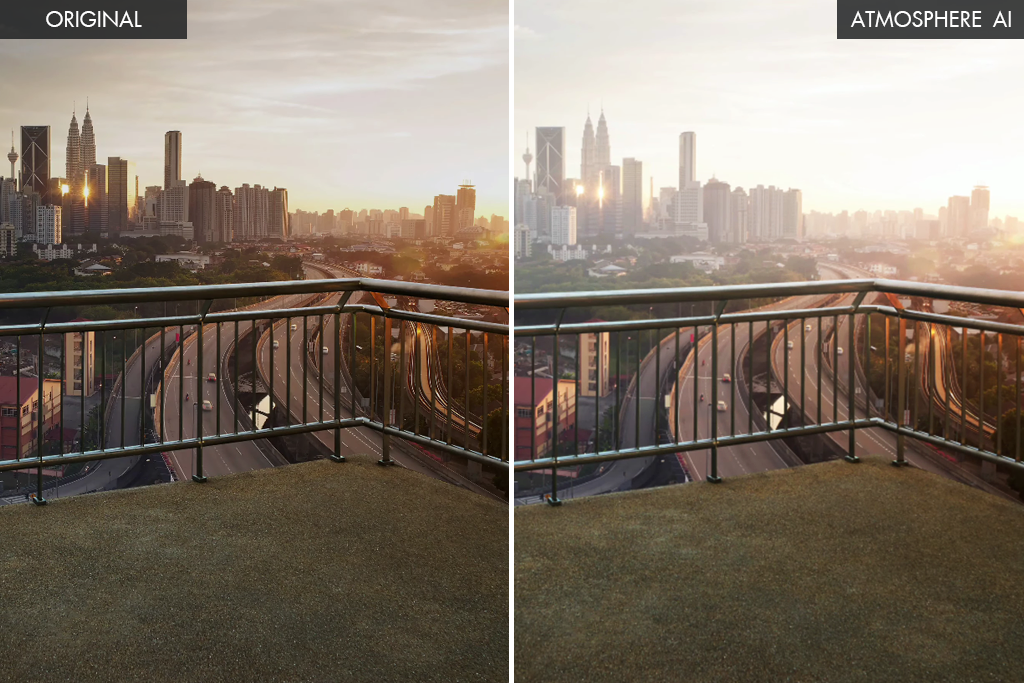
If you consider Luminar pros and cons, you will see that the former outweigh the latter. The recent update comes with new tools, allowing photographers to fully transform the atmosphere in their photos, improve the composition, and apply visual effects. The new tools help users achieve a specific mood or change the visual style of a photo.
Atmosphere 2.0 will come in handy for adding depth and changing the mood in landscape photos, city scenes, and atmospheric portraits. The recently added Fog effect can enhance lighting, tweak colors, and change the depth of the image. It allows photographers to achieve a more natural output and ensure that the effect they apply won’t look like an overlay.
Crop 2.0 allows photographers to experiment with composition. Its Composition Variations facilitate choosing different ways of framing the same photo. This practical option will come in handy in situations when the original composition is poorly balanced or when you need to experiment with several visual styles before cropping your photo.
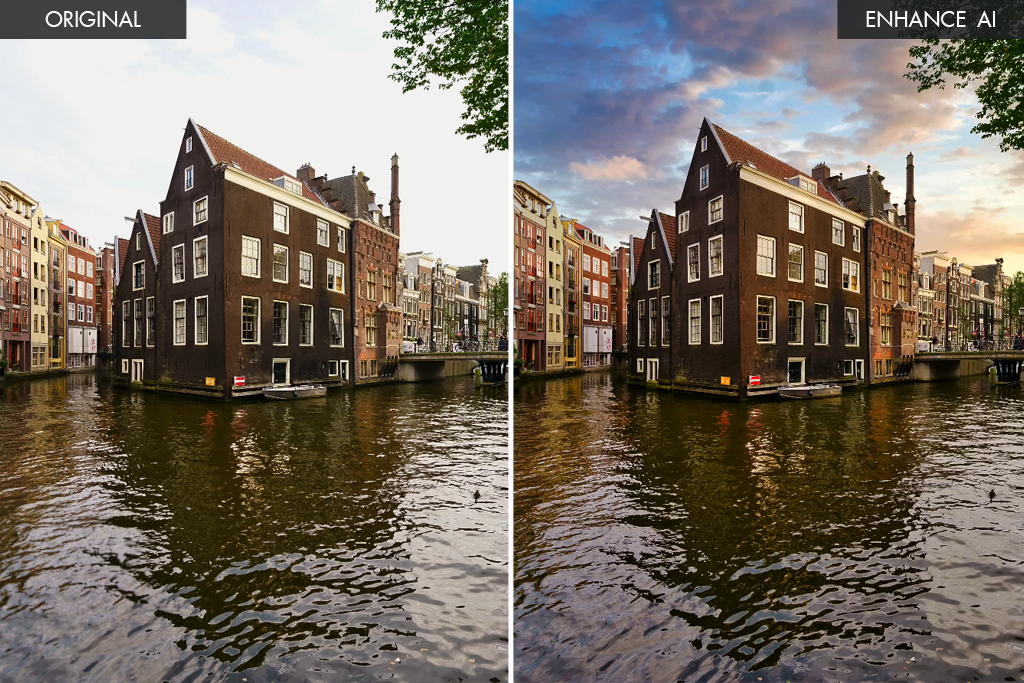
The upgraded Enhance AI feature can be used to give photos a polished look. Instead of simply adjusting clarity and contrast, it analyzes a picture and produces a professional-looking output with natural highlights and colors. It allows photographers to keep the original mood while subtly enhancing a photo.
AI Assistant 2.0 allows photographers to choose the most relevant edits depending on the output they are interested in. It will come in handy when you have a creative idea you want to implement but do not know which Luminar tools to use to achieve the result you need.
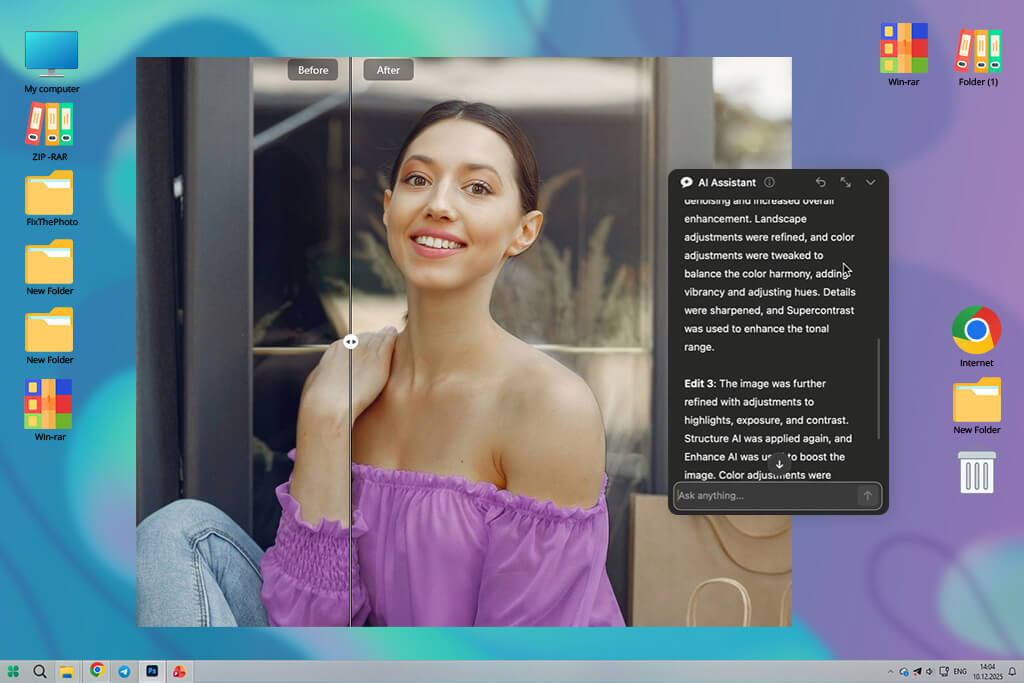
Composition Variations is an announced Crop 2.0 feature that helps photographers explore different ways to frame the same photo.
I like the idea of comparing composition suggestions while keeping control over the final crop. For large prints, I would also check the remaining resolution.

Luminar on Web extends the Luminar ecosystem to the browser, allowing photographers to edit without installing desktop software. Introduced as a beta in Skylum’s partner briefing, it is designed for beginners and photographers who want to work away from their usual computer.
Its announced toolkit includes RAW editing, Light Depth technology, Sky Replacement, Presets, and LUTs. Light Depth enables depth-aware adjustments, while Sky Replacement helps transform the atmosphere of a photo. Presets and LUTs provide starting looks and creative color treatments for landscape, portrait, and everyday editing.
A shared Prime asset library and cross-device synchronization are also covered in the briefing. While optional Prime membership has different terms, eligible plans provide lifetime access on desktop, mobile, and web platforms. The chosen plan determines the availability and accessibility of features.
The ability to use Luminar's creative capabilities through a browser in the event that the desktop version is not available is what appeals to me the most. This summary is not based on a practical Web test, but rather on Skylum's briefing.
The Luminar 1.28.1 update released in September 2026 features several crucial improvements for photographers working with RAW and DNG files. This version of Luminar utilizes the official Adobe DNG SDK, which accounts for better DNG compatibility, color processing, and white-balance improvements.
The update also supports Apple ProRAW photos from iPhone and JPEG XL-compressed DNG files. This makes it easier for photographers to work with RAW files captured by various cameras and devices.
These upgrades make this version even more useful for photographers who store their source images in RAW format and use Luminar for advanced editing instead of performing only basic JPEG adjustments. Improved DNG compatibility also facilitates transferring files between different apps and devices.
Luminar has versions for Windows and macOS computers. The most recent version requires one to use a modern setup with at least 16 GB of RAM and an SSD to achieve a seamless performance when processing RAW files and using AI-driven tools.
| Requirement | Windows | Mac |
|---|---|---|
|
Operating System
|
Windows 10 version 1909 or later, 64-bit
|
macOS 12.0 or later
|
|
Processor
|
Intel Core i5 8th Gen or better; AMD Ryzen 5 or better
|
Intel Core i5 8th Gen or better; Apple M1/M2/M3 or newer
|
|
RAM
|
8 GB minimum; 16+ GB recommended
|
8 GB minimum; 16+ GB recommended
|
|
Graphics
|
OpenGL 3.3 or later compatible graphics card
|
Integrated or discrete graphics supported
|
|
Storage
|
10 GB of free space; SSD recommended
|
10 GB of free space; SSD recommended
|
|
Display
|
1280 × 768 or higher
|
1280 × 768 or higher
|

Luminar has a flexible pricing system, which allows users to choose the subscription plan that suits them best. New clients can choose between such plans as Desktop Only, All Platforms, and Max, while current Luminar subscribers can pay extra for Luminar Prime to benefit from future upgrades and additional creative assets.
The Desktop Only plan costs $129/€129. It is suitable for photographers who need to access only a desktop version of Luminar. It allows them to access the main editing tools and recent updates, including access to new AI and creative tools.
The All Platforms plan costs $159/€159 and allows users to access Luminar across Desktop, Mobile, and Web devices. This solution is suitable for photographers who want to switch between multiple devices when using Luminar.
The Max plan costs $199/€199 and allows users to access the tools covered by the All Platforms. Besides, users can get access to the Luminar Prime subscription for one year, use a collection of 3,500+ creative assets, explore more than 50 hours of photography courses, and utilize AI-driven tools. It makes it the best package for users who want to access Luminar and a variety of creative resources.
Those who have paid for a perpetual license can pay extra to purchase Luminar Prime. This optional membership plan allows users to access future upgrades until the period of membership expires. Many users ask: “Is Luminar worth it?” The short answer is “yes.”
The tools unlocked through the Prime plan remain available to users even after the period of subscription ends. Those who pay for the subscription can also access the creative Library while their membership is still valid.
The standard version of the Prime subscription costs $69/€69 per year. In Europe, the prices range depending on the country. Users may also be able to access this subscription plan at a discounted rate during promotional campaigns.
Summing up, the new pricing model introduced by Luminar allows users to choose a basic version for desktop devices or pay extra to enjoy cross-device access and use additional creative assets. This pricing system allows users to choose the right subscription plan depending on how they are going to use the software.

If you want to spruce up your photos with interesting effects, be sure to download and use these overlays. Sometimes it is impossible to bring your ideas to life during the shoot, due to bad weather, lighting issues, etc. Fortunately, you have a second chance to realize your creative vision using these top-quality tools. They are user-friendly and can give your photos a totally new look.
Luminar has both a perpetual license and a subscription package. You can access the Desktop Only and All Platforms plans after making a one-time purchase. It will allow you to use the apps covered by these plans indefinitely. The Max plan is also available through a one-time purchase, but it also includes one year of access to Luminar Prime. The subscription to Prime will be renewed automatically when the trial period expires. It will allow you to access all the tools covered by this plan.
Yes. There are different desktop versions of Luminar for Windows and macOS. Users can activate the Desktop Only license on two computers. Depending on your subscription plan, you can also access Luminar Mobile and Luminar Web to work on your projects from different devices.
Yes. Luminar allows users to work with RAW images captured with all sorts of cameras. It’s perfect for photographers who need to develop RAW pictures instead of working with only JPEG files. Besides, it supports formats such as JPEG, TIFF, PNG, and PSD.
Yes. Luminar comes with powerful AI features. Depending on their subscription, users can access AI Assistant, GenErase, GenSwap, GenExpand, Restoration, and other AI-based editing tools. They allow users to automate a variety of editing tasks, such as deleting unwanted objects, generating or replacing elements, restoring pictures, and performing quick adjustments.
Yes, if your plan includes access to Luminar Mobile. The All Platforms and Max plans include the mobile version as well. It allows users to edit their projects from multiple devices. Users can also access Luminar Web as part of the larger Luminar ecosystem.
Luminar Prime is a type of membership available to those who have already paid for a perpetual license and want to access recently released tools, AI features, and the Creative Library. Those who have paid for the Prime subscription will still be able to access the tools released while it’s still active, even when the subscription expires. However, they will lose access to the Creative Library and specific AI tools when the membership period ends.
Yes. Luminar was created for those who need to perform regular editing tasks without any advanced technical skills. It comes with a set of AI-driven adjustment features and guided tools that can expedite an editing workflow. Besides, it comes with a set of manual controls that will come in handy for photographers who want to achieve higher editing precision. Luminar is perfect for novices and experienced photographers who want to speed up their workflow. This makes Luminar suitable for both beginners and more experienced photographers who want a faster workflow.