I started exploring productivity apps when my workload at FixThePhoto became harder to manage. Between researching articles, editing, handling team tasks, meeting deadlines, and keeping track of small details, it was easy to lose focus. I wasn’t looking for another complicated setup. I simply wanted a tool that would help me keep everything in order and get my work done without jumping between different apps all day.
I focused on a few features that could make my daily work easier, including task lists, reminders, shared projects, calendars, notes, and a central place for files and key information. Working with a team also meant I needed easy ways to assign tasks, add comments, and check everyone’s progress. A reliable mobile app was important too, since I’m not always at my computer.
I tested each productivity app with my real FixThePhoto workflow instead of simply browsing its features. I used the apps for article planning, deadline tracking, research, recurring tasks, and notes from team discussions. I also considered how easy they were to set up, how naturally the interface worked, and whether the app actually made my routine more efficient or just added another task to my list.
After testing several options, I found that there is no single productivity app that works best for everyone. Some are ideal for basic to-do lists, while others are better suited to larger projects and team collaboration. For my FixThePhoto workflow, I preferred apps that were simple enough for everyday use but still offered enough tools to keep my tasks, deadlines, and projects organized.
My colleagues from the FixThePhoto team shared the tools they use in their daily work, so I decided to add these options to my testing list as well. Since the list included more than 30+ productivity apps, my colleagues also helped test them using real FixThePhoto tasks. This gave us a more practical and balanced basis for evaluating each app.
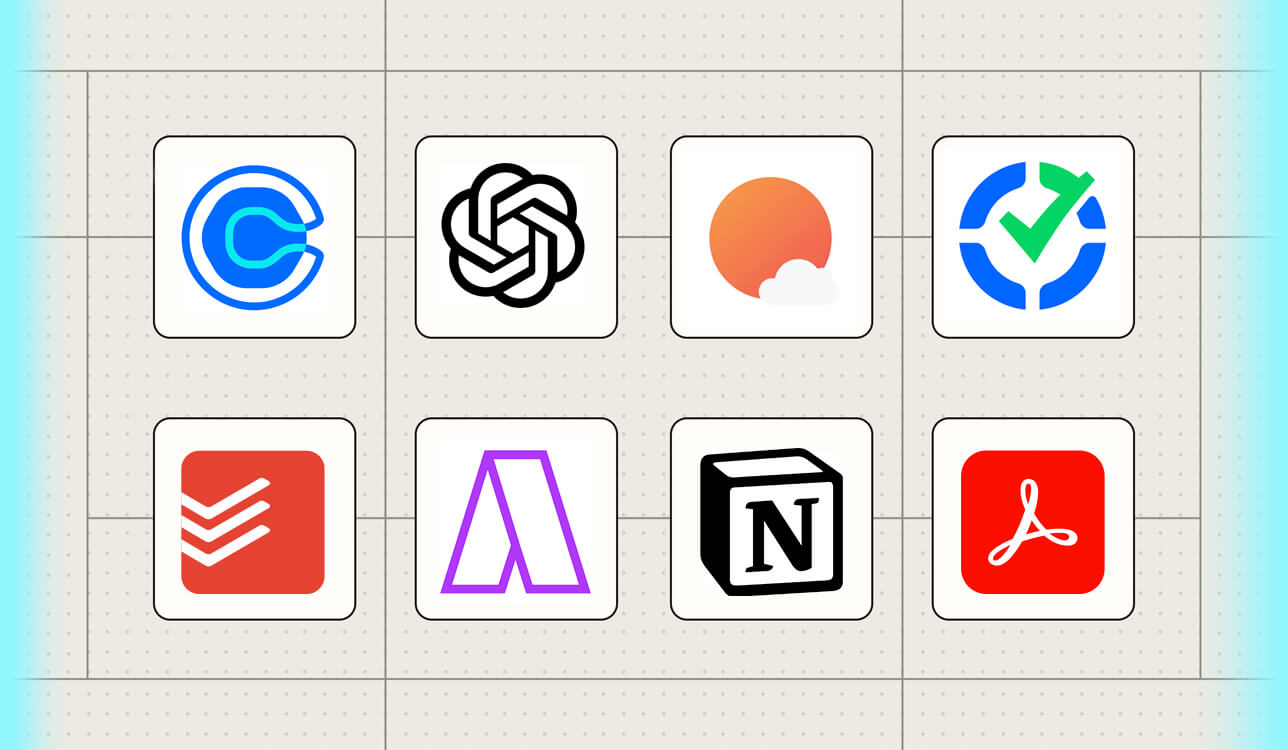
| App | Category | Standout Feature | AI Features | Pricing |
|---|---|---|---|---|

Adobe Acrobat
|
PDF & document management
|
Advanced PDF editing, signing, and document workflows
|
✔️
|
Free version; paid plans from ~$14.99/month
|

Todoist
|
To-do list & task management
|
Simple interface with powerful task organization
|
✔️
|
Free version; paid plans from ~$5/month
|

Notion
|
Workspace & project management
|
Flexible databases, templates, and team collaboration
|
✔️
|
Free version; paid plans from ~$10/user/month
|

Akiflow
|
Calendar & task planner
|
Combines tasks and calendars with time blocking
|
❌
|
Paid plans from ~$15/month
|

Sunsama
|
Daily planner
|
Guided daily planning and time management approach
|
❌
|
Paid plans from ~$20/month
|

Calendly
|
Meeting scheduler
|
Automated booking and calendar integrations
|
✔️
|
Free version; paid plans from ~$10/month
|

ChatGPT
|
AI productivity assistant
|
AI-powered help for writing, research, brainstorming, and problem-solving
|
✔️
|
Free version; Plus from ~$20/month
|

Time Doctor
|
Time tracking & employee monitoring
|
Detailed productivity reports and work tracking
|
✔️
|
Paid plans from ~$7/user/month
|

Apple Notes
|
Notes & personal organization
|
Fast note-taking with Apple ecosystem integration
|
❌
|
Free with Apple devices
|

Toggl Track
|
Time tracking
|
Simple time tracking with detailed reports
|
❌
|
Free version; paid plans from ~$10/user/month
|

Teamdeck for Mobile
|
Team resource management
|
Mobile scheduling, timesheets, and team availability tracking
|
❌
|
Paid plans from ~$3.99/user/month
|
Plan Your Day Before You Start Working
Starting the day with a simple plan makes it easier to focus and avoid spending time figuring out what to do next. Apps like Todoist or Sunsama can help you set clear priorities without overloading your schedule. I found it more practical to focus on 3-5 key tasks each day while keeping some free time for unexpected work.
Combine Task Management With Time Blocking
A basic to-do list tells you what needs to be done, but it doesn’t always help you decide when to do it. Tools like Akiflow let you add tasks to your calendar and set aside specific time for focused work. For example, you might handle writing in the morning, schedule meetings for the afternoon, and leave smaller tasks for later. This makes it easier to stay focused instead of jumping between different types of work.
Use AI to Reduce Repetitive Work
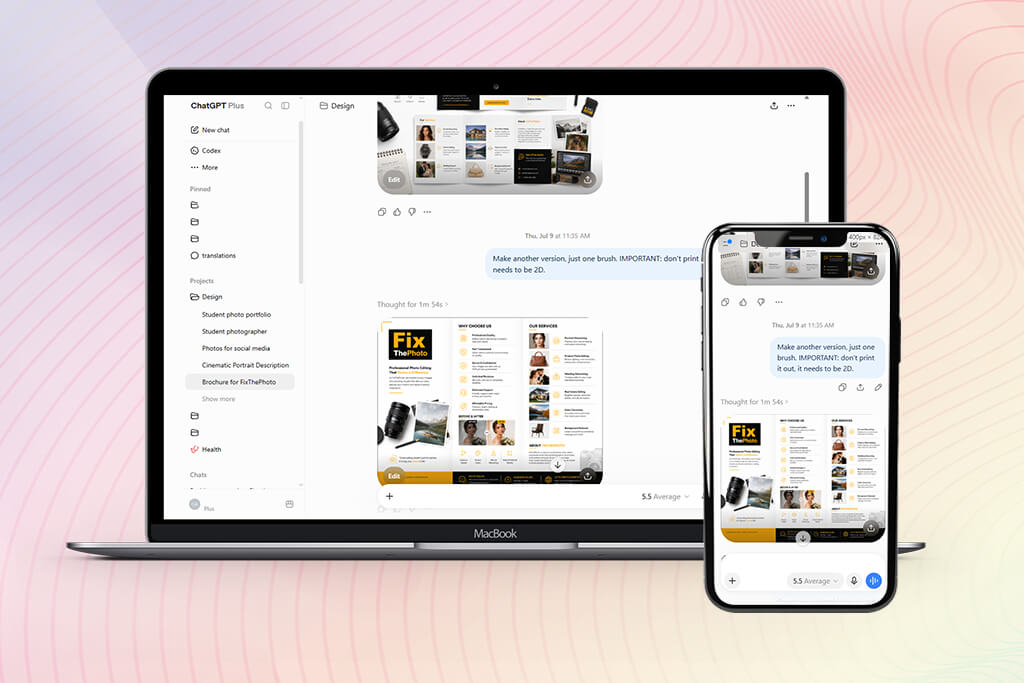
AI productivity app can take care of time-consuming tasks and make everyday work easier. ChatGPT is useful for brainstorming, summarizing information, organizing notes, and preparing first drafts. Notion AI can also turn rough notes into organized pages and summaries. I found it most useful to treat AI as an extra helper for research and preparation rather than letting it take over the entire workflow.
Track Where Your Time Actually Goes
Small tasks can take up more time than you realize. Using tools like Toggl Track or Time Doctor for a few weeks can help you see how you actually spend your workday. You might find that emails, meetings, or repetitive tasks take up more time than expected, making it easier to adjust your schedule and focus on what matters most.
Keep All Important Information in One Place
Constantly looking for files, notes, and documents can quickly interrupt your focus. Notion works well for organizing project information, while Apple Notes is useful for quick ideas and reminders. For PDFs and important documents, Adobe Acrobat keeps everything easier to manage. Having a clear place for each type of information can make your daily workflow much more organized.
Automate Scheduling and Team Communication
Routine admin work can quietly take up a large part of the day. Calendly takes care of booking meetings, while Teamdeck for Mobile makes it easier to plan team schedules, check availability, and balance workloads. This saves you from endless messages about suitable meeting times and gives you more time for actual work.
Review Your Progress and Improve Your System
Productivity isn’t just about getting more done in less time. It’s also about figuring out what actually helps you work better. At the end of each week, look back at what you finished, what is still pending, and how you spent your time using tools like Todoist, Toggl Track, or Time Doctor. Then make small changes to your routine, cut out unnecessary steps, and keep the tools that truly make your work easier.
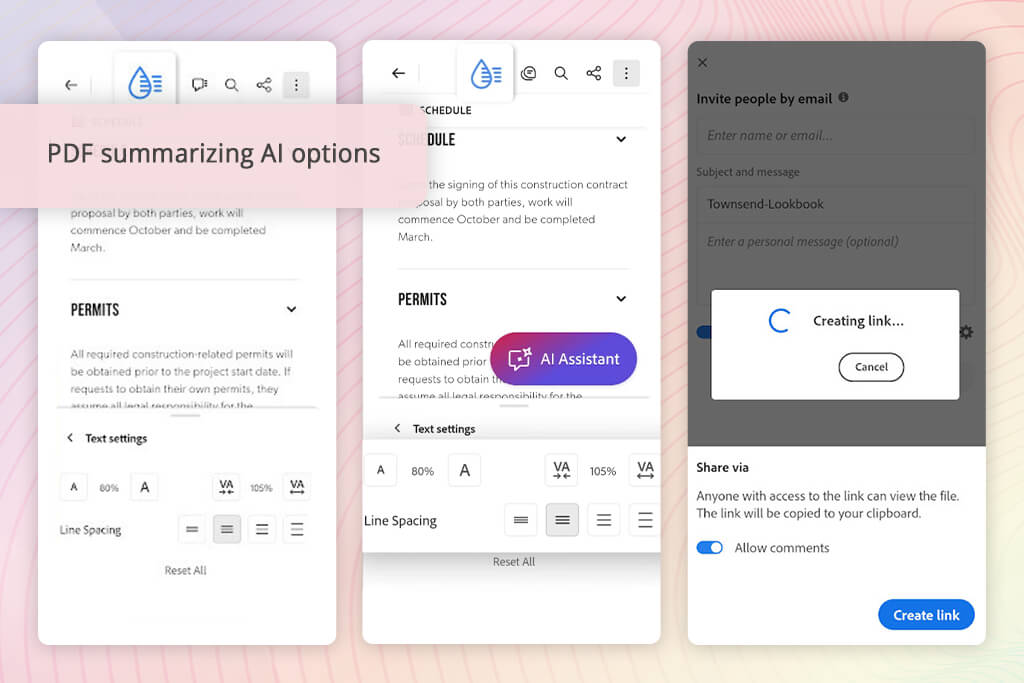
I decided to test Adobe Acrobat to see how well it handles the documents I deal with during my regular creative work.
At FixThePhoto, I regularly work with briefs, contracts, content plans, and reference files, so simply keeping everything in folders wasn’t always convenient. I wanted a tool that would let me edit, check, and share documents without spending extra time on basic tasks. Acrobat caught my attention because it is designed specifically for working with PDFs.
For the test, I used real work documents rather than sample files. I tried Edit PDF, Organize Pages, Combine Files, Fill & Sign, and Adobe Scan to see how they handled everyday tasks. I also tested how easily I could convert scanned papers into editable files, rearrange pages, add comments, and get documents ready to share with the team.
I also tested the AI Assistant to see how well it handled longer PDFs. It could quickly summarize documents and help find specific information without going through every page manually. Compared with a basic PDF viewer, this free Adobe software felt more like an all-in-one tool for working with documents.
“I use it regularly for PDF work. It makes editing, signing, and organizing documents much simpler, although you need the paid version to access some of the more advanced features.”

What I liked most was how much easier it made everyday document work. I didn’t have to use separate apps for editing, signing, and converting files because everything was available in one place. The collaboration tools were also helpful when working with teammates, as comments and edits stayed attached to the document. Overall, it took a lot of the hassle out of routine paperwork.
After working with this personal productivity app for a while, I could see why so many professionals rely on it. It doesn’t try to replace task managers or planning tools. Instead, it focuses on making PDF work easier and faster. If you handle PDFs on a regular basis, Acrobat can cut out many of the extra steps that tend to slow you down.
Pro tools, student price.
Over 75% OFF. Every Adobe app.
Every big idea starts as a rough one. Creative Cloud Pro gives you the full set of tools to take it from a sketch in your notes app to something you're proud to put your name on — Photoshop, Illustrator, Premiere Pro, InDesign, and the generative AI features built right into them.
Claim your student offer → Offer ends September 2.
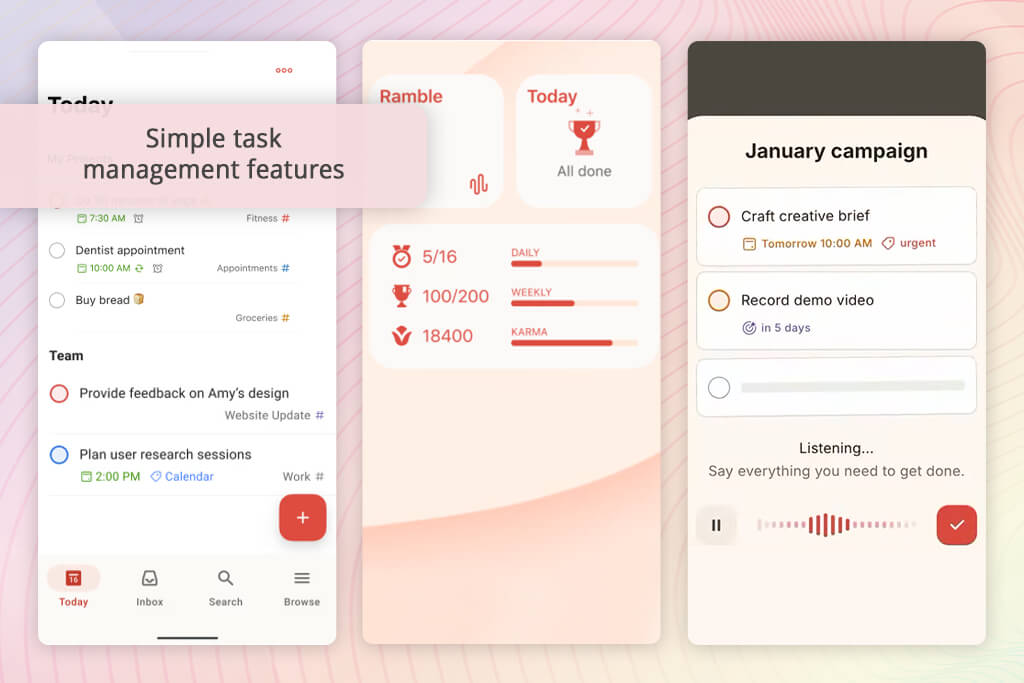
I tried Todoist to see if a simple planner could make busy workdays easier. Many productivity apps have too many extra features, so I wanted something more basic. I needed a tool where I could quickly add a task, check my priorities, and get back to work without a lot of setup.
At FixThePhoto, I deal with many small deadlines and regular tasks, so I wanted a daily planner app that would help me keep track of everything without making my schedule feel too complicated.
I tested different ways to organize my work using Projects, Labels, Filters, Priority Levels, and Recurring Tasks. I set up separate lists for content planning, editing, research, and personal reminders to see how easily Todoist could fit into my usual routine.
The Karma feature was another useful addition, as it tracked progress and encouraged consistency. Both quick daily tasks and larger projects were tested to see where Todoist worked best.
The biggest advantage was how simple everything felt. Tasks could be added in just a few seconds, and natural language made it quicker to set due dates and reminders. There was no need to open several menus just to schedule a recurring task or enter a deadline. Even with dozens of items, the interface stayed neat and easy to follow.
Todoist turned out to be a good fit for anyone who wants to stay organized without dealing with a complicated system. It doesn’t try to do everything, but it handles task management really well. In my daily workflow, it became a simple tool that saved time and kept things organized without getting in the way.
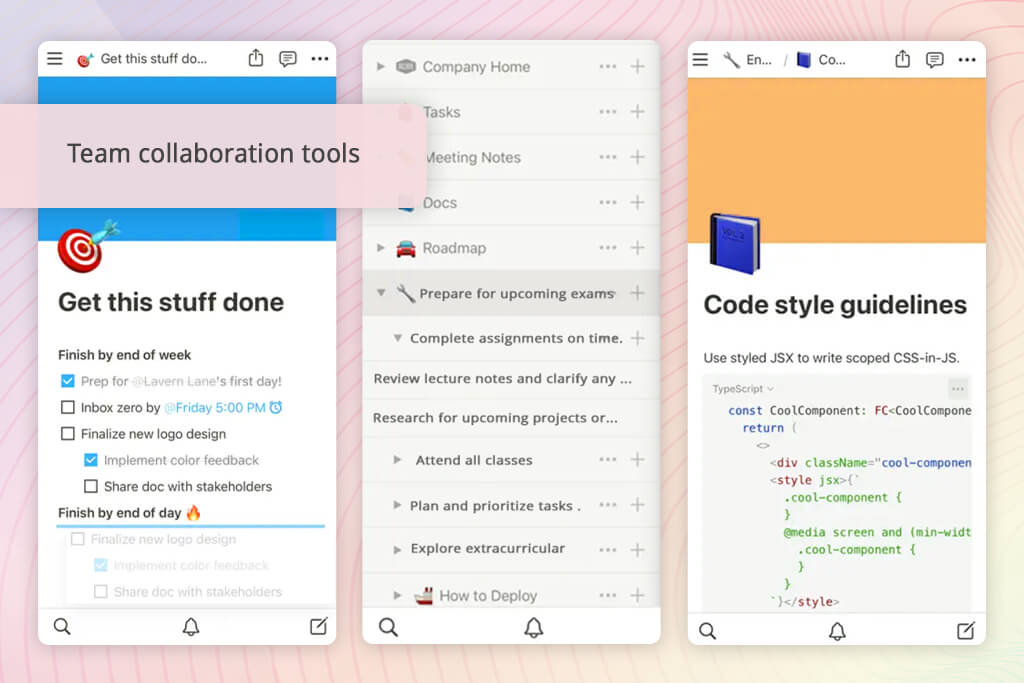
I tested Notion after hearing it could bring several work tools together. The main question was whether one task management channel for photographers could handle notes, planning, databases, and teamwork without feeling too complicated. With my FixThePhoto work covering research, content, and creative ideas, I wanted to see if Notion could keep everything in one place.
Several pages were set up with Databases, Templates, Kanban Boards, Calendar Views, and Notion AI. I used them to make content calendars, idea lists, research collections, and simple project dashboards. What stood out was the freedom to arrange everything based on my own needs instead of following a preset layout. Compared with basic note-taking apps, Notion felt much more flexible.
“I like having my notes, projects, and ideas together in one place. Setting this productivity app up took some time, but now I use it as part of my daily routine.”
The hardest part was getting used to all the available options. In the beginning, it took some time to find a setup that worked for me. Once I made my own templates, though, everyday tasks became much easier. Linking databases was also useful because I could keep related ideas, tasks, and resources connected instead of having them in separate places.
After testing Notion, I understood why it is popular with teams handling larger projects. It suits people who need more than a basic task list and want to shape the workspace around their needs. For creative teams and content work, it can bring ideas, tasks, and resources together in one flexible space.
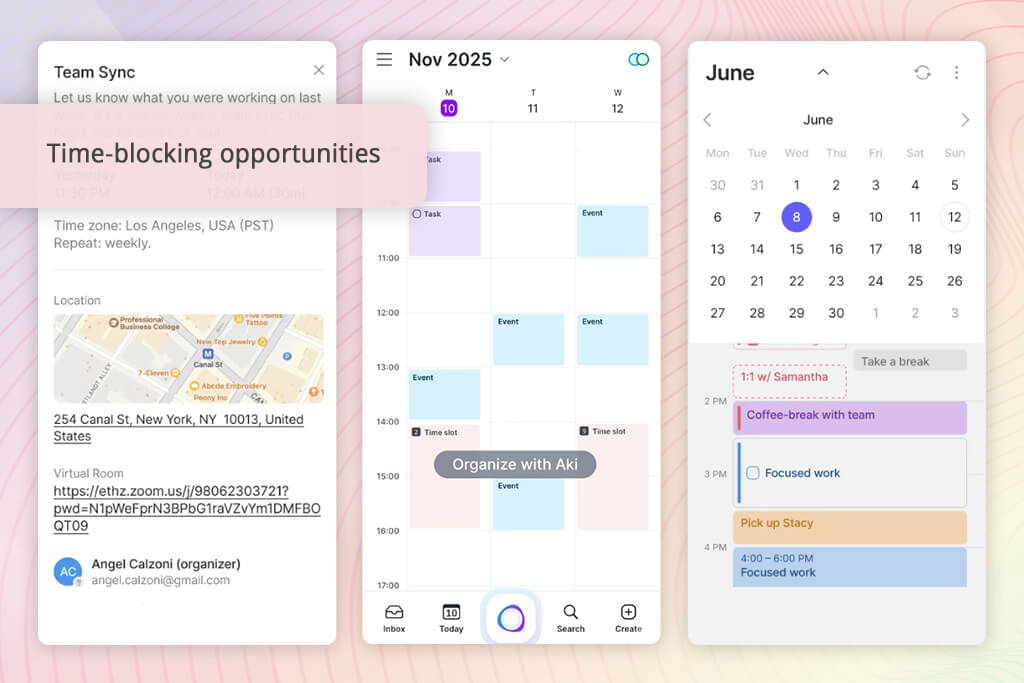
I tested Akiflow to see whether it could bring my scattered to-dos together and help me build a practical plan for the day, similar to the free task management software.
Regular to-do lists were useful for recording everything, but they didn’t help much with figuring out how much time each task would take. I wanted one place where I could see my schedule, appointments, and work together. Akiflow stood out because it focuses more on planning the day around available time than simply keeping a list of tasks.
For the test, I connected my calendars and tried features such as Time Blocking, Task Inbox, Daily Planning, Calendar Integration, and Keyboard Shortcuts. Tasks could be placed straight into the calendar to see whether the resulting schedule felt realistic. It was also helpful to bring tasks from different sources into one place, while plans could be moved around quickly when something more important came up.
What worked best for me was seeing each task as a set amount of time instead of just another item on a list. I could choose when to work on something and build a schedule that felt possible to finish. The clean interface also made it easier to stay focused without jumping between apps. This was especially helpful on busy days with meetings, writing, and tight deadlines.
After using this app for productivity, I’d recommend it to people who have trouble fitting everything into their day, rather than simply keeping track of tasks. It may take some time to get used to, but the planning tools give you a clear way to organize your day. If you have several responsibilities to manage, Akiflow can make a busy schedule feel much more manageable.
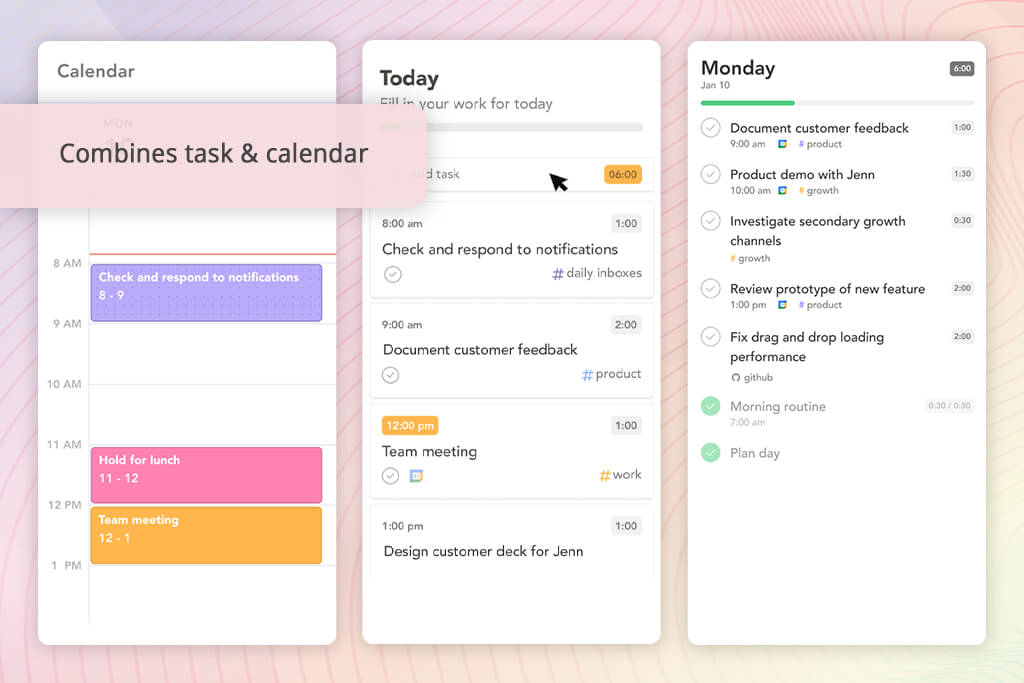
I decided to test Sunsama because its approach to productivity felt more balanced. Rather than focusing on long lists and constant task completion, it encourages you to plan a realistic day and avoid taking on too much. I wanted to see if this approach would fit a busy creative workflow. The idea made sense to me because staying productive is not always about doing more, but about planning your time better.
Testing this free schedule maker included features such as Daily Planning Ritual, Task Importing, Calendar Management, Timeboxing, and Daily Shutdown Ritual. Tasks from different projects were added, given time estimates, and placed on the calendar. The process encouraged more thought about priorities before starting work. Instead of feeling like a basic to-do list, Sunsama worked more like a tool for planning the entire workday.
“I like how it helps me plan a manageable day instead of filling my list with too many tasks. The main drawback is the price, which feels a little high.”
The focus on balance was what stood out most. Sunsama made it easier to see when my schedule was too full and adjust it before the day became overwhelming. The clean interface kept things simple without a lot of extra features getting in the way. Another useful part was being able to bring tasks from other apps into one daily plan instead of entering everything again.
After testing Sunsama, it felt like a good productivity app for work for busy people who want to keep their days under control. It is not designed for handling huge lists of tasks, but it works well when you want to decide what deserves your attention each day. For creative work, it provides enough structure to stay on track without making the schedule feel too full.
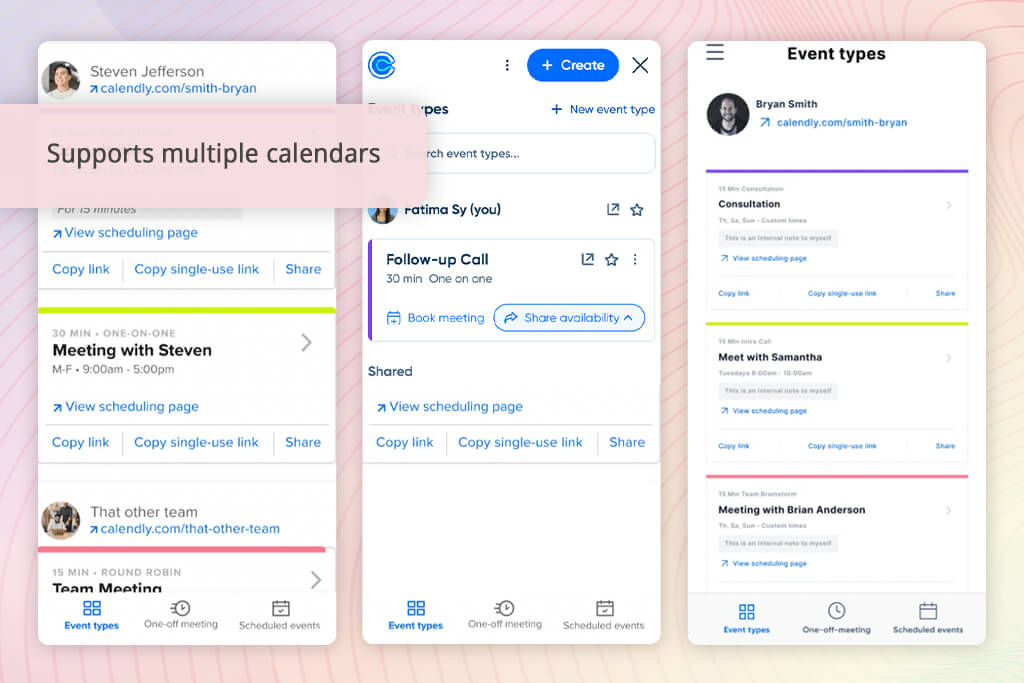
Calendly was worth testing because arranging meetings had started taking more time than expected. At FixThePhoto, I often have team discussions, project updates, and occasional client calls, so finding a suitable time could lead to a long email exchange. I wanted a tool that could make the whole process quicker and easier.
The main thing I wanted to check was whether automatic booking could make communication easier. I wanted to see how much time I could save by letting people choose a meeting time on their own.
To see how Calendly works in practice, I first connected my calendar and set my available hours. Then I created a few meeting types and tested Scheduling Links, Availability Settings, Calendar Sync, Meeting Polls, and Automated Reminders. The main thing I checked was how easily someone could find a free slot and book a meeting without any extra messages.
Different meeting lengths and breaks between calls were also tested to see how well this productivity tool handled different schedules. Setting up this calendar app was quick and straightforward, even on the first try.
The main advantage was how much easier it made arranging calls. Rather than comparing calendars or sending multiple messages, I could share a booking link and let the other person pick a suitable time. Automatic reminders also helped prevent missed meetings. This seemed especially useful for people who often work with clients or remote teams.
After trying Calendly, it was easy to see why so many people use it for scheduling. It doesn’t help with project management or creative work, but it does one thing very well: arranging meetings. For anyone who spends a lot of time finding suitable times for calls, it can make the process much quicker and easier.
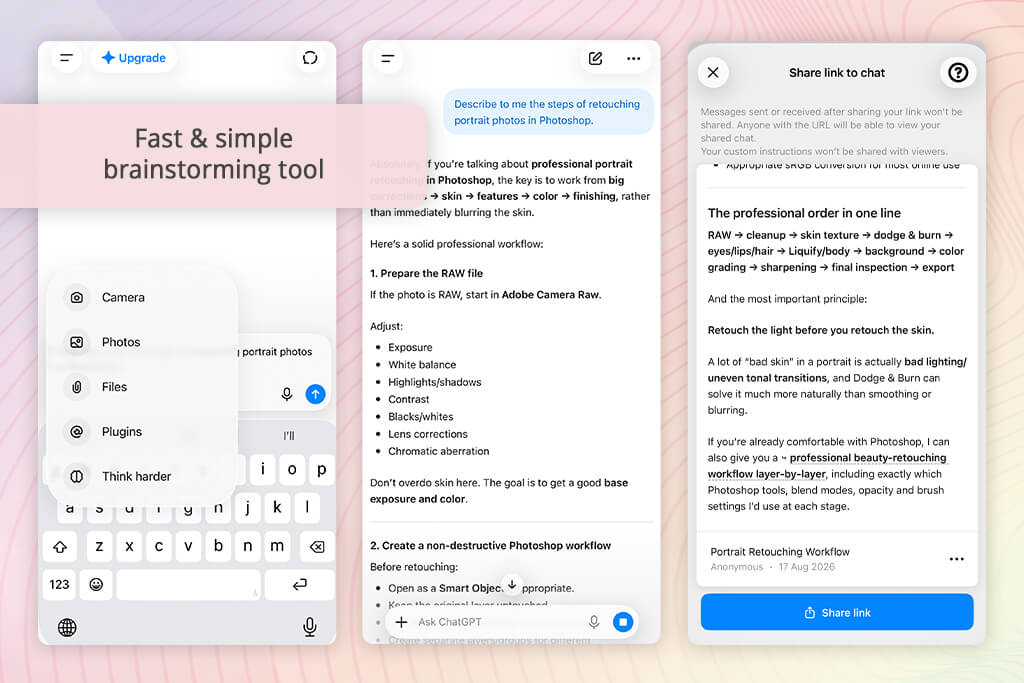
I tested ChatGPT to see how useful it could be during a normal workday. Rather than replacing productivity apps I already use, I wanted to see if it could make things like research, writing, planning, and routine tasks a little easier. I was also curious to see where it could actually save time when working on creative projects.
During the review, I tried features such as Chat History, Custom Instructions, File Uploads, Advanced Data Analysis, and Image Generation. ChatGPT helped with summarizing documents, coming up with content ideas, polishing drafts, organizing notes, and explaining difficult topics. I also gave it both quick requests and more detailed tasks. The clearer the instructions, the better the results, but I was impressed by how many different types of work it could handle.
“I use it every day for brainstorming, writing, and quick problem-solving. It saves me a lot of time, but I still check important information before relying on it.”
What stood out most about this AI app for iOS and Android was how many different tasks it could handle. I could use it for brainstorming, sorting through information, or polishing content without jumping between several apps. Custom Instructions were especially useful because they helped make the responses fit my usual way of working. It was useful whenever I needed a quick idea, some help, or a different perspective.
After using ChatGPT, I found it works best as an extra tool rather than a full productivity app. It cannot replace a task manager, calendar, or project tool, but it can make many daily tasks quicker. For creative work, it is especially useful for coming up with ideas, working through problems, and getting a fresh perspective.
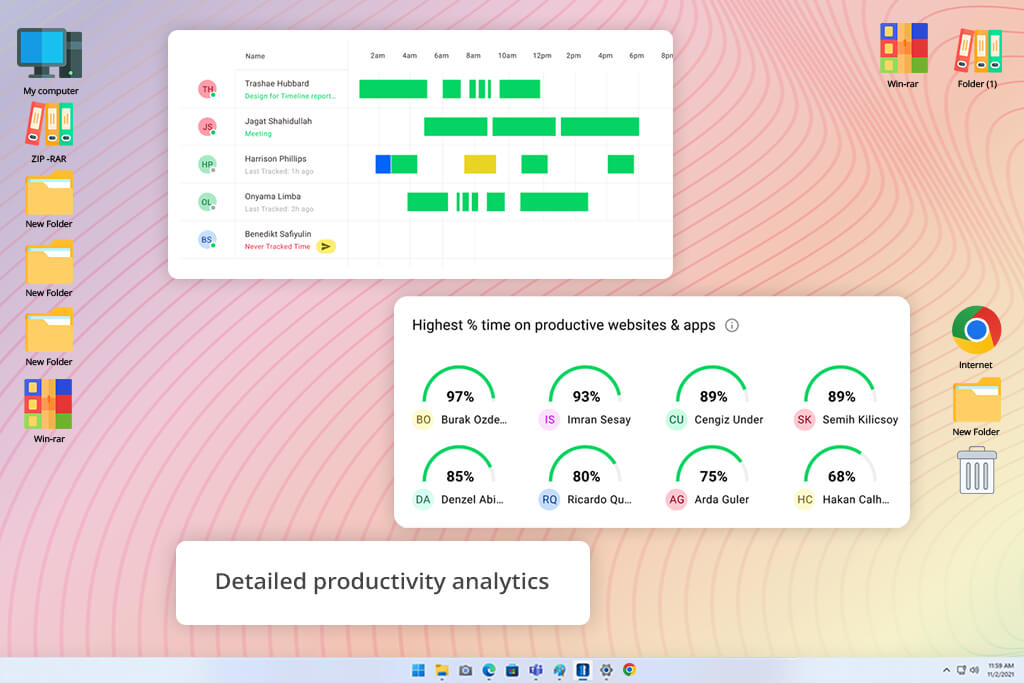
I started testing Time Doctor to see how useful time and productivity tracking could be for remote teams. At FixThePhoto, different people often handle different tasks and work on their own schedules, so having a clear picture of how project time is spent can make planning and coordination easier.
The main question was whether time tracking could help improve work habits without getting in the way. I wanted to see how well this productivity app for teams worked for keeping remote tasks and schedules organized.
I used Time Tracking, Work Schedules, Screenshots, Activity Levels, Task Management, and Reports to see how the app handled daily work. It was useful to check how long different tasks took and how that information appeared in the reports. The project tools also gave a clearer picture of where working hours were going, while the visual reports made daily work patterns easier to spot.
The most useful part was seeing how much time different tasks actually took. Some tasks looked simple but took much longer than expected, and the reports made that clear. Still, I think time tracking works best when everyone understands why it is being used. The goal should be to improve the workflow, not make people feel watched.
After using Time Doctor, I’d recommend it mostly for teams that need to keep track of working hours. It may be more than an individual user needs, but it can be useful for remote teams working on several projects. When used well, it can help managers understand workloads and plan work more easily.
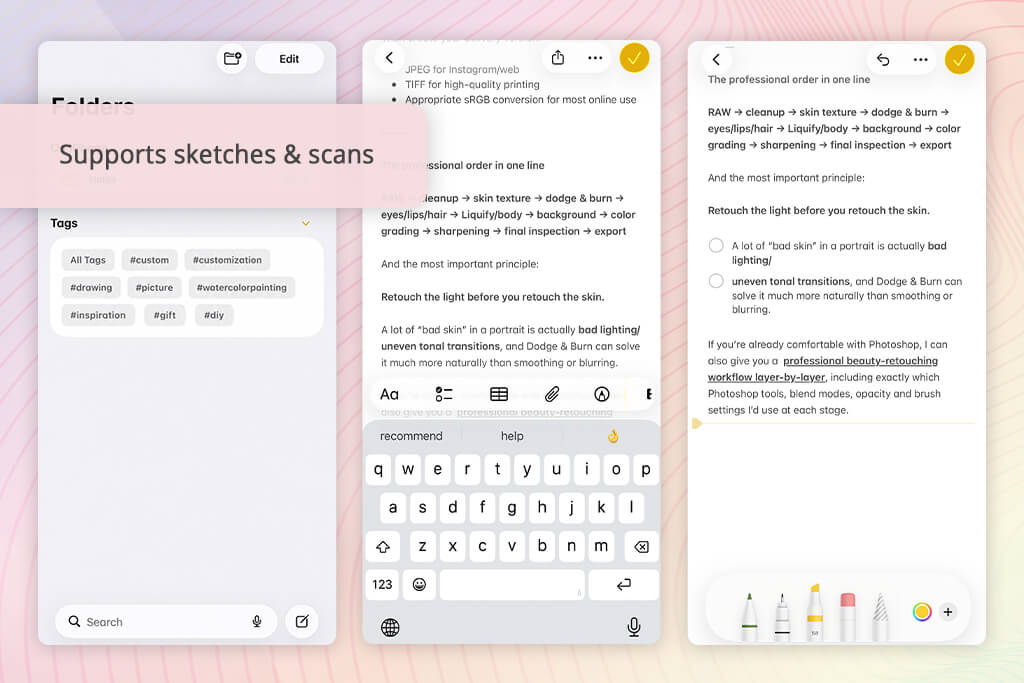
Apple Notes was worth trying because I wanted to see how far a basic built-in app could go compared with larger productivity platforms. Instead of adding another service, I used what was already available on my device for ideas, reminders, research, and useful information. The main question was whether keeping things simple could actually make everyday work easier.
For this note taking app, I tried Quick Notes, Smart Folders, Tags, Scan Documents, Checklists, and Collaboration. I turned paper files into digital copies, grouped information, marked items with labels, and sent notes to others to see how easily everything could be managed in one place.
Finding specific details was easy, even in lengthy pages and scanned documents. Another thing I liked about this free productivity app was how quickly everything appeared across my Apple devices.
“It’s great for saving ideas, lists, and quick thoughts on the go. The simple design works well, although I would like more ways to sort and manage information.”
The biggest advantage was how quickly I could jot something down. There was no need to open a complex workspace or decide where the note should go first. It worked well for sudden ideas, meeting notes, and short lists. For everyday use, this simple approach was a big plus.
Apple Notes showed that a productivity app does not need a lot of extra features to be useful. It may not replace a full project management tool, but it works very well for personal use. For anyone who needs a simple place to keep notes, lists, and ideas, it is still a solid choice.
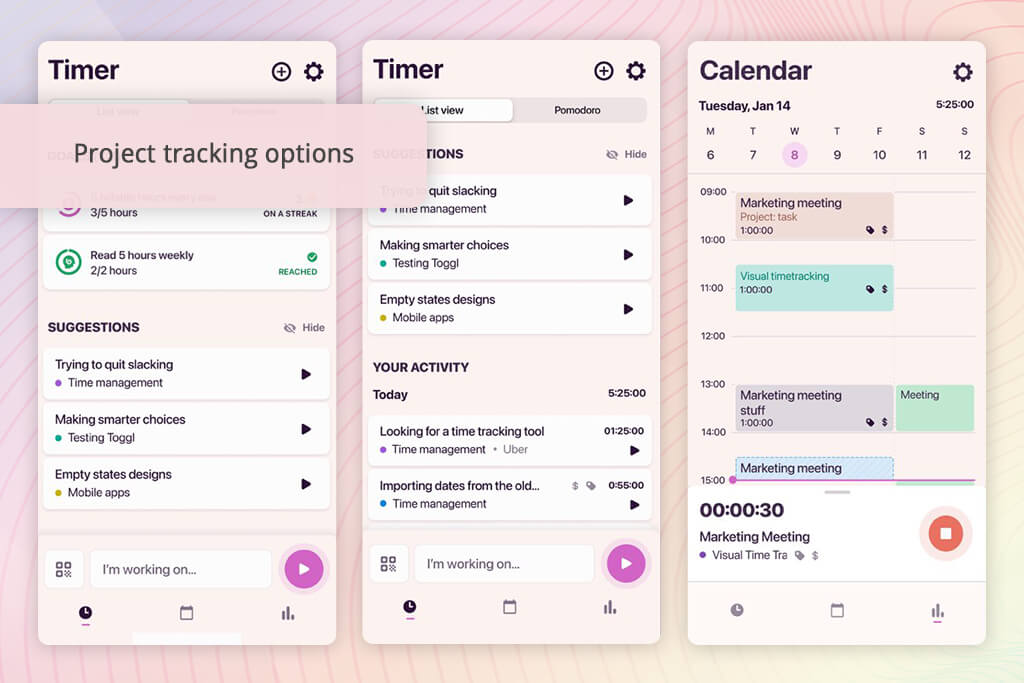
I tried Toggl Track to get a better idea of how much time went into my daily work. With creative tasks, research, editing, and revisions can easily take longer than expected. This time management software gave me a simple way to see those patterns instead of estimating them.
I tried Time Tracking, Projects, Tags, Reports, and the Pomodoro Timer with different kinds of work. I logged writing, editing, meetings, and routine tasks to see how long each one took. The reports made it easier to spot where most of the day went. I also checked whether starting or stopping a timer felt quick and natural.
Toggl Track felt simple and easy to use. There was no need to build a complicated system before getting started. The browser extension and quick timer made recording work almost automatic. After a few days, I could see patterns in my routine that I had not noticed before.
After using this productivity app, I found it especially useful for seeing how work time is spent. It does not plan your day for you, but the data can help you decide what to change. Freelancers, teams, and people working on several projects may find it particularly helpful, especially when tracking hours matters.
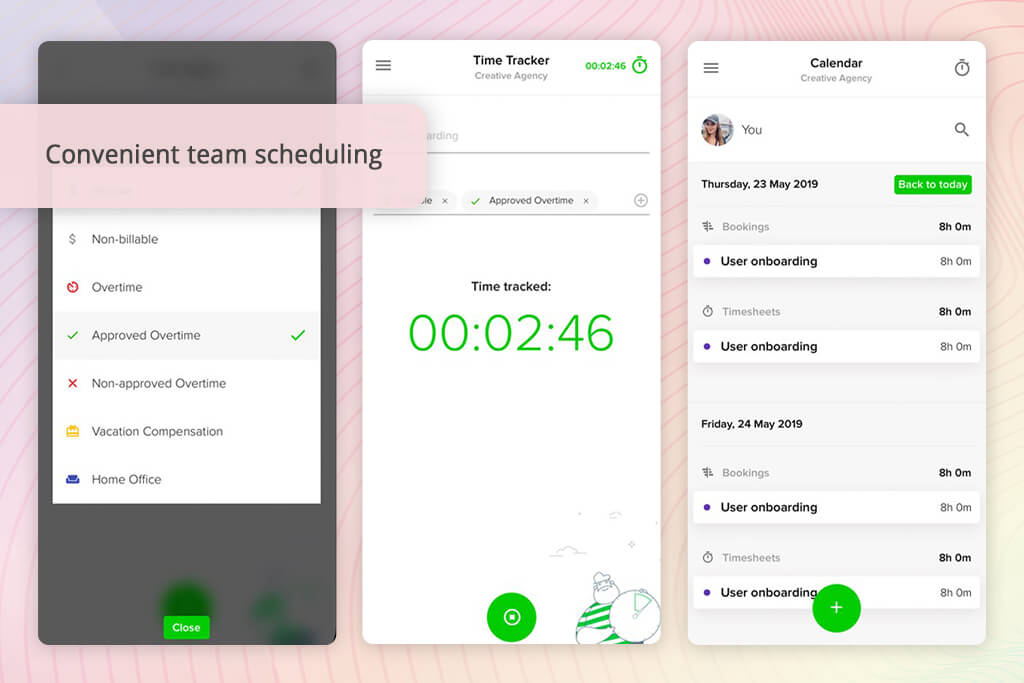
I tested Teamdeck for Mobile to see how useful it could be for managing teams on the go. At FixThePhoto, several projects can run at the same time, with people handling different tasks and working on different schedules, so having a simple way to check availability and plan resources can be helpful.
I wanted a mobile productivity tool that would let me check team details without having to sit at a computer. The main question was whether it could make planning easier when working away from the desk.
I tried features such as Resource Scheduling, Timesheets, Team Availability, Project Tracking, and Time Off Management. I checked schedules, adjusted work hours, and looked at who was working on different projects. The mobile app made it easy to check these details without using a computer. I also looked at how easily team members could log hours and keep project information current.
“It’s handy for checking team schedules and seeing who is available when I’m away from my computer. It works best for teams, but it’s not really suited to personal planning.”
The best part of this online collaboration software was having everything in one place. I could quickly check who was busy, what deadlines were coming up, and how work was spread across the team without digging through chats or different files.
The scheduling tools were useful for seeing if a project had enough people available or if someone had too much on their plate. It felt more suited to managing a team than keeping track of personal tasks, which made it a good fit for bigger projects.
After using Teamdeck for Mobile, I found it most useful for teams juggling several projects at once. It is not really meant for personal to-do lists or note-taking, but it does a good job of showing who is working on what and when. For creative teams, it can make day-to-day planning and workload management much easier.
The FixThePhoto team focused on real-world use to see which tools could genuinely improve our daily work. Julia Newman, Kate Debela, and Eva Williams worked with the productivity apps while preparing articles, gathering information, tracking due dates, and handling shared projects.
The review focused on features that can make everyday tasks easier, including task creation, reminders, shared projects, calendars, note-taking, file organization, and mobile access. We used the apps to assign article work, follow editing progress, keep research in one place, schedule repeated tasks, and see how projects were moving along while working remotely.
During testing, we looked at how easy each app was to get started with, how clear it felt to use, and whether it made our work faster or more complicated. Julia focused on article planning and due dates, Kate looked at sharing tasks and team communication, while Eva checked how well the productivity tools worked on mobile and for everyday tasks.
“Notion became my go-to place for article planning, deadlines, and team notes. Having research, ideas, and project updates together made things much easier to manage. It took some time to set everything up, but once I got comfortable with it, I spent less time jumping between different apps.”

Using these apps in our everyday FixThePhoto work showed that no single tool is perfect for everything. Some were better for quick tasks, while others made larger projects and teamwork easier to handle. The most useful ones combined a simple interface with enough flexibility to fit different workflows.