As I create content for FixThePhoto daily, I like to look for new solutions that would allow creatives like me to produce professional results on a budget. That’s why I decided to put together this list of free business card maker software. Business cards can still be very effective at leaving a lasting impression, but most people don’t want to pay for premium tools just to make one. I made sure to pick options that allow for achieving quick results while also offering intuitive UIs and a straightforward design process.
To cover as much ground as possible, I tried out over 20 free business card software, gauging their flexibility, user-friendliness, and performance. Some options allow me to produce clean, print-ready cards while others have clunky editing functionality or applied watermarks to the exported files. However, I still managed to find a good selection of free options that should suit different types of users.
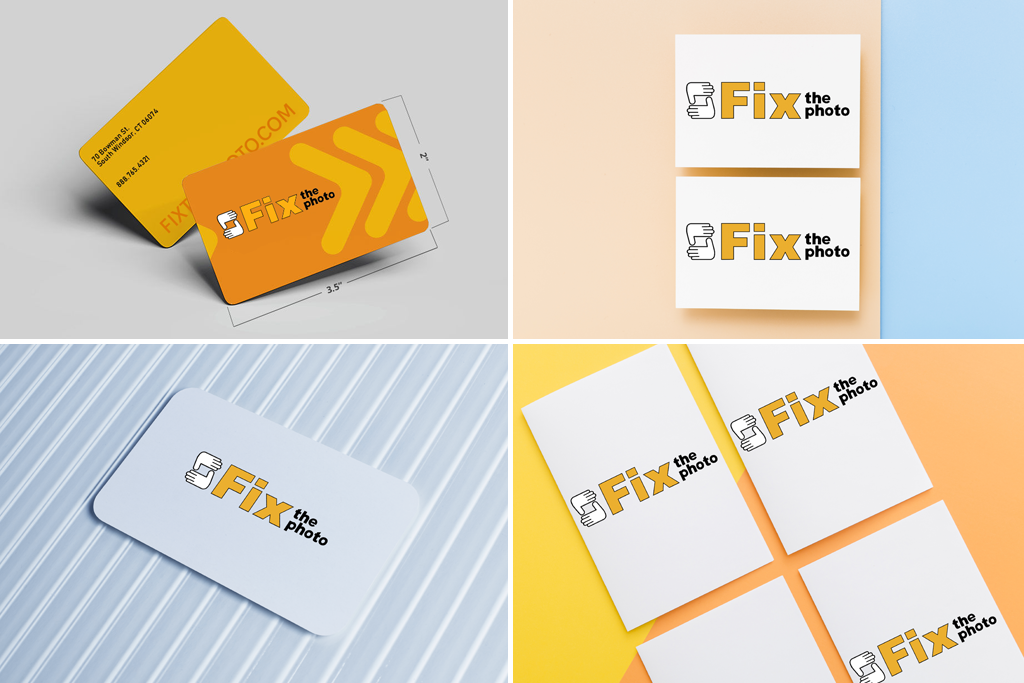
After using all the best free business card design software, I concluded that the optimal shape and layout should be determined by how and where you want to give out your card.
Usually, I stick with the standard horizontal layout (3.5 x 2 inches in the U.S.). It’s expected, fits nicely into wallets and cardholders, and has a clean design. Additionally, such a format is spacy enough to fit my name, role, logo, contact details, and a QR code without feeling overwhelming.
However, I’ve also made various vertical cards, which look slightly more contemporary and unique. They catch everyone’s attention, particularly at events or creative meetings, but I make them sparingly.
In terms of shapes, I prefer rectangular cards since they’re more practical, but I’ve also made designs with rounded corners or square cards I wanted to make them more eye-catching. These look fantastic on monitors and phones if you're making digital copies too.
Generally, the optimal layout is one that represents your brand and presents all information clearly. Ask yourself: Is it easy to read? Is it professional? Does it fit my brand? If the answer to all these questions is “Yes!” then you have a great business card regardless of its format or shape.
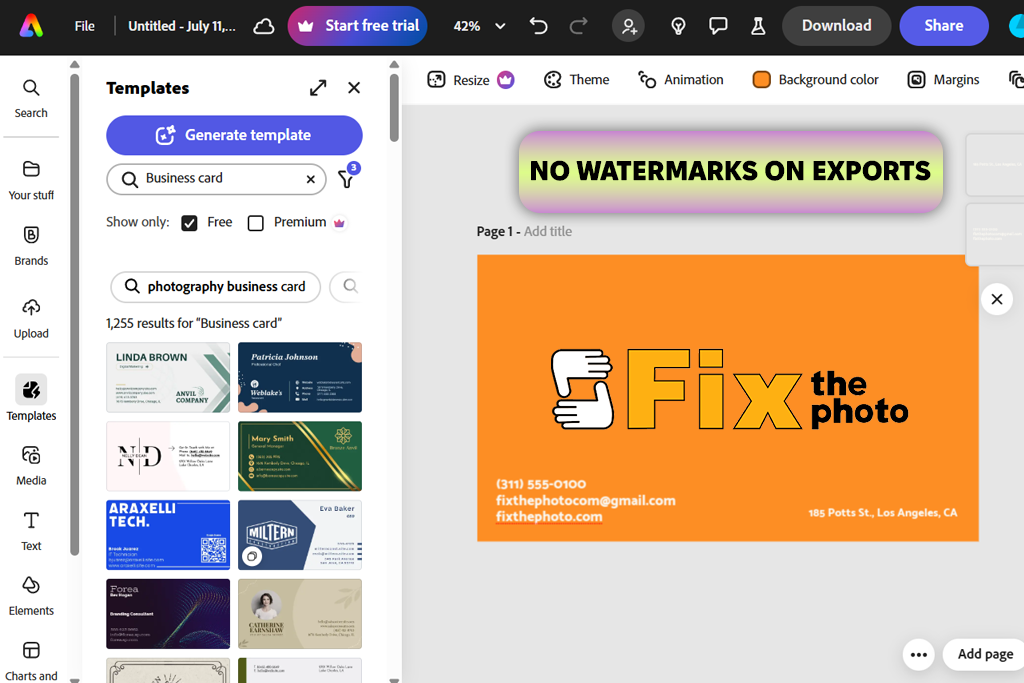
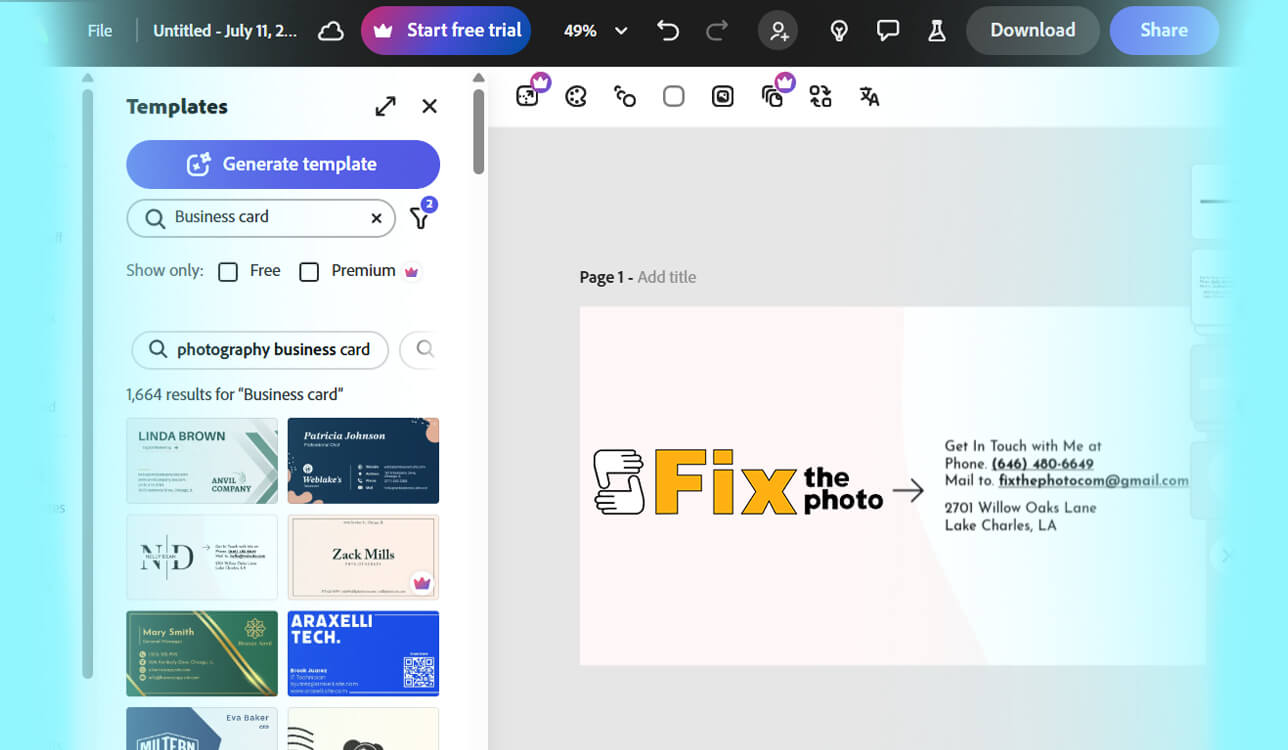
When I was testing free business card software, Adobe Express caught my attention with its intuitive controls and robust functionality. I made several business cards from scratch while importing logos, experimenting with fonts and color palettes, and trying out some customizable templates.
The UI is user-friendly and easy to navigate even for non-tech-savvy users. This software simplifies the process of adjusting layouts, changing fonts, and adding your branding elements. I particularly appreciate the ability to import my images, logos, and typefaces before applying them to the design to ensure they match my vision. The export options are also pleasantly diverse, as I can save my business cards in PDF, JPEG, or PNG. Moreover, if you’re residing in the US or UK, Adobe Express provides pro-grade prints that are delivered to your home or office.
The updates introduced in 2025 made Adobe Express even more flexible, as it can be used as a full-fledged branding solution. In my opinion, the most useful tools include:
Certain premium templates and assets are only available to paid users who pay $9.99/month or $99.99/year for a subscription. However, even if you use Adobe Express free, you still get all the tools you need to make a professional business card that can be personalized and saved in high quality without any watermarks.
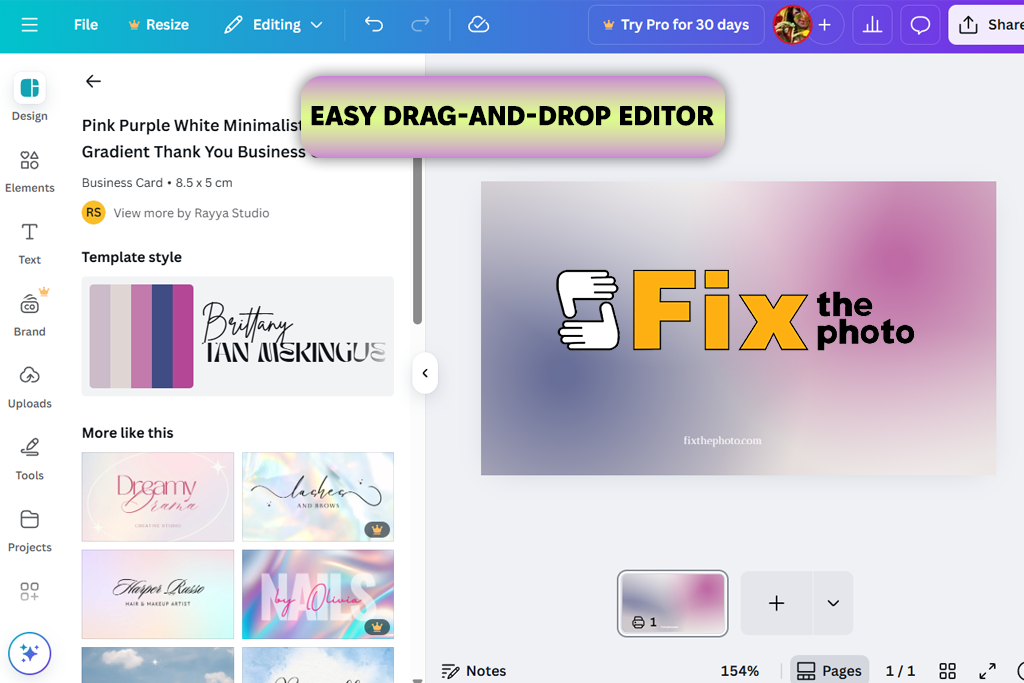
When checking how Canva holds up as free business card software, I started by exploring its expansive template library. It features thousands of professional designs in a variety of styles and color schemes. I personalized a couple of templates with various business names, logos, and contact info before making a design from scratch to fully test the functionality of this solution.
The drag-and-drop UI is intuitive and robust, allowing me to conveniently import my logo, change fonts, adjust the colors, and move around elements as I see fit. Canva also lets me make cards with rounded corners and has a business card mockup view, making it easy to visualize how the printed result will look.
This platform allows you to save high-quality images in PDF, JPEG, and PNG formats. Moreover, if you’re interested in online business card printing services, you can use Canva Print with free standard shipping to many regions. Even though Canva has a terrific free plan, certain premium templates, fonts, and design assets can only be used if you get the Pro plan, which starts at $15/mo.
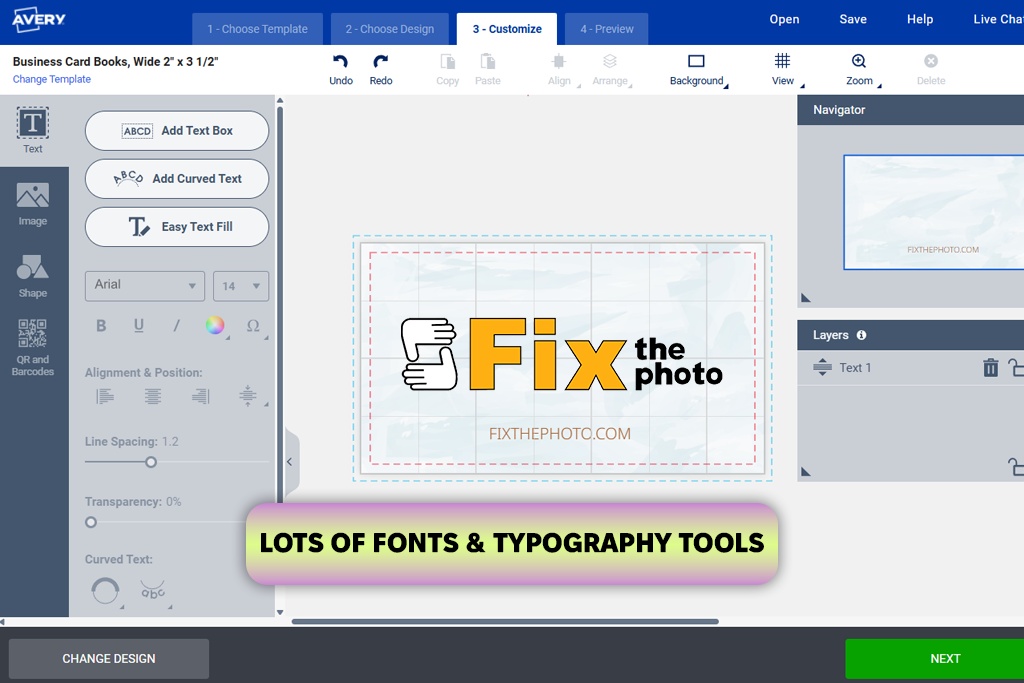
Avery is pleasantly straightforward and intuitive, as it’s some of the best business card software available for free. I picked one of its templates and customized it with my logo, information, and a QR code that leads to my portfolio page. Using the editor is very simple and I had no issues tweaking the layout and text. Additionally, Avery can be used as barcoding software.
The process of creating a regular horizontal card with my branding elements was quick and efficient. I appreciated the ability to save the result online, as a high-resolution image, or order it as a print straight through Avery. The fact that my creation can be opened on any device and browser makes this platform even more convenient.
While creating the card and exporting it is free, ordering prints via Avery can be expensive based on the quantity and paper type you choose. Even though this is a fantastic solution for making different layouts and printing, the range of creative design tools is very small when juxtaposed against alternative free graphic design software.
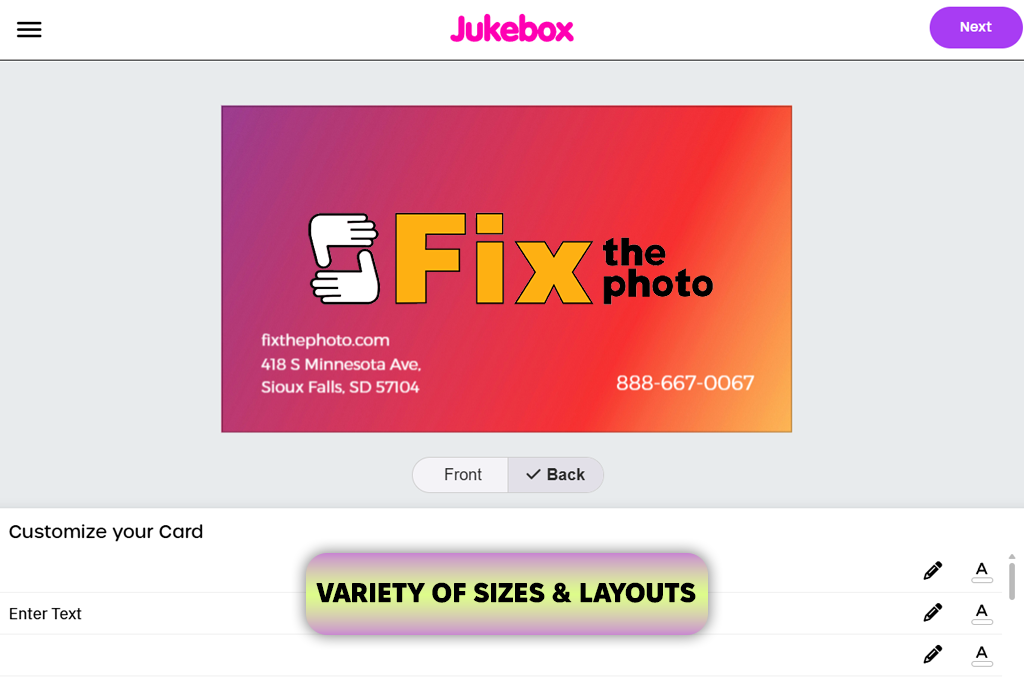
I employed Jukebox’s free online business card creator to design a minimalistic, vertical card with my logo, personalized colors, and a QR for my portfolio. All the tools are pleasantly intuitive and the platform lets me adjust text, import images, and fine-tune the layout without requiring any technical or graphic design skills. I also appreciated the ability to save a print-optimized PDF for free without even having to create an account.
The quality is impressive, and I can preview the design in detail before downloading it. Additionally, Jukebox lets you pick between multiple sizes and finishes if you decide to print your business card out. Sadly, some of the design options are a bit too simplistic if you want to get really creative. However, it’s still arguably the best free business card software for Windows 10 and 11 if all you need is a user-friendly, efficient solution that won’t bog you down with technical details.
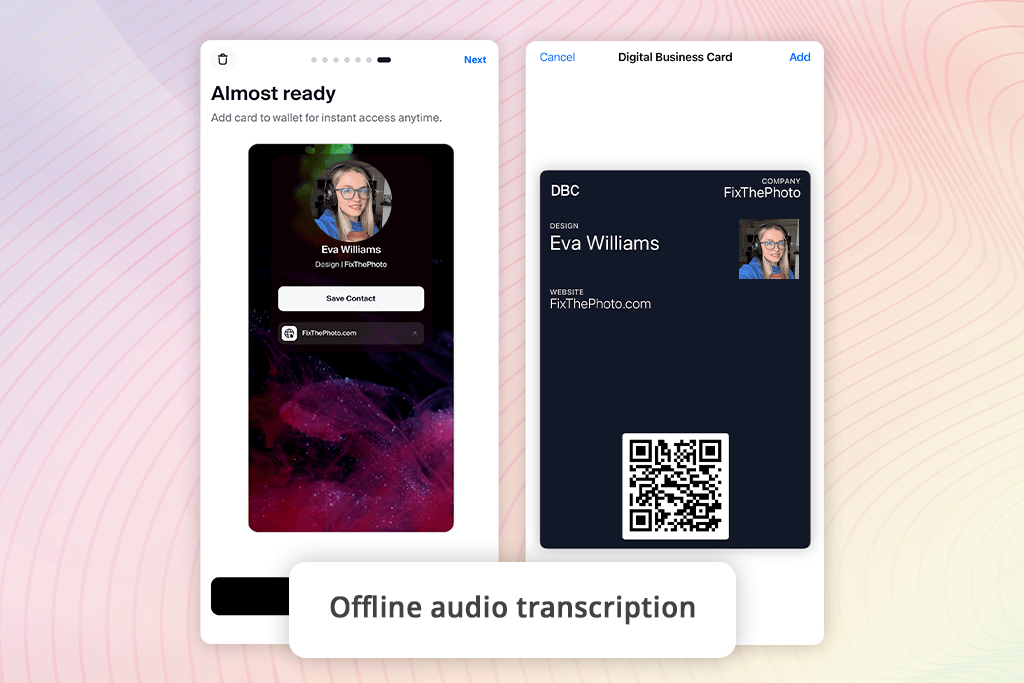
When evaluating digital business card solutions, I explored DigitalBusinessCard platforms that focus on fast, paperless contact sharing. This tool stands out for its clean interface and ease of use, allowing users to create and customize a professional card in just a few minutes. I tested it by adding different names, company details, social links, and branding elements, and the setup process remained smooth throughout.
The platform makes it simple to update contact information anytime without reprinting cards, which is ideal for professionals who frequently change roles or details. Cards can be shared instantly via QR code, link, or mobile device, making networking more efficient during meetings and events.
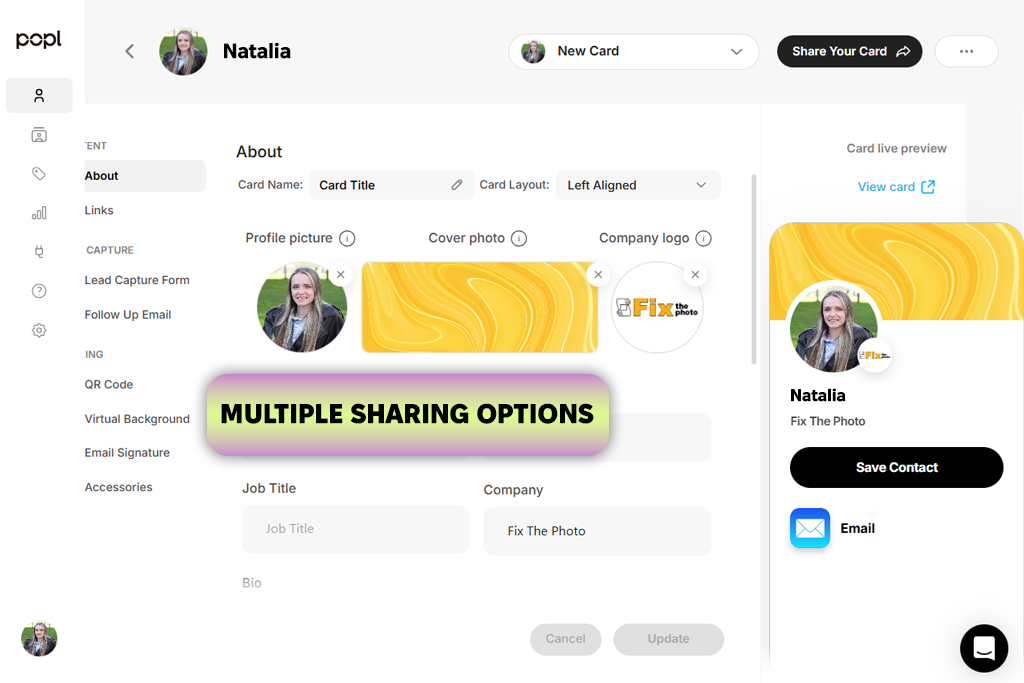
The first aspect that caught my eye about Popl is its dedication to catering to digital business cards, which is perfect if you mostly meet with people online. I made a personal card for free and ensured it features my picture, name, title, social media links, site, and a downloadable portfolio – all without having to resort to additional free web design software. I shared the card using a generated QR code, added it as an email signature, and to my smartphone’s wallet.
I was incredibly impressed by the ability to share my business card in a wide variety of ways, including the Apple Watch, iPhone widget, and a Zoom virtual background. It can also be embedded as an email signature or sent via iMessage. For companies, Popl allows you to manage all your designs and templates, perform CRM syncing, access the analytics dashboard, etc.
However, the free version is rather basic as most premium tools (like lead capture, branding control, or analytics) are only available to paying customers. The cost is determined by the team size and feature set you want to access.
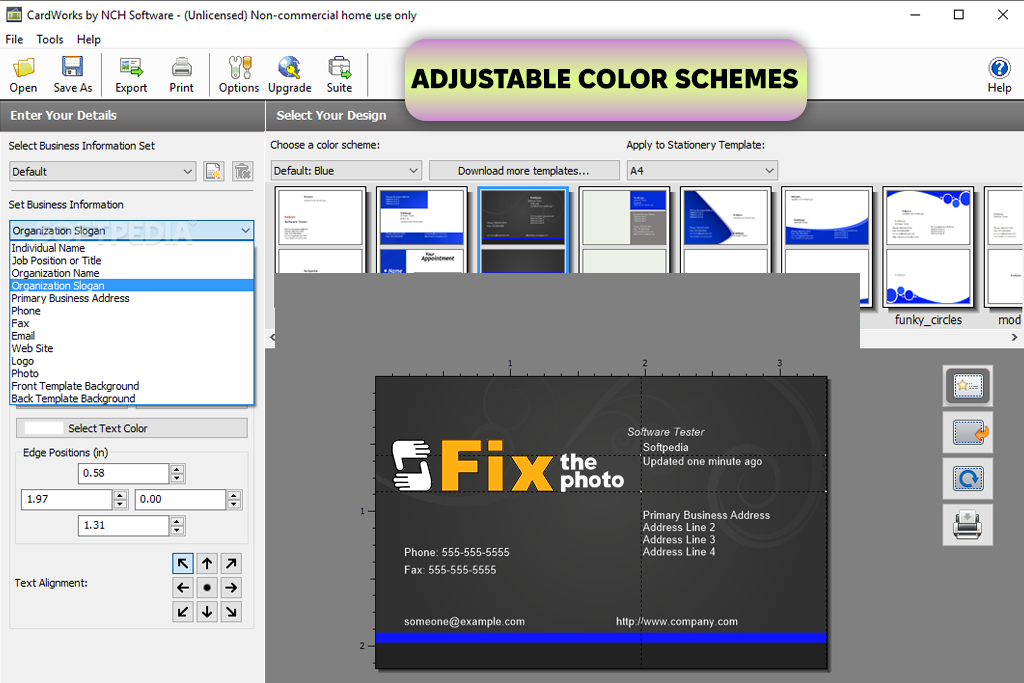
CardWorks is the best card design software offering a free download. It’s a desktop solution that can be used offline without requiring a browser or a registered account. I made a double-sided card for a branding project by picking one of the available templates as a foundation. CardWorks comes with a decent selection of layouts and allows users to customize the color scheme, import logos, and adjust the font and text placement as needed. I included our company’s contact information, a PNG logo, and a minimalistic yet informative back design – all without any hiccups or complications when using different tools.
This software impressed me with its capability to design print-ready cards with crop marks and bleed, which is perfect if you plan to send the file to a professional printer. Additionally, CardWorks supports adding several business profiles and saving your results in high-resolution PDF file formats. It’s compatible with all popular business card sizes and lets you make both one- and double-sided designs. The template styles themselves look a tad outdated.
Additionally, since this is an offline solution – it’s not as flexible as some of the web-based business card makers. Lastly, even though you can use CardWorks for free, some of its tools are locked behind a paid upgrade.
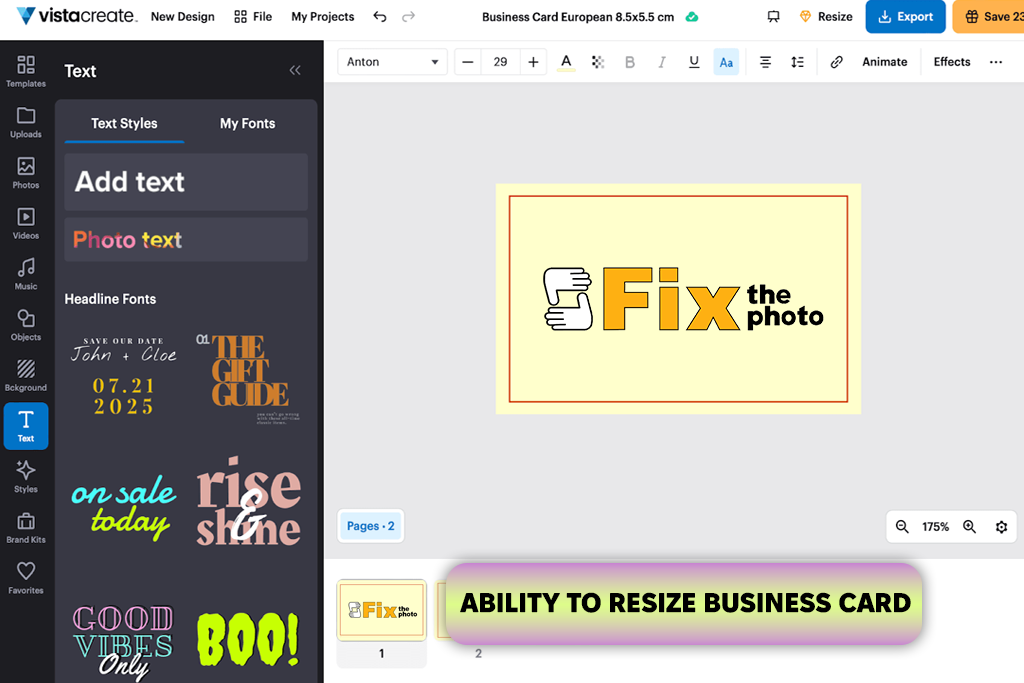
My experience with this free business card maker software began with me creating an account and writing “business card” in the search bar. VistaCreate provided hundreds of premade templates, a lot of which were double-sided designs. I picked a minimalistic layout and swapped out the default assets for FixThePhoto’s logo, color scheme, and contact information as well as social media links and a tiny QR code that I created with the help of a free QR code generator.
I particularly liked the fact that VistaCreate lets me save my designs in a variety of formats (JPEG, PNG, PDF). Their Print Online service is also very handy and has redirected me to VistaPrint to make the necessary preparations. This platform offers standard, double-sided, and custom-size cards. It also lets you start from scratch if you want to control every single detail of how your business card looks.
However, while using the editing features is simple, the design functionality is rather restrictive if your goal is to create something completely unique. You can use VistaCreate for free or get a subscription starting at $10/mo.
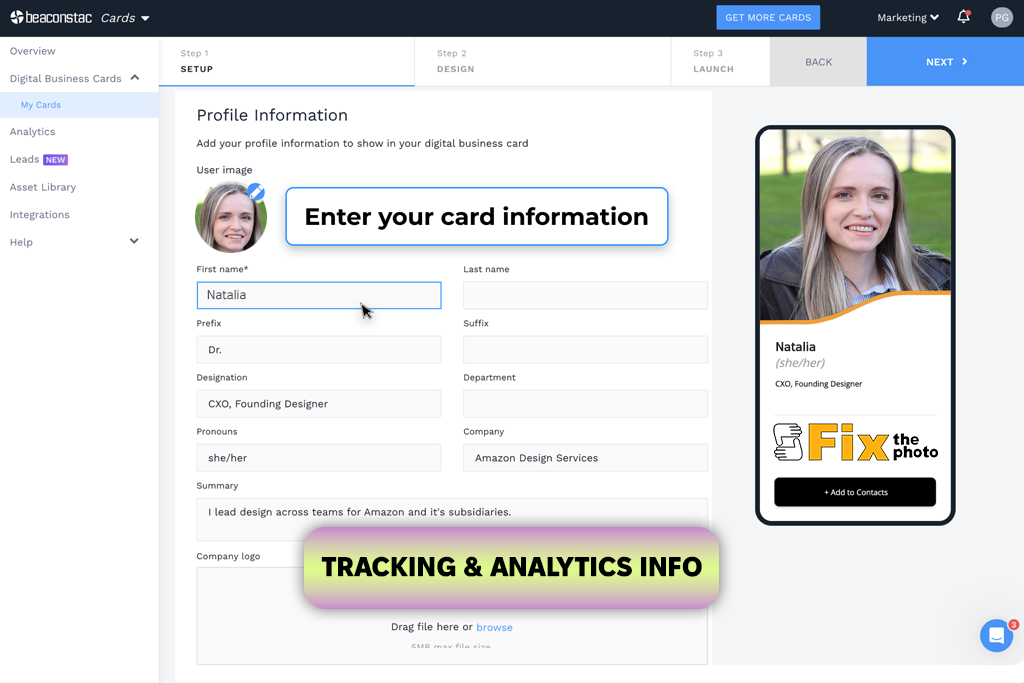
I made a business card for my role at FixThePhoto, employing Uniqode’s premade templates. I wanted to create a stylish, branded design that can be shared via email and WhatsApp. The UI is easy to navigate and personalizing a template with my name, position, logo, site link, and colors only took a couple of minutes.
After finishing the design, I successfully tried sharing it via Apple Wallet, WhatsApp, and a QR code. The digital version of the business card can be changed anytime and the generated QR code will still be relevant, which is perfect for events and networking. A digital business card platform like Uniqode allows me to create designs in several languages. For teams, it lets them manage and design cards in bulk (up to 2000), which is very convenient. Sadly, it doesn’t offer a free version, only a 14-day free trial and a subscription for $15/month.
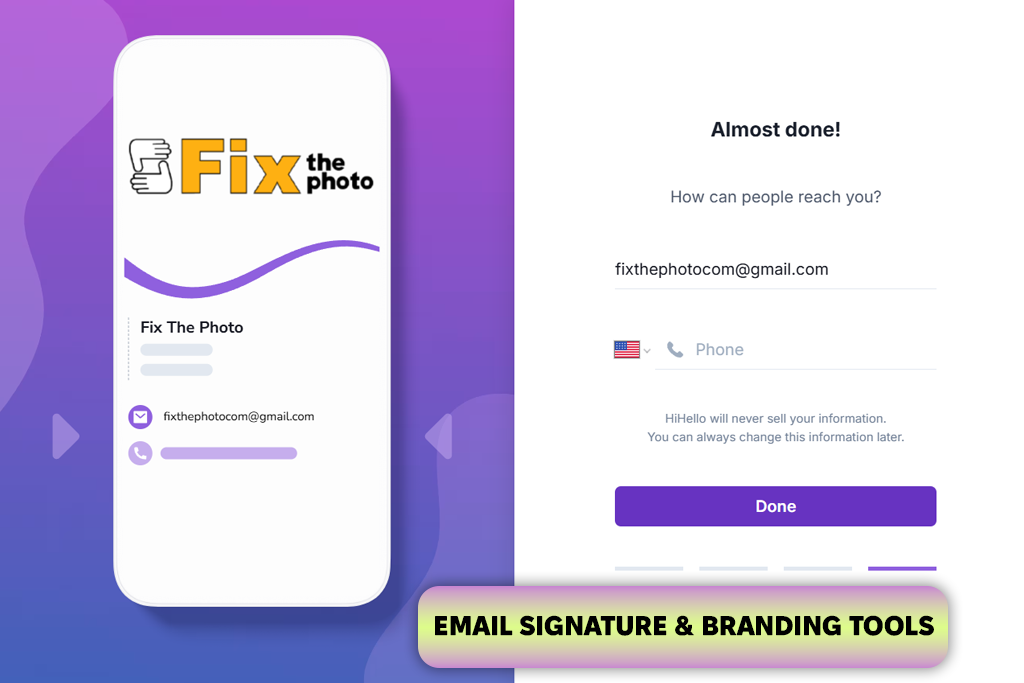
HiHello represents some of the best free business card software on the market, allowing you to create personalized designs without spending a single cent. Using the provided tools is very simple. I imported our logo, type in the contact information and job title, and provided our socials before changing the background. You can use this platform for making personal, professional, and enterprise cards while sharing them via QR code, email, or adding them to your smartphone's wallet for convenient access.
I greatly appreciated how sleek and refined the results look. I managed to share my business cards over video calls and even basic texts. Embedding them as an email signature was also a straightforward process. Even though the free version of HiHello is fully functional, most advanced features like CRM synchronization, analytics, and in-depth branding functionality require a subscription (priced at $6/mo).
I and my colleagues from FixThePhoto tried out all the best free business card maker software, including Shopify, Visme, Business Card Maker, Netblitz., Vistaprint, Microsoft Word, GIMP, Inkscape, BeFunky, Blinq, Business Card Star, and Business Card Designer Plus.
To test all these solutions, we prioritized evaluating such aspects as user-friendliness, personalization freedom, template variety, export parameters, print-readiness, and sharing functionality.
My personal testing algorithm looked like this:
Real-life design scenarios. I made several business cards – some for personal projects, others with FixThePhoto branding (name, title, logo, social links, QR code) to evaluate design flexibility.
User-friendliness. I checked how easily I can open each solution, whether it needs to be downloaded (like CardWorks for Windows) or can be used in-browser (like Canva, VistaCreate, or Adobe Express), and how intuitive the available features are.
Template and customization quality. I looked at all the provided templates while checking how simple it is to customize the colors, fonts, logos, and layouts to achieve a consistent branded look.
Export and sharing functionality. I saved my cards in PDF, PNG, and JPEG formats, verifying their digital and print quality (including bleed and crop marks). Additionally, I made sure the platform supports convenient QR sharing, email signature embedding, and Apple Wallet compatibility.
Performance and cost. I tested to learn if a specific platform has all the necessary features to be used for free, or if some essential tools were only available to paid users. Additionally, I tested the performance, taking note of any possible lagging, crashes, or unwanted watermarks.
Even though not all business card-making software I tried is included on my list, I ensured the most impressive options in terms of functionality, output quality, and affordability are all featured above. The final shortlist has a suitable option for anyone, be it a freelancer, business owner, or creative professional.