When we polled our FixThePhoto Instagram community about the hardest stock library to replace, we anticipated Adobe Stock or Shutterstock topping the list. Surprisingly, iStock alternatives stole the spotlight. Finding stock websites wasn't the issue. Determining if a new option truly offered a better experience was the real hurdle.
Buyers repeatedly cited frustrations with iStock’s complex Essentials versus Signature pricing splits, restrictive subscriptions, and high per-image costs for light users. Meanwhile, contributors voiced concerns over shrinking royalty rates, search discoverability, and vague policies regarding AI-generated media.
To find real solutions, our FixThePhoto team rigorously tested 50+ iStock alternatives sourced from Reddit, YouTube, photography forums, and direct follower suggestions. Instead of relying on marketing hype or catalog size, we actively tested each platform as active buyers searching for content and as creative contributors uploading work to uncover the absolute best iStock alternatives available today.
Big stock catalog sizes mean very little if the user experience is far from pleasing. During testing, we prioritized 7 key criteria:
| Alternative | Free | Price | Library | AI Content |
|---|---|---|---|---|

|
✔️
|
From $29.99/mo
|
900M+ assets
|
✔️ Contributor AI accepted
|

|
❌
|
From $25/mo
|
615M+ assets
|
✔️ Own GenAI; ❌ contributor AI
|

|
✔️
|
From $25/mo
|
366M images
|
✔️ Contributor AI accepted
|

|
✔️
|
From $24.50/mo
|
298M+ assets
|
✔️ Contributor AI accepted
|

|
✔️
|
$0
|
Millions
|
AI content searchable
|

|
✔️
|
$0
|
7M+ images
|
❌ AI submissions prohibited
|

|
✔️
|
$0
|
Thousands
|
❌ No dedicated AI collection
|
Scrolling through our Instagram replies, we grasped that users aren't abandoning traditional stock sites over one huge issue. It’s usually a steady buildup of everyday micro-frustrations.
The primary complaints center on 5 major pain points: tier confusion, expensive plans for casual downloads, forced subscriptions, shrinking contributor earnings, and rigid rules around AI submissions.
When buyers come across the ideal image, but can’t receive it due to plan limitations, they typically feel disappointed. Accessible, free iStock alternatives are quickly winning over bloggers, students, and small businesses needing flexible downloads without recurring commitments.
Meanwhile, for contributors who make money with stock photos Guide, AI policies and declining payouts have become the ultimate tipping point. These changing dynamics are driving creators away from traditional platforms toward smarter, more flexible replacements.
Price isn't the only factor shifting creators away from iStock. AI policies are rewriting the rules. While two platforms may look identical to buyers, their terms for creators tell a completely different story.
The critical detail most people overlook is the way a site uses AI for search tools versus whether it allows contributors to upload AI-generated art are two entirely different games.
| Platform / Niche | Third-party AI uploads | How it handles AI |
|---|---|---|
|
Adobe Stock
|
✔️
|
Must be marked as created with generative AI tools
|
|
Shutterstock
|
❌
|
Offers its own AI generation tools
|
|
Dreamstime
|
✔️
|
AI disclosure + dedicated AI category required
|
|
123RF
|
✔️
|
Must be submitted to its AI Generated Images category
|
|
iStock
|
❌
|
Own AI generator; generated results stay separate from contributor library
|
|
Pexels
|
❌
|
Generative AI uploads prohibited
|
|
Unsplash+
|
❌
|
AI-created or AI-edited submissions prohibited
|
For buyers, AI stock tools offer a rapid search process and endless choices, but they also create lots of visual noise. Search generic phrases like "cybersecurity" or "future workplace," and you’ll get thousands of hyper-polished images. Today's real challenge isn't finding a good-looking shot. It's finding one that appears authentic and believable.
For contributors, AI won't kill stock photography. It will divide the market. Cheap, generic illustrations will lose value fast, while demand shifts heavily toward real human connections. The true value will move to genuine lifestyle photography, local culture, and specialized, hard-to-access industries. If you're deciding where to invest your shooting budget, bet on real life every single time.
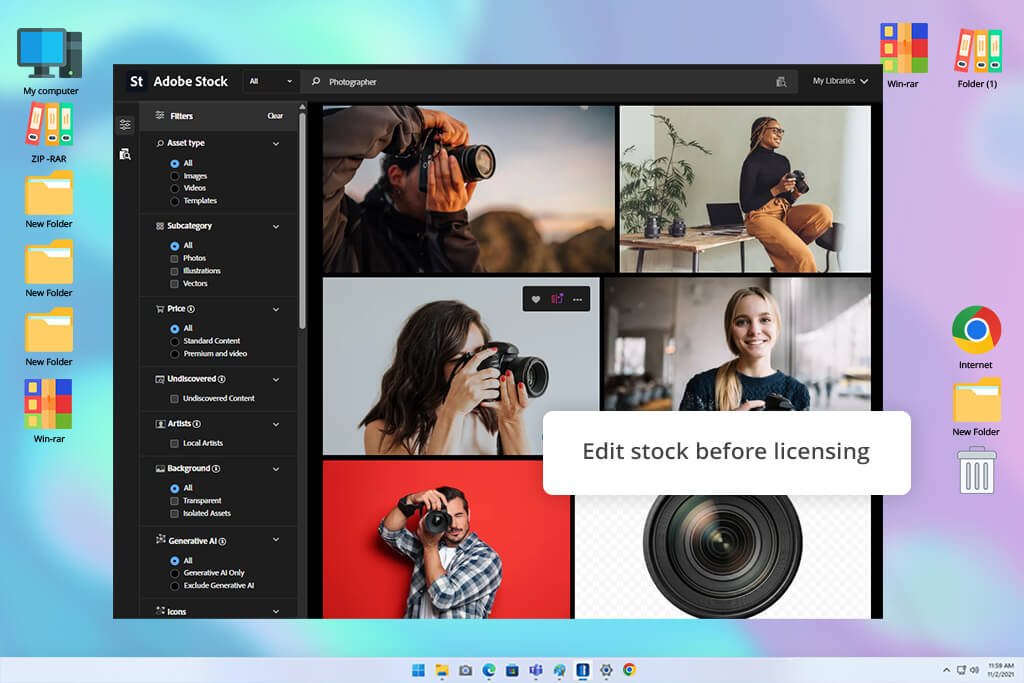
Everywhere creators gather, from Reddit forums to YouTube reviews, Adobe Stock constantly pops up as one of the best iStock alternatives. Put through the exact same testing regimen across varied media types, it quickly proved why it commands such high praise. The primary advantage is its frictionless workflow. Browsing, licensing, and editing assets happen instantly inside Photoshop, Illustrator, and Premiere without breaking creative momentum.
Unlike Adobe Stock alternatives with confusing credit tiers, standard subscription plans keep monthly budgeting straightforward. Starting at $29.99 per month for 10 standard images or one video, it provides a dependable balance of quality and convenience, though top-tier media still requires deeper pockets.
“Adobe Stock is usually my go-to for design projects. The fact that I can find an image and open it right in Adobe apps makes the whole process feel a lot smoother.”

Adobe Stock impressed me with its generous free collection. Rather than offering low-res previews or temporary trial files, the platform provides full-access photos, vectors, and videos cleared for commercial projects. While it may not power a top-tier ad agency, it serves as an incredible asset bank for bloggers, students, content creators, and indie designers.
For content contributors, Adobe easily outperforms competitors like iStock by offering a stable, predictable pay structure. Content creators earn a transparent 33% royalty on standard images and 35% on video clips. This straightforward system eliminates the unpredictable earnings tiers found on alternative platforms. Thus, monthly income is easier to project for small to mid-sized portfolios.
Navigating the modern AI landscape is another major win for Adobe. The platform embraces generative AI artwork with simple, clear guidelines. As long as artists hold full rights, label their submissions correctly, and provide standard disclosures for fictional people or property, their synthetic creations are welcome. This open approach is more artist-friendly than the confusing restrictions implemented elsewhere.
Adobe Stock remains a go-to tool for image editing, motion graphics, and commercial media production. While rival platforms occasionally offer higher-end niche photography, Adobe delivers the ultimate balance of fair payouts, clear AI policies, and versatile assets. It is undeniably the most predictable and creator-focused ecosystem available for buyers and sellers alike.
Pricing: Free Collection + 7-day trial; From: $29.99/mo; From: $359.88/year
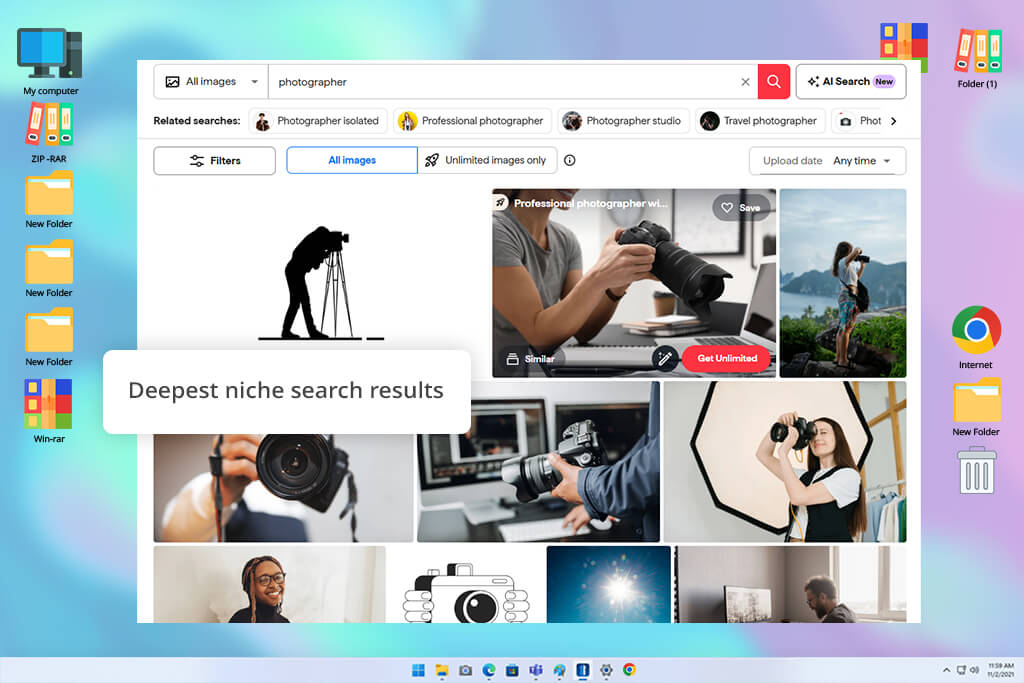
Searching for iStock photo alternatives inevitably leads straight to Shutterstock. While it seemed almost too predictable to test, putting it head-to-head against competing platforms revealed key advantages that keep it at the top of the industry.
The true strength of the platform is the variety of assets. There are more than 600 million options to pick from. When tested with challenging search terms, ranging from hyper-specific occupations and rare locations to authentic workplace interactions and current editorial events, the platform consistently delivered relevant results where smaller libraries struggled. Broad search terms yield plenty of options everywhere, but niche requests bring the most accurate results.
Flexibility in purchasing is another major win among popular iStock and Shutterstock alternatives. Instead of forcing users into rigid, long-term commitments, the platform offers clear monthly subscriptions alongside convenient credit-free image packs for quick project-based buys. Starting at $25 per month for 10 assets on an annual plan, it provides an accessible entry point for creators who prefer simple, upfront costs over complex credit math. For projects requiring hard-to-find visual assets without subscription traps, it remains a reliable heavyweight.
“For very specific image searches, Shutterstock is hard to beat. I usually get several solid results on the first try, which saves me from constantly changing the wording.”

While evaluating the free tier, I noticed limitations almost immediately. Browsing and organizing assets is completely free, but downloading cleared content requires spending money. Unlike iStock competitors offering free assets to test drive, Shutterstock functions strictly as a paid marketplace.
The contributor experience presents a mixed bag. Earnings operate on a sliding scale from 15% to 40% based on sales volume. This structure makes monthly payouts fluctuate significantly compared to platforms offering stable, fixed-rate royalties. Shutterstock relies heavily on huge volume, which can leave mid-tier contributors feeling lost in a crowded catalog.
Shutterstock takes a unique approach to artificial intelligence. While it provides buyers with cutting-edge AI generation tools powered by industry leaders, it strictly prohibits creators from submitting AI-generated stock content. This policy limits opportunity for modern digital artists, especially compared to rival sites that embrace tagged synthetic uploads under defined guidelines.
Despite these drawbacks, Shutterstock remains an essential tool for editorial media, high-volume project research, and finding niche subjects that exhaust smaller asset banks. For media buyers, its unmatched search engine and deep catalog give it a distinct edge over competitors. However, for content contributors, particularly those using AI tools, alternative platforms offer more predictable income and forward-thinking submission policies.
Pricing: Free: Browse/save only; no free licenses; From: $25/mo; From: $300/year
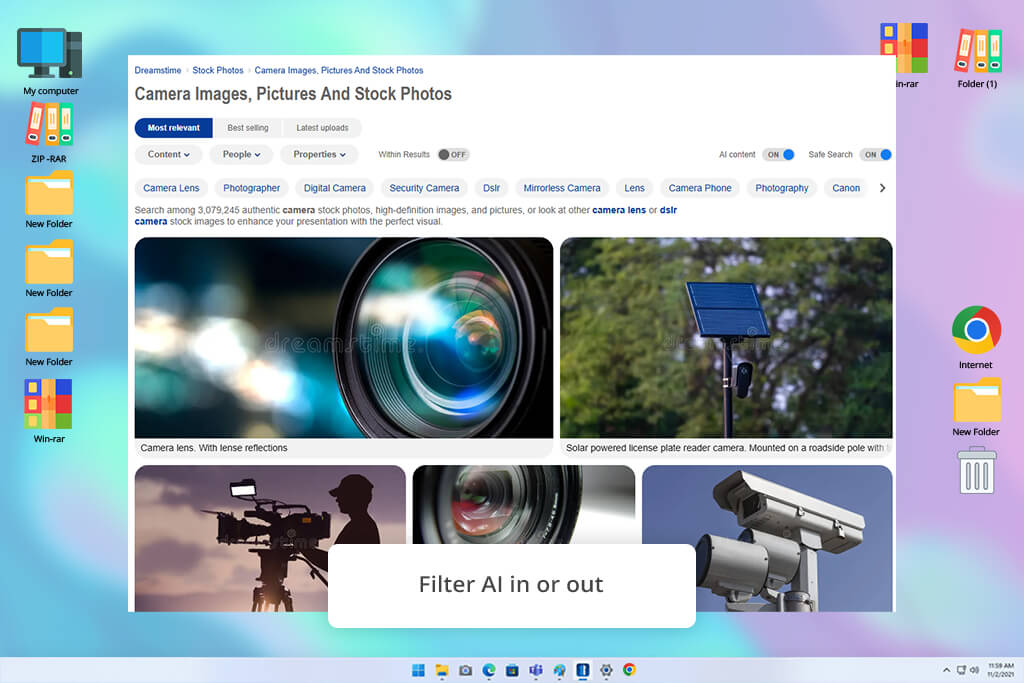
Dreamstime earned a spot in our evaluation following repeated recommendations across online creative communities, often highlighted by contributors seeking a viable site like iStock. Far from being an outdated legacy platform, it maintains an expansive database exceeding 366 million searchable assets covering commercial photography, editorial shots, vectors, and multimedia.
When subjected to rigorous search testing across diverse categories like lifestyle, travel, and niche concepts, the engine delivered solid results. Although the website interface is less modern than competitors, the ability to specifically toggle AI-generated visuals on or off is a big advantage. This filtering control proves invaluable when projects demand authentic photography over synthetic artwork.
From a budget perspective, the platform offers an accessible entry point. A dedicated free section offers legitimate royalty-free downloads, albeit with standard physical print limits. Paid options remain flexible, featuring credit bundles alongside monthly plans starting near $25. For budget-conscious buyers and creators seeking generous royalty structures, few Dreamstime alternatives can offer something similar.
“I didn’t expect to use Dreamstime much, but it worked surprisingly well for more specific image searches. The quality can be a little less refined than Adobe’s, but I liked the variety of natural and not overly repetitive photos.”

For contributors, Dreamstime offers compelling advantages over traditional platforms. Exclusive sellers can unlock royalty payouts reaching up to 60%, which is significantly higher than the strict, tiered rates found on sites like iStock. While overall buyer traffic is lower, the potential return per asset makes it worth considering.
The platform fully embraces synthetic art alongside standard photography. Contributors can upload AI-generated media, clear standard disclosures, and earn identical payout rates as traditional submissions.
It serves as a nice backup whenever major libraries feel repetitive. Budget-conscious creators, independent bloggers, editorial teams, and multi-format artists say it is a flexible, revenue-friendly marketplace to buy media or test alternative income streams.
Pricing: Free + public-domain images; license limits apply; From: $25/mo; From: ≈$228/year
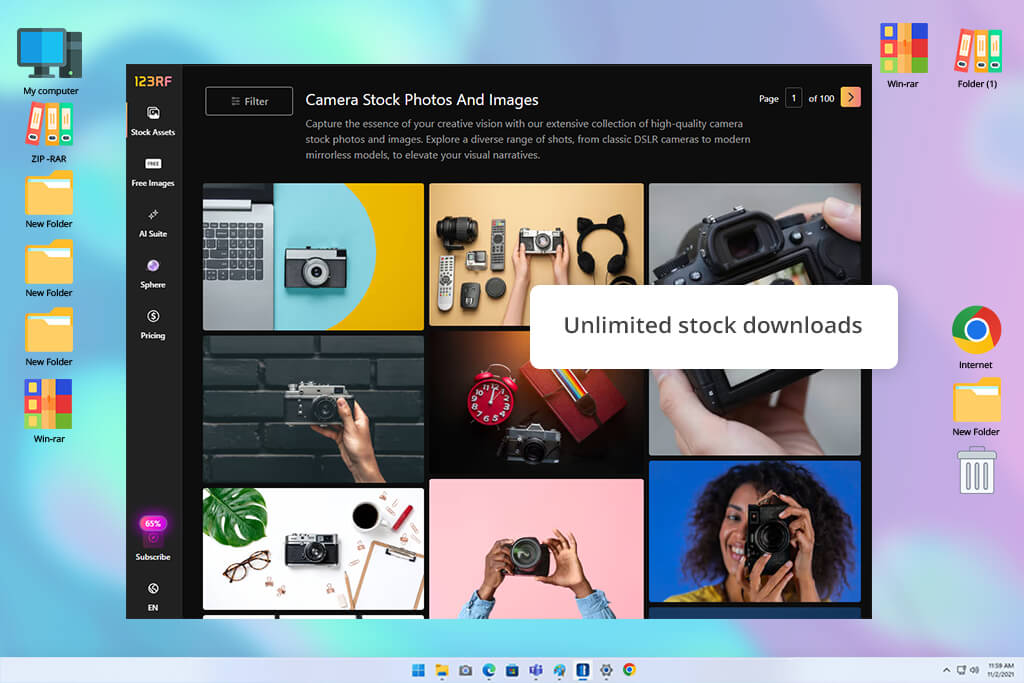
When high subscription costs on mainstream stock platforms become a problem for everyday marketing visuals, 123RF is a compelling iStock alternative. We tested the platform across various digital assets, including social graphics, corporate settings, travel photography, and vector illustrations. The current library exceeds 298 million files, so you rarely left empty-handed.
The platform sets itself apart through value for budget-conscious creators. The PLUS subscription tier offers unlimited stock downloads for around $24.50 monthly, making it significantly more economical for high-volume needs. Flexible credit packs are available for occasional users, and a dedicated free catalog provides instant access to cost-free assets. Members also gain entry to built-in AI editing features to improve visuals before downloading.
For content contributors, the platform features a competitive commission structure. Earnings range from 30% to 60% based on seller performance levels. This is a more attractive starting baseline than the strict royalty tiers found on traditional sites. While lower overall platform traffic means it works best alongside other marketplaces rather than replacing them entirely, the earning potential per download remains strong.
123RF also takes a modern stance on artificial intelligence. Content creators can submit AI-generated visuals into a designated category, provided the artwork avoids trademarked brands, real individuals, or protected intellectual property.
All in all, 123RF is a dependable stock photography site for bloggers, social media managers, and small business teams producing high-volume content on a budget. While elite ad agencies seeking hyper-curated, high-end commercial shots may still lean toward premium platforms, teams focused on maximizing ROI will find 123RF to be a smart, cost-effective workhorse.
Pricing: Free images + limited AI tool use; From: $24.50/mo;
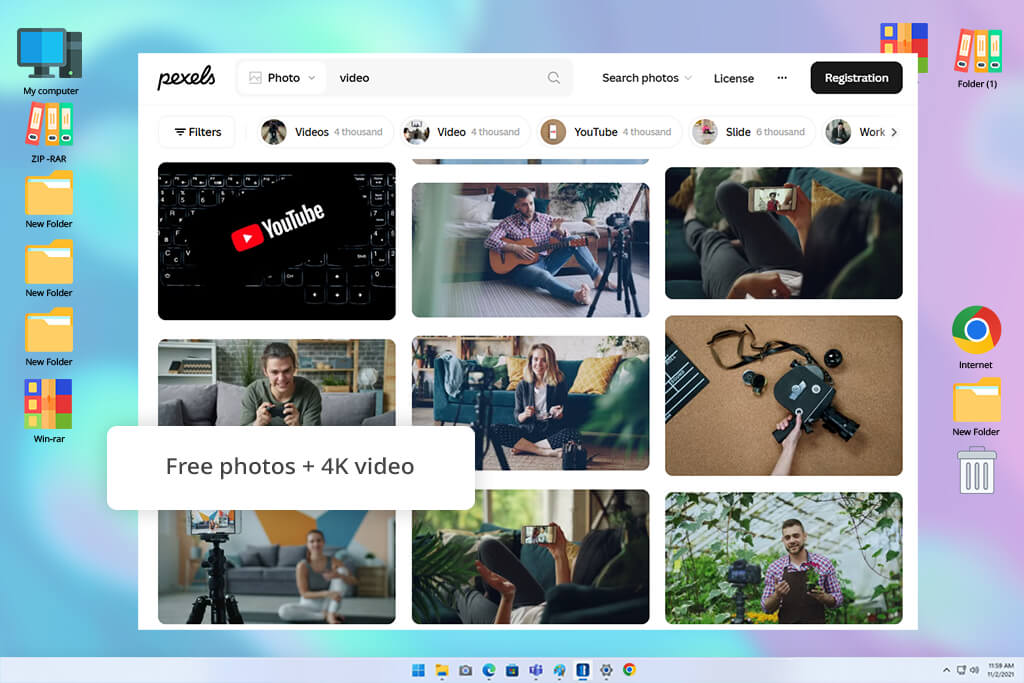
When iStock’s price tag is too steep for everyday visuals, Pexels steps in as an unbeatable free alternative. It covers authentic, everyday moments like candid office setups, vibrant travel shots, quick food clips, and sleek social media backgrounds. Because every asset falls under a completely flexible free license, you can drop these files straight into commercial campaigns, YouTube videos, blogs, or pitch decks without paying a cent or worrying about required attributions.
The browsing experience is wonderfully streamlined, especially now that searchable AI-generated images and video clips are integrated right into the main feed. However, that free-access model comes with clear trade-offs. If your project demands highly specific commercial concepts or specialized niche subjects, premium sites like Pexels still offer deeper, more tailored libraries.
“Pexels is still one of the first places I check when I need free lifestyle footage. The clips often feel more natural than traditional stock, which is especially useful for social media.”

For creators and visual contributors aiming to monetize their work directly, traditional royalty sites like Adobe Stock or iStock remain the smarter financial bet. Pexels simply isn't built as a direct pay-per-download marketplace. But for content creators, students, and businesses running on a lean budget, Pexels is a great iStock photo alternative that delivers stunning, high-quality media without touching your wallet.
Pricing: Free photos and videos
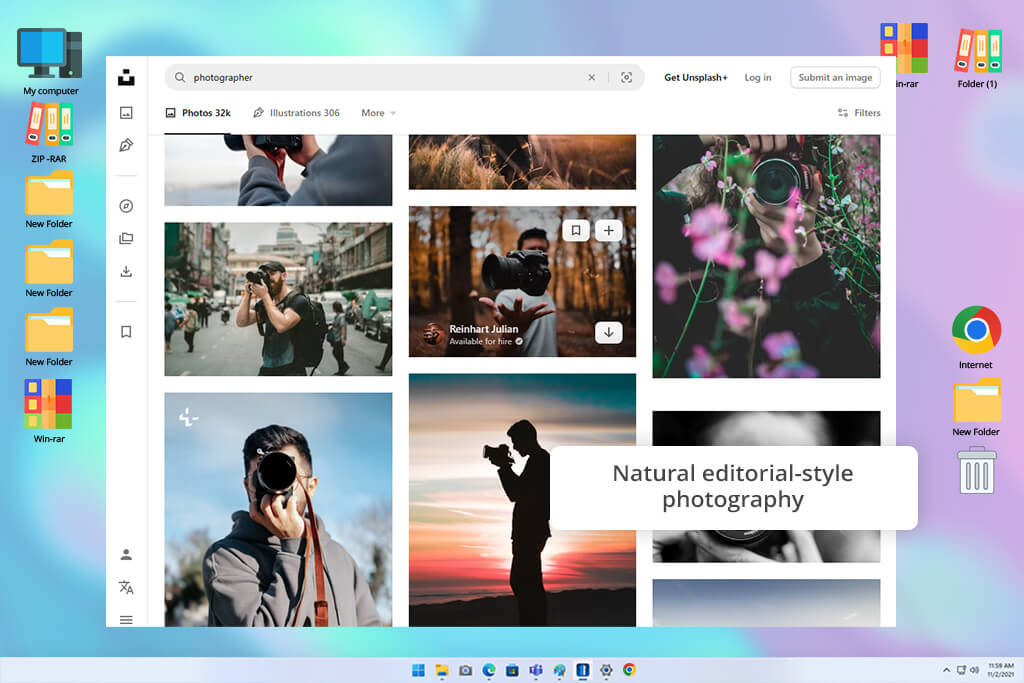
Looking for images that do not scream "generic stock photo" often leads straight to Unsplash. I scanned the collection for tech, travel, workspaces, and website heroes, and quickly understood that this platform prioritizes atmospheric visual quality over quantity.
The biggest draw is its open library. The standard license grants free commercial and noncommercial usage without requiring attribution, eliminating the typical licensing friction before every download. It is one of the best websites like iStock for blogs, mood boards, editorial layouts, and modern brand designs that need a contemporary edge. For users wanting legal peace of mind, Unsplash+ offers curated assets, unlimited downloads, and enhanced protections for $7 monthly ($84 billed annually).
However, Unsplash operates differently for creators. Rather than serving as a direct royalty generator like many Unsplash alternatives, it functions primarily as a digital storefront for global exposure and portfolio visibility. The platform also strictly enforces a prohibition on generative AI submissions, favoring authentic human photography instead.
While it lacks the hyper-specific variety of legacy databases, Unsplash remains a go-to choice whenever mood and authenticity matter more than literal concepts. For high-stakes paid campaigns needing guaranteed model releases, traditional options like iStock still hold the advantage.
Pricing: Free core library included; From $7/mo for Unsplash+ promo From: $84/year for Unsplash+ promo
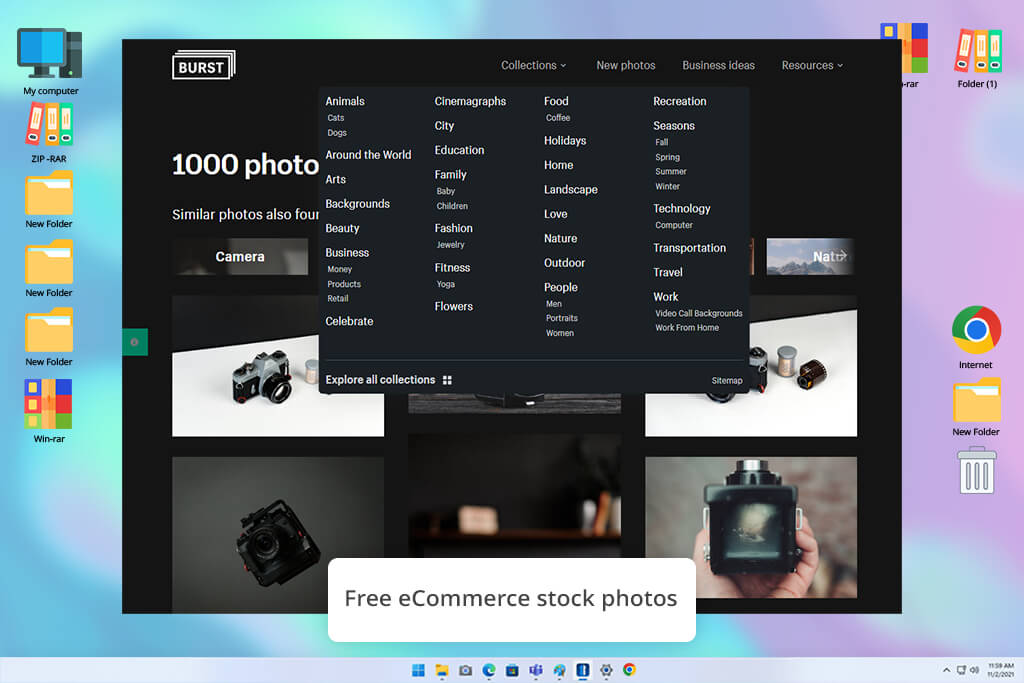
Are you looking for authentic, conversion-friendly visuals for an online store for free? Burst may suit you. Tested against premium platforms across product flat lays, packaging backgrounds, fashion, and social ad concepts, this platform proved surprisingly capable of holding its own.
Burst is Shopify's dedicated image platform, offering a fully open collection that requires no attribution, even for commercial projects. One standout usability feature is the option to choose between high-res files for crisp displays and low-res downloads ready for fast web performance. This simple distinction saves valuable time during site builds. It is an ideal iStock competitor for new storefronts, startup landing pages, email marketing, and social media content where keeping costs minimal is a priority.
“Burst isn’t the site I’d pick for every image search, but it’s surprisingly good for ecommerce. A lot of the product and small-business shots already look like something you could drop straight into a project.”

Naturally, it cannot compete with paid libraries in terms of legacy depth. Niche business concepts, highly specific industry scenarios, and campaign setups requiring consistent model sets will expose the catalog's limits. Furthermore, Burst operates in a legacy maintenance state and no longer accepts fresh creator submissions, meaning the current media pool will not expand over time.
While it cannot fully replace a paid subscription for complex, enterprise-level campaigns, Burst remains an exceptionally useful free asset for ecommerce projects, earning a well-deserved spot among the best secondary visual tools for selling photos online.
Pricing: Free entire library
This evaluation started as a simple Instagram poll but quickly turned into an eye-opening experiment. After learning that iStock remains the hardest platform for our FixThePhoto followers to replace, we set out to discover why endless options haven't solved the problem.
To get answers, the FixThePhoto team gathered 50+ stock sites from Reddit, YouTube, forums, and reader tips. Then, we analyzed each platform through a dual lens, testing the user experience for both buyers seeking content and creators looking to monetize their work.
“I was pleasantly surprised by how much I could get from 123RF without spending lots of money. For everyday blog graphics and marketing visuals, it is a solid budget-friendly option.”

I systematically tested each iStock alternative, using identical queries, ranging from everyday lifestyle and business visuals to tricky niche requests. I paid attention to search precision, filtering efficiency, licensing clarity, and whether checkout pricing remained transparent.
Simultaneously, my team tested the creator experience by registering as contributors and uploading photos, illustrations, and AI content. We analyzed royalty structures, review speed, AI disclosure policies, and exclusivity terms to determine if each site like iStock offers a viable earning opportunity for modern creators trying to build a sustainable stock workflow.
“I like using Unsplash when standard stock images look too stiff and business-like. There’s a lot more personality in the photos, which works really well for headers, editorial layouts, and mood-focused designs.”

AI introduced a crucial new benchmark. I evaluated whether buyers could filter out AI-generated content and if contributors were permitted to upload it.
Some well-known names didn’t satisfy us:
Instead of just counting photos, we tested stock sites on real-world usefulness. The winners are the exact platforms our team would keep using day in and day out long after the test run is over.