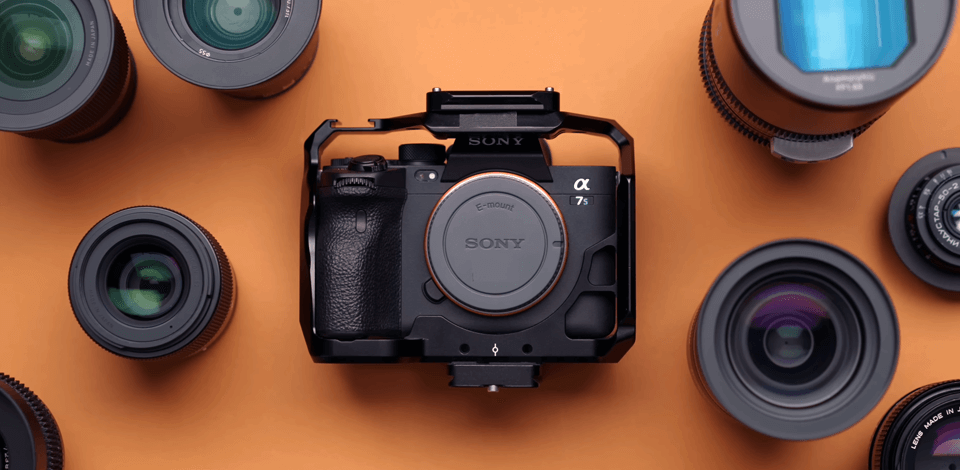
I recently upgraded to a Sony Alpha camera and couldn’t be happier with its advanced features and incredible image quality. As a travel photographer, I’m passionate about capturing breathtaking landscapes and vibrant cityscapes, so I can’t do without wide-angle lenses for Sony.
My current lens, the Sony FE 24-105mm f/4 G OSS, often fails to convey the expansiveness of open landscapes or the fine details of city structures. To elevate my photography, I decided to test 20+ wide-angle lenses for Sony, to find the best option.
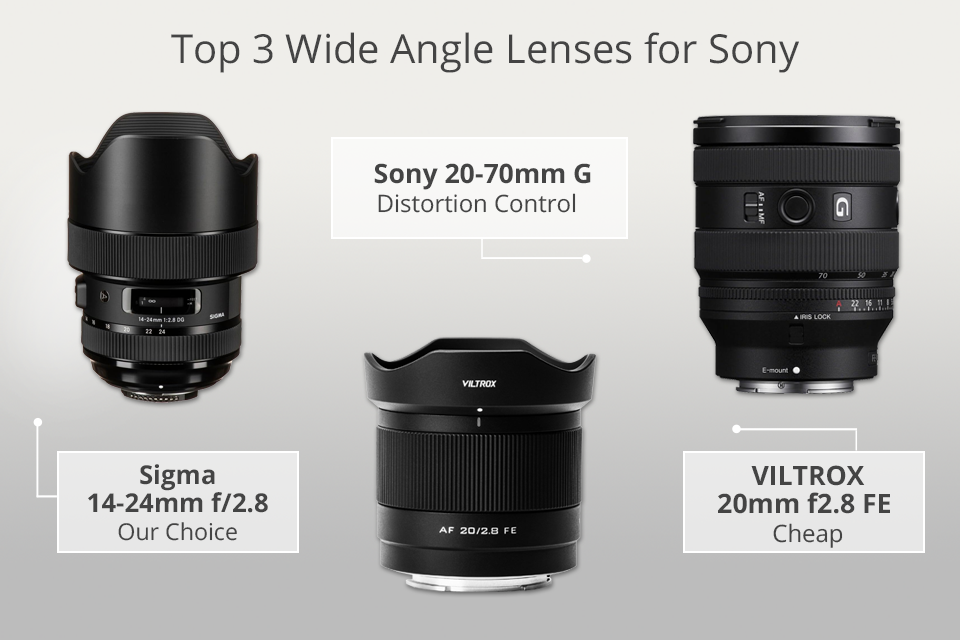
 Sigma 14-24mm f/2.8 ★★★★☆ (4.5/5)
It is one of the best wide angle lenses for Sony due to its outstanding sharpness, fast f/2.8 aperture for low-light performance, and minimal distortion even at its widest focal lengths. Its durable, weather-sealed design makes it perfect for outdoor photography.
When it comes to picking the perfect wide-angle lens for my Sony camera, I stumbled across several questions. Should I choose a prime lens or a zoom lens? What aperture range would work best for my needs? Is image stabilization something I should prioritize? And, most importantly, how can I find a lens that delivers great quality without exhausting my budget?
I want a lens that can meet the following requirements:
Versatility. The chosen lens should handle landscapes, architecture, and astrophotography.
Lightweight design. Since I often travel, portability is one of the most essential aspects.
Sharpness and distortion control. I’m looking for a lens that delivers sharp, crisp details while minimizing the distracting distortion commonly seen in wide-angle photography.
Budget-friendly options. I’m looking for great quality without spending a fortune.
A wide-angle lens generally has a focal length shorter than standard lenses, enabling you to capture a broader field of view.
| Type of lens | Focal lenght | Usage |
|---|---|---|
|
Standard wide-angle
|
35mm to 24mm
|
Landscapes, street photography, and environmental portraits. ✔️ Wide enough to capture more of the scene without too much distortion. |
|
Ultra-wide-angle
|
24mm to 14mm
|
Dramatic perspectives, architecture, and astrophotography. Objects in the foreground appear more prominent, while the background looks more distant. ❌ This can lead to noticeable distortion, particularly near the edges of the frame. |
|
Fisheye lenses
|
8mm to 15mm
|
Extremely wide field of view, often up to 180° or more for creative, artistic, or specialized shots. ❌ It creates significant distortion, causing straight lines to appear curved or bent. |
For full-frame cameras, these focal lengths create the classic wide-angle look. However, if you’re using a crop-sensor camera (APS-C), the crop factor requires a shorter focal length (like 10mm-20mm) to match the field of view of a wide-angle lens on a full-frame sensor.
When it comes to general wide-angle photography with your Sony, lenses between 24mm and 35mm are a practical and versatile choice for most scenarios.
|
Amazon:
|
800+ sold in past year
|
|
B&H:
|
12K+ sold in past year
|
|
Adorama:
|
9K+ sold in past year
|
This Sony lens provides outstanding image quality across its entire zoom range. Its cutting-edge optical construction includes three aspherical elements, five SLD (Special Low Dispersion) elements, and one FLD (Fluorite Low Dispersion) element, delivering crisp, vibrant images with virtually no chromatic aberration.
Sigma’s NPC (Nano Porous Coating) technology improves image clarity by minimizing ghosting and flare, even in difficult lighting situations.
“This lens is super sharp, even at f/2.8, and handles flare and ghosting really well - shooting into the sun is no problem anymore. Its weather-sealing has saved me so many times in the rain.”

Lens’ remarkable sharpness, which remains impressive even at its maximum aperture of f/2.8, was a real bonus for me. This is an excellent choice for photographing intricate architectural details and expansive landscapes with stunning clarity.
The ultra-wide viewing angle (114° at 14mm) enabled me to capture expansive, immersive shots of both urban environments and natural settings. Additionally, the fast aperture was ideal for low-light conditions, allowing me to shoot during sunrise, sunset, or even nighttime while maintaining exceptional image quality.
|
Compatible cameras:
|
Sony Alpha A7 series (A7 III, A7 IV, A7R IV, A7S III, etc.), Sony Alpha A9 series, Sony Alpha A1, Sony Alpha FX3
|
|
Lens construction:
|
18 elements in 13 groups
|
|
Angle of view:
|
114-84mm
|
|
Diaphragm blades:
|
11 (rounded for smooth bokeh)
|
|
Min. focusing distance:
|
0.28m
|
|
Max. magnification ratio:
|
0.14x
|
|
Filter attachment thread:
|
N/A
|
|
Dimensions:
|
85x131mm
|
|
Weight:
|
795g
|
|
Amazon:
|
200+ sold in past year
|
|
B&H:
|
10K+ sold in past year
|
|
Adorama:
|
2K+ sold in past year
|
When I began looking for the best wide angle lens for Sony A7 III, staying within my budget was a top priority. The VILTROX 20mm f/2.8 FE grabbed my attention due to its price and impressive features, making it a great affordable lens for astrophotography.
Despite its affordable price, the VILTROX 20mm f/2.8 FE boasts a compact and lightweight build, with a sleek metal exterior that feels surprisingly high-quality. While its body is not weather-sealed, the lens is durable enough for everyday shooting. I had no trouble taking it for long hikes or urban adventures, as it didn’t weigh down my camera bag or take up much space.
“For its price, this budget wide angle lens for Sony is an absolute bargain! The autofocus, though not the fastest, gets the job done. While it’s not the sharpest, particularly in the corners, it’s tough to complain given how affordable it is.”

The center sharpness is outstanding, even at the widest aperture of f/2.8. However, as with many budget lenses, the corners tend to be softer, particularly at lower apertures. Closing down to f/4 or f/5.6 noticeably enhances edge sharpness. The lens performed well for casual landscape photography on my full-frame camera.
It handles chromatic aberrations decently, though you might notice slight color fringing in high-contrast situations. Vignetting is visible at f/2.8, but it can be adjusted in post-production or by stopping down the aperture. Given the lens’s budget-friendly cost, these flaws didn’t bother me much.
|
Compatible cameras:
|
Sony Alpha A7 series (A7 III, A7 IV, A7C, A7R IV, A7S III), Sony Alpha A9 series, Sony Alpha A1, Sony Alpha FX3, Sony APS-C models (A6100, A6400, A6600)
|
|
Lens construction:
|
10 elements in 8 groups
|
|
Angle of view:
|
94°
|
|
Diaphragm blades:
|
9
|
|
Min. focusing distance:
|
0.25m
|
|
Max. magnification ratio:
|
0.10x
|
|
Filter attachment thread:
|
67mm
|
|
Dimensions:
|
70x55mm
|
|
Weight:
|
160g
|
|
Amazon:
|
50+ sold in past year
|
|
B&H:
|
16K+ sold in past year
|
|
Adorama:
|
8K+ sold in past year
|
|
Best Buy:
|
10K+ sold in past year
|
The Sony 20-70mm G, a lens for Sony A7III and other models of the Alpha series, offer an impressive combination of extended zoom range, premium optics, and consistent performance.
What sets this lens apart in the wide-angle category is its unique 20-70mm focal range, which is wider than the typical 24mm starting point of most standard zoom lenses. This extra width is a game-changer for landscape and architectural photography, allowing photographers to capture expansive views without having to rely on a prime lens.
“This lens is super versatile. The 20-70mm range works for almost everything I shoot, from wide landscapes to portraits. The image quality is great at all zoom levels, and the autofocus is really fast and accurate.”

With an optical design comprising 16 elements in 13 groups and advanced coatings to combat chromatic aberrations, flare, and ghosting, the Sony 20-70mm G lens delivers outstanding performance. When I tested it, I was blown away by its sharpness and clarity, even when shooting wide open at f/4.
The colors were rich and true-to-life, thanks to Sony’s advanced lens coatings, requiring minimal post-processing. Even at the 20mm end, barrel distortion is slight and easily corrected in-camera, so my architectural shots remained free of any noticeable warping.
|
Compatible cameras:
|
Sony Alpha A7 series, Sony Alpha A9 series, Sony Alpha A1, Sony Alpha FX3
|
|
Lens construction:
|
16 elements in 13 groups
|
|
Angle of view:
|
94°–34°
|
|
Diaphragm blades:
|
9 (rounded for smooth bokeh)
|
|
Min. Focusing Distance:
|
0.25m (wide) / 0.3m (telephoto)
|
|
Max. magnification ratio:
|
0.39x
|
|
Filter attachment thread:
|
72mm
|
|
Dimensions:
|
78.7x99mm
|
|
Weight:
|
488g
|
|
Amazon:
|
1K+ sold in past year
|
|
B&H:
|
13K+ sold in past year
|
|
Adorama:
|
5K+ sold in past year
|
This lens is tailored for full-frame Sony E-mount devices but also works well with APS-C cameras, factoring in the crop effect. It’s a great lens for Sony A6000, which is a favorite model among FixThePhoto specialists. For my landscape and architecture photography, the 14mm focal length delivers a broad perspective, perfect for wide horizons and fine architecture.
The Rokinon 14mm f/2.8 is a manual focus lens, which required some practice at first. I relied on Sony’s focus peaking and zoom tools to get sharp shots. Once I got comfortable with it, I really enjoyed the smooth focus ring, especially for capturing stars and detailed landscapes.
“While it may not be the most adaptable lens, it excels in specific scenarios like capturing wide landscapes or night photography. Some edge distortion is noticeable, but that’s typical for a lens with this focal length.”

The lens is light and small, making it easy to carry on long hikes or trips. The fixed focal length made me think more carefully about my shots, helping me create more creative and thoughtful photos.
However, this budget wide angle lens for Sony A6000 is not weather-sealed and lacks AF, making it a less versatile solution. I really liked using manual focus, but beginners might find it a bit tricky at first.
|
Compatible cameras:
|
Sony Alpha A7 series, Sony Alpha A9 series, Sony Alpha A1, Sony FX3
|
|
Lens construction:
|
14 elements in 10 groups
|
|
Angle of view:
|
114°
|
|
Diaphragm blades:
|
6
|
|
Min. focusing distance:
|
0.28m
|
|
Max. magnification ratio:
|
0.08x
|
|
Filter attachment thread:
|
N/A
|
|
Dimensions:
|
87x96mm
|
|
Weight:
|
570g
|
|
Amazon:
|
550+ sold in past year
|
|
B&H:
|
20K+ sold in past year
|
|
Adorama:
|
11K+ sold in past year
|
|
Best Buy:
|
8K+ sold in past year
|
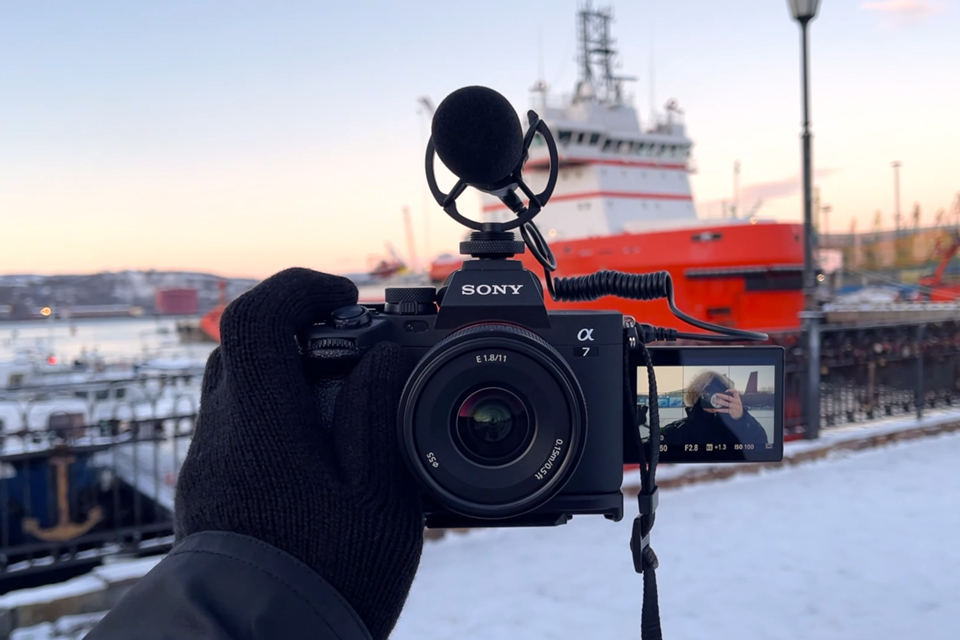
The Sony E 11mm f/1.8 is a small, light compact prime lens made for Sony APS-C mirrorless cameras. Its 11mm focal length (like 16.5mm on full-frame) gives a super-wide view, great for landscapes, buildings, and vlogging. For me, it was perfect for capturing dramatic angles in architecture and wide, open landscapes.
The bright f/1.8 aperture excels at isolating subjects and creating mesmerizing bokeh in macro shots. This lens for Sony A6400 also offers excellent performance in low-lit spaces, which is crucial for night photography projects.
“This lens is small, sharp, and fast – it’s hard not to love it! I primarily use it for real estate and indoor photography, as it’s excellent for fitting everything into the shot.”

While testing, I discovered that even though it’s an ultra-wide lens, distortion is kept to a minimum. I was pleased to see that straight lines stayed accurate, which is essential for architectural photography. Additionally, the advanced optical design ensured that chromatic aberrations were almost fully absent, even in high-contrast situations.
Sony E 11mm f/1.8 caters well to videographers and vloggers. Its ultra-wide field of view, paired with its compact and lightweight build, makes it incredibly easy to use for handheld shooting. I found it the best wide angle lens for creating vibrant travel videos and smooth real-estate walkthroughs.
|
Compatible cameras:
|
Sony APS-C models (A6000 series like A6100, A6400, A6600)
|
|
Lens construction:
|
12 elements in 11 groups
|
|
Angle of view:
|
105°
|
|
Diaphragm blades:
|
7 (rounded for smooth bokeh)
|
|
Min. focusing distance:
|
0.12m
|
|
Max. magnification ratio:
|
0.20x
|
|
Filter attachment thread:
|
55mm
|
|
Dimensions:
|
66x57.5mm
|
|
Weight:
|
181g
|
When the FixThePhoto team started testing and ranking the best wide-angle lenses for Sony, we focused on how they perform in real-world situations. We wanted to give useful advice for photographers and videographers, whether they’re shooting landscapes, buildings, or vlogs. Here’s how we did our testing:
Technical image quality tests. Along with real-world testing, we ran technical tests to compare the image quality of lenses with several crop sensor and full frame bodies. These tests covered:
Low-light and night performance. To fully test wide-angle full-frame lenses for Sony cameras, evaluating their low-light performance is essential. We put each lens to work in:





![7 Best Everyday Cameras [No BS Reviews]](http://fixthephoto.com/blog/images/gallery/news_main__preview_28403.png)