As a web designer at FixThePhoto, my role involves crafting visually impressive websites for photographers, whether it's portfolios, service pages, or landing pages. Over time, I realized my old laptop couldn't keep up with modern features anymore: it constantly froze at the worst moments, making it clear I needed a specialized laptop for web design.
Creating websites for photographers is a unique challenge. Each project demands detailed photo galleries, crisp high-resolution images, and dynamic interactive features. I rely heavily on Adobe XD, Photoshop, and Illustrator while simultaneously testing layouts across different browsers. Unfortunately, my old laptop couldn’t keep up: basic tasks like live previews lagged unbearably, and even opening multiple tabs would cause it to overheat and struggle.
To make matters worse, the display doesn’t feature accurate colors, which is a huge problem when working with photographers who need perfect color reproduction. Picture showing a client their portfolio, only to realize the colors looked wrong because my screen wasn’t calibrated properly. It was beyond frustrating, and I knew I had to fix it.
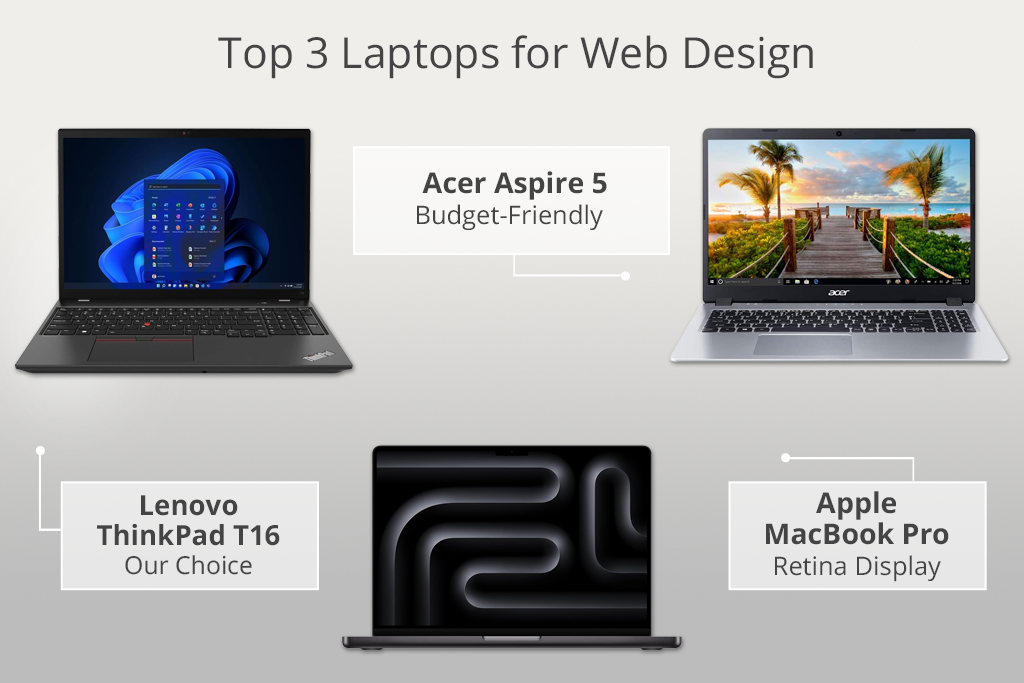
 Lenovo ThinkPad T16 ★★★★★ (5/5)
This is the best laptop for graphic design and web development, as it combines an Intel Core i7 processor and up to 32GB of RAM for smooth, lag-free multitasking. The 16-inch WUXGA display delivers precise color reproduction and plenty of room to work on pixel-perfect designs.
I was searching for a laptop capable of handling my intensive work requirements. The most important criteria were:
As a web designer, you need a fast, reliable laptop. A slow or old one makes everything harder - programs lag, colors look wrong, and your work takes longer. Don't let bad equipment ruin your productivity.
You're putting the final touches on a photographer's portfolio, carefully arranging every image and text element. Then your computer begins to lag - suddenly, simple actions like moving photos become slow. But the real headache comes when you realize the colors on your screen don't match the printed version or other devices. Now you're stuck in a cycle of endless corrections.
Your work setup matters too. A blurry or dim screen makes your eyes tired, and a bad keyboard turns coding into a real nightmare. When you're always fighting with your computer, you spend more time fixing problems than designing - it drains your energy and kills creativity.
A good laptop for web designers changes everything. With fast speed, enough memory, and true-to-life colors, your ideas can move smoothly from your mind to the screen. A comfortable design lets you work for hours without strain, so you can focus on one thing - making your creative vision real.
| Component | Minimum Requirement | Reason |
|---|---|---|
|
Processor (CPU)
|
Intel Core i5 or AMD Ryzen 5
|
Runs multiple programs smoothly at once
|
|
RAM
|
8 GB
|
No delays when switching between apps
|
|
Storage
|
256 GB SSD
|
Files open fast, and the laptop starts up quickly
|
|
Graphics Card (GPU)
|
Integrated Graphics
|
Great for everyday design work (unless you’re doing heavy 3D or video editing)
|
|
Display
|
14-15.6", Full HD
|
Sharp screen with plenty of room for your projects
|
|
Battery Life
|
6-8 hours
|
Lightweight and easy to carry for remote work
|
|
Ports
|
USB-A, USB-C, HDMI
|
Connect external devices with no efforts
|
|
Operating System
|
Windows 10/11 or macOS 12+
|
Works well with popular design software
|
|
Keyboard & Trackpad
|
Backlit, Responsive Trackpad
|
Comfortable keyboard for long hours of work
|
|
Connectivity
|
Wi-Fi 6, Bluetooth 5.0
|
Reliable Wi-Fi and seamless connections to other devices
|
|
Weight
|
Under 4 lbs (1.8 kg)
|
Easy to take with you if you’re always on the move
|
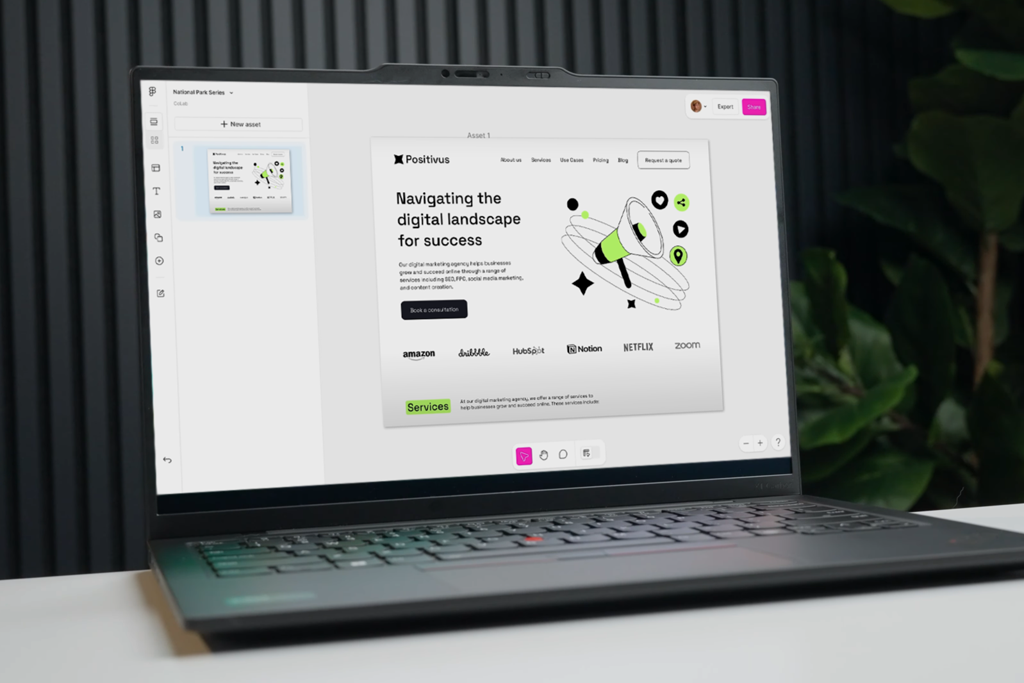
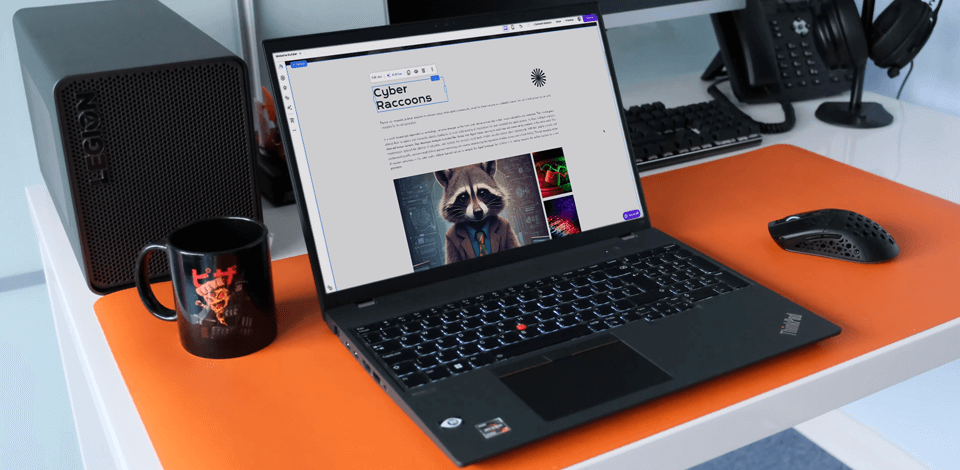
When I first took the Lenovo ThinkPad T16 out of the box, its solid build immediately stood out. Although it was a bit heavier than ultraportables, the sleek, professional design balanced its sturdy feel. My test unit in Storm Grey featured an aluminum lid and a reinforced bottom casing, clearly built for durability wherever you work.
“The battery easily lasts all day - even through video calls and running multiple apps at once. While it’s not the lightest laptop, considering its rugged build and reliable performance, this is not a problem”

The ThinkPad T16's 16-inch screen (with its tall 16:10 shape) makes this model the best laptop for web design students. The extra height means I can see more of my layout at once with almost no scrolling. The sharp WUXGA resolution keeps everything clear, with colors that look true to life, which is critical for making sure every website detail is pixel-perfect.
This Lenovo laptop packs strong performance with its Intel Core i7 processor and up to 32GB RAM, making multitasking smooth and easy. I put it to the test by running Adobe XD, Photoshop, and many Chrome tabs all at once - it handled everything without lag. If you do light photo editing, the optional NVIDIA GeForce MX550 graphics card gives it an extra performance boost.
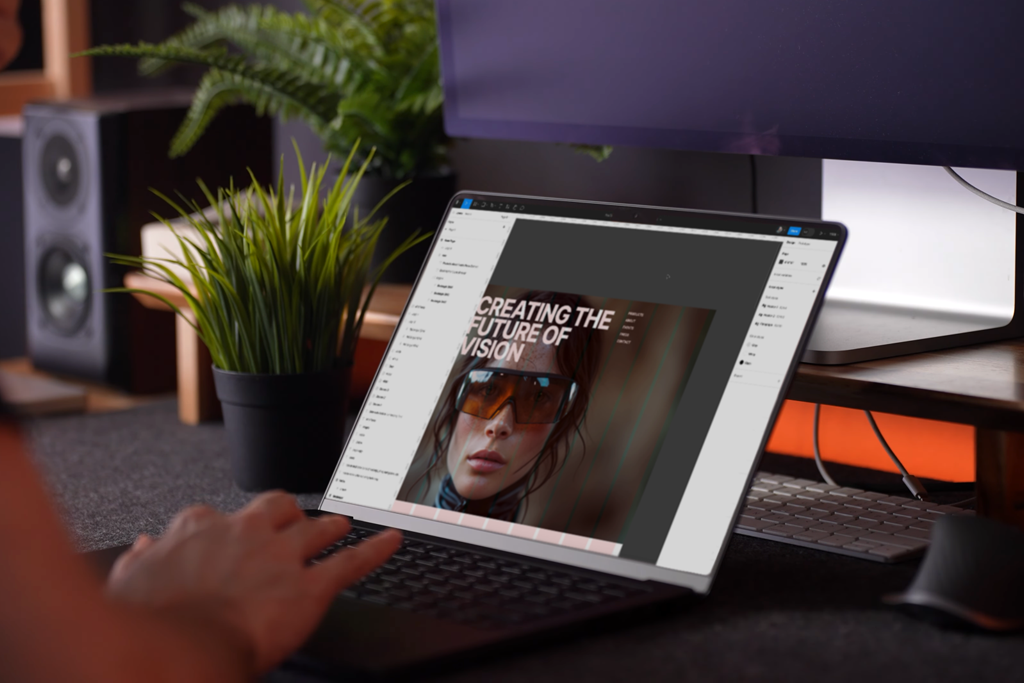
If you are a web designer whose specialization is photography portfolio, the Apple MacBook can become your handy assistant. Its standout features are crisp display, solid performance, durable battery – actually everything, I was missing with my previous laptop.
The MacBook Pro's 16-inch screen shows colors perfectly and gets very bright. Its True Tone feature automatically adjusts colors to match the light around you, whether I'm in the office or at a client meeting, everything looks right without me having to fix it.
The Apple M1 Pro chip makes multitasking smooth and effortless. It's both powerful and efficient, loading and rendering designs instantly - no more waiting like with my old slow laptop. Plus, this Apple laptop has a battery that lasts up to 10 hours, so I can keep designing even when traveling or away from power outlets.
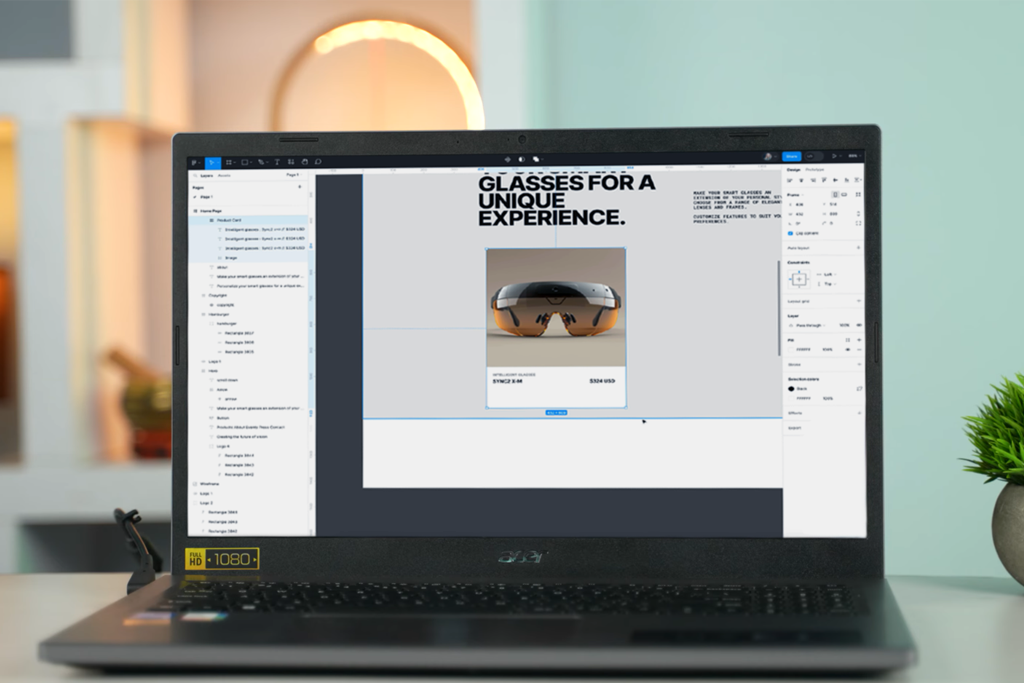
I needed to build a basic portfolio website without animations or complex visuals, so I tried the reasonably-priced Acer Aspire 5. Its anti-glare matte screen made it comfortable to work in brightly lit areas, while the Full HD display offered sufficient sharpness for all my web design work.
“It's lightweight for easy carrying, and the 6-7 hour battery life works well for meetings or mobile work sessions.”

The Intel Iris Xe graphics aren't top-level, but they handle everyday design programs surprisingly well for an integrated chip. I especially appreciate the variety of ports - you get USB-C, USB-A, HDMI, and even Ethernet, making it easy to hook up all your gear. While I wish there were more USB-C ports, this versatility makes this option a great laptop for working from home, especially if you need to connect multiple devices.
I took the Aspire 5 to client meetings to test its real-world performance - both on battery power during editing sessions and video calls. What really stood out was the reliable Wi-Fi, which kept cloud files syncing instantly and made online collaboration seamless, whether I was working from a café or shared workspace.
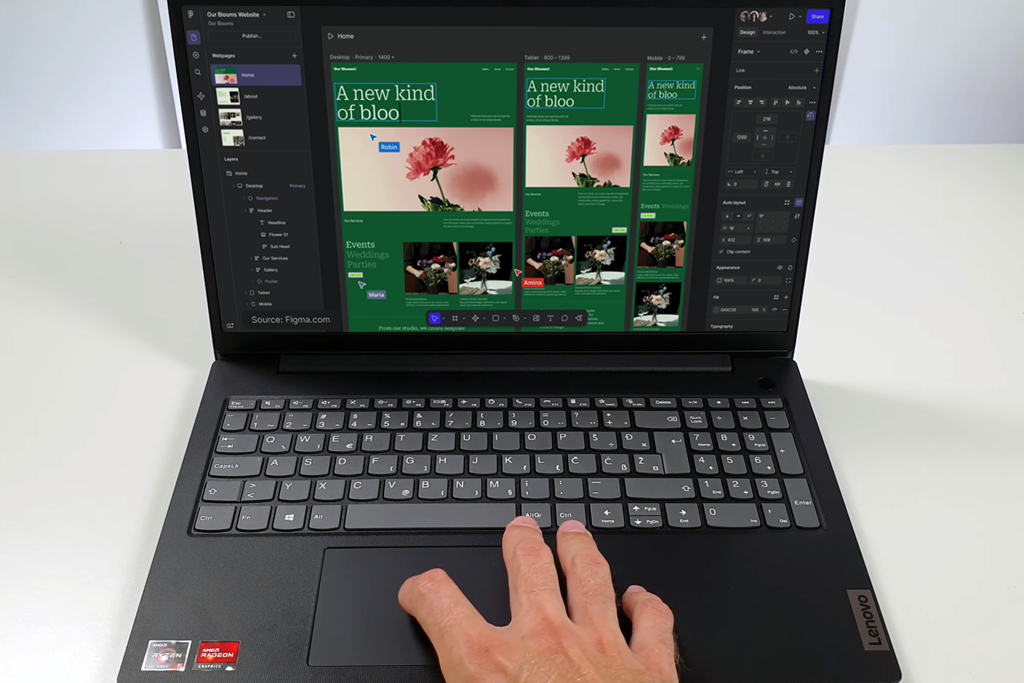
When testing the Lenovo V15 as laptop for programming and web design, I constantly jumped between Chrome, Firefox, and Edge tabs to check how websites looked across different browsers. Even while running multiple Adobe apps at once, editing high-res Photoshop files, working on Illustrator vectors, and prototyping in XD, the laptop handled everything without breaking a sweat.
With 40GB of memory, the laptop switched between programs instantly - no waiting or crashes. Everything ran smoothly all day. The 1TB super-fast storage made starting up quick and moving large photo files nearly instant.
The included A-DATA external SSD is a great bonus: it lets you quickly and safely move large files, which is perfect for photographers with big portfolios. While the Full HD display works fine, the screen isn't as bright or color-accurate as more expensive models. Photographers who need precise colors might want to look elsewhere. That’s why I’d recommend this laptop for programming, rather than for design work.
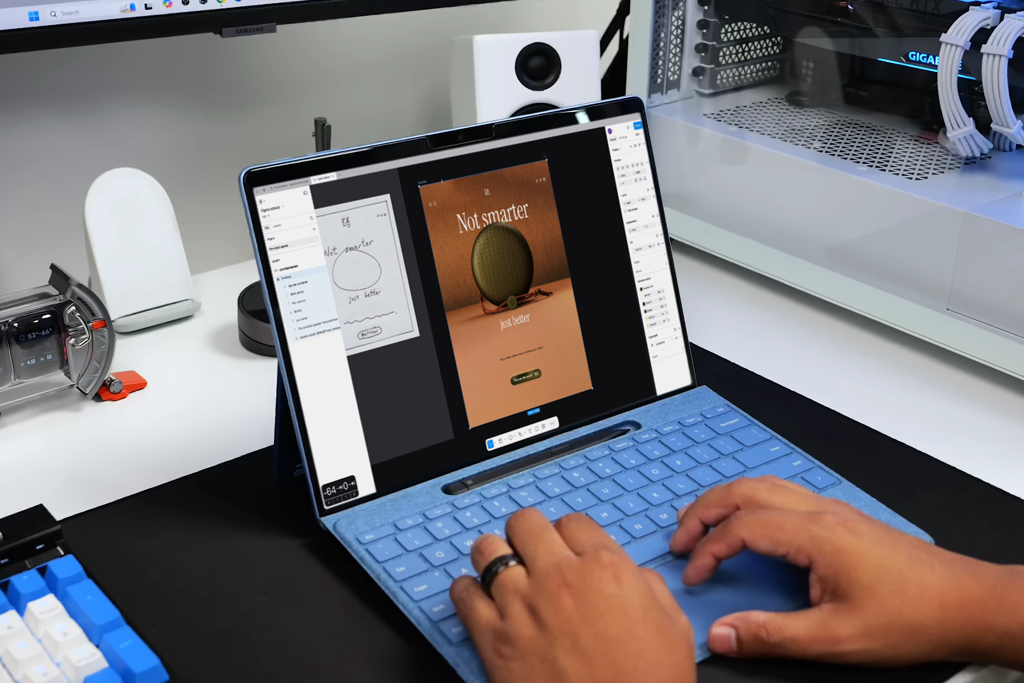
The standout feature of the Microsoft Surface Pro 11 was its brilliant 13" PixelSense screen. With ultra-sharp 2880x1920 resolution and deep contrast, every image looked vibrant and detailed - perfect for presenting photographers' portfolios accurately. The 120Hz refresh rate made everything feel smooth, whether scrolling through galleries or sketching layout ideas.
“What’s not to love? It’s incredibly lightweight and easy to carry around. The detachable keyboard and Surface Pen let me jump between typing notes and sketching concepts effortlessly. Plus, the all-day battery means I can work from anywhere without recharge.”

The Surface Slim Pen made sketching and adding notes effortless. It charges conveniently on the keyboard and has a comfortable, balanced feel. Drawing wireframes or editing designs directly on the screen was surprisingly accurate and natural, making it also an ideal laptop for drawing.
The ultra-wide front camera with automatic framing made client video calls more professional, keeping me perfectly framed even when moving around. Instant Copilot key is what I like most of all. Having quick AI access right from the keyboard is a neat productivity booster – it helps with tasks like summarizing notes or automating repetitive steps.
The wide-angle webcam automatically adjusts to keep me in the frame during video calls, even if I move around, which makes meetings look more polished. But my favorite feature is a dedicated Copilot key. Having instant AI help at my fingertips is a game-changer, whether I need to condense notes or automate boring tasks.
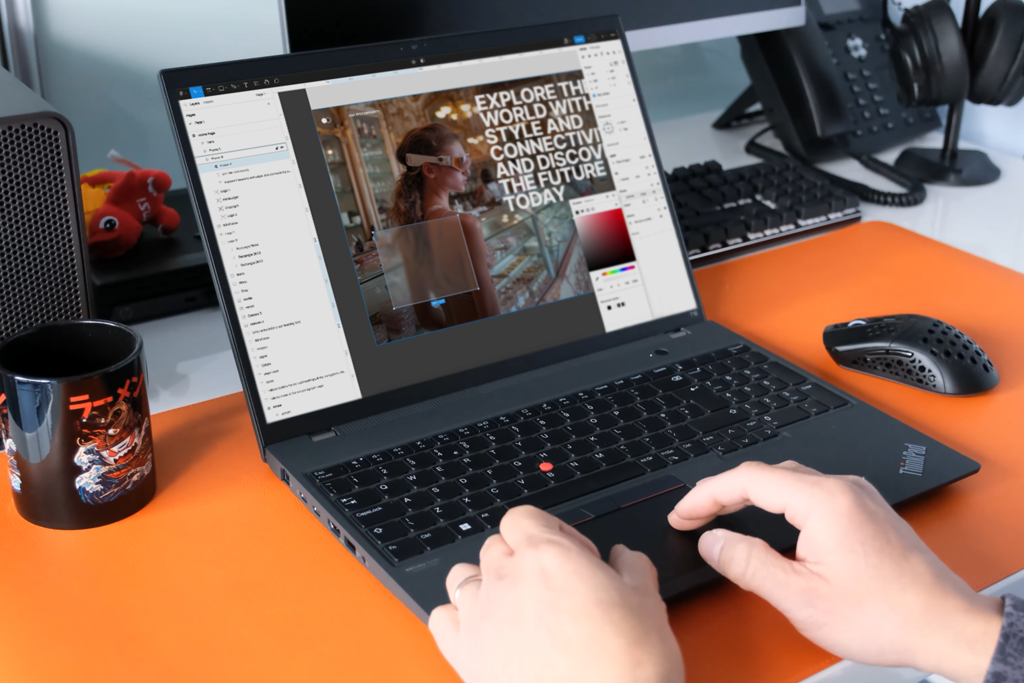
What caught my eye about this model was its recycled carbon fiber body. I wanted to test it both for its eco-friendly design and because forum users kept recommending it when I was researching laptops for web design to review. At just 2.41 pounds, it’s amazingly light yet still feels rock-solid.
The keyboard's slightly rough keys help you type accurately without getting tired, even after hours of work. The big touchpad works well, but I like the ThinkPad's red pointing stick most of all: it lets you move the cursor precisely and work faster.
The slimmer edges around the screen make it look more modern and give you a bit more display space. The Full HD screen is sharp and shows colors accurately, which is perfect for reviewing photo work. Even with heavy use, the battery easily lasts all day, so you won’t be stuck hunting for power outlets. If you need a laptop with long battery life, this is a great pick.
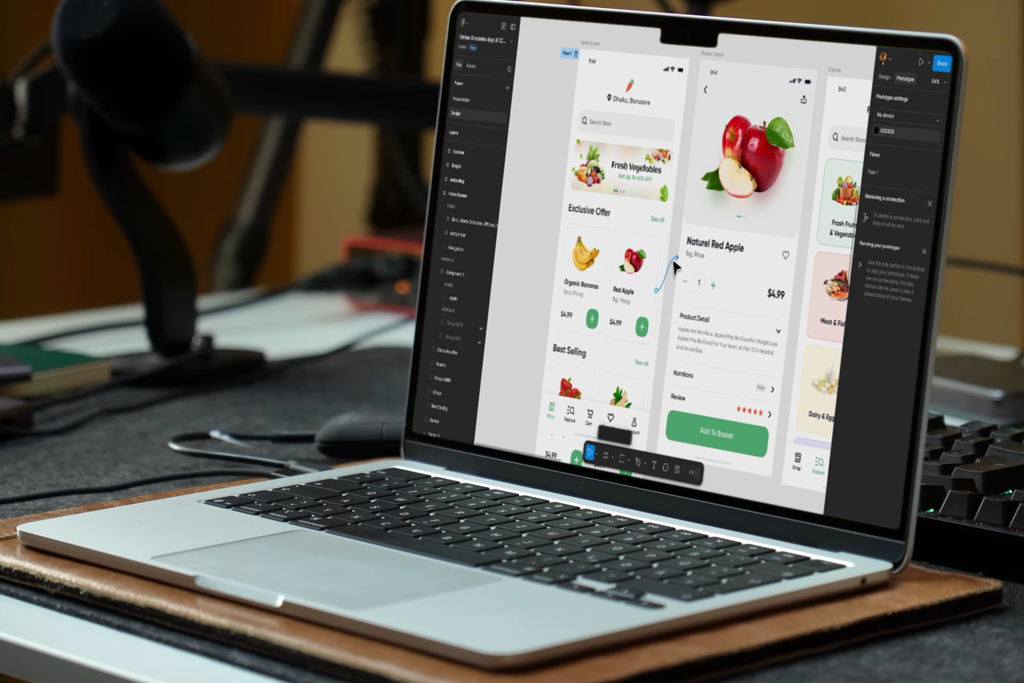
The MacBook Air's M4 chip makes everything fast and smooth. I could jump between apps without lag, even with 10+ browser tabs and design software open. The screen shows colors beautifully for photo work, and since it has no fan, it stays totally quiet. Adobe RGB laptop handled video exports and animations better than I expected, though it's not meant for heavy-duty professional work.
“The laptop is incredibly portable, making it ideal for switching workspaces throughout the day."

The battery life seriously impressed me. I put it through a full workday - apps, video calls, browsing - and after 8-9 hours, I still had around 20% left. Apple’s 18-hour estimate seems realistic for lighter use. If you’re always on the move, this kind of endurance is a total lifesaver.
The 12MP Center Stage camera keeps me in view during calls without me moving it. The four speakers make the sound clear and full. Plus, the laptop works smoothly with other Apple devices and uses smart features to help me work faster, all while keeping my info safe.
To check how good these laptops were for web design, I worked with the FixThePhoto team - Kate Debela, Vadym Antypenko, and Julia Newman. We tested each one by using common design programs like Adobe Photoshop, Adobe XD, and WordPress. We watched carefully to see how well they handled multiple tasks and big projects without slowing down.
Kate tested how practical and portable each laptop was: checking if they’d stay comfortable for all-day use, whether at a desk or while traveling. Meanwhile, Vadym analyzed the technical performance, measuring processing speed, RAM efficiency, and storage speed to confirm they could handle intensive coding and design tasks without lag.
Julia focused on two key areas: connectivity, testing how smoothly the laptops worked with external monitors; and display performance, checking for sharp visuals, true-to-life colors, and enough screen real estate for precision design work.
During the testing process, we tracked battery performance during real web design work, assessed keyboard comfort for programming, and evaluated durability. By combining our team’s diverse skills, we could thoroughly assess each laptop’s pros and cons for everyday design challenges.