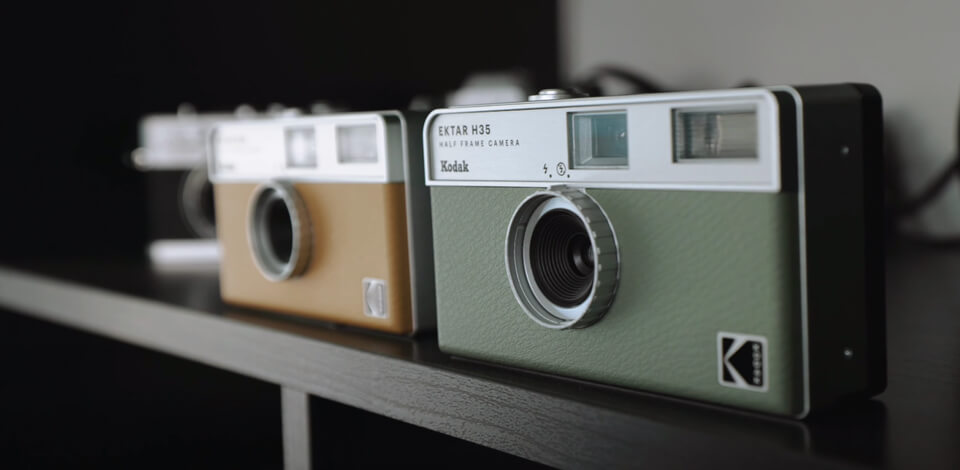
A follower asked me which half frame film camera to get, and I couldn’t find a truly helpful guide to share. Most lists just copy specs, but don’t elaborate on the feel, the quality, or the real-world use.
That’s when I joined forces with the FixThePhoto team to personally test 30+ half frame film cameras. We wanted to give you the full picture, not just the sales pitch.
 ★★★★★ (5/5)
I tested lots of half frame film cameras, and the Kodak Ektar H35 came out on top. It’s sleek, simple to handle, and perfect for daily shooting. Beginners will love its simple operation, and experienced users will enjoy its advanced capabilities.
With half frame film cameras, each frame of 35mm film holds two vertical photos instead of one. So instead of 36 photos, you get 72.
Half frame cameras are kind of special for me. They give you double the photos per roll, which means you can shoot more freely without worrying they you run out of frames. Besides, thanks to their small size, they are great for travel or daily use.
The most important thing for me is that such cameras spark creativity. They are suitable for capturing vertical scenes, making fun diptychs, or pairing shots to tell a story.
At first, I had doubts about half frame cameras. Film costs more, and many people are switching to other formats. So, I asked myself whether this little format is still useful or just holding on for old times’ sake. I needed to find out for myself.
Spending time with these cameras reminded me why I love them. They’re not just for show. They help you slow down, think about each shot, and enjoy the process. Since you get 72 photos from a single roll, you don’t feel like you’re wasting money. I could experiment, make mistakes, and still achieve amazing results.
I was honestly surprised by how many options this format offers. Some half frame cameras are automatic and perfect for quick snapshots, while others give you more control if you are an experienced film photographer, who likes to set the scene yourself. What’s more, they are suitable for different genres, be it street photography, everyday shooting, etc.
Half frame film cameras still have a spot in today’s world. They won’t take the place of your main camera, but they’re perfect for everyday moments. That’s exactly what happened to me during this test.
Amazon: 100+ bought in the past month
B&H: 1K+ sold in the past year
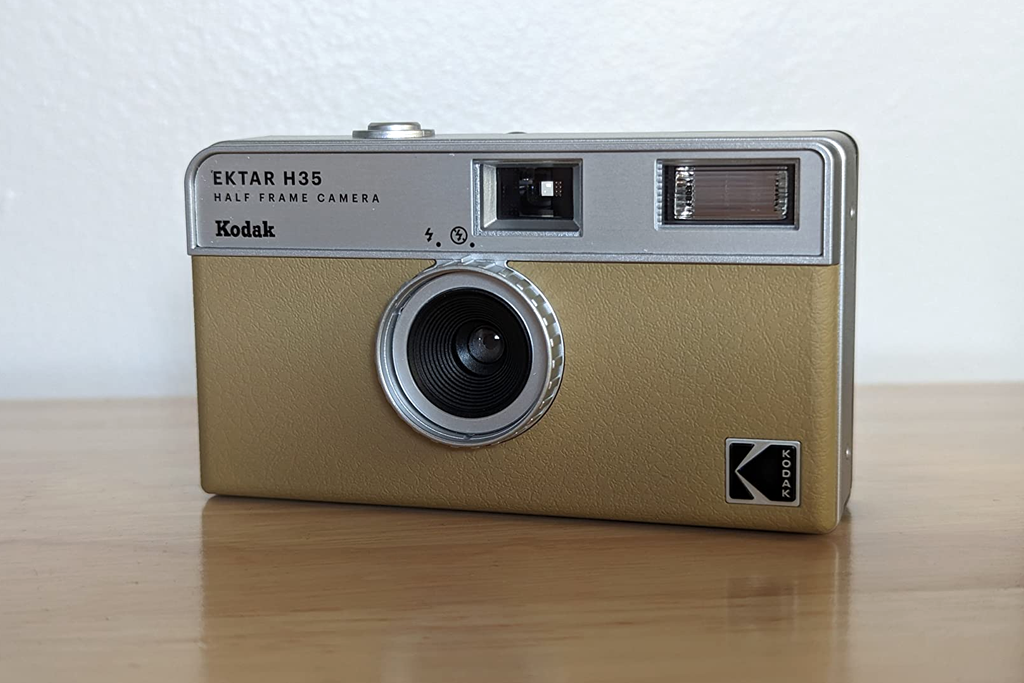
The moment we unboxed this camera, we opened our mouths in awe. It’s small, stylish, and feels so good in your hand. Kodak Ektar H35 has a silver finish and leather-style wrap. It’s hard not to like. I carried it in my pocket for a full week on walks, during lunch, and even on a random coastal road trip. It quickly became my go-to buddy.
Getting used to vertical shots took a bit of time. I typically shoot horizontally, so this was a challenge for me. But once I mastered it, the process went smoothly. I had fun framing narrow streets, shooting in twos, and playing with storytelling through diptychs. Sometimes, stepping out of your comfort zone really pays off.
When I saw the scans, I was pleased. The colors were beautiful, and the mood was just right. Several photos turned out softer than I expected, probably because of a shaky hand. Still, I liked the overall results.
If you are searching for a compact, stylish, and light-on-the-wallet model, this can be the best half frame film camera for you. Considering it is a little camera under $50, the resulting photos will exceed your expectations.
Amazon: 50+ bought in the past month
B&H: 600+ sold in the past year
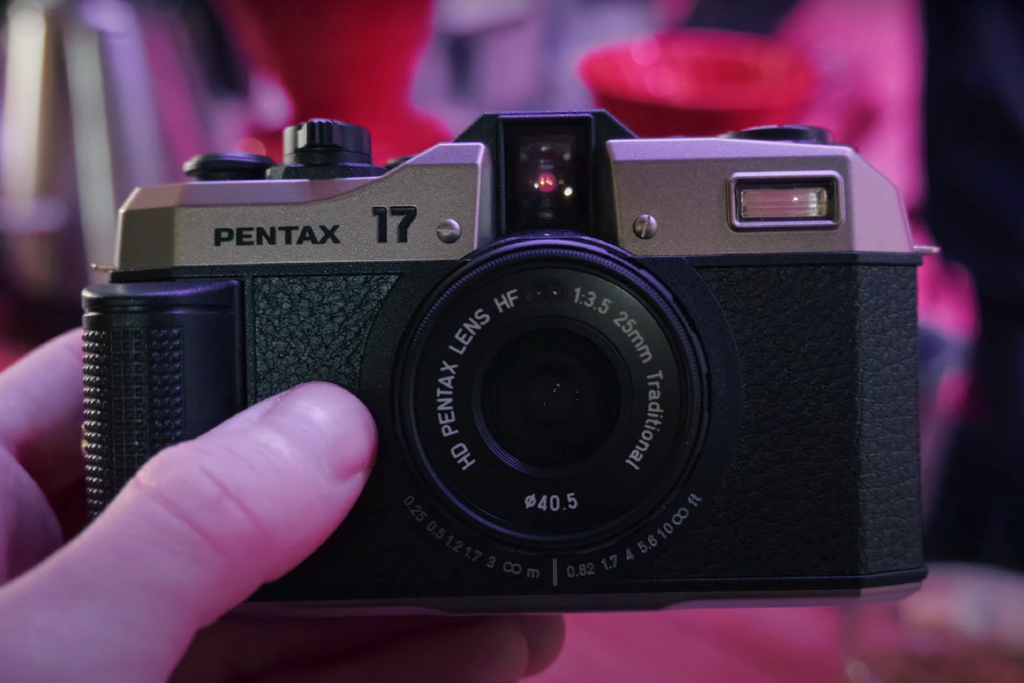
If I had to pick just one favorite, it would be the Pentax 17. It fits perfectly in the hand, and every part of it is built with care. I love the manual film advance and the satisfying shutter click. Even the small window on the back that shows the film type is a smart touch. You can tell this camera was made by people who know film photography inside and out.
I brought this camera along for a short trip and some sunset walks. I mainly shot in Program mode, only adjusting the flash when needed. The built-in flash was powerful. I also tried the Bokeh mode for some close-up garden photos. The background blur was impressive for such a compact camera.
The camera is simple to use, even with advanced settings. It is possible to just point and shoot, or enable exposure compensation and aperture priority when I want more control. The only downside was close-up shots. If you’re closer than 1.2 meters, the autofocus won’t work.
Amazon: 100+ bought in the past month
eBay: 900+ sold in the past year
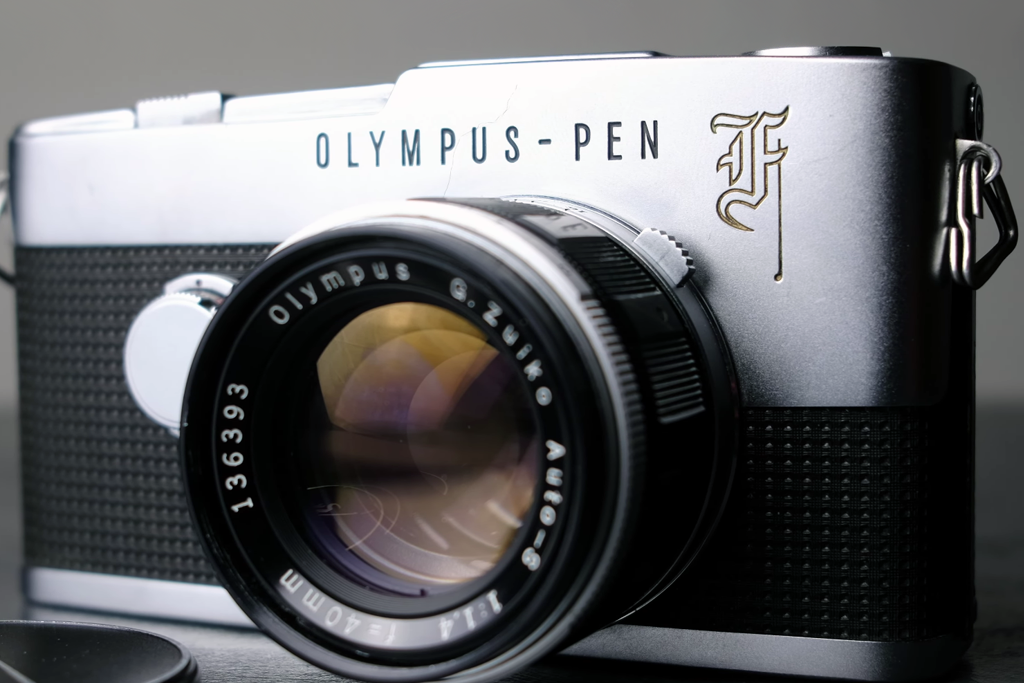
A coworker let me borrow this camera when she found out I was picking the best half frame camera. The Olympus Pen-F transcends many other models I’ve used. It’s a true SLR, which means you can switch lenses and control everything manually. Still, it is very compact. I used it during a few peaceful morning walks, and it felt more like a pro camera than a casual “toy”.
With the 38mm f/1.8 lens, I focused on simple scenes – quaint exteriors, storefronts, and the interplay of light and shadow on walls. By controlling the shutter speed and aperture, I had enough time to slow down and enjoy the process.
Focusing was fast. Besides, thanks to a bright viewfinder, I could virtually feel the moment. Compared to other half frame cameras, this one lets me fully immerse myself in the shooting process.
Keep in mind that this isn’t a typical point-and-shoot Olympus camera. I did miss a few candid moments while adjusting settings or checking focus. However, if you don’t mind slowing down and getting into the photography process, the Pen-F is a terrific model. No surprise, so many people want this camera in their collection.
eBay: 100+ sold in the past year
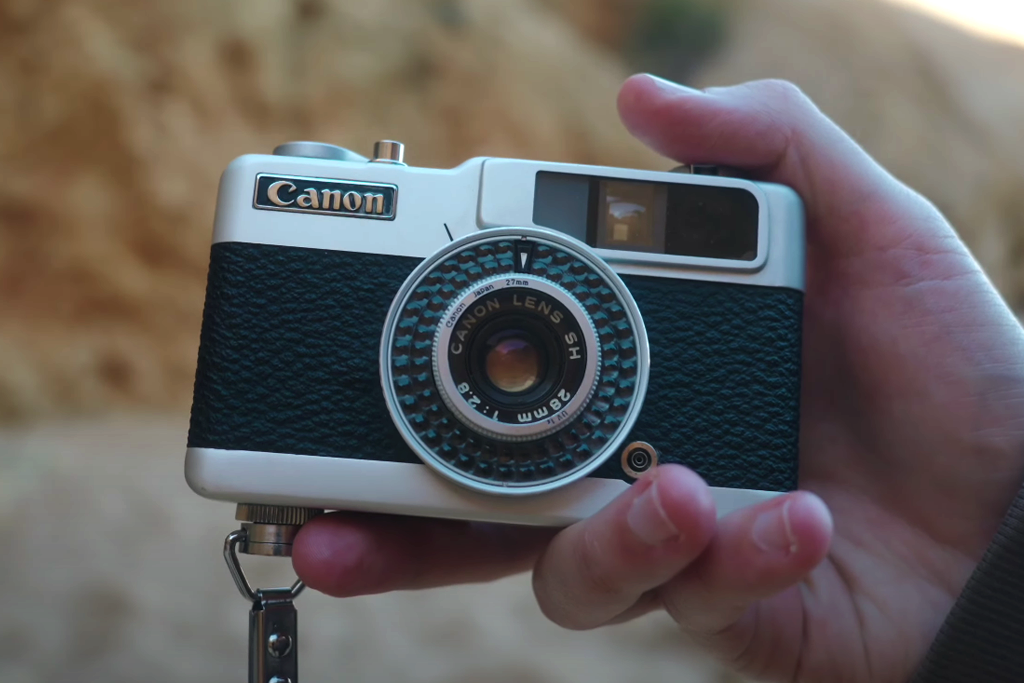
I own this camera, and I keep coming back to it when I want something easy to use, small, and reliable. When I first learned to use half-frame cameras, many of my colleagues recommended the Canon Demi. It’s built tough, fits nicely in your hand, and the 28mm f/2.8 lens creates soft, beautiful pictures. Generally, it is great for daily shooting.
I often take my Demi with me when I’m out in the city. For instance, I can take unplanned photos while doing errands, hanging out in cafes, or just walking along the streets. I mainly use zone focusing. It took some practice to master it, but after a few rolls of film, I do it without thinking.
One thing I love about this Canon camera is that I can choose the built-in meter or go fully manual. Besides, it’s simple to switch between the two. The images are very expressive and deep. You may notice slight distortion in the corners, but it doesn’t spoil pictures and makes them even more unique instead.
Once, I had to slow down while shooting in strong sunlight. I needed to adjust the exposure manually. It was a small delay that didn’t spoil my experience. Generally, if you are into film photography, the Demi is a solid choice.
eBay: 50+ sold in the past year
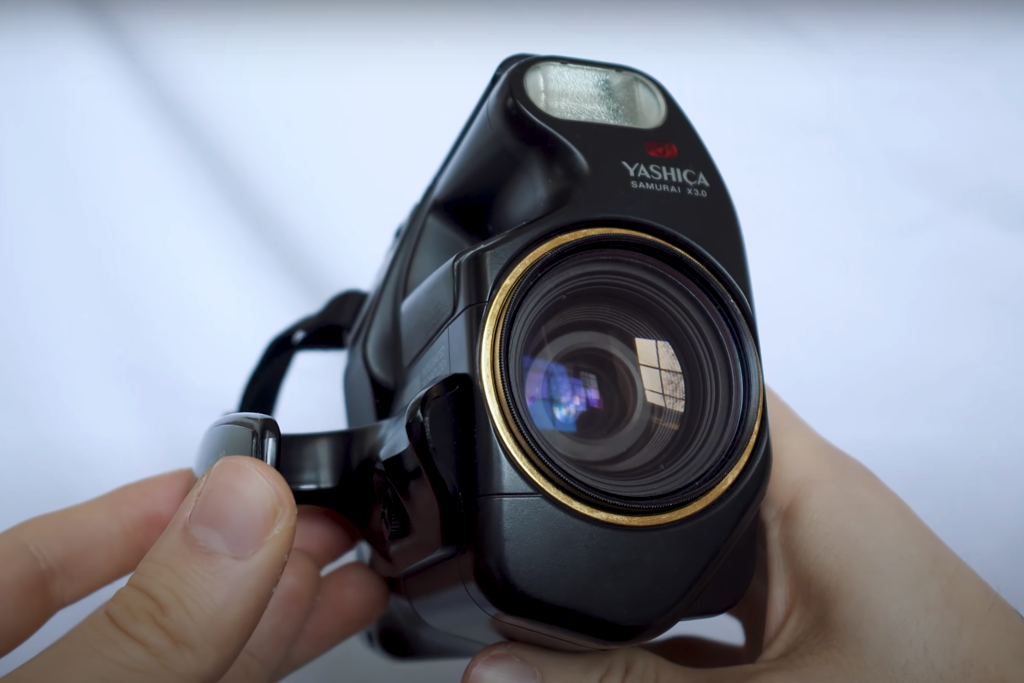
I got lucky when a friend found a Yashica Samurai hiding in her closet and let me test it. It has a quirky design, resembling a vintage camcorder, so some people stared at me. But once I started shooting, I didn’t want to stop. With its sideways half-frame style, zoom lens, and full-auto mode, this camera makes shooting enjoyable.
I tested the camera at a lively street event and a relaxed picnic. Such settings are terrific for evaluating the capabilities of an automatic camera. I didn’t have to adjust anything - just point and shoot. Thanks to the 25–75mm lens, it was easy to switch between big crowd shots and tighter portraits. Though this half frame film camera looks a little odd, it delivers impressively sharp images.
It’s not the smallest camera out there. In fact, it is better suited for wearing across your shoulder than tossing in a tote. But once you start using it, you’ll see that its simplicity is worth the extra size. It’s a great “just-for-fun” film camera that lets you enjoy the moment without getting bogged down in settings.
eBay: 100+ sold in the past year
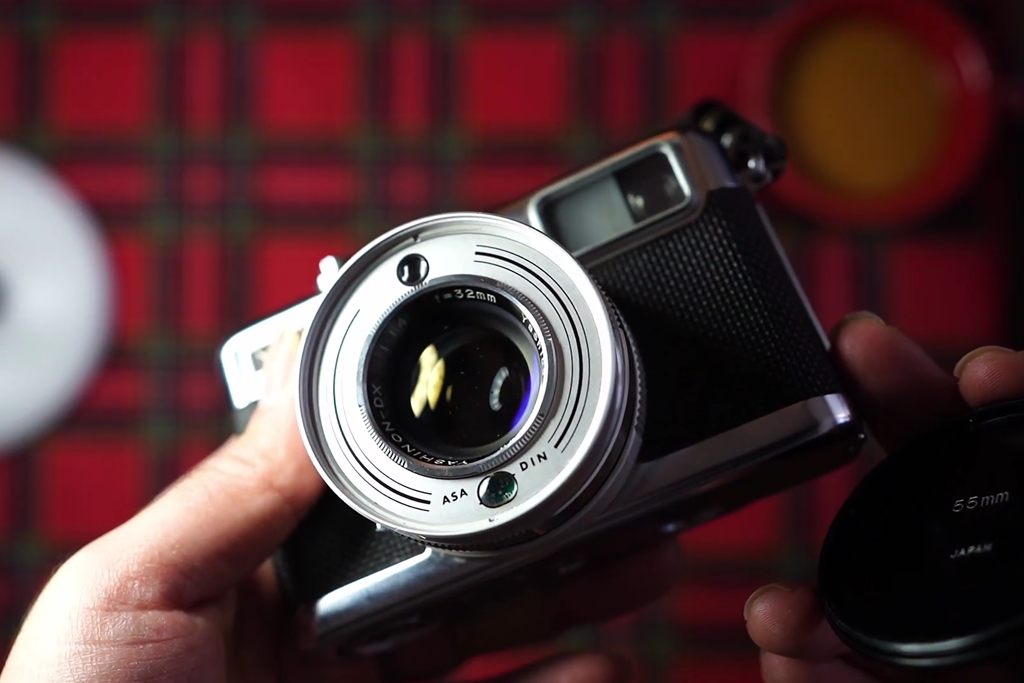
This camera has been on my wish list for ages. The Ricoh Caddy is one of the most sought-after vintage cameras that collectors love. Since it’s rarer than many other half frame models, finding one in great condition was very difficult. It’s small, solid, and stylish.
On a calm Sunday morning, I walked through a quiet, vintage part of town with the Ricoh Caddy in hand. I adored the scene with soft light and empty benches.
The Ricoh Caddy is a manual camera, so I used a light meter app to get started. I took several pictures to find the proper exposure. The lens delivers crisp details in the center and soft edges. I should admit that figuring out zone focusing was a fun practice.
The Caddy isn’t a camera for catching action. I missed a couple of shots trying to lock in the focus and exposure. But when you have time to slow down and shoot with care, it offers a rewarding experience. A camera makes you stay sharp behind the viewfinder. Besides, for fans of classic gear, it really ticks all the boxes, particularly when combined with the best film for half camera.
eBay: 50+ sold in the past year
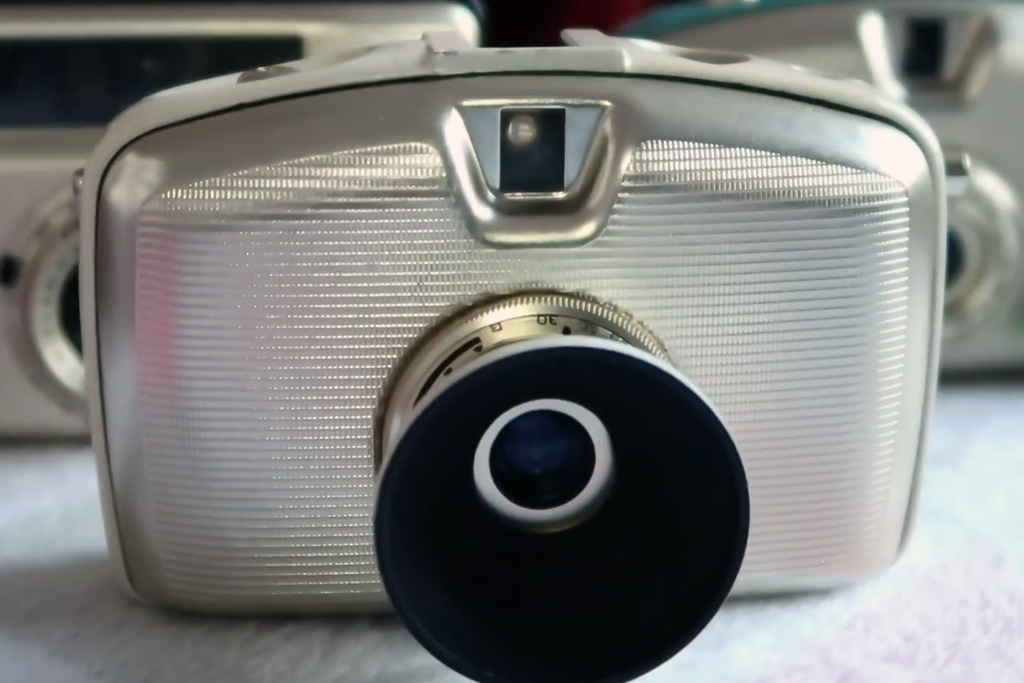
The Welta Penti 0 is one of the quirkiest film cameras I’ve tried and one of the oldest too. It looks like something from a jewelry box – small, shiny, and gold. Besides, it feels very delicate. When I took it to a market, it drew lots of attention. It’s manual, made of solid metal, and still delivers sharp results.
The Penti offers a slow and quiet shooting experience. There’s no meter and no fancy features, just a sharp lens and zone focusing. I used the Sunny 16 rule and relied on my eye to set exposure. It reminded me why I enjoy film photography so much. Sometimes, going back to the basics helps you stay in the zone.
The one downside is the special film cartridge. You can’t just pop in a regular roll of 35mm. You need to reload it into a custom cassette inside a dark bag. It’s not ideal for beginners, but if you enjoy DIY projects or develop your own film, it’s worth the effort. This camera may be small, but it’s up to the task.
We spent a few weeks testing these cameras in everyday situations. We strolled through the city, hung out at cafés, snapped portraits of friends, and relaxed at home. Instead of just checking the specs, we wanted to know how each one performs when the shutter is pressed.
While shooting, we evaluated the comfort of use, efficiency, and speed, as well as the intuitiveness of controls. I know that novices often get confused with zone focusing, exposure adjustments, and the viewfinder’s framing, so I wanted a half frame film camera that had understandable controls.
Next, we developed the film. We did it at home and also delegated the task to a trusted lab when we were pressed for time. When the images were ready, we assessed their sharpness, lens character, contrast, and lighting. Our FixThePhoto team wasn’t after perfect shots. Steady performance and consistent results mattered more.
Finally, we focused on practical details. Some cameras were unusual or rare, so we checked whether it was easy to load film, carry the bodies around, charge batteries, and use cameras in challenging shooting conditions. Besides nostalgia, I was genuinely interested in their capabilities in present-day challenges.